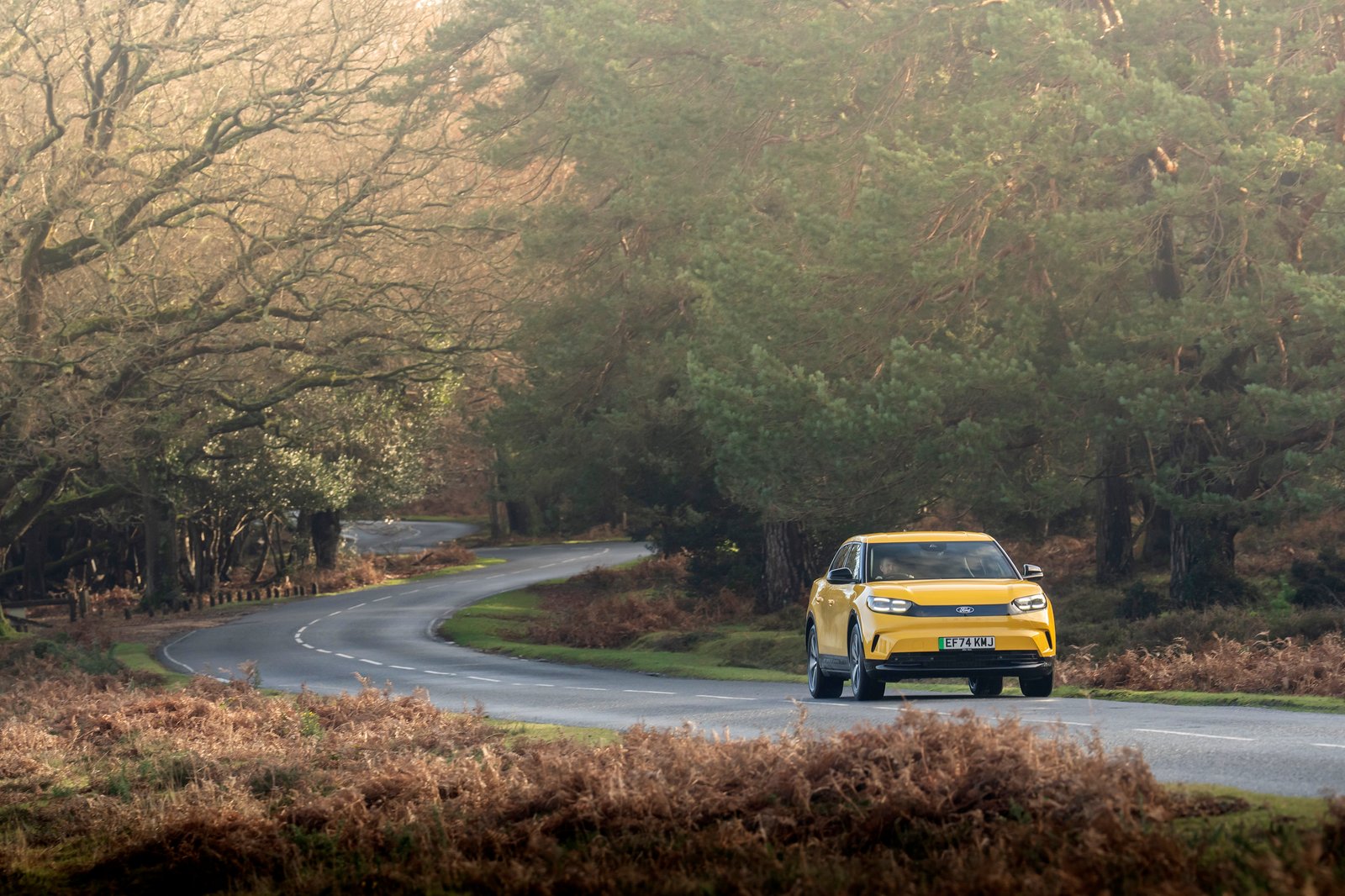
FEW cars have generated quite as much debate before they’ve even reached customers as the new Ford Capri.
The reason, of course, is the name. For many people, the Capri badge conjures memories of a sleek, rear-wheel-drive coupé that became one of Britain’s most recognisable cars. It was affordable, stylish and just sporty enough to earn a place in the hearts of enthusiasts.
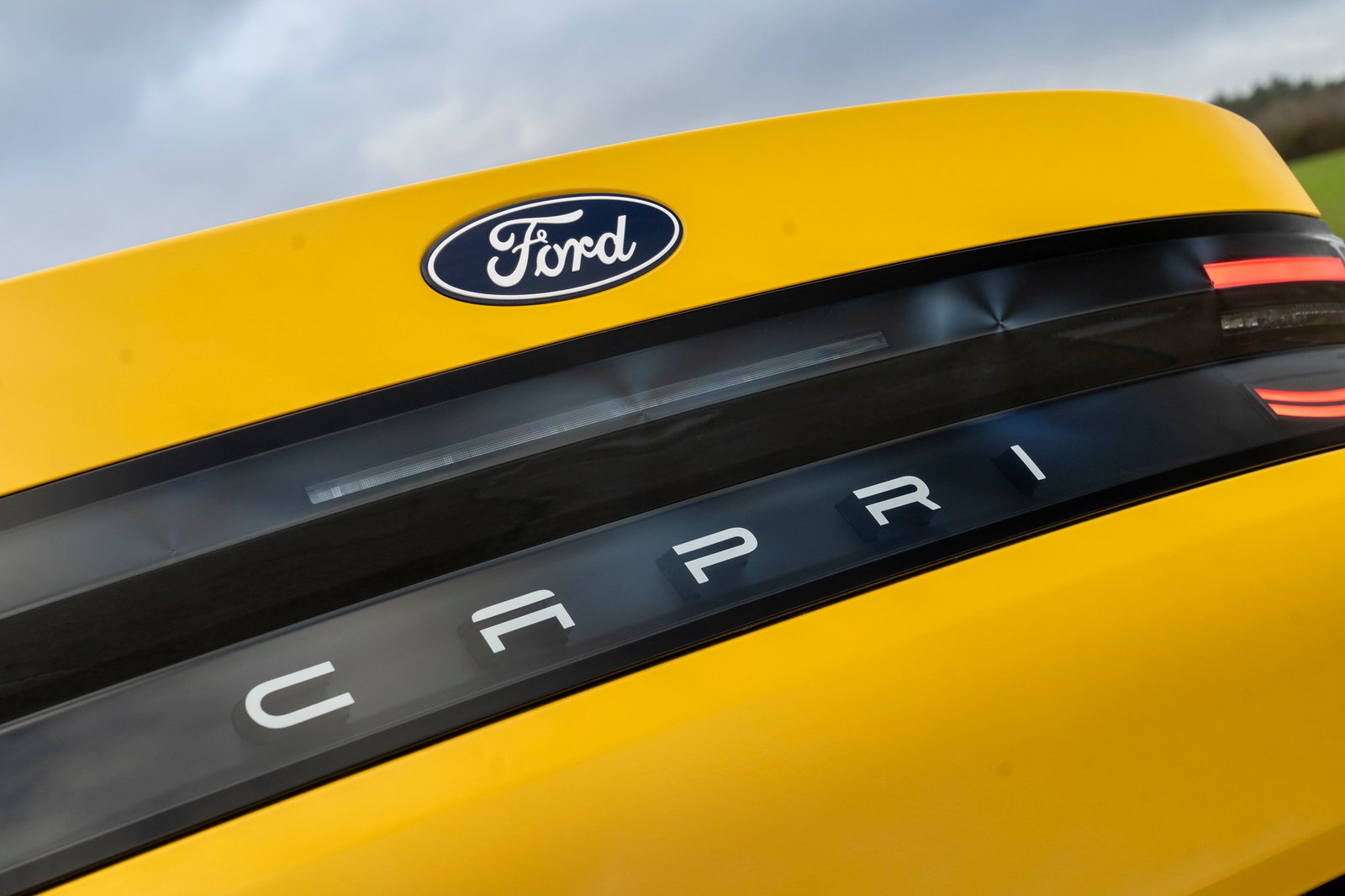
The 2026 Ford Capri is none of those things. Instead, it’s a fully electric crossover that shares its foundations with the Ford Explorer and Volkswagen Group’s MEB platform. That’s enough for some critics to dismiss it immediately. But once you move beyond the badge and judge the car on its own merits, a more nuanced picture emerges.
Because while this new Capri may not be a spiritual successor to the original, it’s actually a very competent electric family car.
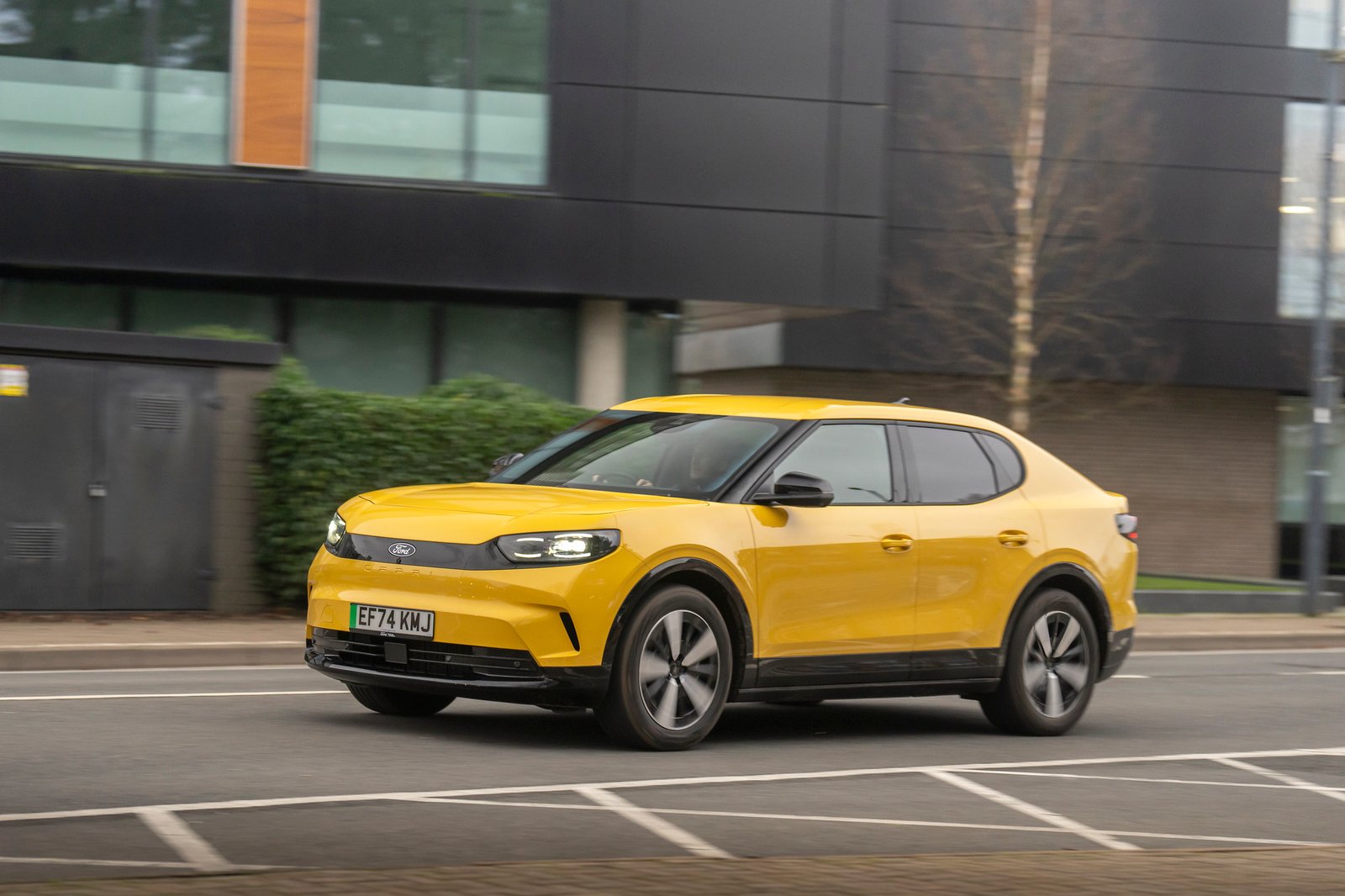
The version tested here was the flagship Premium AWD, equipped with the Driver Assistance Pack, bringing the as-tested price to £59,185. It’s quick, well equipped and impressively refined, though not quite as sporty as Ford’s marketing might suggest.
Overview
Ford has clearly been listening. For 2026, the Capri receives a series of meaningful upgrades that improve its usability, technology and efficiency, while also introducing a new range-topping Collection model aimed at buyers looking for something a little more distinctive.
The biggest improvements centre around the entry-level Standard Range model. Thanks to revisions to both the battery and electric motor, driving range increases by up to 43 miles, taking the official figure to as much as 288 miles – an increase of more than 17 per cent. At the same time, power rises to 190PS and torque increases to 350Nm, helping reduce the 0-62 mph sprint to 8.0 seconds.
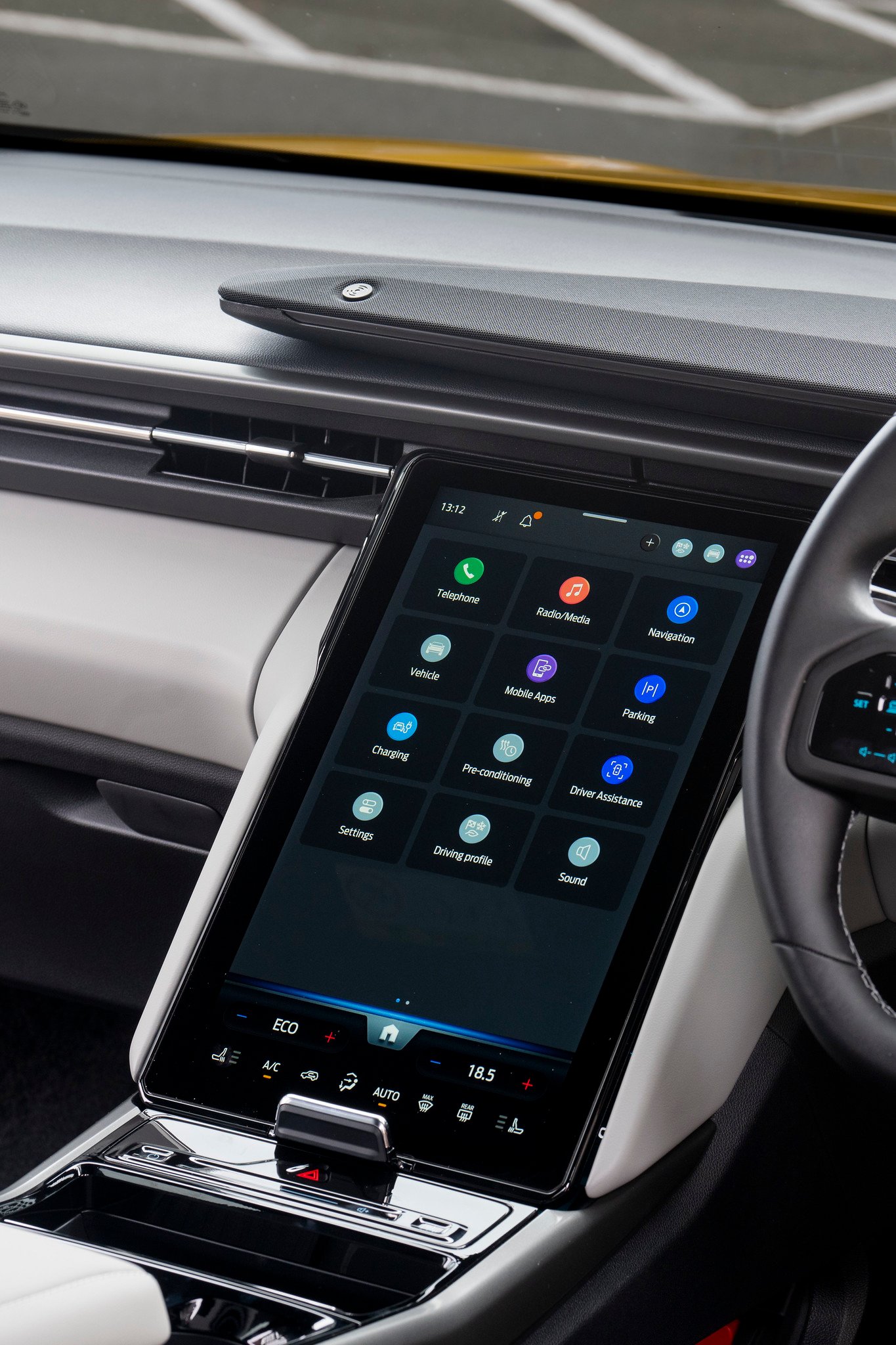
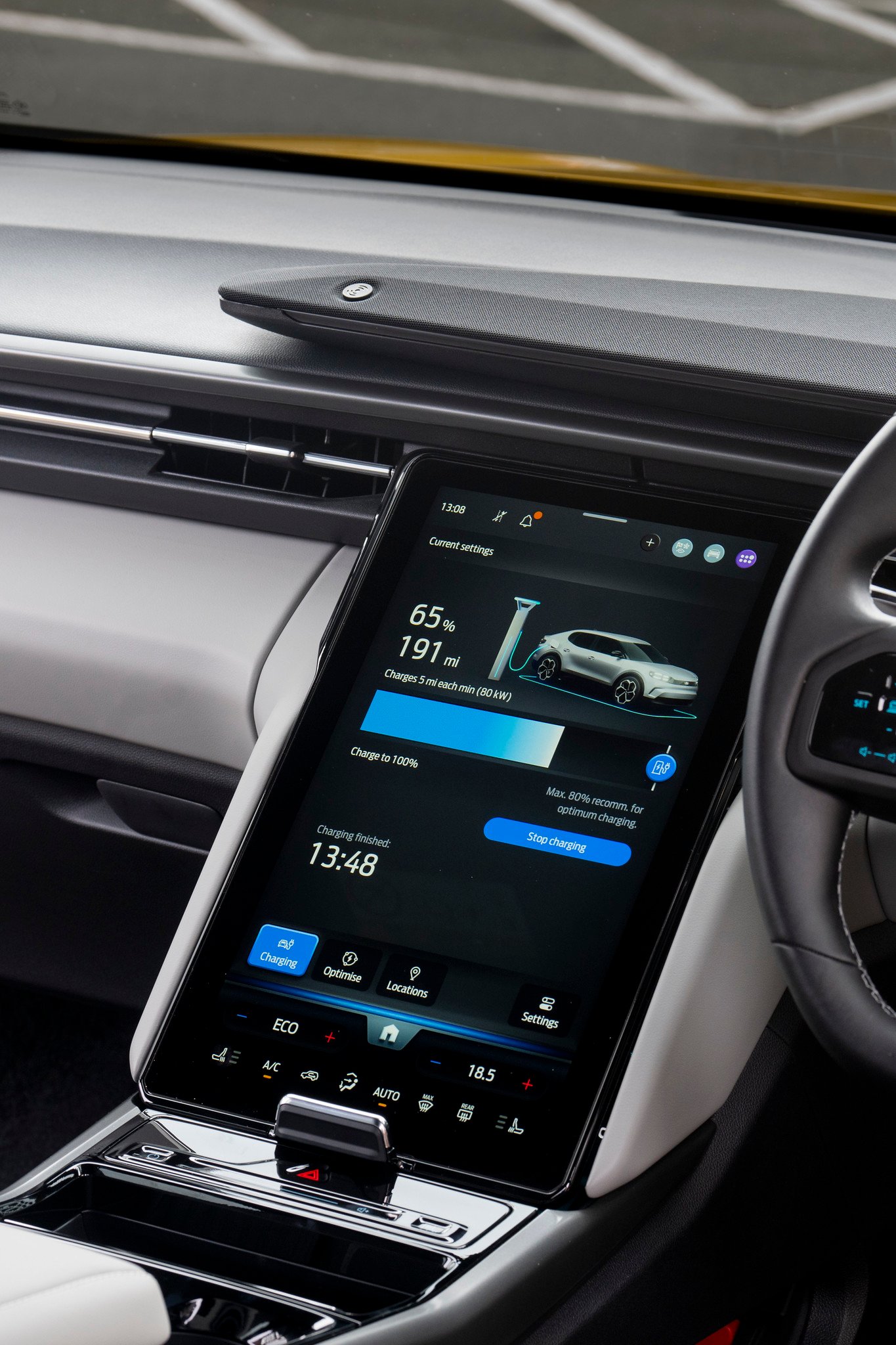
Elsewhere, Ford has upgraded the Capri’s technology offering with a new Android-based operating system for the infotainment system. Alongside refreshed graphics and a cleaner interface, owners can now create app folders and benefit from improved navigation and parking displays.
The driver assistance package has also been expanded. New features include Reversing Assist, which can automatically retrace the vehicle’s path for up to 50 metres, and Park Assist with Memory, capable of learning and repeating frequently used parking manoeuvres.
One-pedal driving is now standard across the range (hooray!), while a new Driver State Assist system can intervene if it detects the driver has become unresponsive.
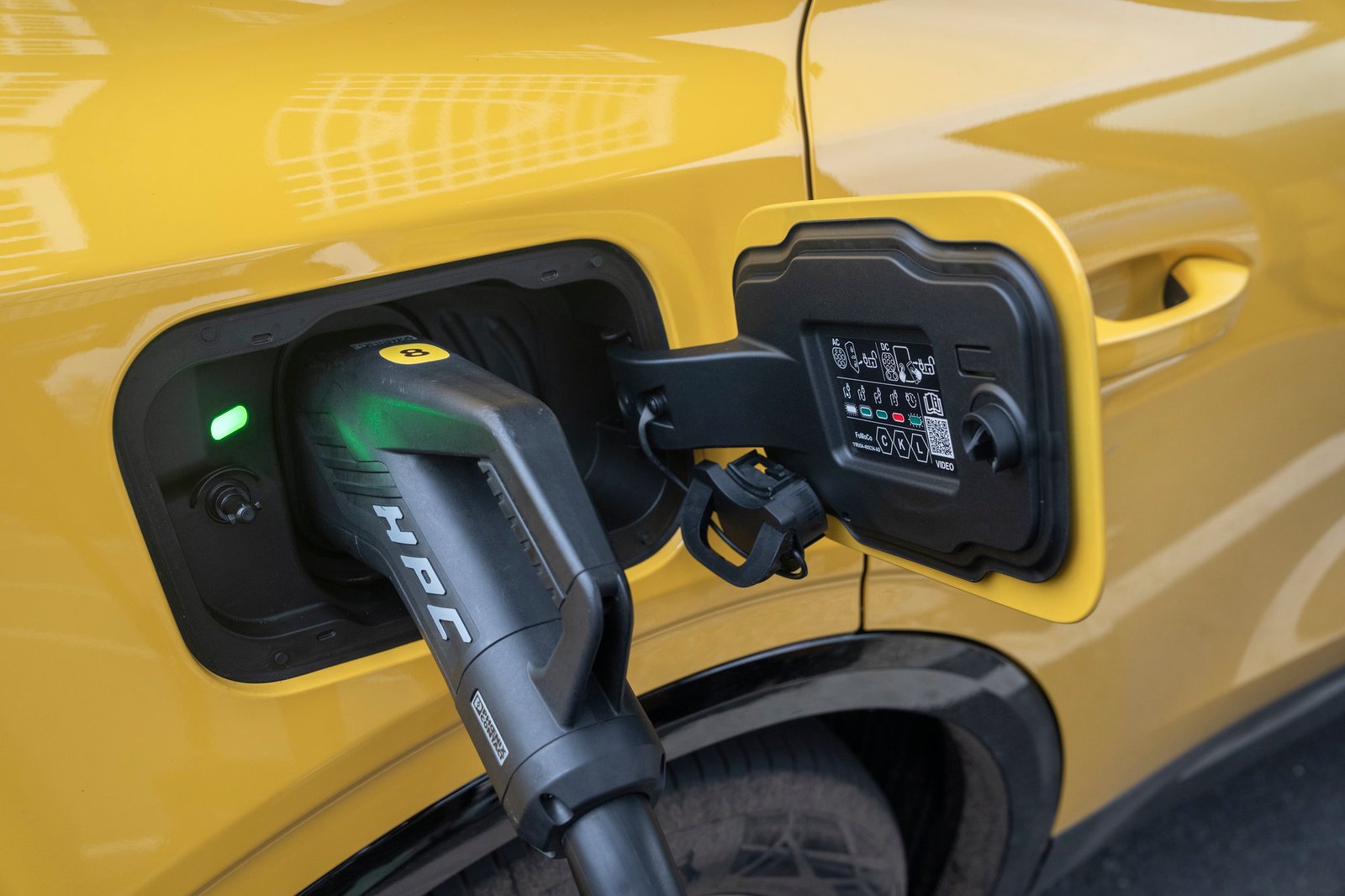
Another welcome addition is Pro Power Onboard. Like the system already seen on vehicles such as the Ford F-150 Lightning, it allows owners to power external devices directly from the vehicle’s battery, with up to 2.3kW available through a socket in the boot or via an optional adapter connected to the charging port.
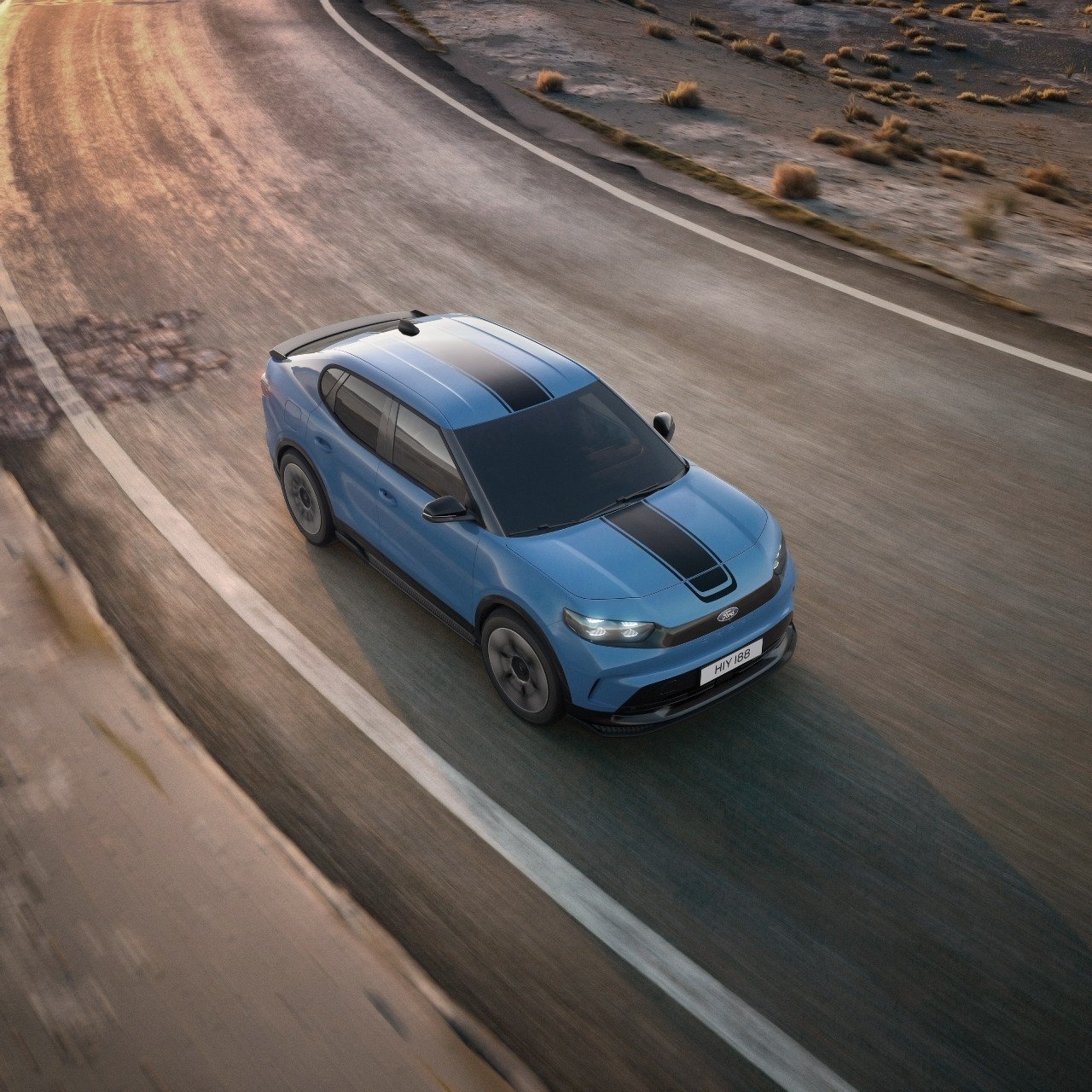
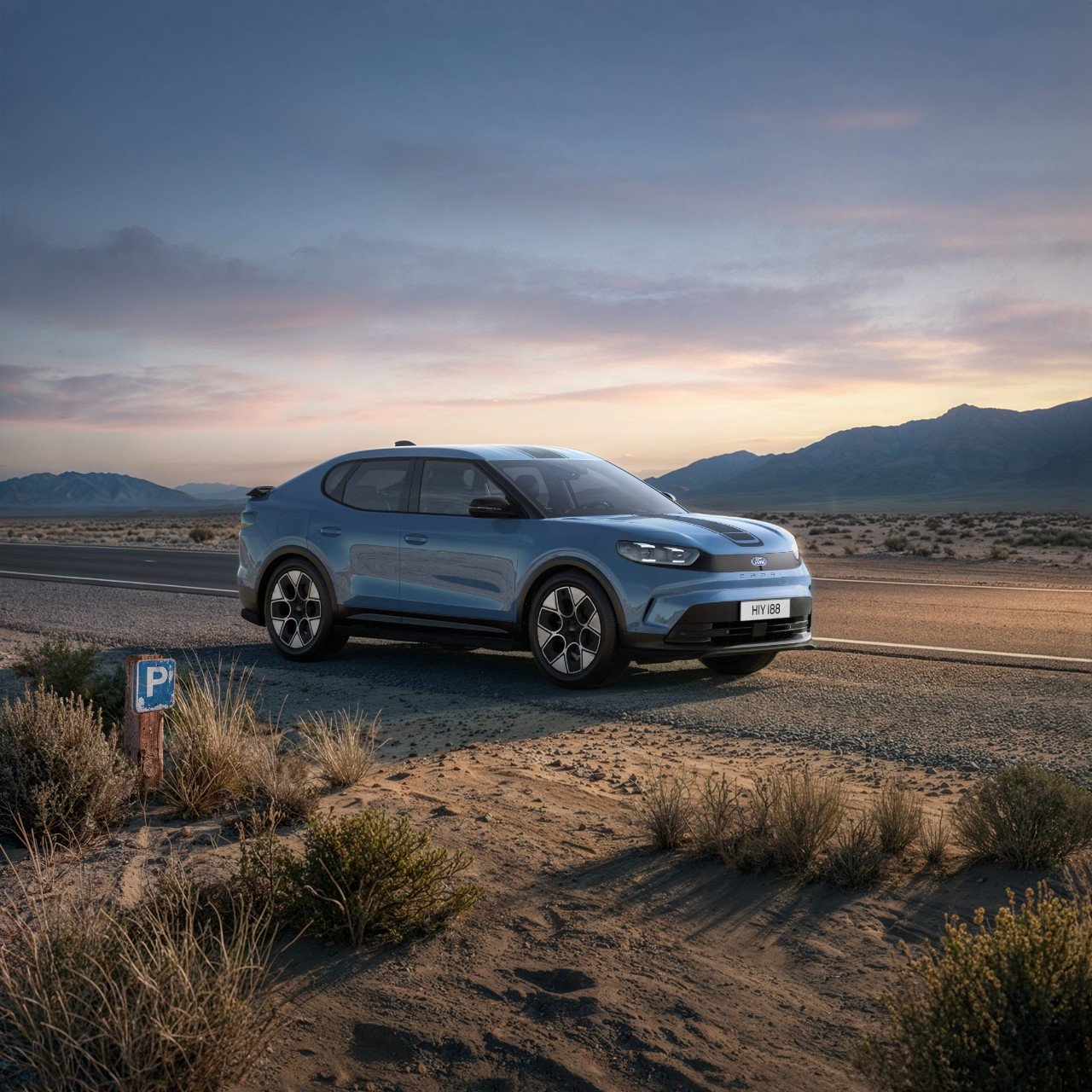
The existing Style, Select and Premium trims continue, while the new Capri Collection joins the range as a more design-focused flagship. Finished in exclusive Tribute Blue paint, it gains unique 21-inch alloy wheels, black exterior styling elements, blue interior accents and distinctive trim detailing inspired by Ford’s heritage.
The range begins with the Style model, priced from £41,485 and powered by a 52kWh battery paired with a 170PS rear-mounted motor. Above that sits the Select trim, which gains the larger battery and more powerful motor, while the Premium adds a more luxurious specification including Matrix LED headlights, panoramic roof, upgraded audio and enhanced interior materials.
The car tested here remains the flagship Premium AWD. Its dual-motor all-wheel-drive system produces 340PS and 679Nm of torque, enough to propel it from 0-62mph in just 5.3 seconds. Power comes from a 77kWh usable battery, delivering a claimed range of up to 347 miles combined, or around 276 miles at motorway speeds.
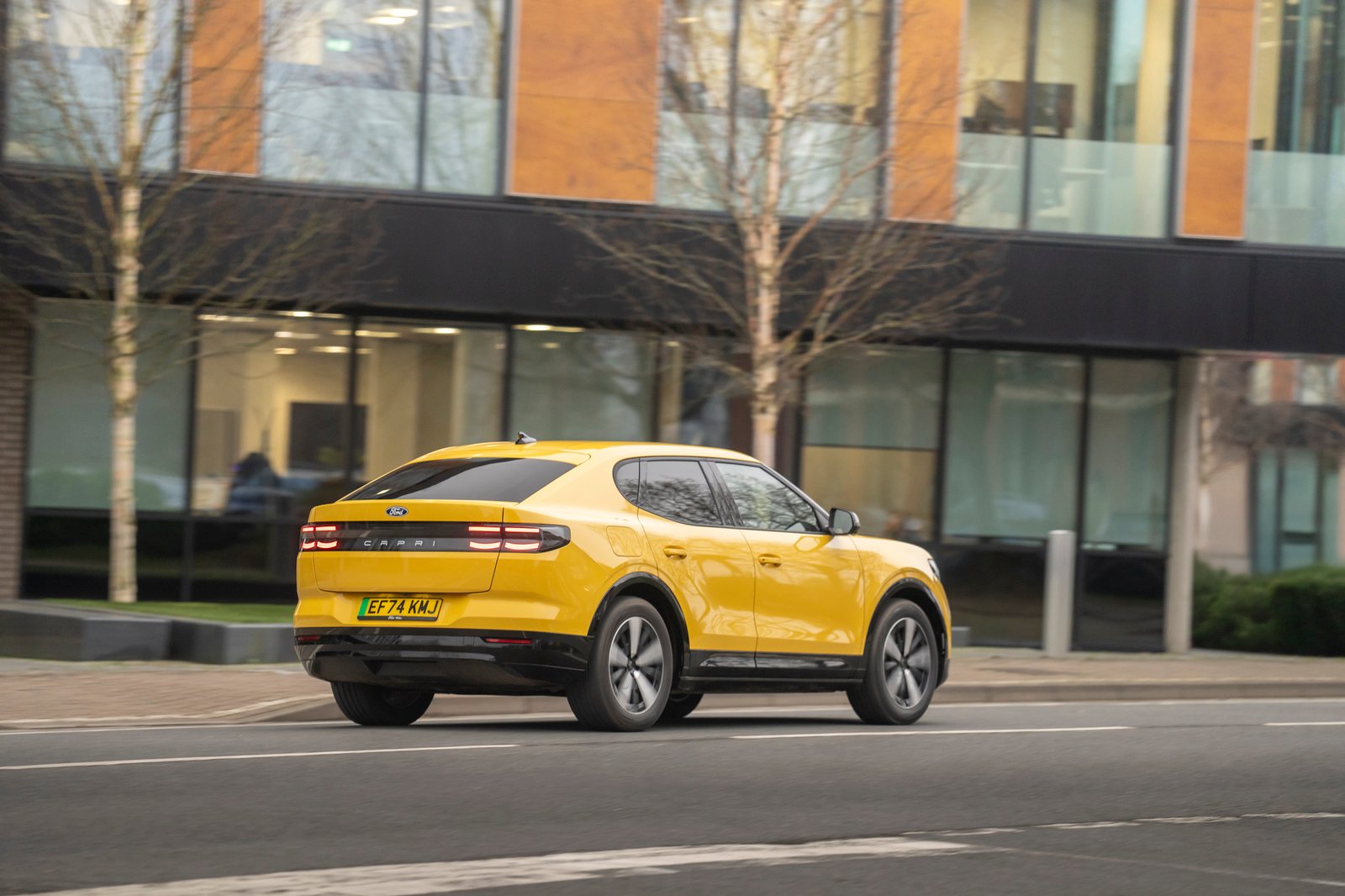
On paper, at least, it has all the ingredients to compete with rivals such as the Kia EV6, Tesla Model Y, Volkswagen ID.5 and Renault Scenic E-Tech.
Design
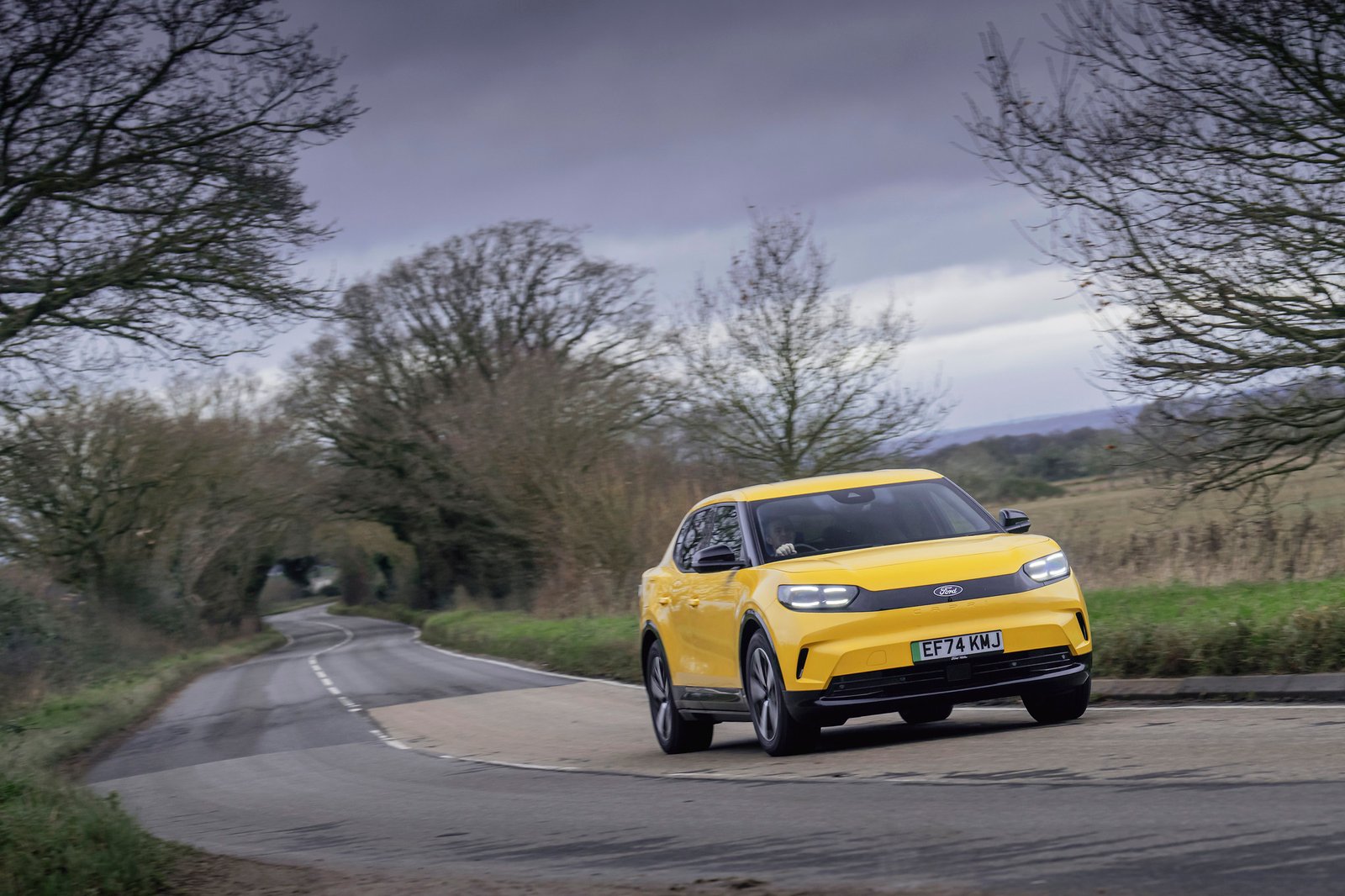
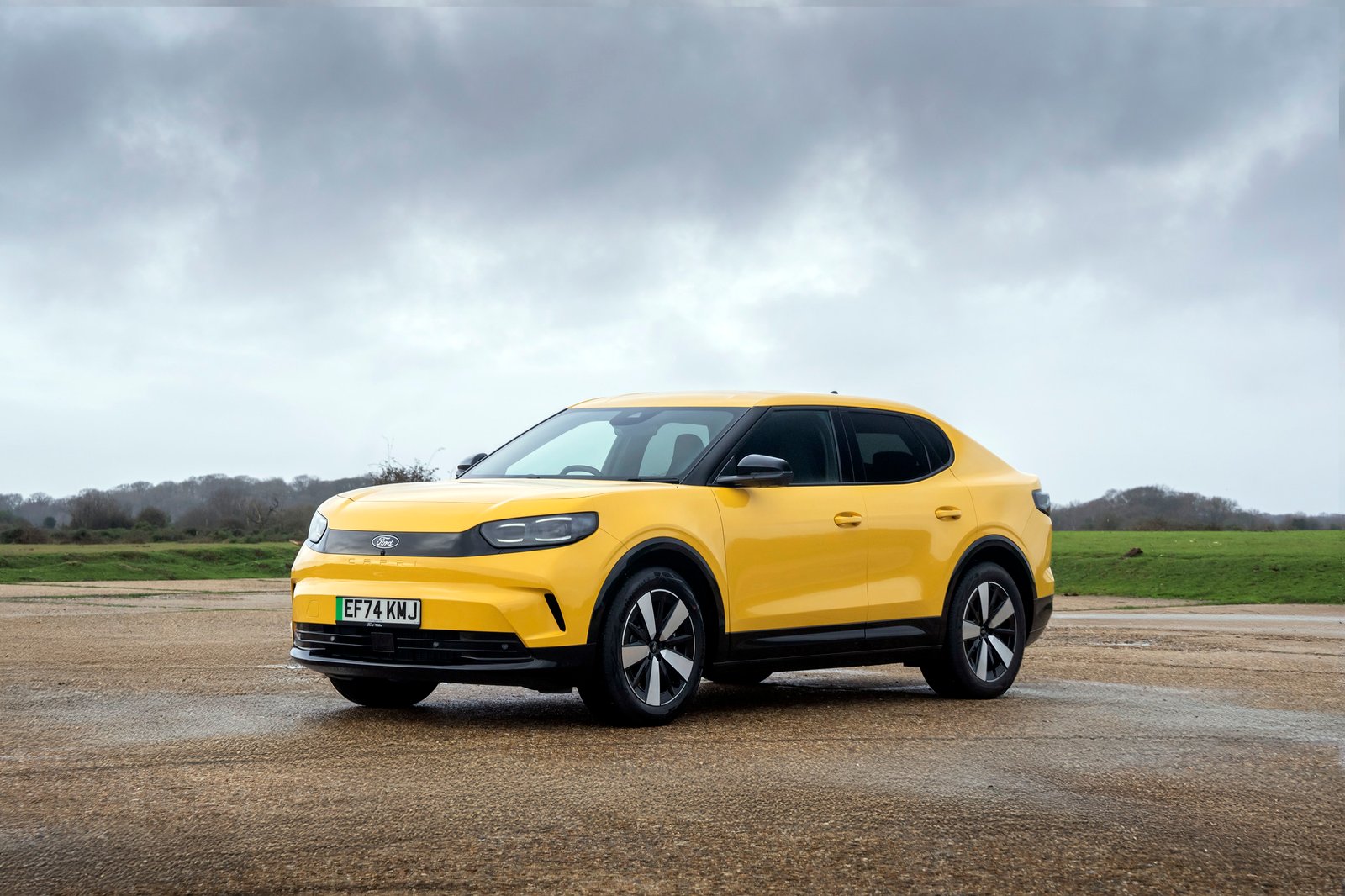
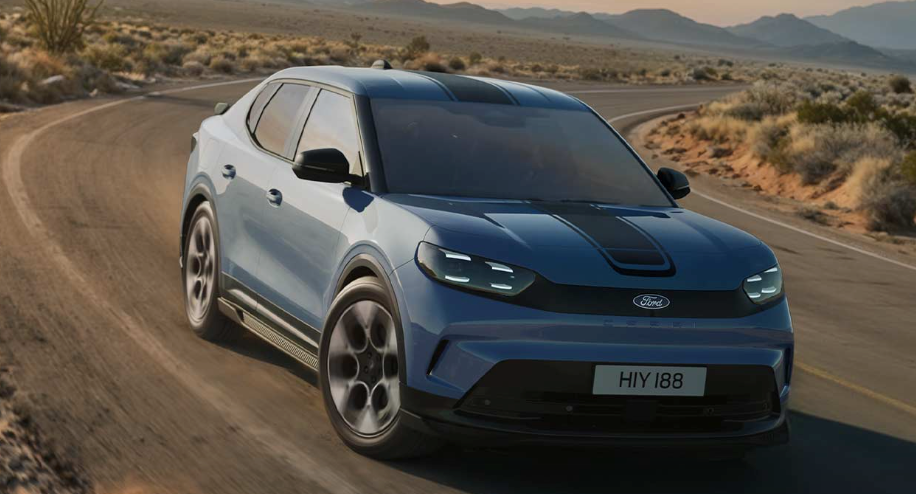
Whether you like the new Capri’s styling may depend entirely on what you’re expecting. Viewed as a successor to the original Capri, the resemblance is limited. Viewed as a modern electric crossover, however, it’s actually quite an attractive thing.
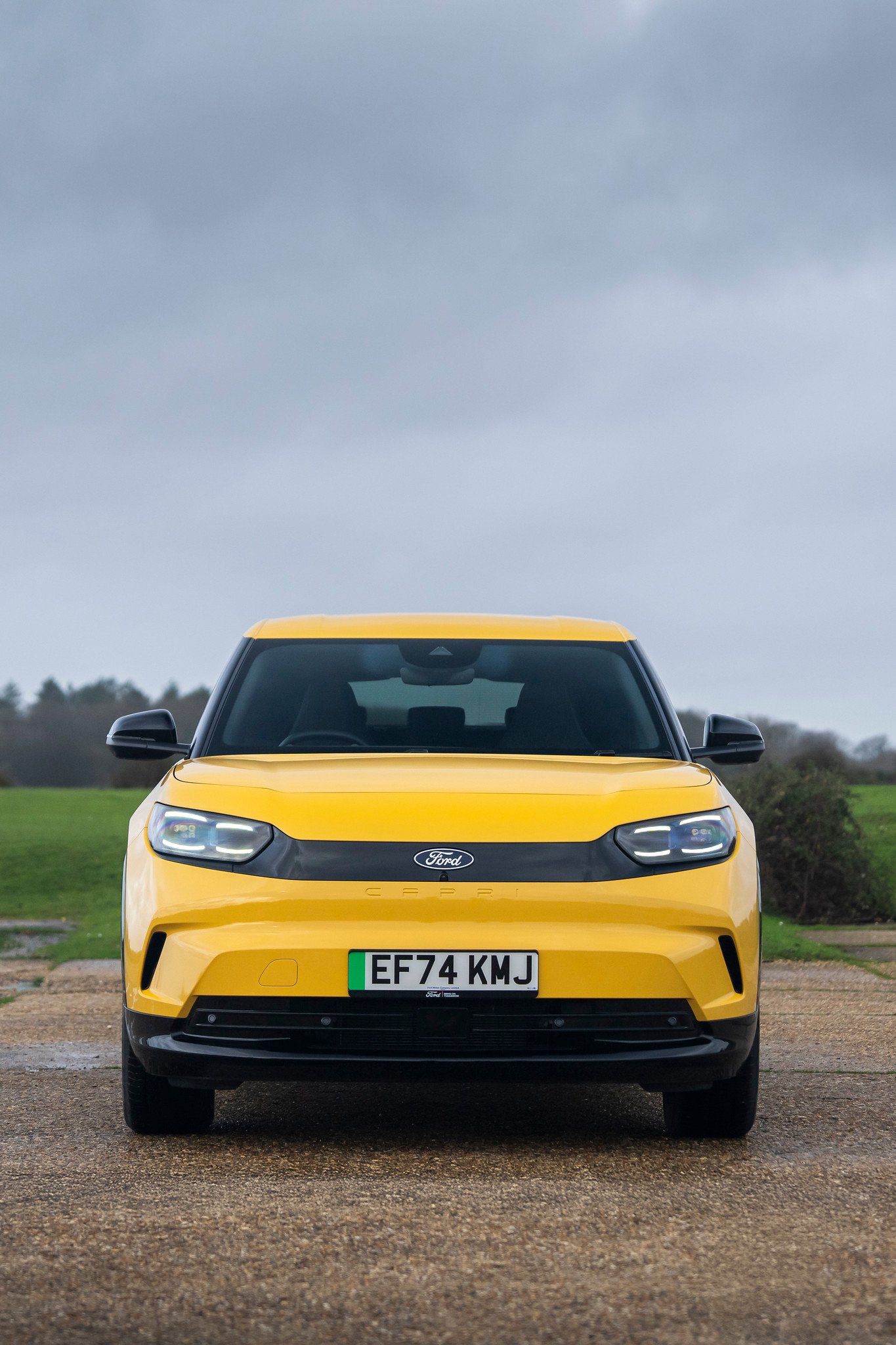
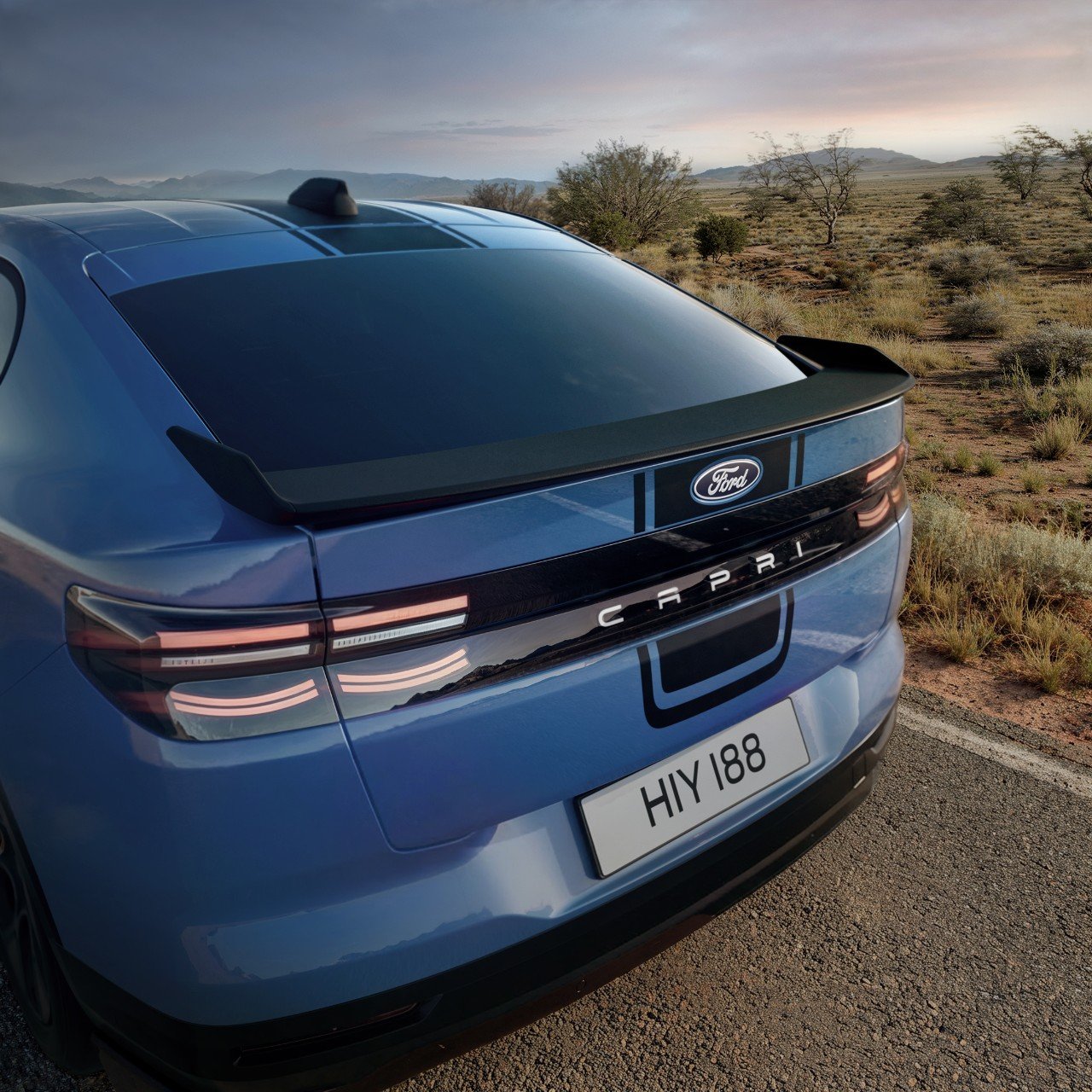
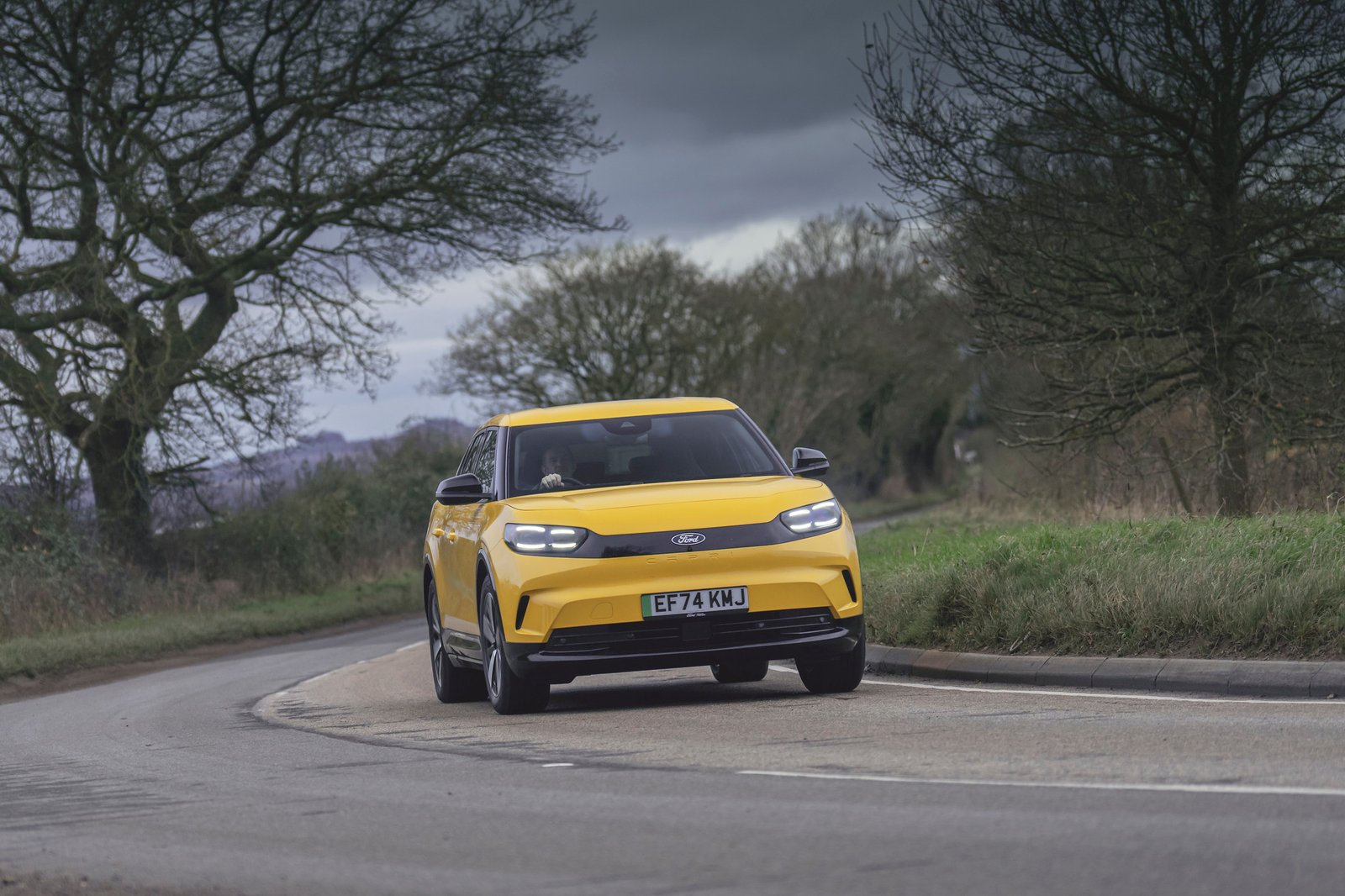
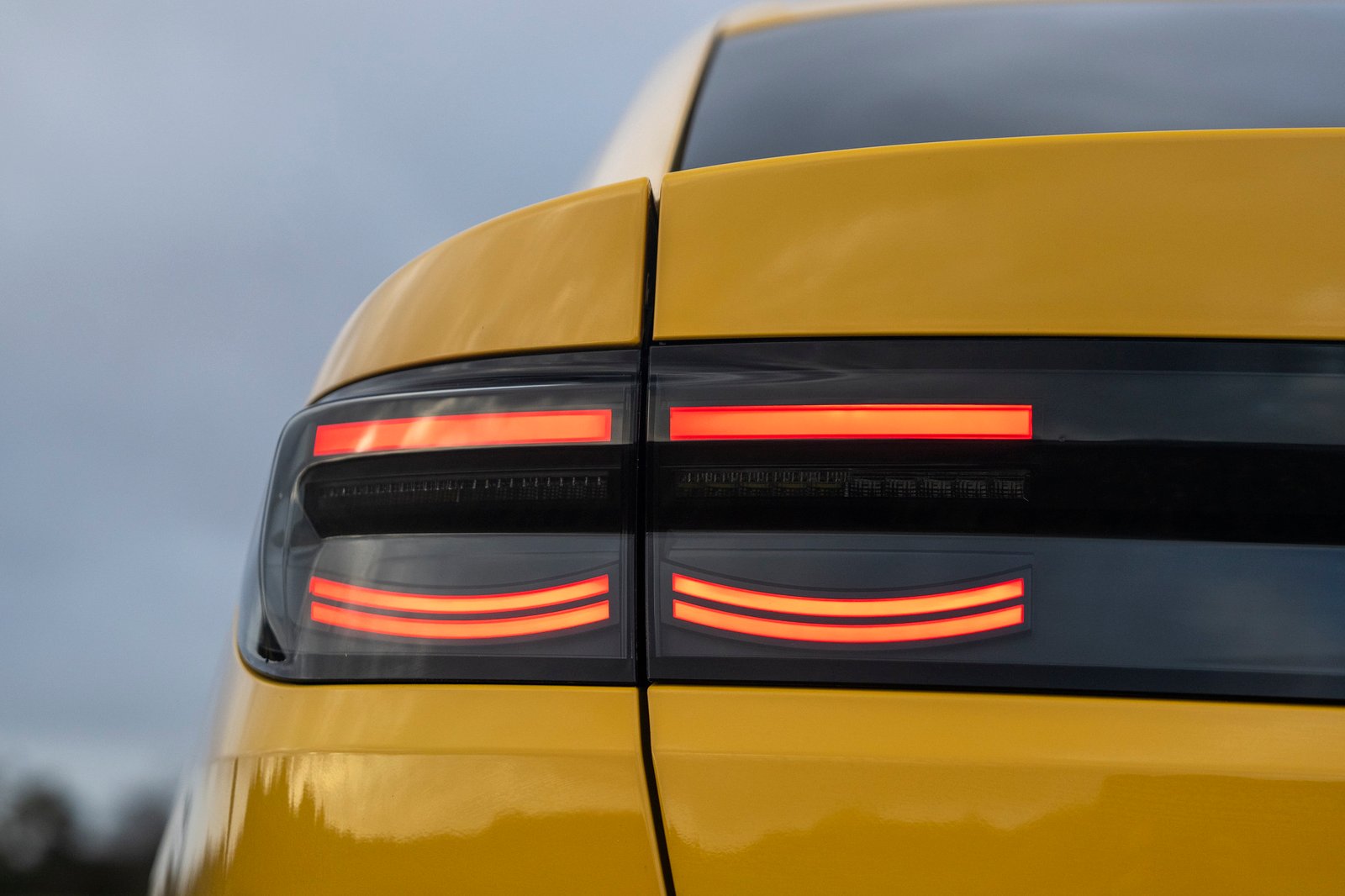
Ford has clearly tried to incorporate visual references to the original. The front lighting signature, with its four distinct LED elements connected by a dark horizontal panel, is intended to echo the later Capris of the 1980s. The rear follows a similar theme, while the side window graphic incorporates what Ford calls the “Capri Swoosh”.
Some of these references require a healthy imagination to spot, but the overall design works well enough regardless.
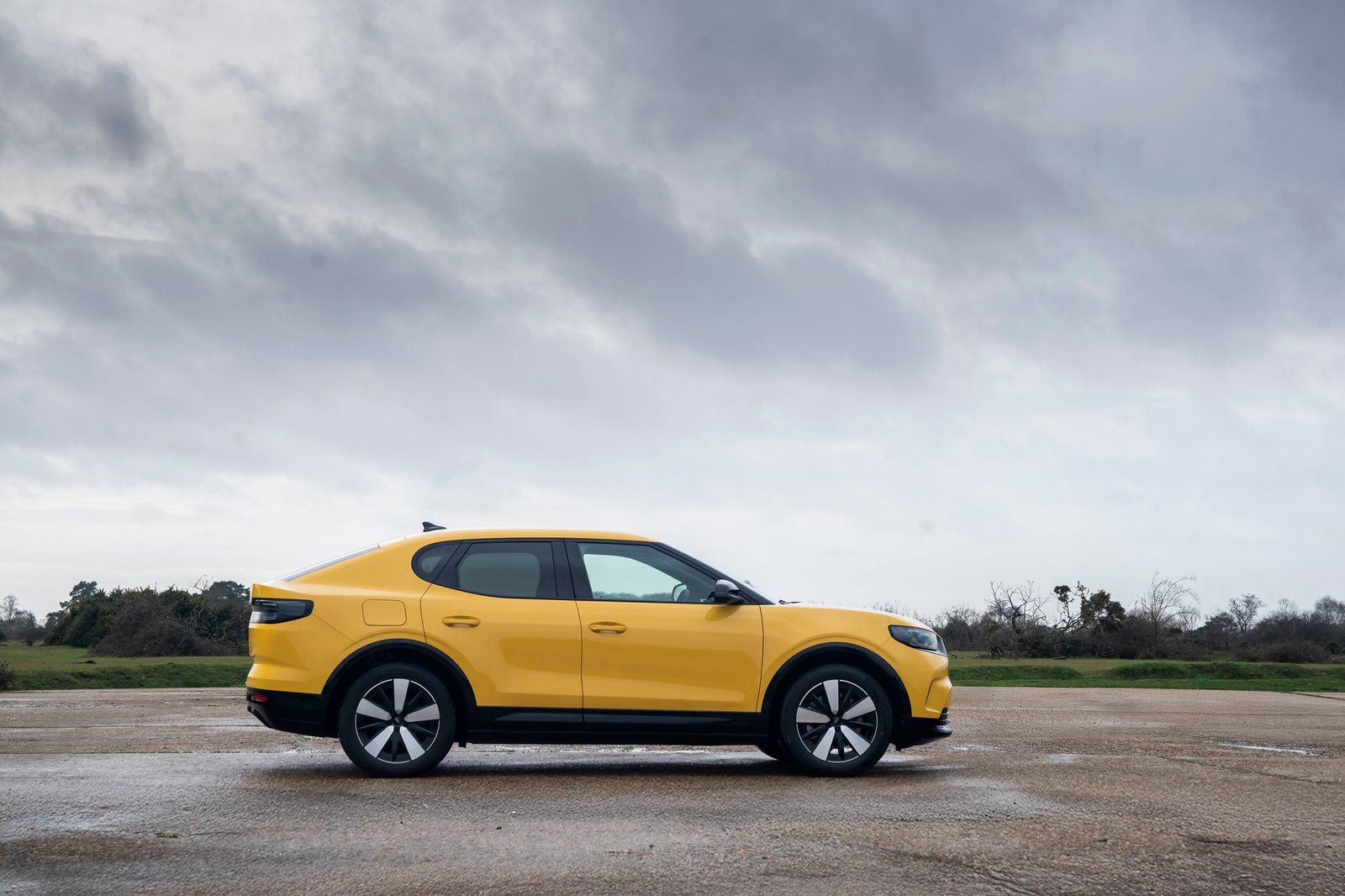
The coupe-like roofline helps distinguish it from the more upright Explorer, while the broad stance and large wheels give it a planted appearance.
It’s also worth noting that Ford has managed to make the Capri look reasonably sleek without sacrificing too much practicality. That’s not always an easy balance to strike.
Interior
Inside, the similarities to the Ford Explorer become immediately apparent. That’s no bad thing.
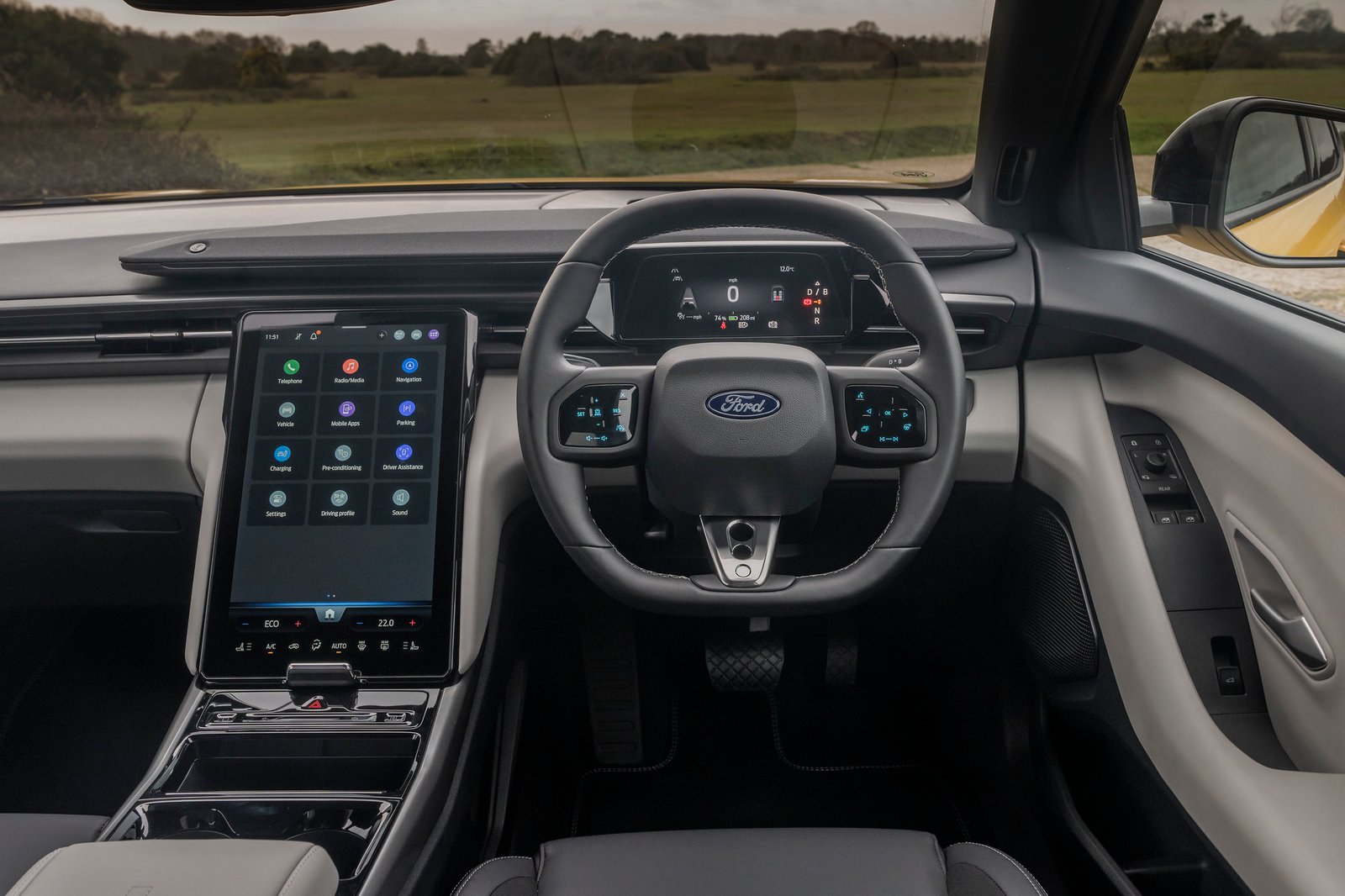
The dashboard is dominated by Ford’s 14.6-inch SYNC Move touchscreen, mounted vertically in the centre console. It’s sharp, responsive and generally easy to navigate, with clear graphics and intuitive menus.
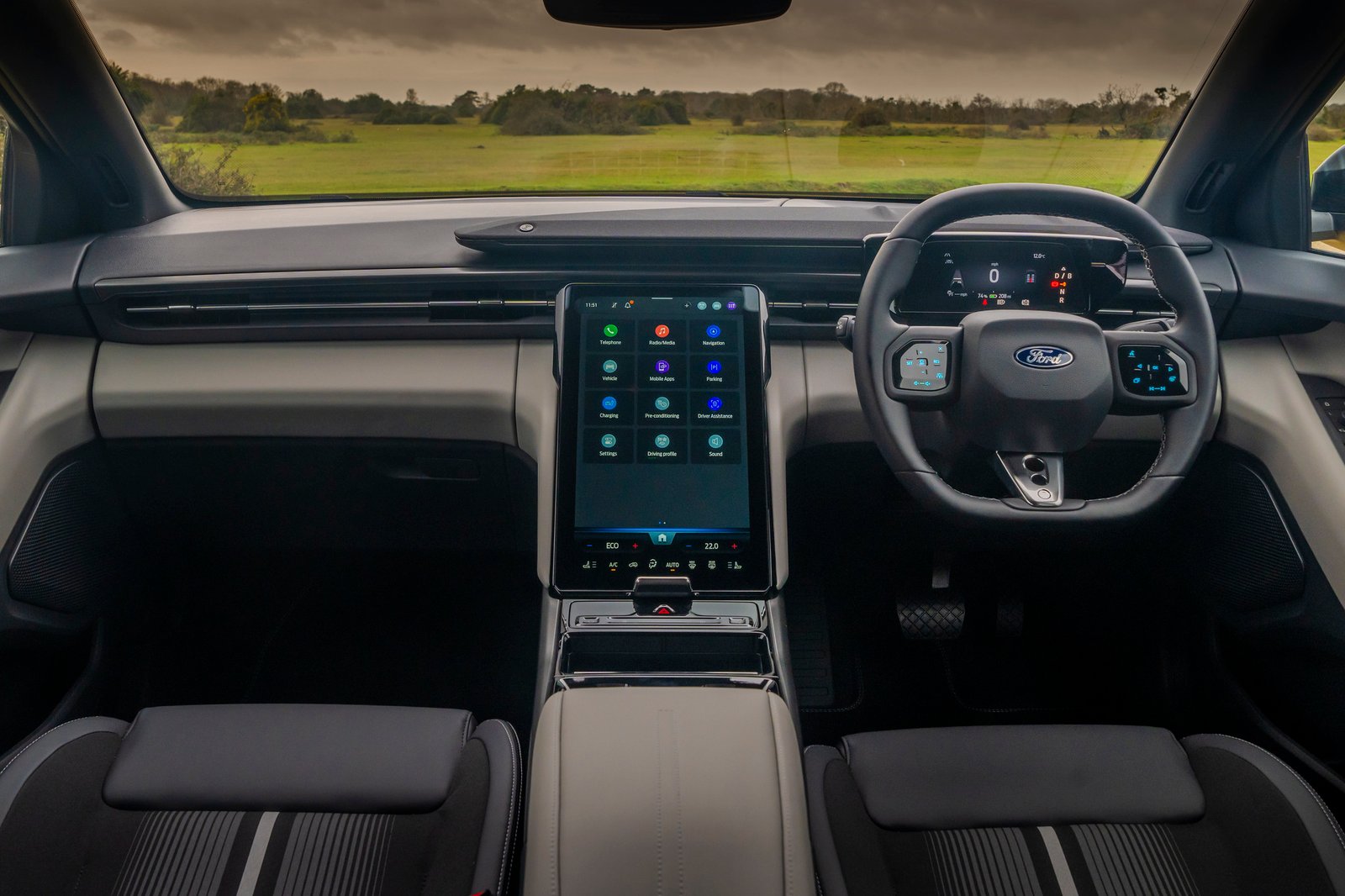
One of its cleverest features is its ability to slide backwards and forwards. Not only does this allow you to adjust the viewing angle to minimise glare, but it also reveals a hidden storage compartment behind the screen. It sounds gimmicky, but it quickly proves useful for storing valuables out of sight.
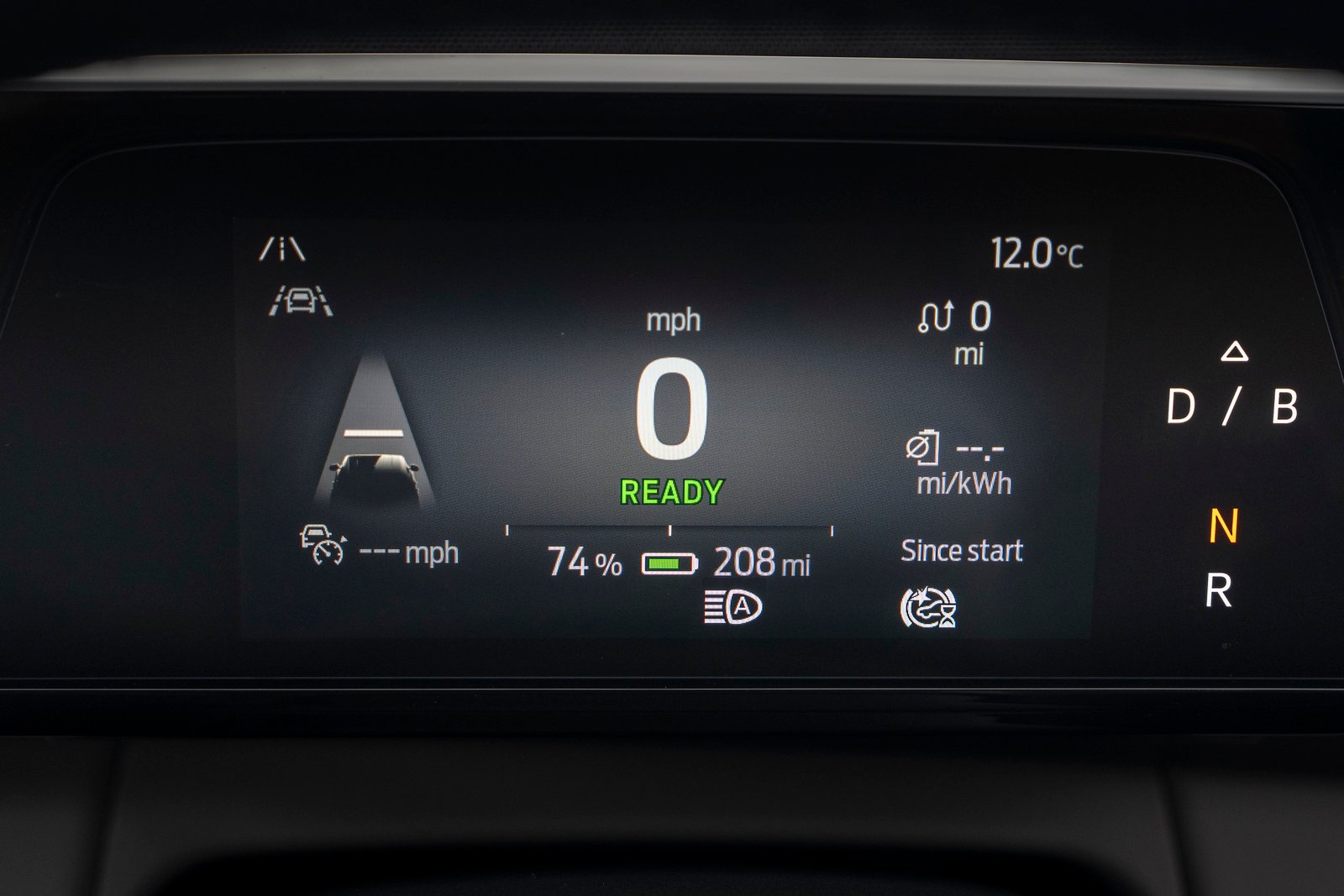
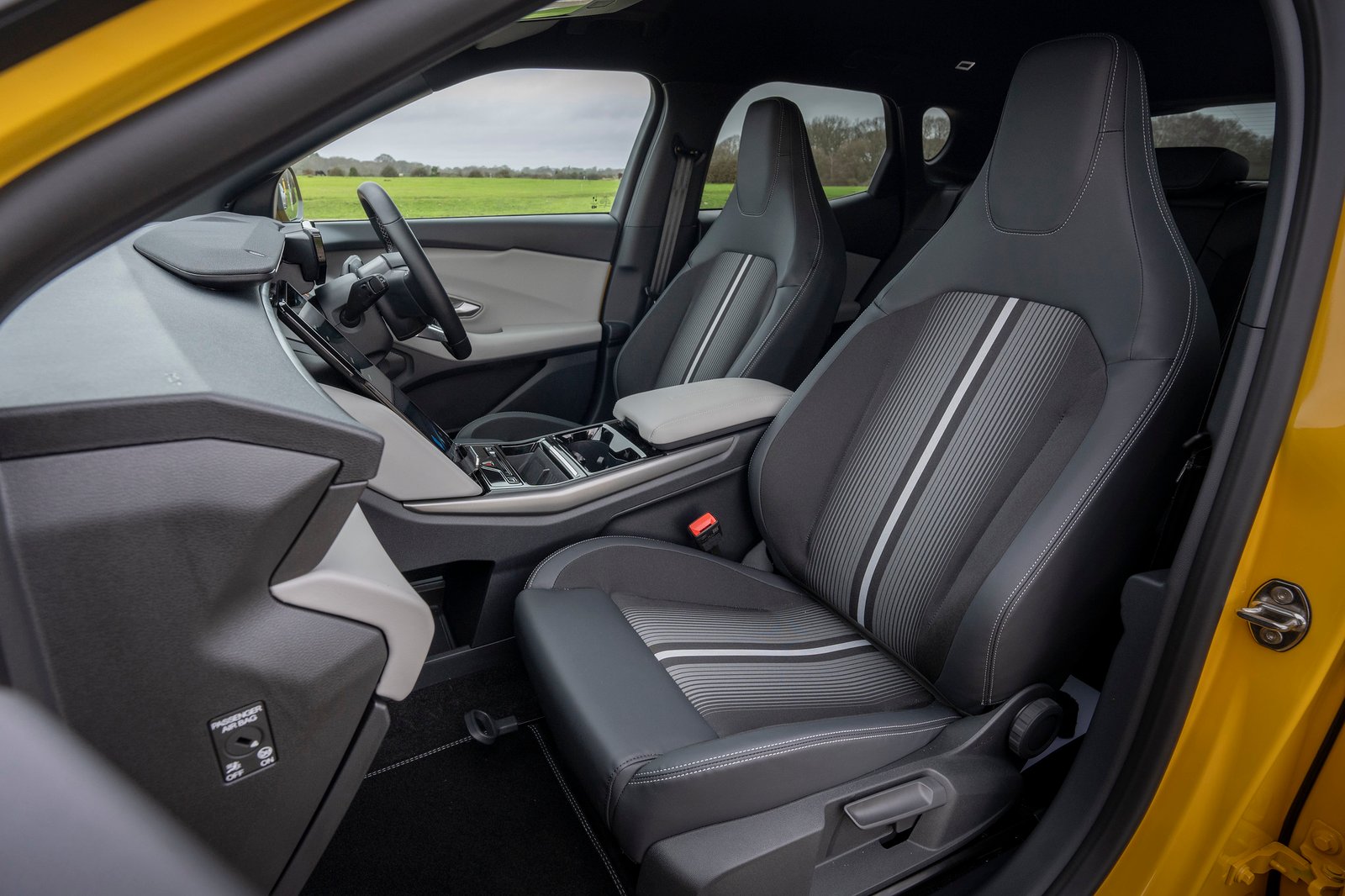
Material quality is generally impressive. While there are still some harder plastics lower down in the cabin, the surfaces you interact with most frequently feel appropriately premium. The Full Sensico upholstery in the Premium model looks and feels smart, while the overall fit and finish is competitive with key rivals.
The seats deserve particular praise. The driver’s seat offers extensive electric adjustment, memory settings and even a massage function. On longer journeys, it proves genuinely comfortable, with enough support to prevent fatigue without feeling overly firm.
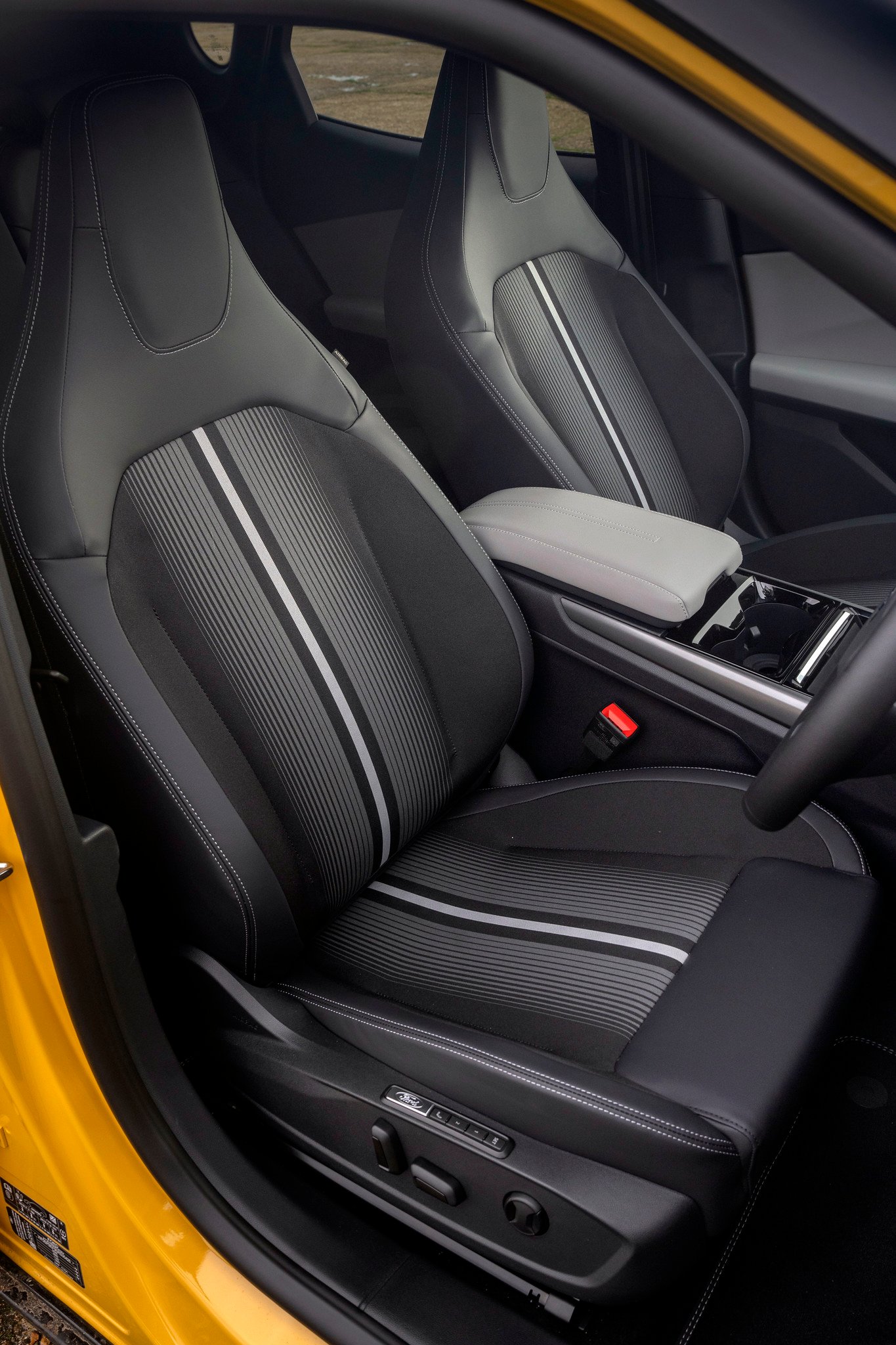
The driving position is excellent too. There’s plenty of adjustment in both the steering wheel and seat, making it easy to find a comfortable setup regardless of height.
Not everything is perfect, however. Like many modern EVs, Ford has moved climate controls into the touchscreen. The controls remain permanently visible at the bottom of the display, which helps, but physical buttons would still be preferable. Adjusting temperature or fan speed through a screen simply isn’t as intuitive when you’re concentrating on the road.
The steering wheel controls also feel slightly flimsy compared with the otherwise solid cabin.
Rear Passenger Comfort
One area where the Capri impresses is rear passenger accommodation. Despite the sloping roofline, there’s a surprising amount of legroom thanks to the long wheelbase and flat floor. Rear occupants benefit from plenty of knee room, while the absence of a transmission tunnel makes the cabin feel more spacious than many conventional family SUVs.
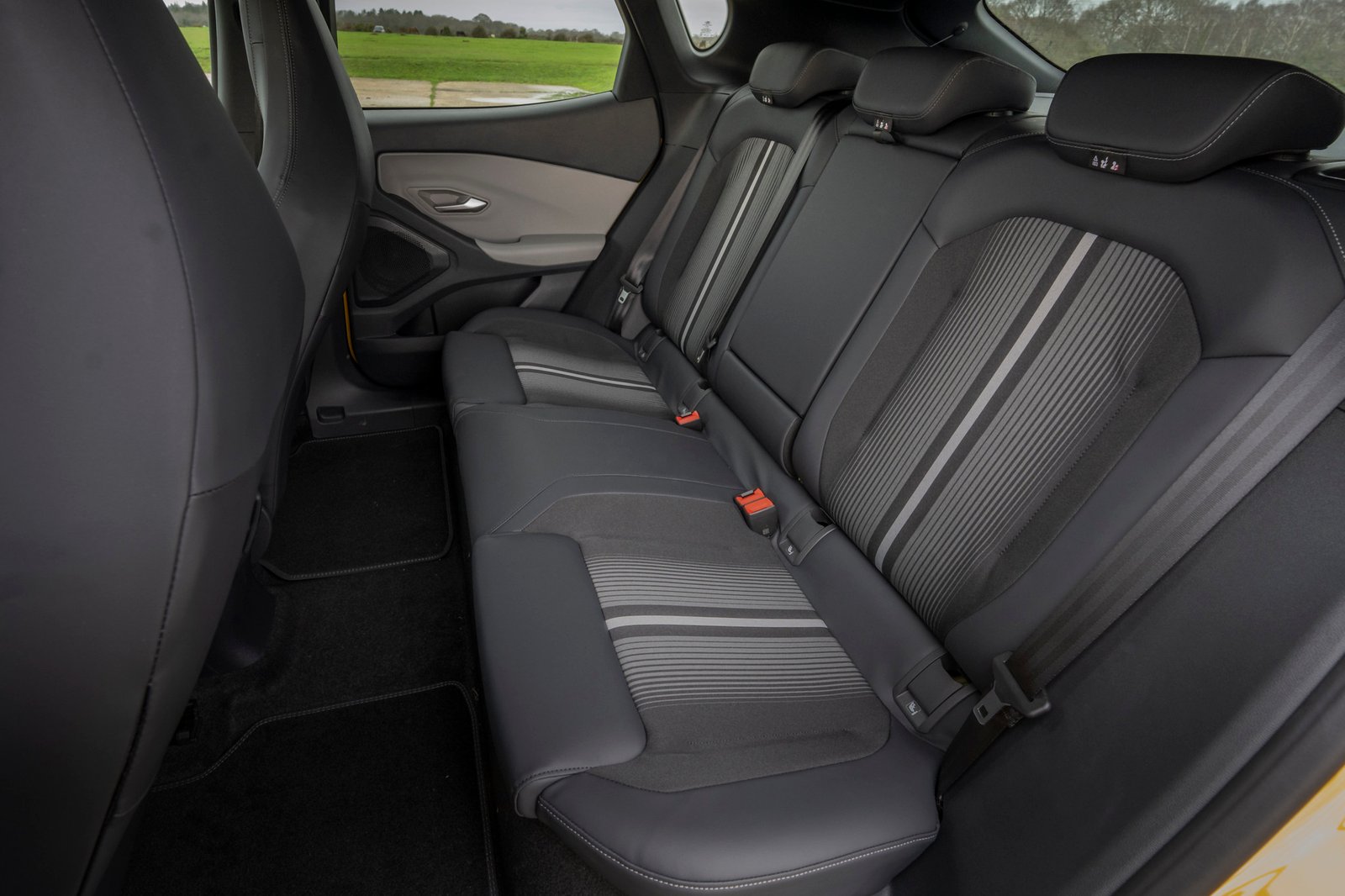
Headroom is less generous. Passengers approaching six feet tall may find the coupe-style roofline begins to intrude, particularly if seated in the centre position where the seat base is slightly raised.
For most families, however, the compromise is minor. Two adults can travel comfortably in the rear, and children will have more than enough space.
Practicality
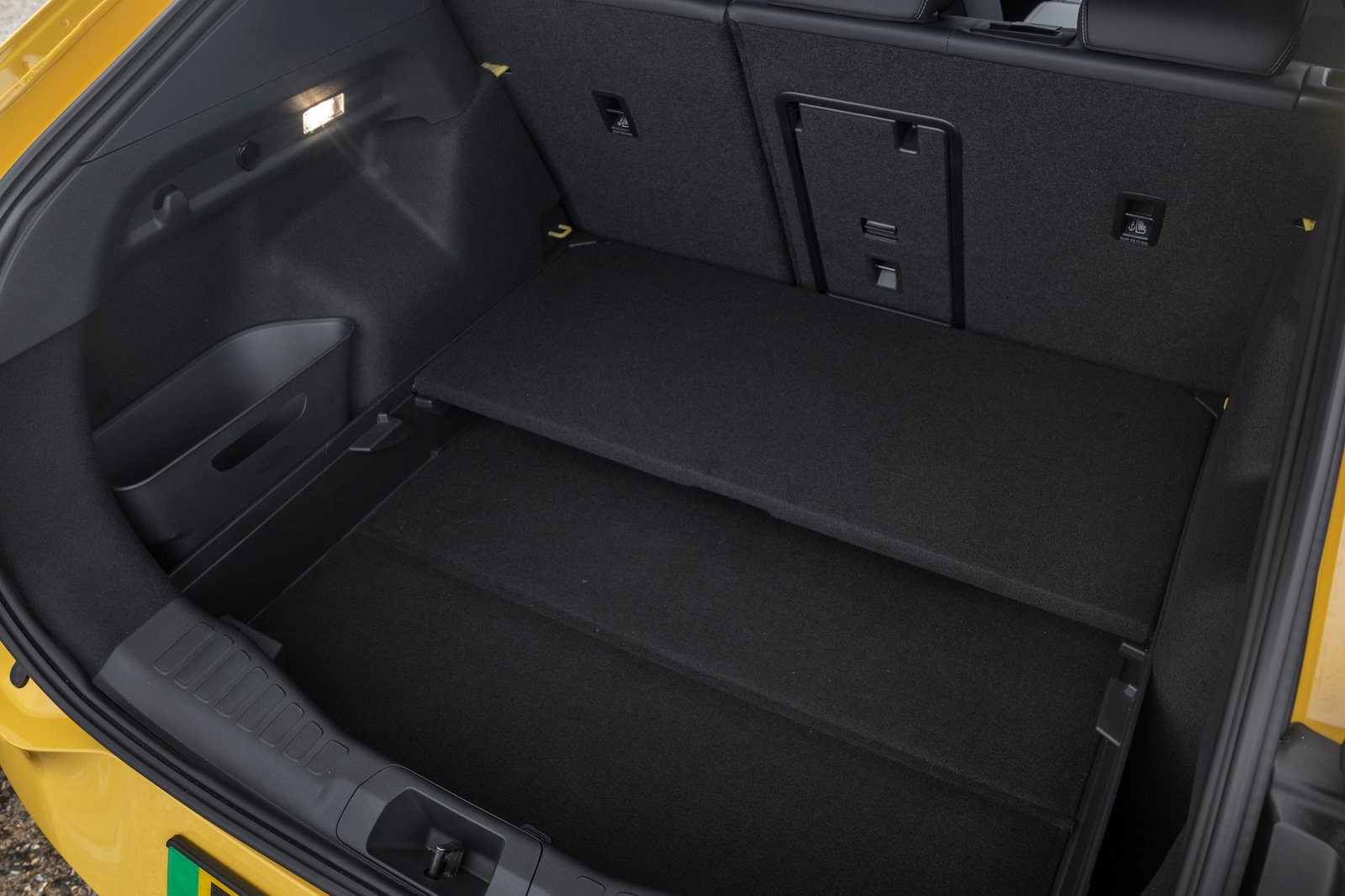
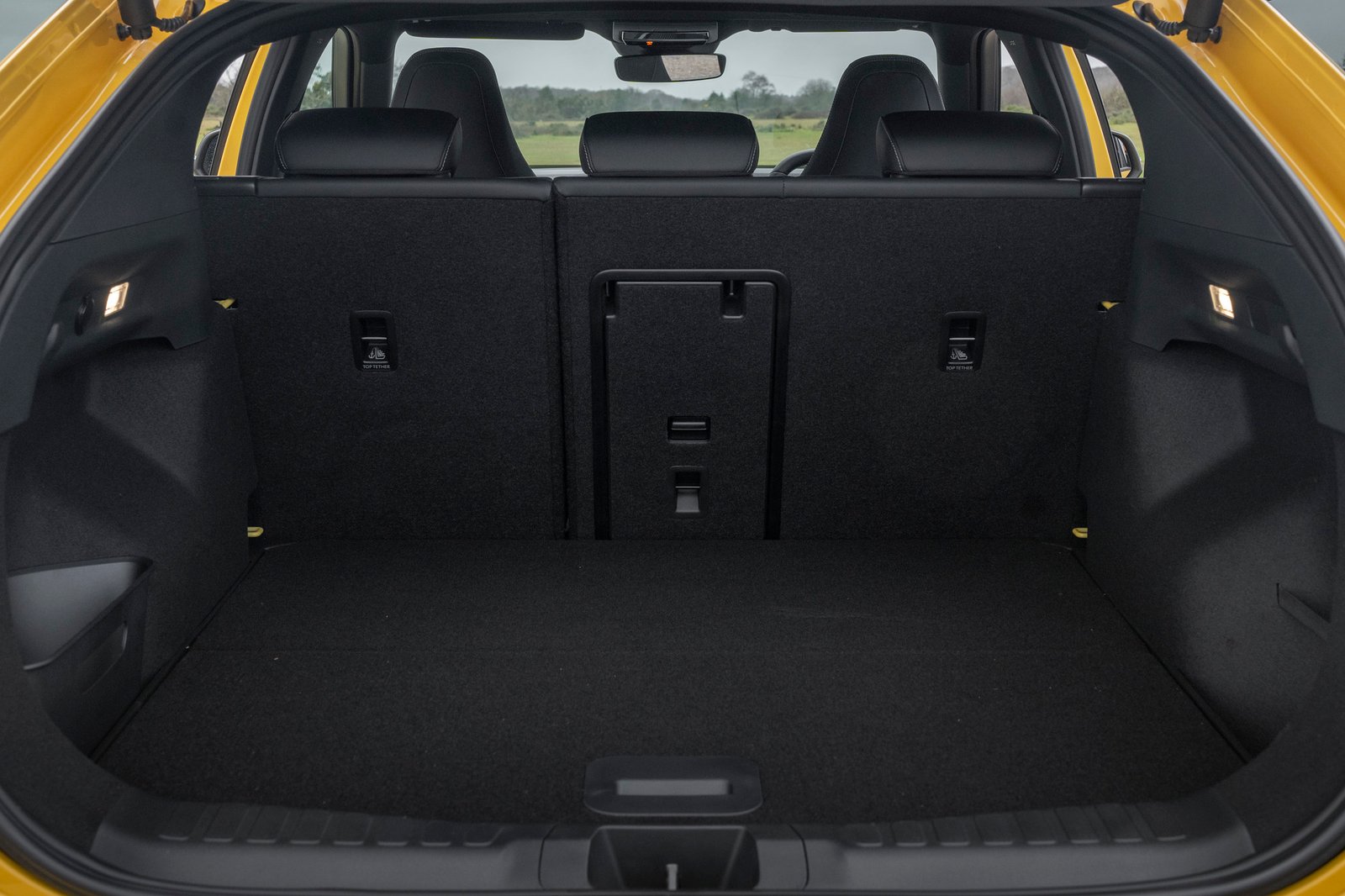
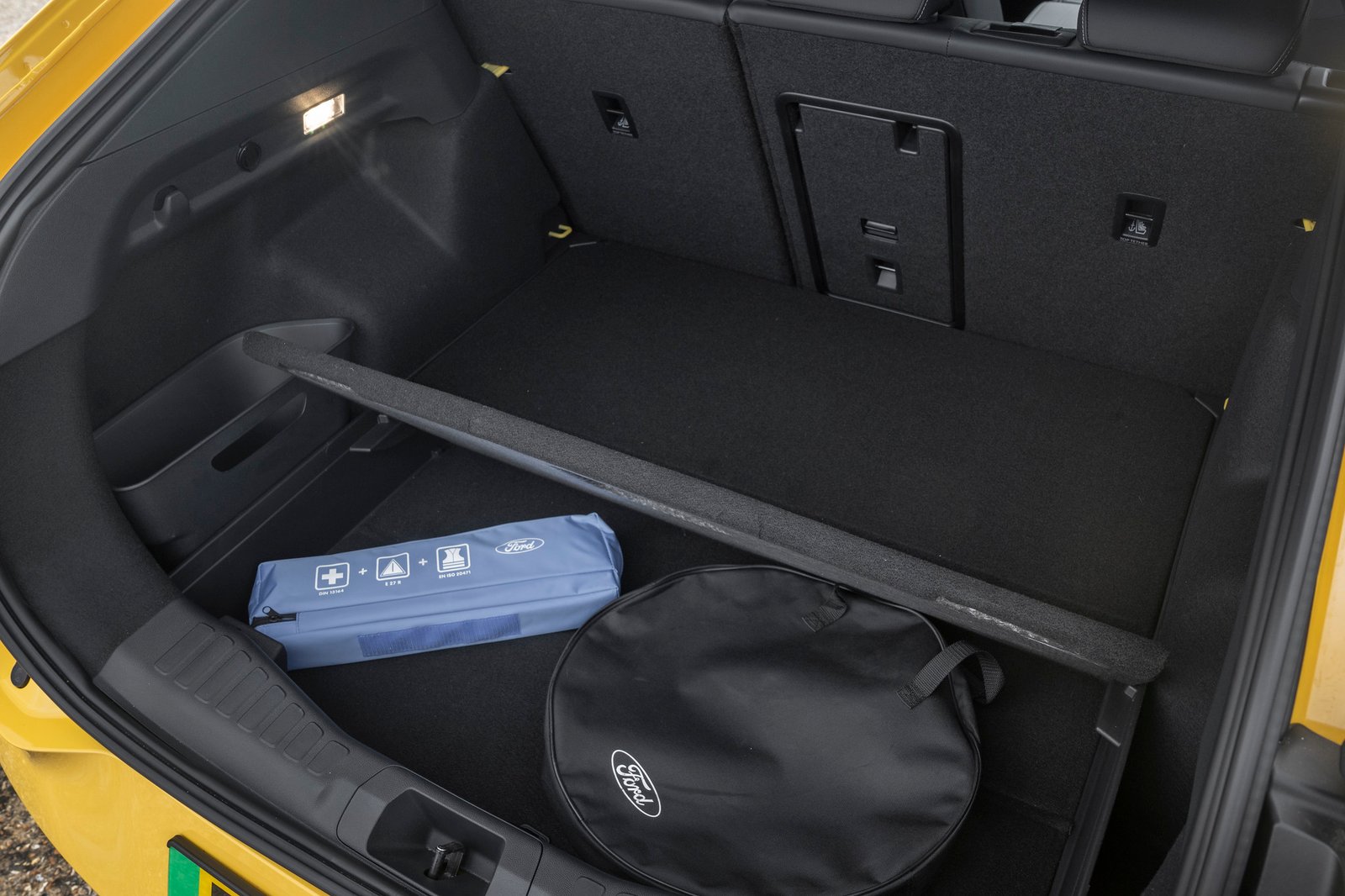
Family buyers will find plenty to like here. The boot offers an impressive 567 litres of luggage space, comfortably exceeding many direct rivals. The opening is wide and usefully shaped, making it easy to load larger items, while the low load lip helps when handling heavier luggage.
Fold the rear seats down and capacity increases significantly, creating a large, practical load area capable of swallowing bikes, furniture packs or holiday luggage without complaint.
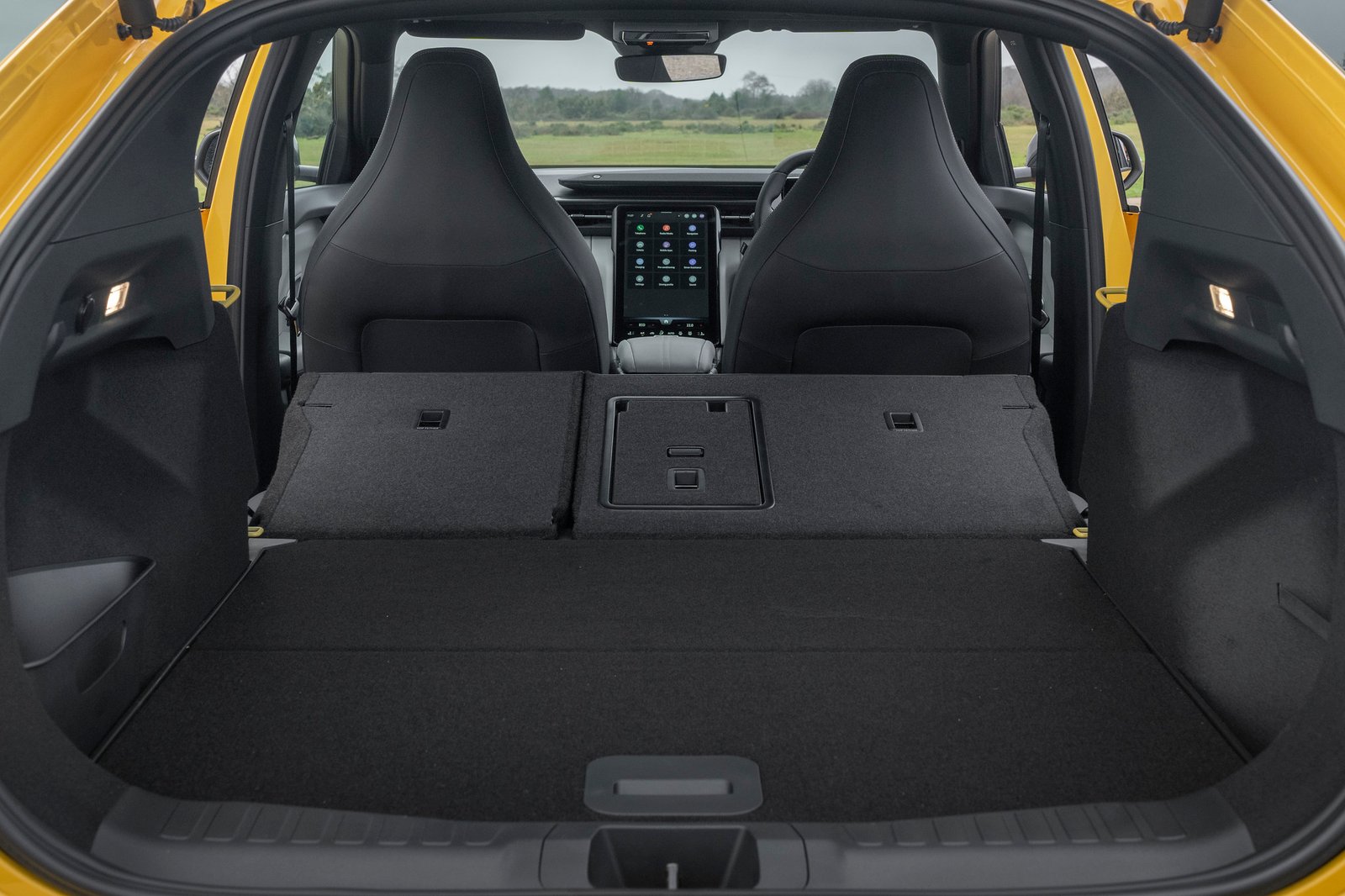
The sloping rear window does slightly limit vertical loading space compared with a more traditional SUV, but not enough to become a genuine issue in everyday use.
One omission is the lack of a rear wiper. While this undoubtedly helps the styling, Scottish winters quickly reveal why rear wipers remain useful inventions.
Technology and Safety
Technology is one of the Capri’s strongest areas.
The SYNC infotainment system is among the better systems currently available, offering wireless Apple CarPlay and Android Auto, cloud-connected navigation and over-the-air updates.
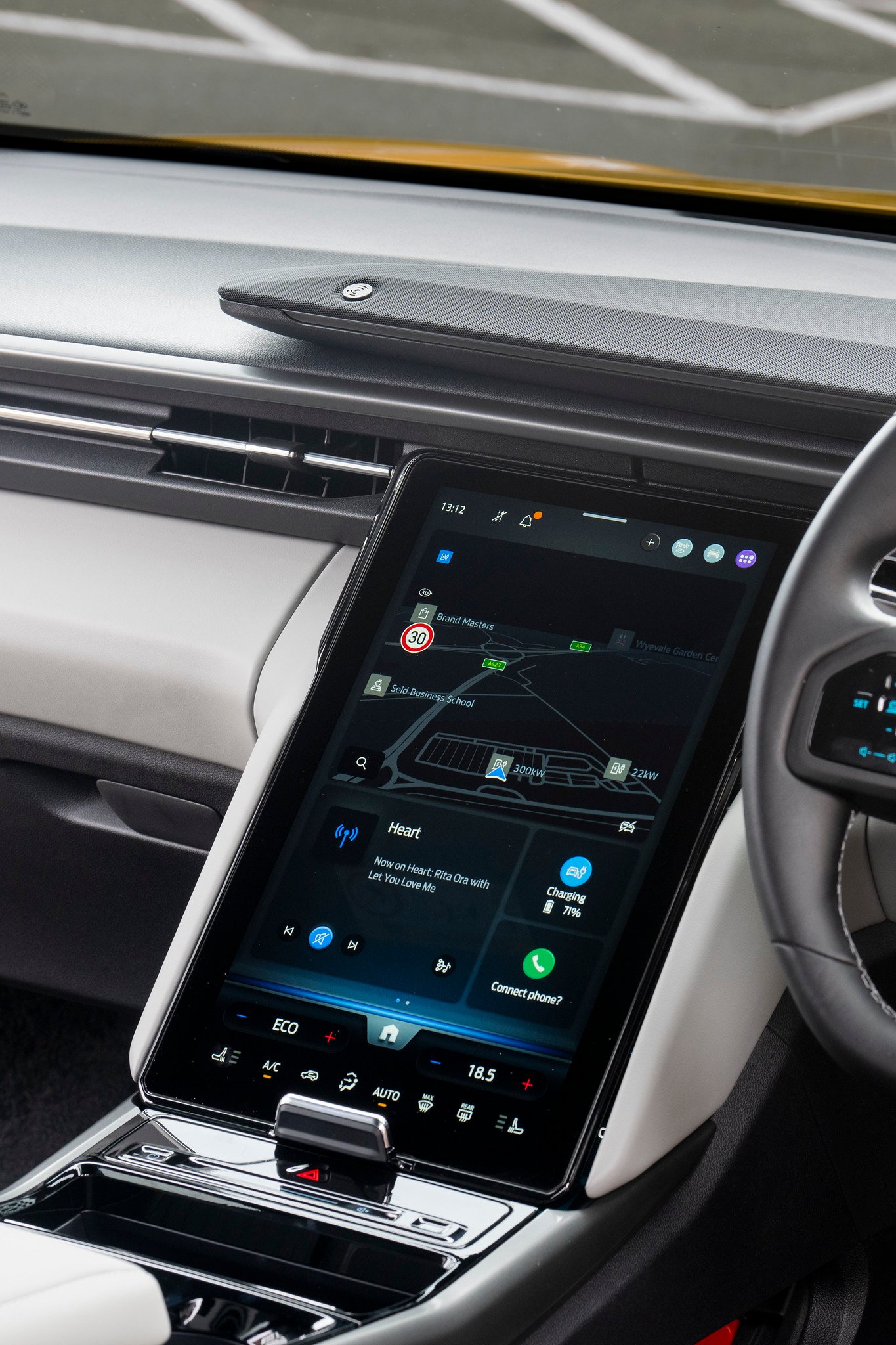
For 2026, the software has been comprehensively updated with a new Android-based operating system. The refreshed graphics are cleaner, navigation screens are easier to interpret and parking camera views are more useful than before. The ability to organise applications into folders may sound like a small change, but it helps make the system feel more modern and easier to live with on a daily basis.
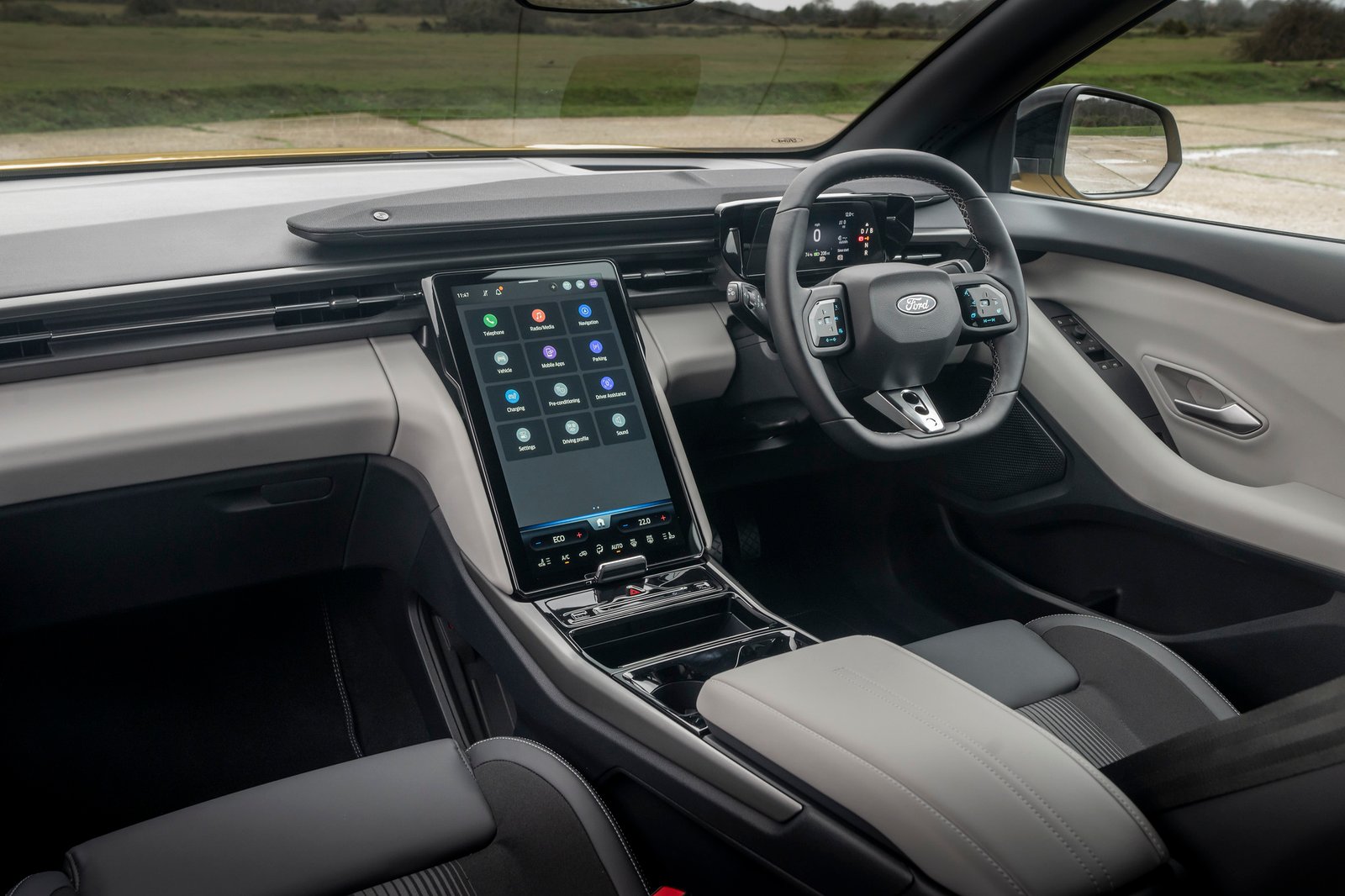
The optional Driver Assistance Pack fitted to the test car adds a head-up display, 360-degree camera system, lane centring and active lane change assist. These features work well and feel genuinely useful rather than simply existing to pad out a specification sheet.
One-pedal driving is now fitted as standard across the range, making urban driving easier and allowing more efficient energy recovery. Meanwhile, the new Driver State Assist system adds an extra layer of safety by monitoring driver attention and intervening if it detects a potentially serious medical event or lack of driver input.
The adaptive cruise control is particularly impressive. Smooth, intelligent and less abrupt than many rival systems, it reduces fatigue on longer motorway journeys without constantly drawing attention to itself. Definitely a winning improvement.
The Bang & Olufsen audio system also deserves a mention. With ten speakers, a soundbar and subwoofer, it delivers excellent clarity and depth.
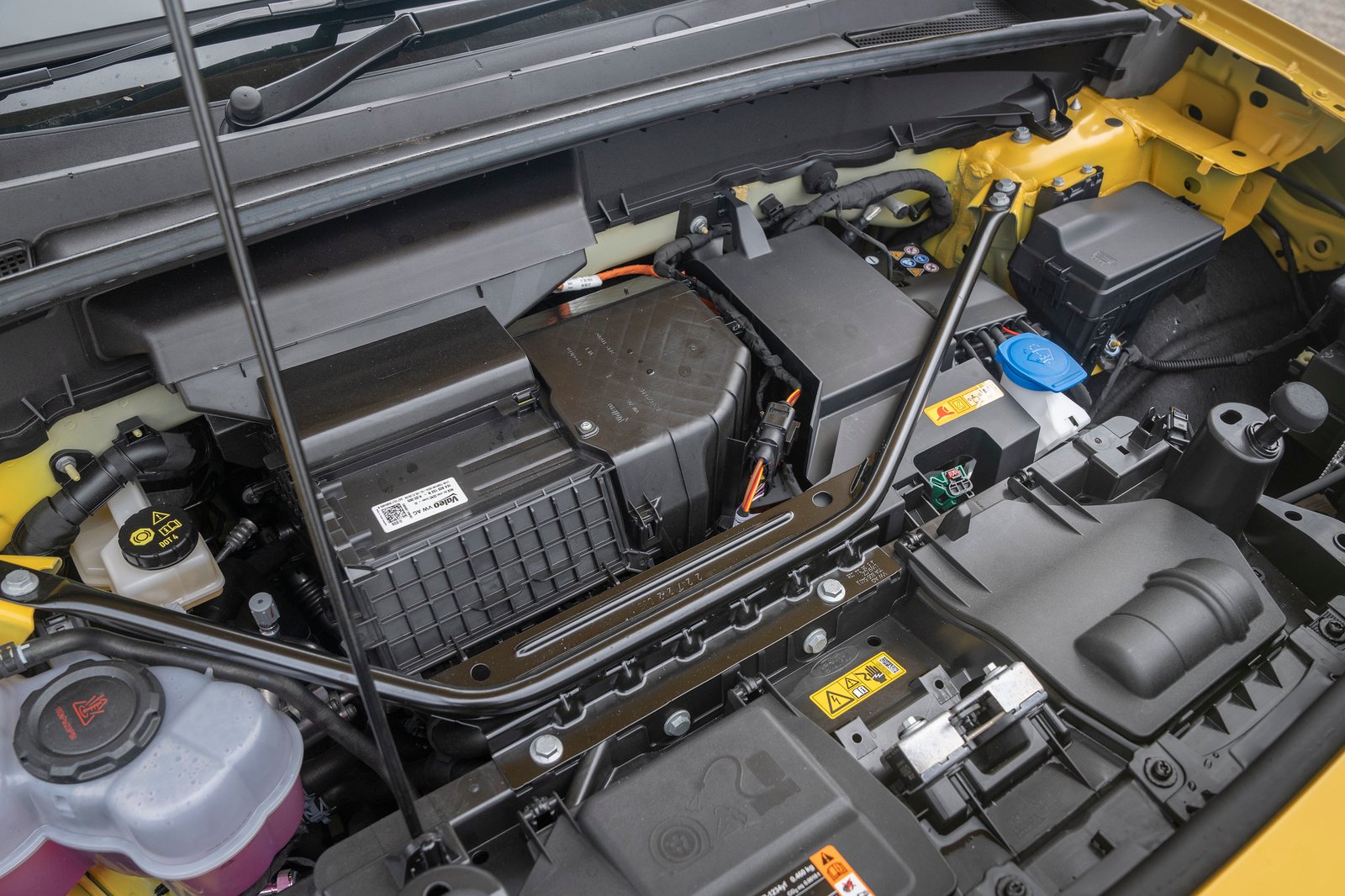
Safety provision is comprehensive, with lane keeping assistance, blind spot monitoring, traffic sign recognition, wrong-way alert, parking sensors and a rear-view camera all fitted as standard.
Driving
This is where expectations need careful management. Ford talks about the Capri’s sporting heritage, and visually the lower roofline suggests something more dynamic than a conventional SUV.
In reality, the Capri’s strengths lie elsewhere. The dual-motor powertrain is undeniably quick. The instant shove from 679Nm of torque makes overtaking effortless, while the 5.3-second sprint to 62mph is more than enough to surprise unsuspecting passengers.
Like many EVs, acceleration feels stronger than the numbers suggest. The initial response is immediate, and progress remains brisk well beyond legal motorway speeds.
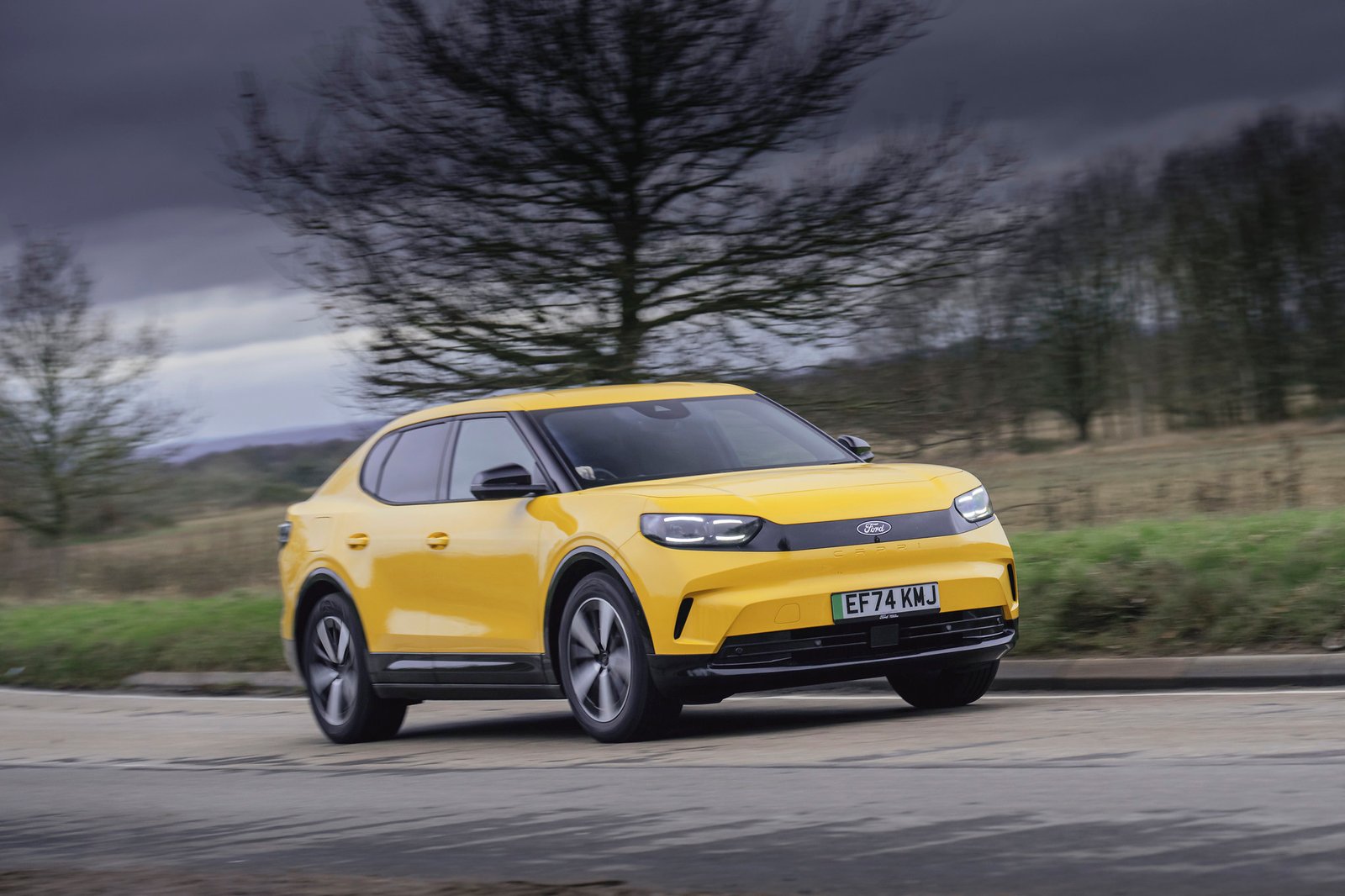
Yet despite this performance, the Capri never really feels sporty.
Through corners, you become aware of its considerable weight. Grip levels are strong, but there’s little sense of connection between driver and road. The steering is accurate and easy to use, but feedback is limited.
The result is a car that’s competent rather than engaging.
That may disappoint drivers hoping for a modern interpretation of the original Capri’s character. On the other hand, it makes perfect sense for the sort of family EV Ford is actually selling.
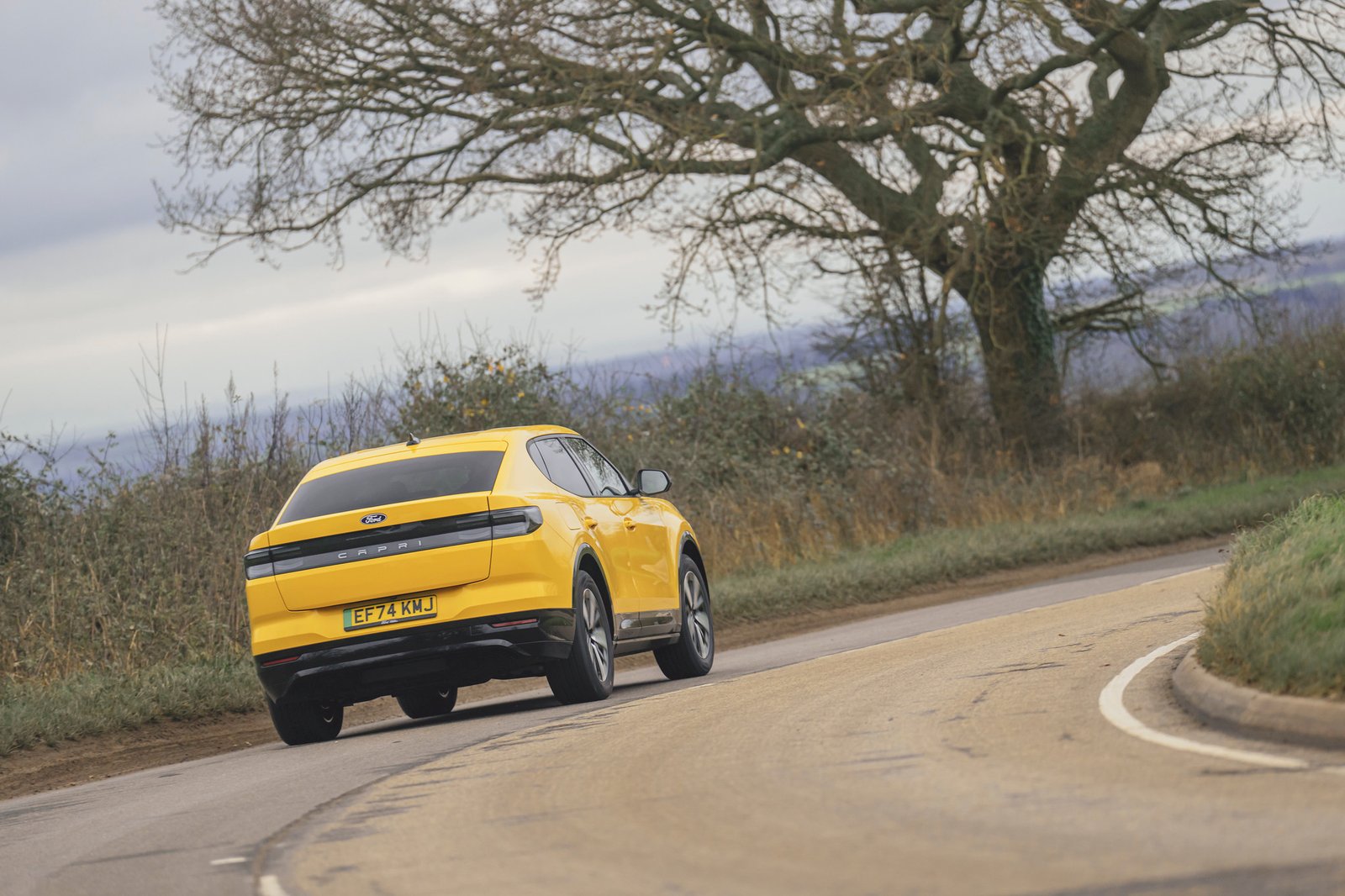
Ride quality strikes a reasonable compromise. The Capri sits 20mm lower than the Explorer, which improves appearance and body control, but it also means sharper road imperfections make themselves known more readily. On the 21-inch wheels fitted to this test car, poorer road surfaces occasionally generate noticeable thumps and jolts. Even so, comfort remains good overall.
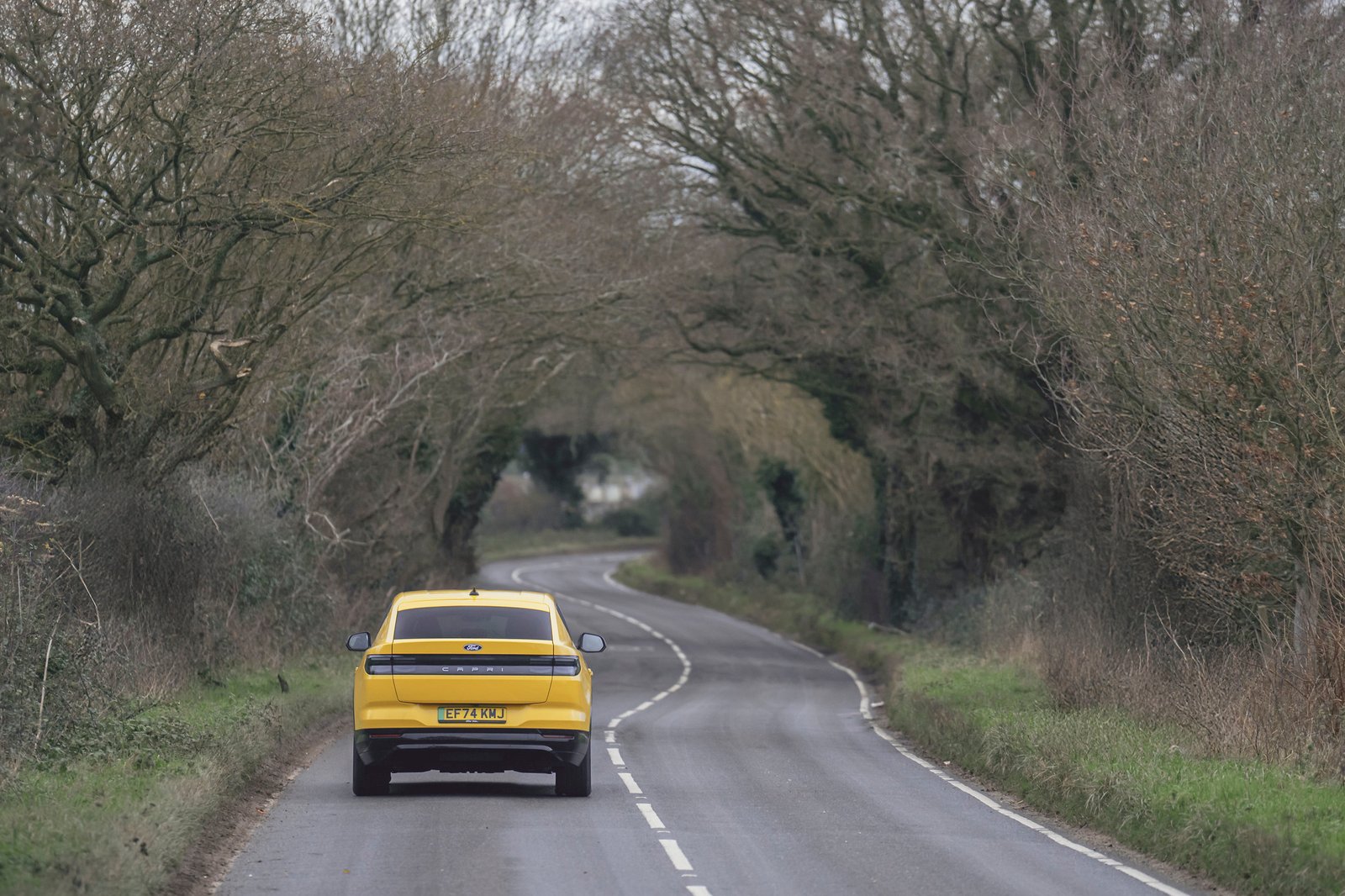
Where the Capri really excels is on longer journeys. Motorways are dispatched with ease thanks to excellent refinement, low noise levels and effective driver assistance systems. It settles into a relaxed cruising rhythm that suits its character perfectly.
One area that could be improved is braking feel. The pedal travels further than expected before meaningful deceleration occurs, creating an initially disconnected sensation. It’s something drivers quickly adapt to, but it never feels entirely natural.
Range and Charging
The Premium AWD uses a 77kWh usable battery and delivers a claimed WLTP range of 347 miles.
As ever, real-world results will vary depending on conditions, but the motorway figure of 276 miles feels realistic and useful.
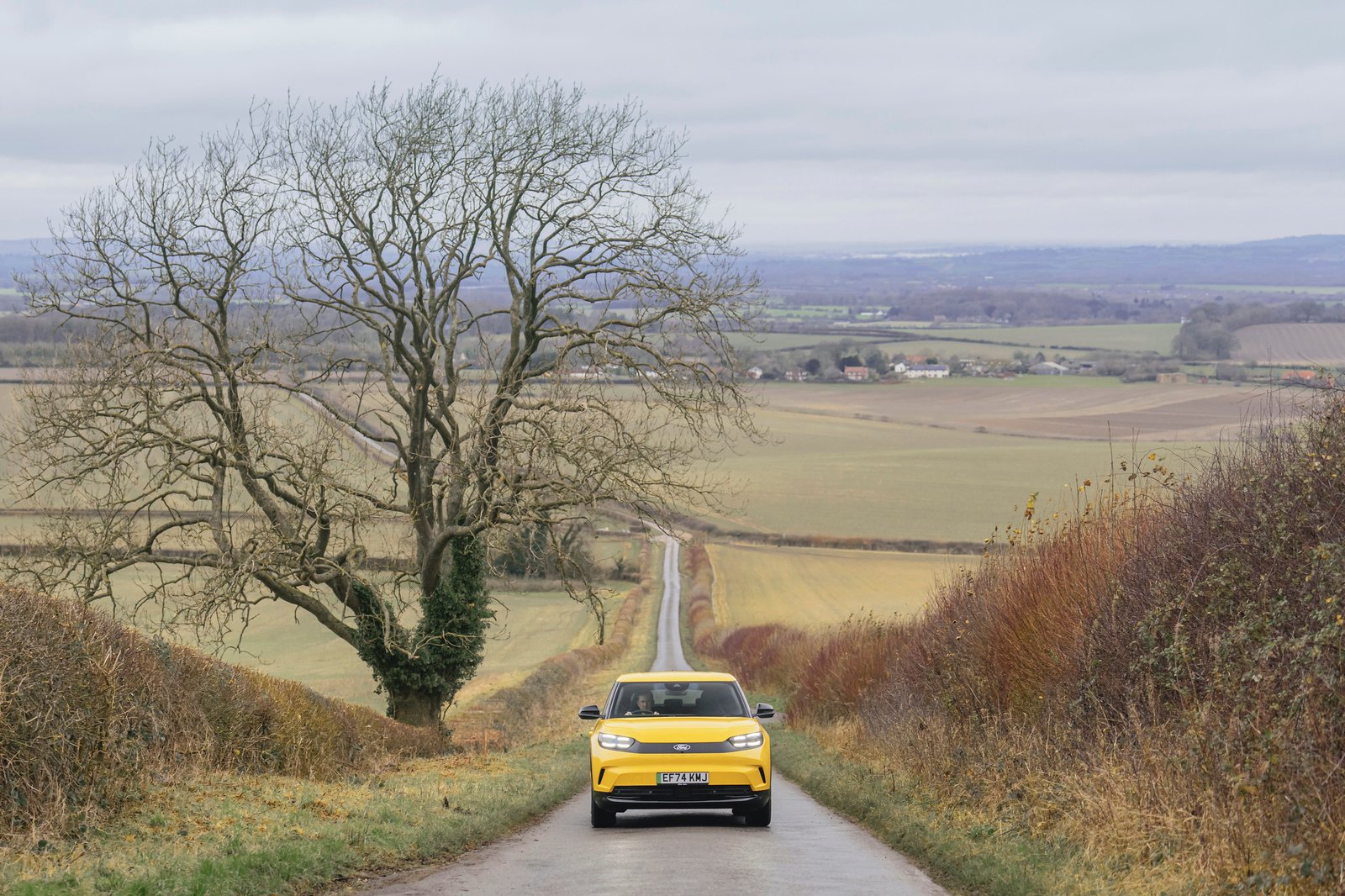
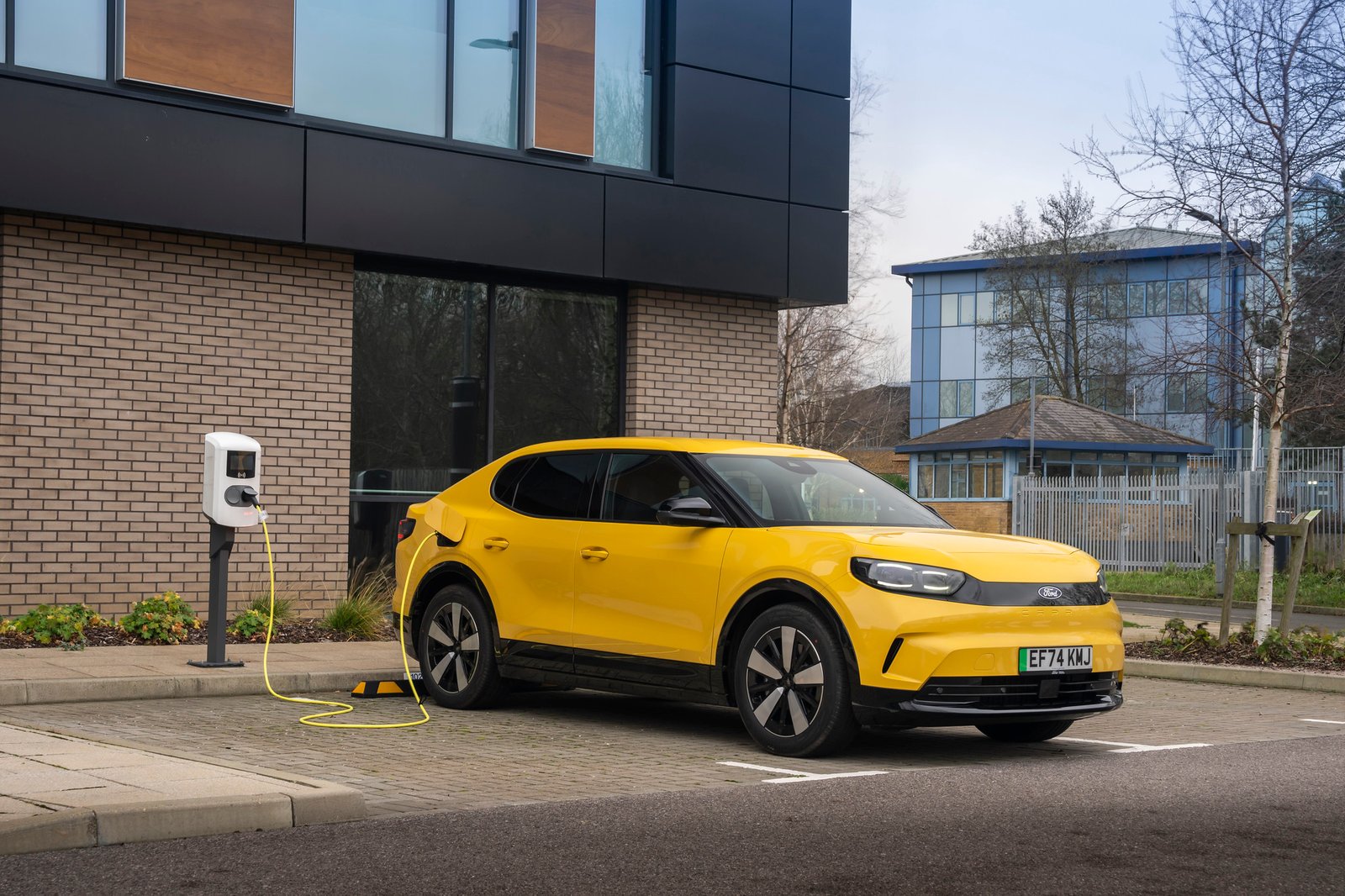
Charging performance is competitive rather than class-leading. DC charging peaks at 135kW on this version, allowing a 10-80% charge in around 28 minutes under ideal conditions.
The optional heat pump fitted to the test vehicle is a worthwhile addition for UK buyers, helping preserve range during colder weather by reducing the energy required to heat the cabin.
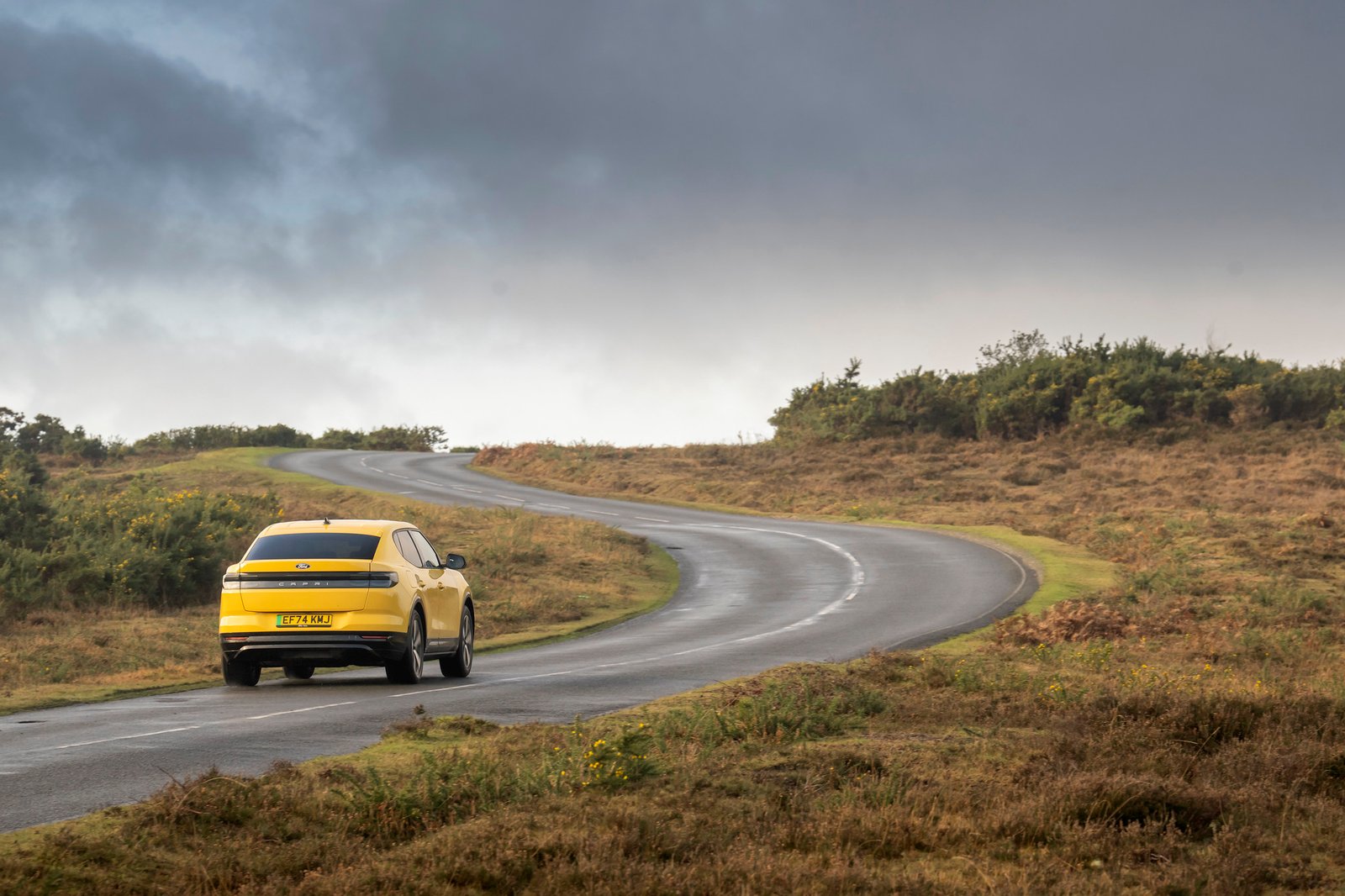
Ford’s route planning and BlueOval charging integration also make long-distance travel straightforward, with access to an extensive charging network across the UK and Europe.
The addition of Pro Power Onboard for 2026 also adds another layer of practicality. With up to 2.3kW available, owners can power everything from camping equipment and power tools to electric bikes and laptops directly from the vehicle’s battery.
Rivals
The Capri enters a fiercely competitive market.
The Kia EV6 remains the more engaging driver’s car and offers faster charging. The Tesla Model Y provides impressive efficiency and a huge charging network. The Volkswagen ID.5 offers similar technology in a slightly different package, while the Renault Scenic E-Tech majors on efficiency and value.
Where the Capri stands out is in its blend of practicality, refinement and equipment. It may not dominate any single category, but it performs consistently well across all of them.
Verdict
The biggest challenge facing the Ford Capri remains its name.
But with the 2026 updates, Ford has strengthened the areas that matter most to buyers – range, technology, efficiency and day-to-day usability. As a result, the Capri feels more complete and more competitive than before.
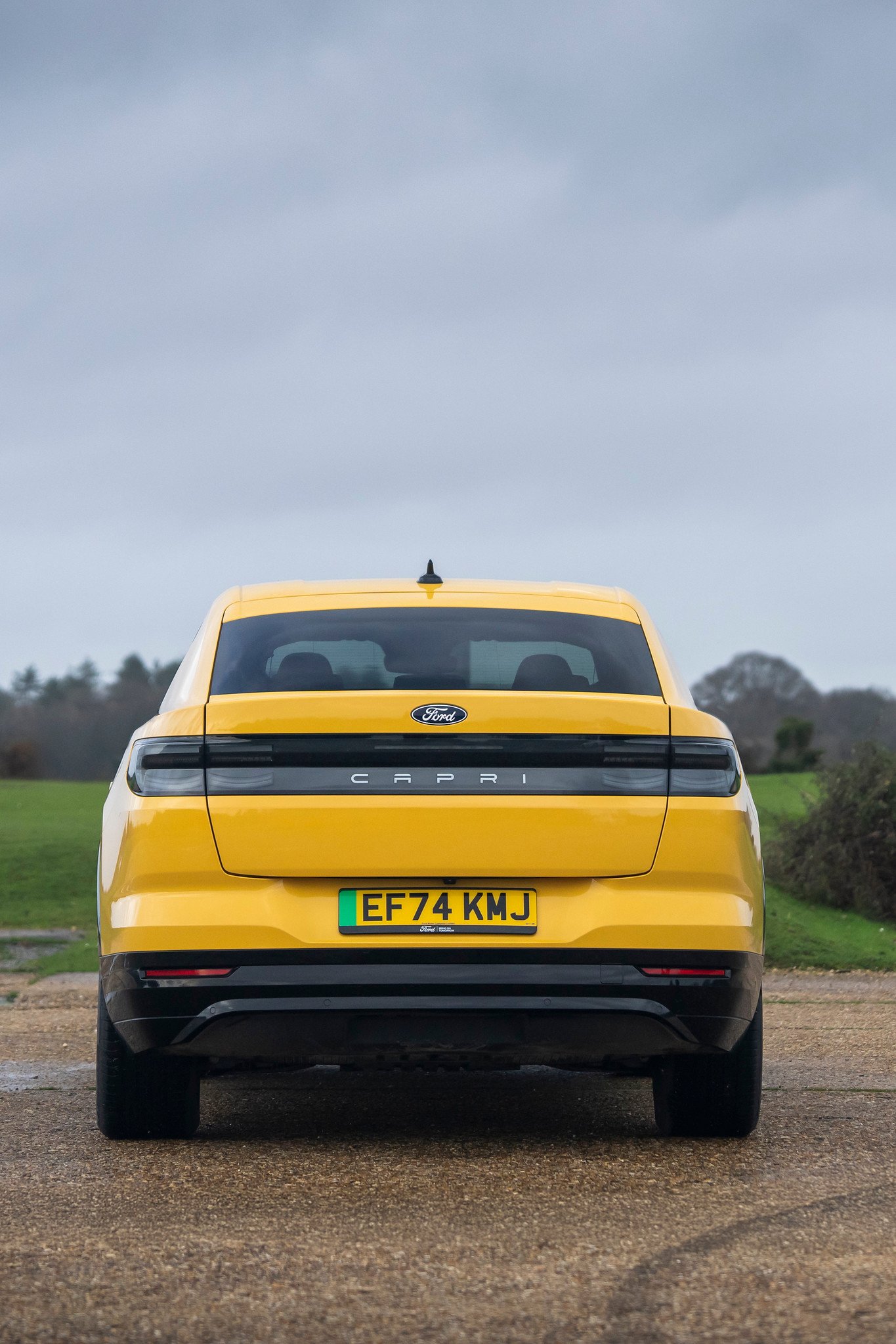
Had Ford launched exactly the same car under a different badge, much of the controversy would disappear overnight. Viewed through the lens of nostalgia, it’s difficult not to feel disappointed that the Capri name has been applied to an electric crossover.
Viewed objectively, however, it’s a good car.
The Premium AWD combines strong performance, generous equipment, excellent practicality and impressive long-distance refinement in a package that feels well suited to modern family life.
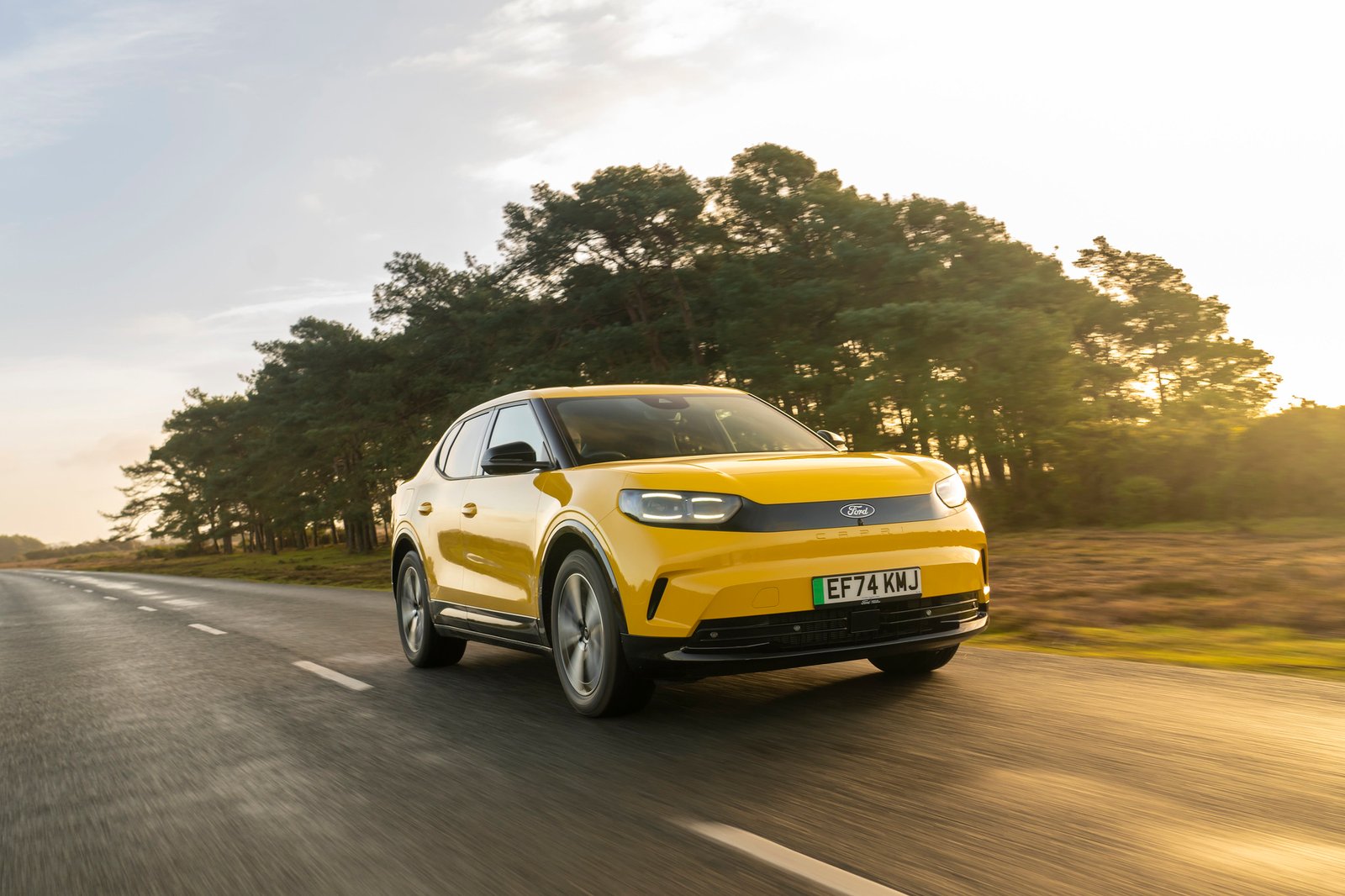
It’s not especially sporty despite its styling, and some of the touchscreen-heavy controls remain frustrating. But these shortcomings are relatively minor when viewed against the Capri’s overall strengths.
Final thought: Forget the badge for a moment and judge it on what it is, not what it isn’t. Do that, and you’ll find a capable, comfortable and surprisingly likeable electric crossover.

At a Glance
- Make & Model: Ford Capri Premium AWD
- Price (OTR): £56,185 (£59,185 as tested)
- Powertrain: Dual-motor all-wheel drive
- Power: 340 PS
- Torque: 679 Nm
- Battery: 77 kWh usable
- 0–62 mph: 5.3 seconds
- Top Speed: 111 mph
- WLTP Range: 347 miles
- Motorway Range: 276 miles
- Charging: 10–80% in 28 minutes (135 kW DC)
- Boot Capacity: 567 litres
- New for 2026: Android-based infotainment, One-Pedal Drive, Pro Power Onboard, Reversing Assist, Park Assist with Memory