NEW car brands rarely move into flagship territory so quickly. Most establish themselves with accessible, volume-focused models before stepping up.
Omoda had already introduced itself to the UK with the smaller Omoda 5. The 9 SHS, however, signaled a clear escalation in ambition.

This is the brand’s range-topping SUV — a large, all-wheel-drive plug-in hybrid producing 449 bhp, capable of up to 90 miles of electric driving, and priced at £44,990 on the road. These are not cautious figures. They reflect confidence.
On paper, the value proposition is strong. The more important question is whether the engineering depth matches the specification sheet — because stepping from compact crossover to flagship SUV is a meaningful leap in expectation.
Overview
The Omoda 9 SHS (Super Hybrid System) sits at the top of the brand’s UK line-up, with the aforementioned Omoda 5 and newcomer, Omoda 7, sitting below it.
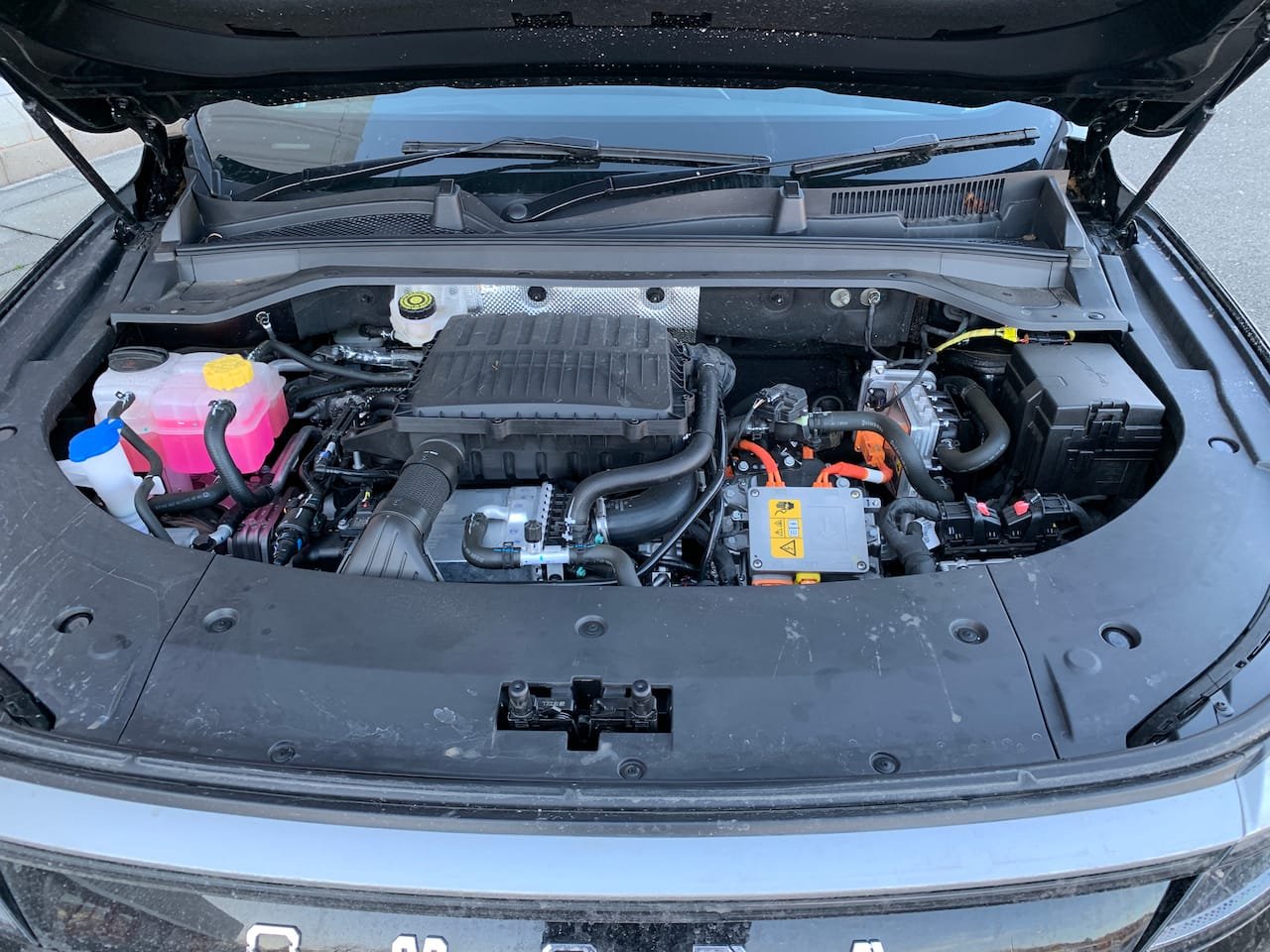
The 9 pairs a 1.5-litre turbocharged petrol engine with a three-speed Dedicated Hybrid Transmission and a multi-motor electric system, driving all four wheels.
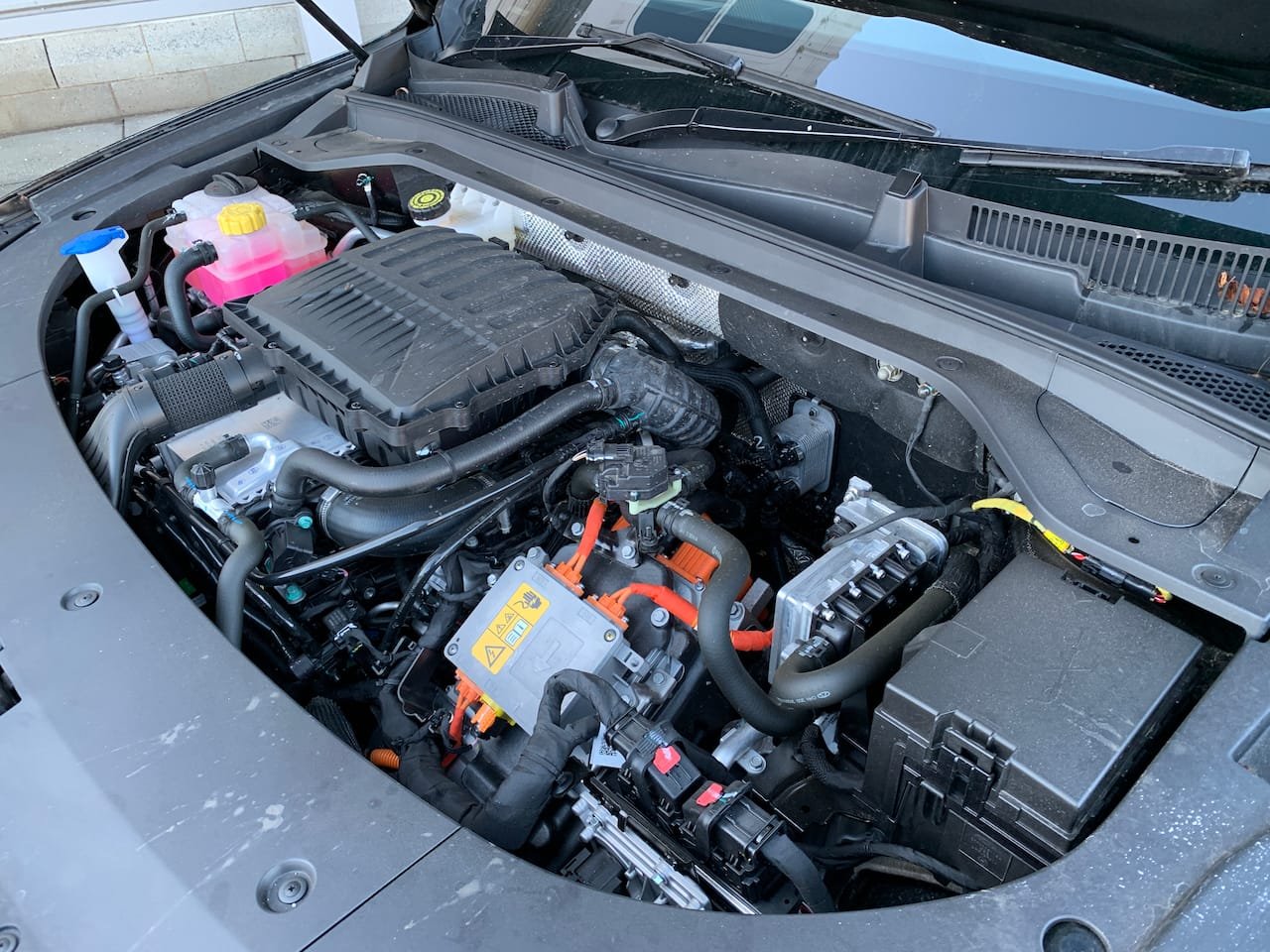
Maximum drive power is 449 bhp supported by a substantial 915Nm of torque available between 2,000 and 4,000rpm. The result is a 0–62mph time of 4.9 seconds — firmly within performance SUV territory — while top speed is limited to 111mph, an entirely appropriate ceiling for a car of this type.
What truly differentiates the Omoda 9 is its battery capacity. With a WLTP-rated electric range of 90 miles, it stretches the traditional boundaries of a plug-in hybrid.
For many drivers, weekday journeys could be completed almost entirely on electric power, with the petrol engine reserved for longer trips. With a full tank of fuel, the 9 is capable of exceeding 700 miles. Impressive.
The retail figure including VAT is £44,325. Adding £500 for delivery and £165 for VED brings the total on-the-road cost to £44,990. In a market where similarly sized SUVs frequently exceed £50,000 once specified, that positioning is deliberately tempting.
Design
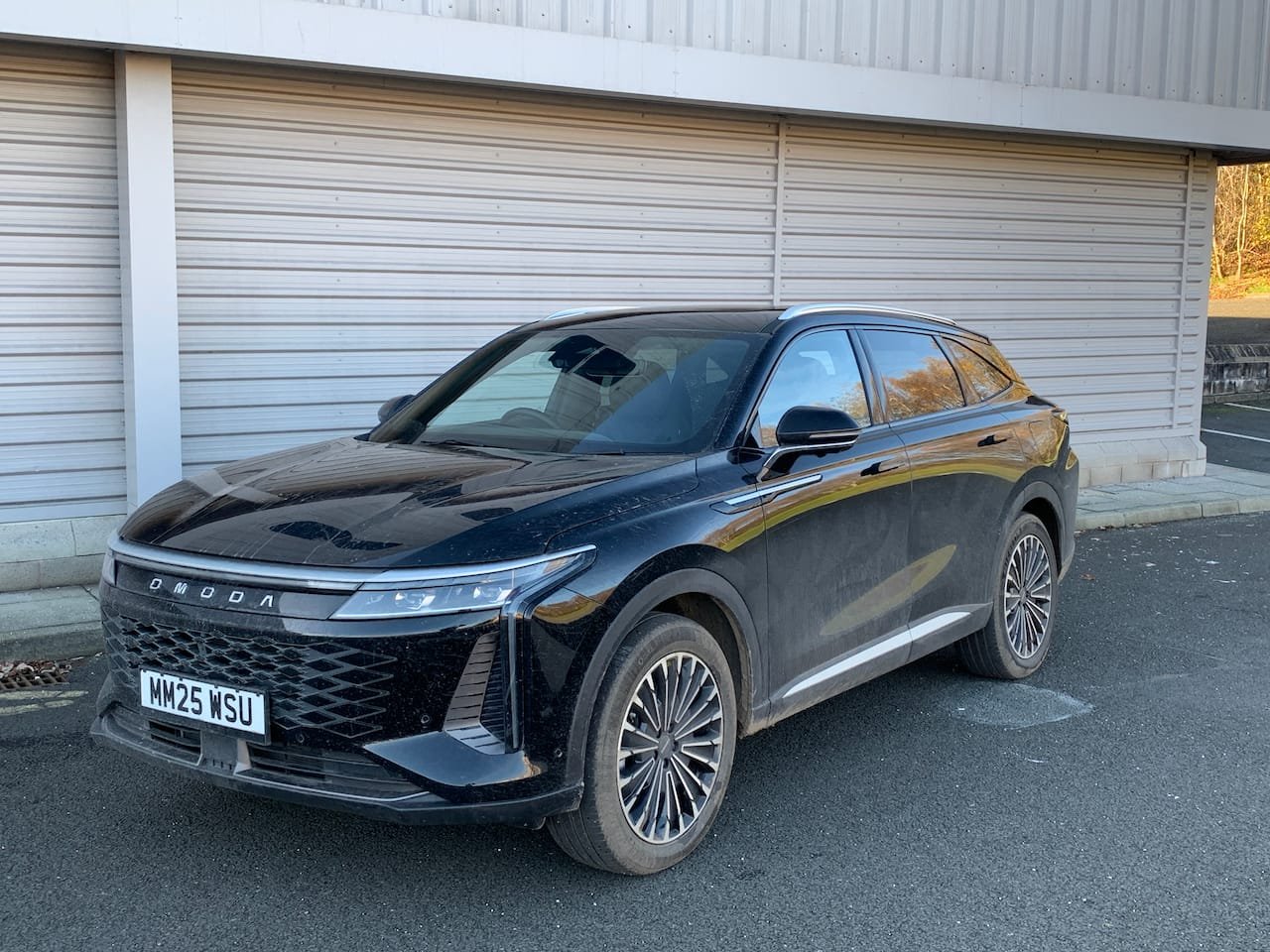
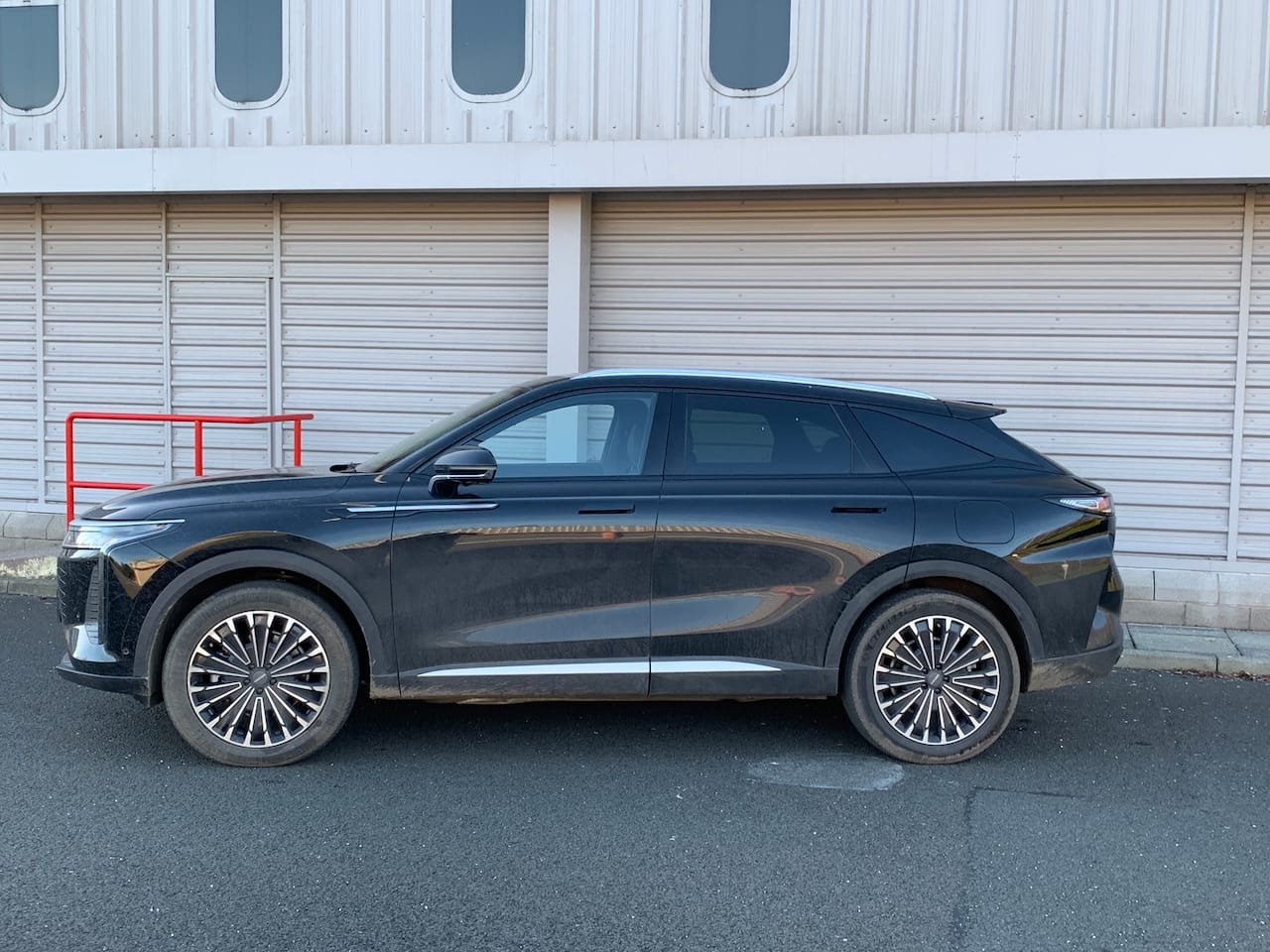
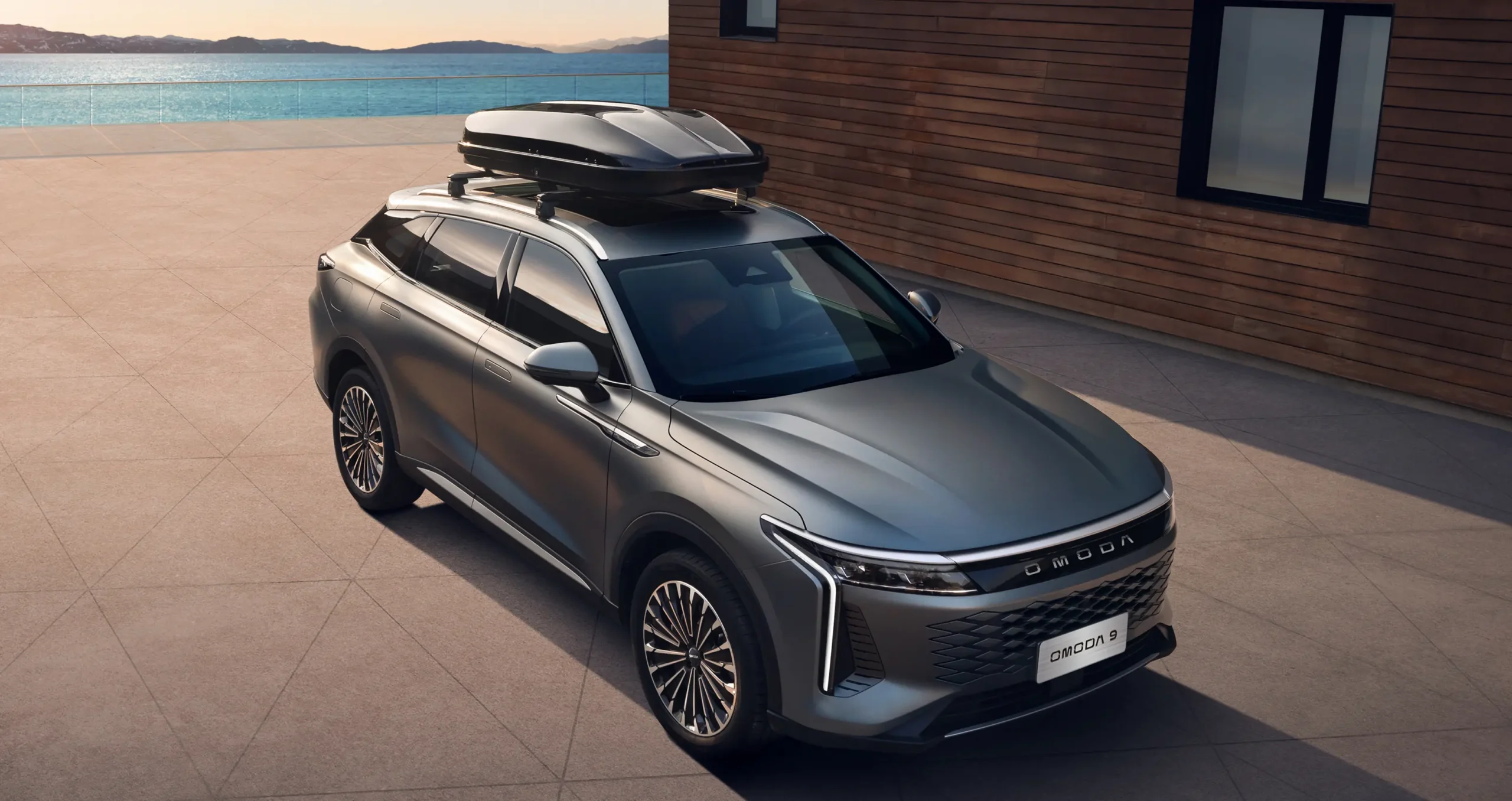
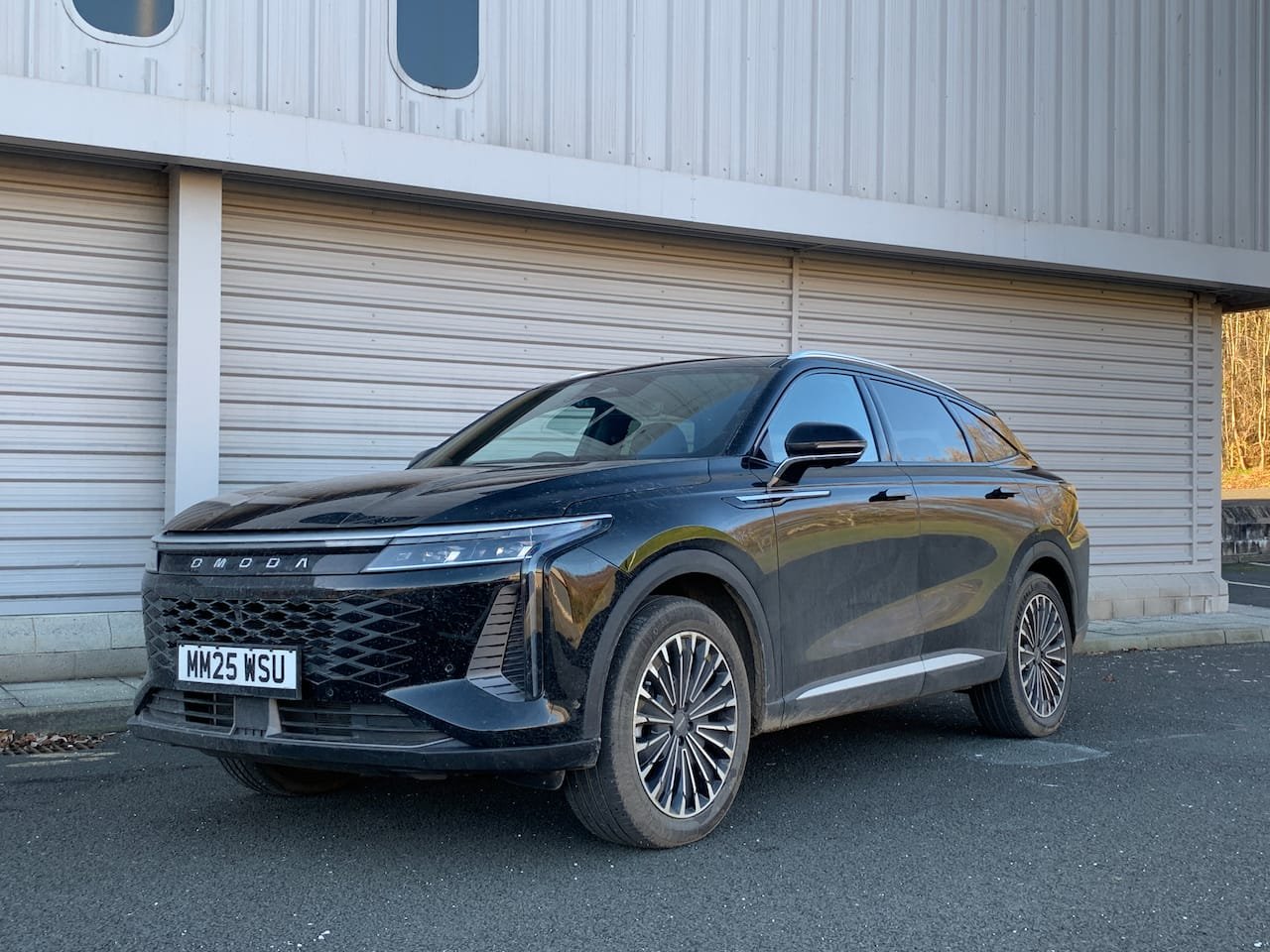
At 4,775mm long and 1,920mm wide, the Omoda 9 has clear presence. It occupies the space between traditional mid-size and larger family SUVs.
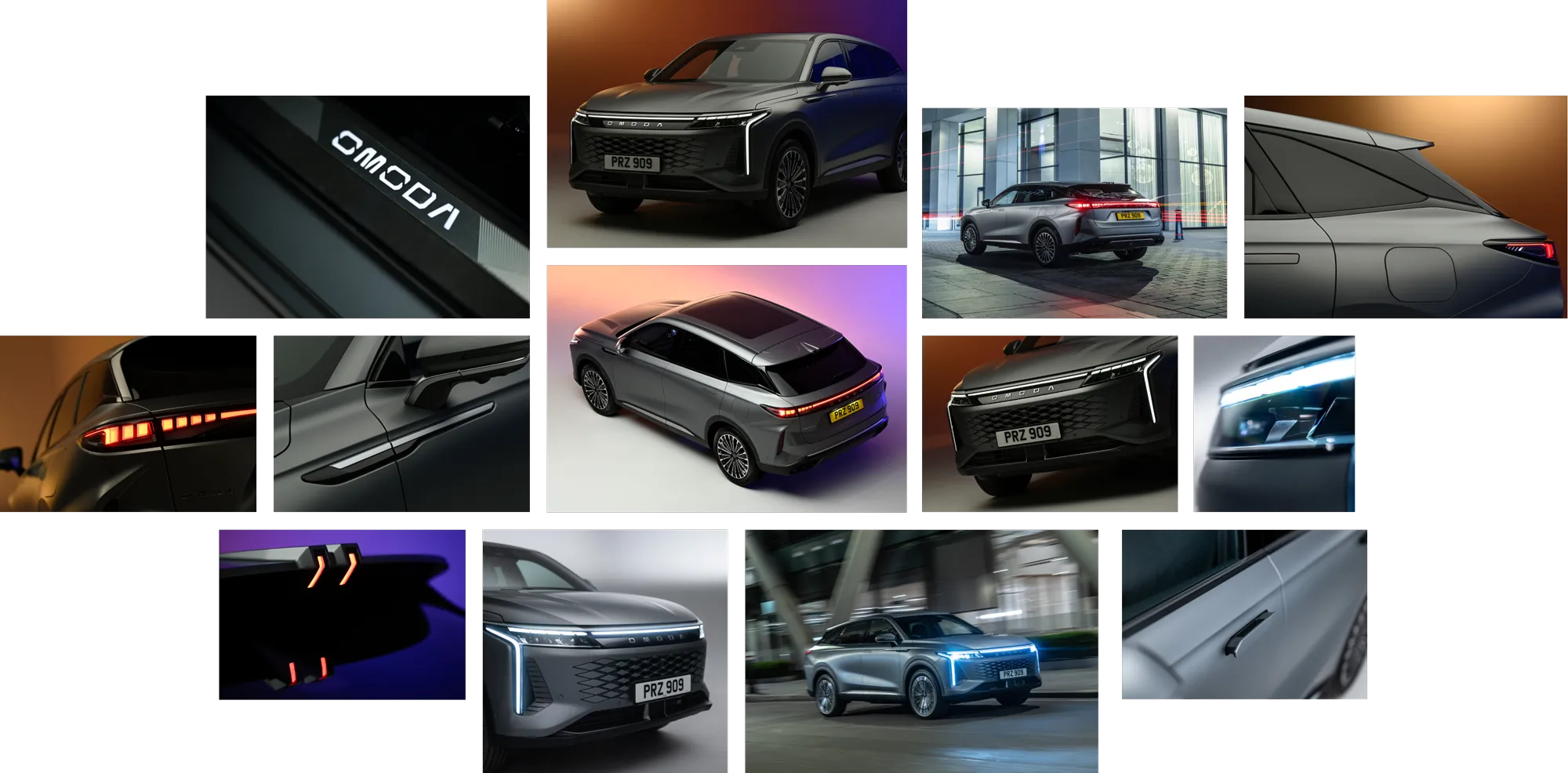
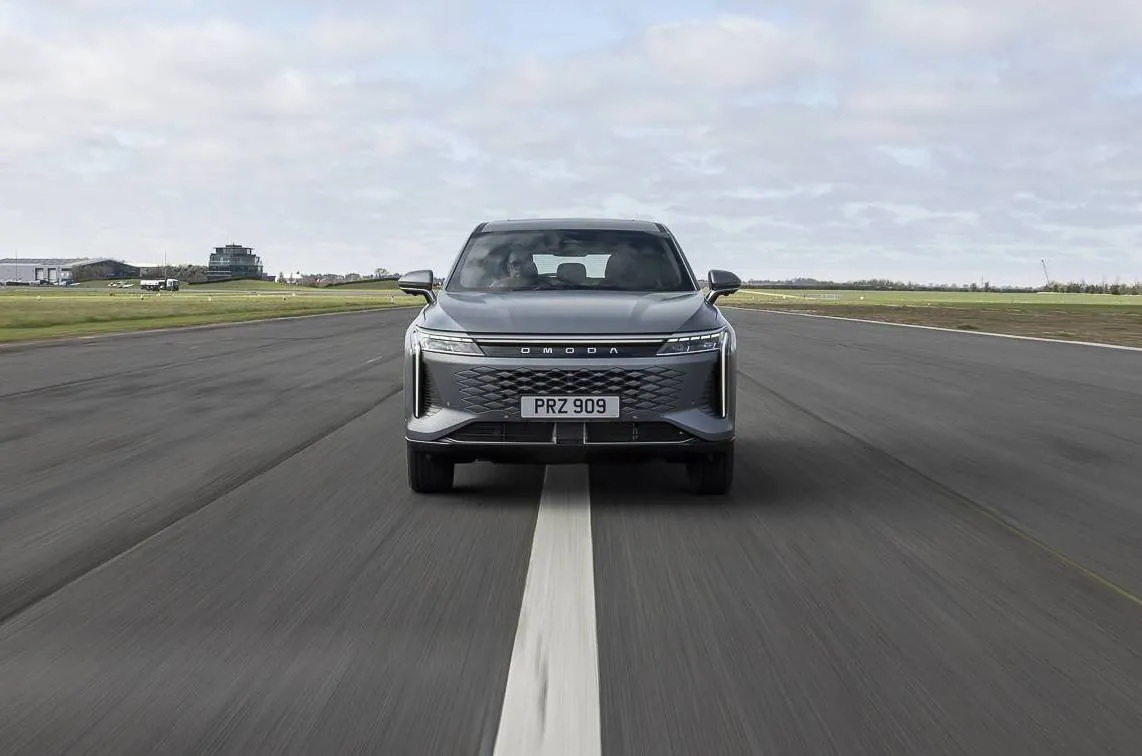
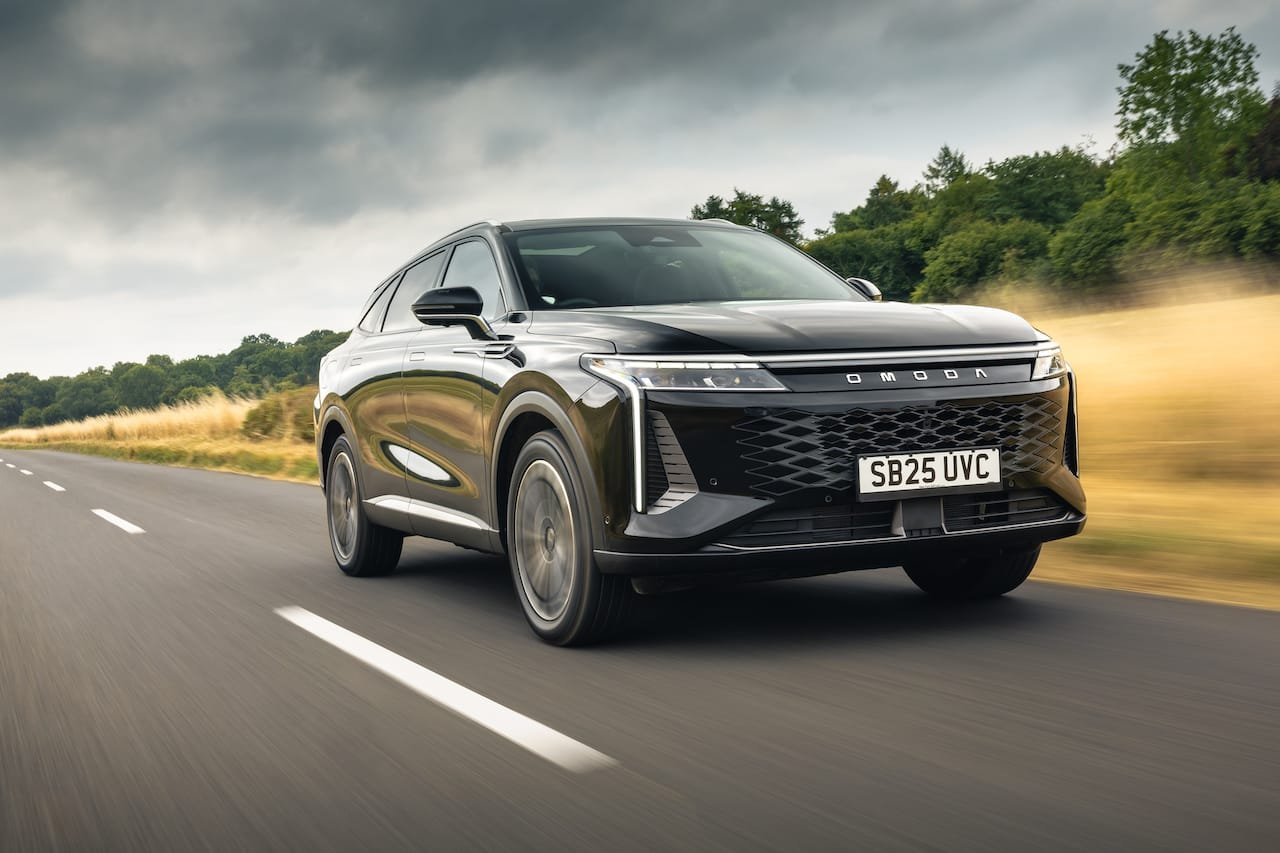
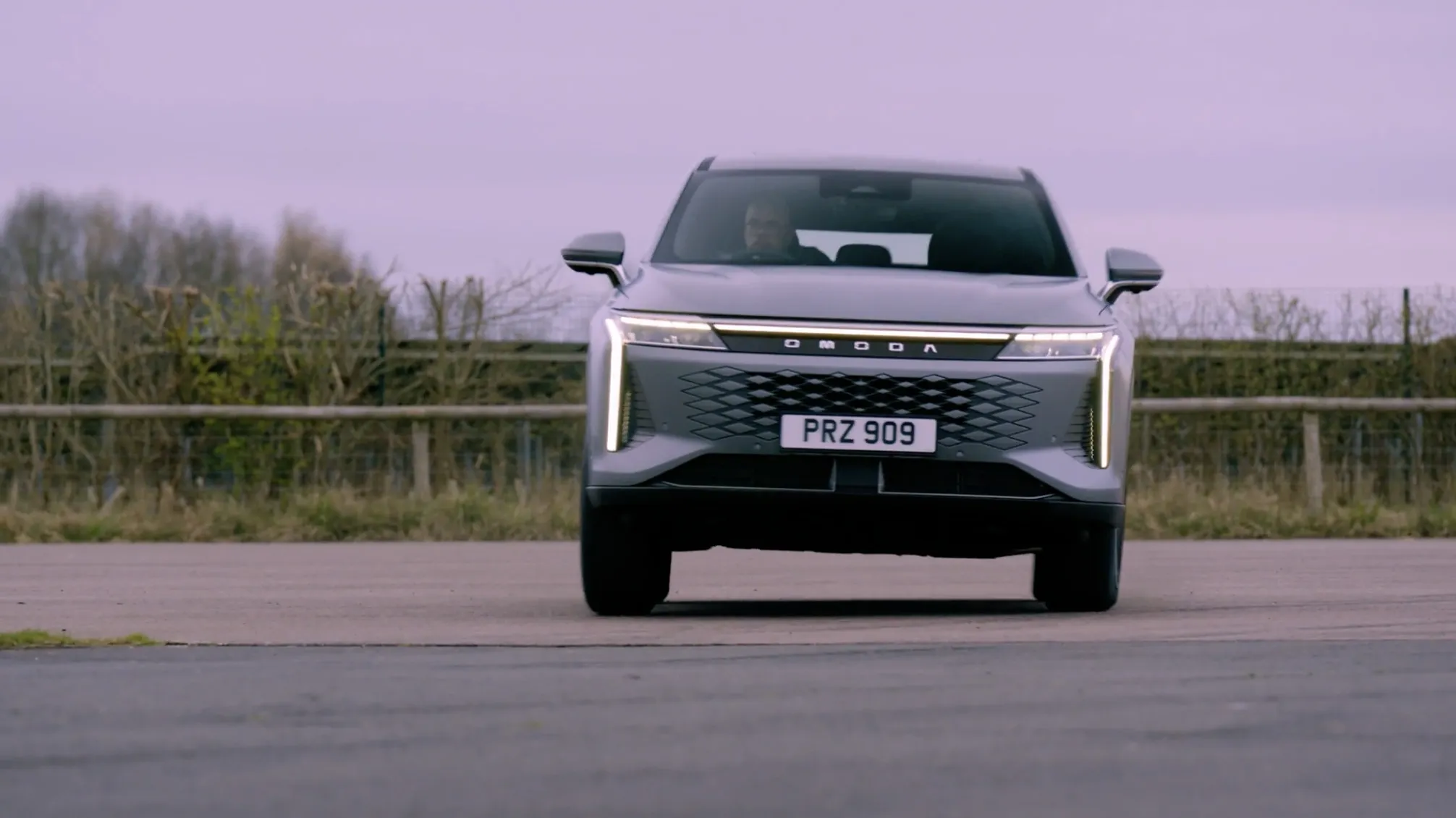
The front end is defined by a geometric grille and slim LED lighting that give the car a contemporary, almost concept-inspired appearance – although, these days, not so unique any more.
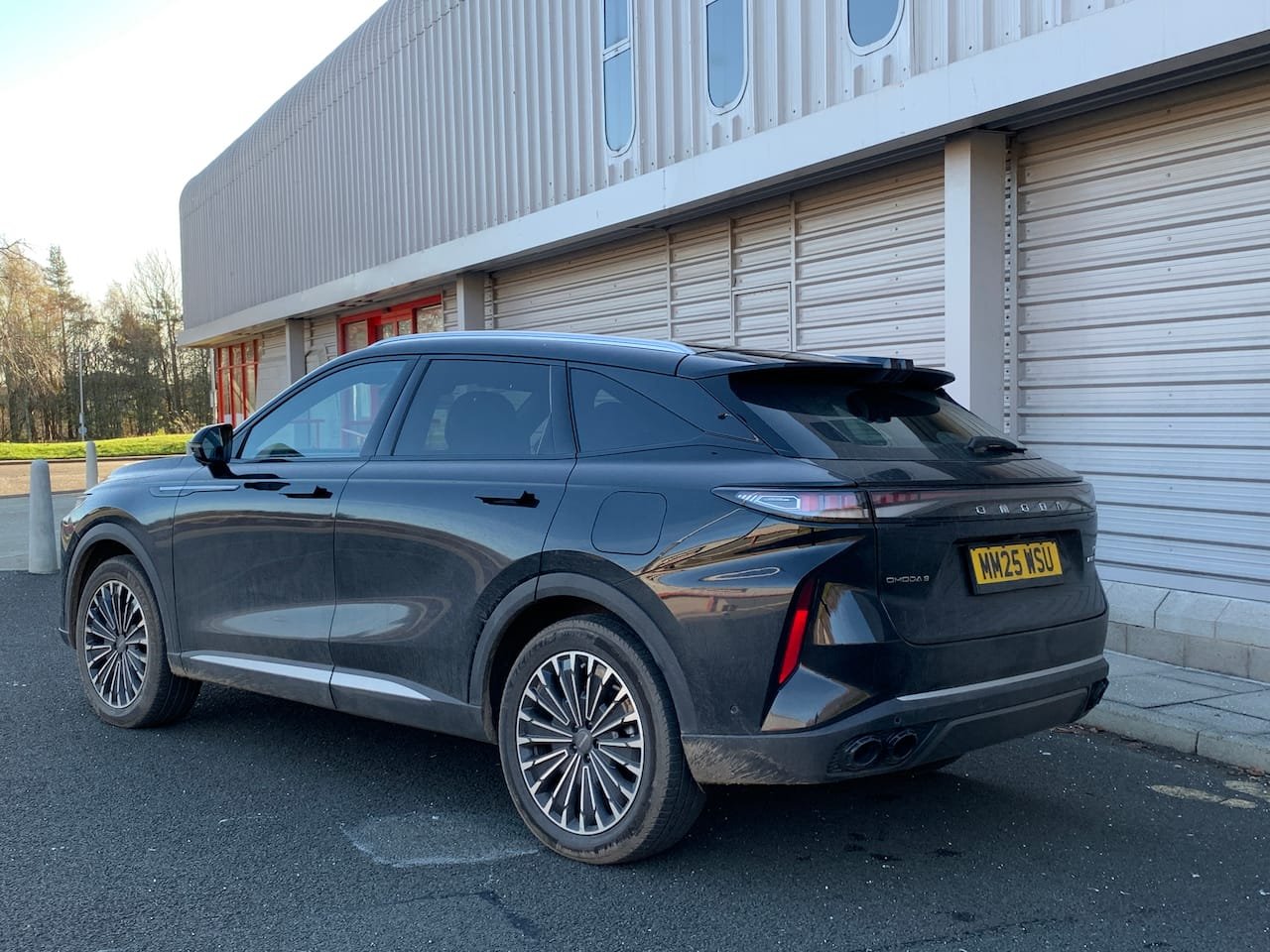
In profile, the proportions are well resolved and remind me of Range Rover Evoque with its sloping roofline and relatively shallow window depth.
With 210mm of ground clearance, it carries the stance buyers expect while maintaining balanced proportions.
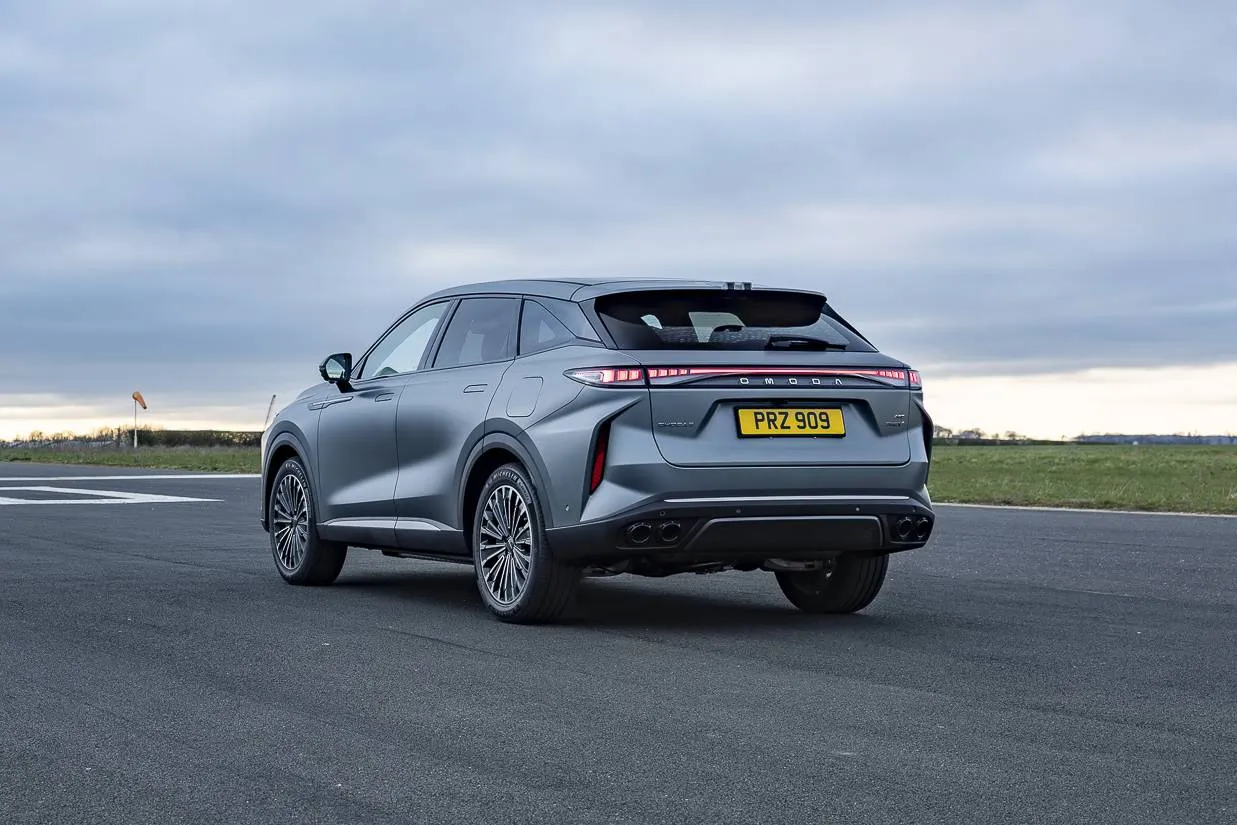
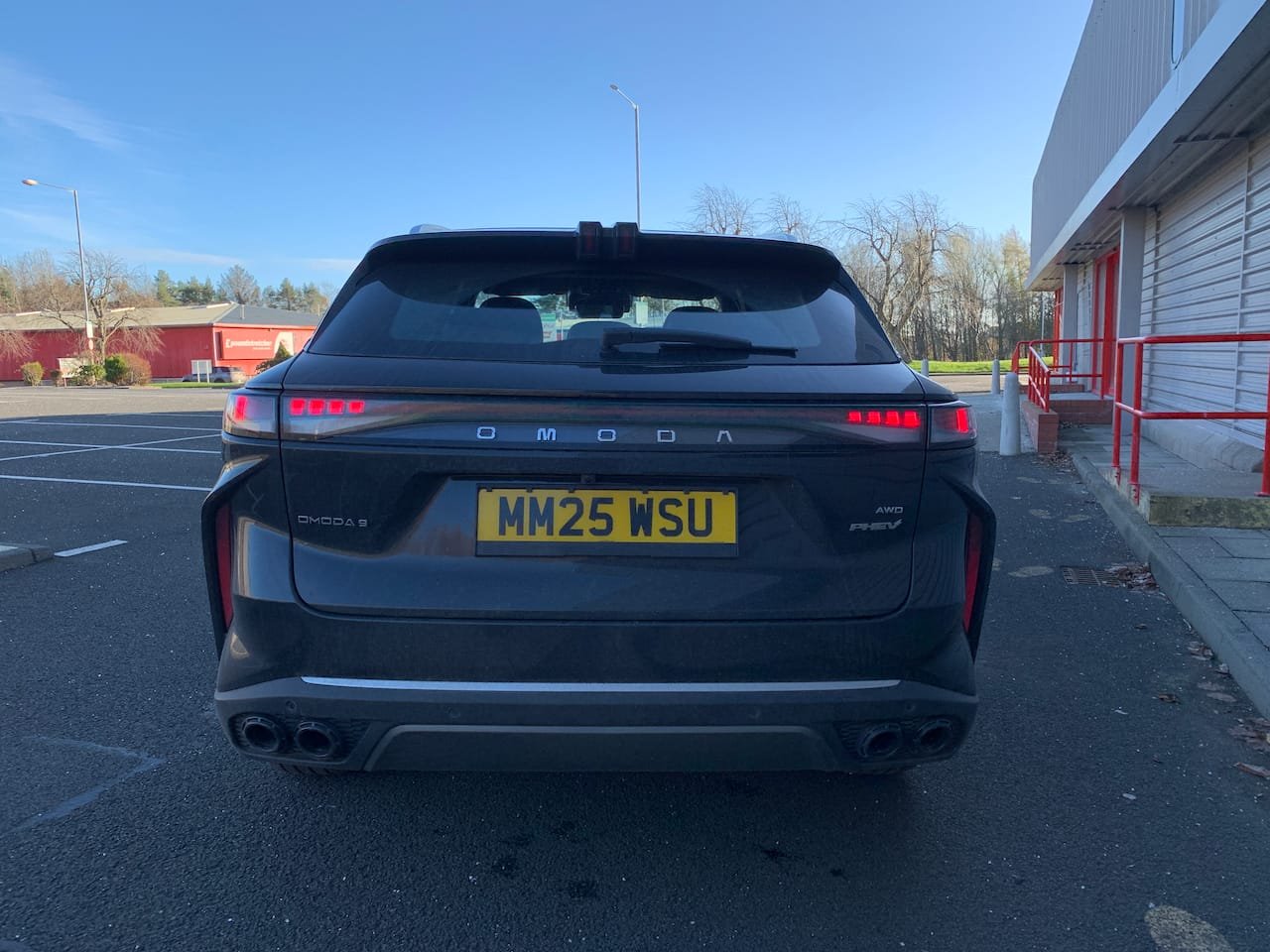
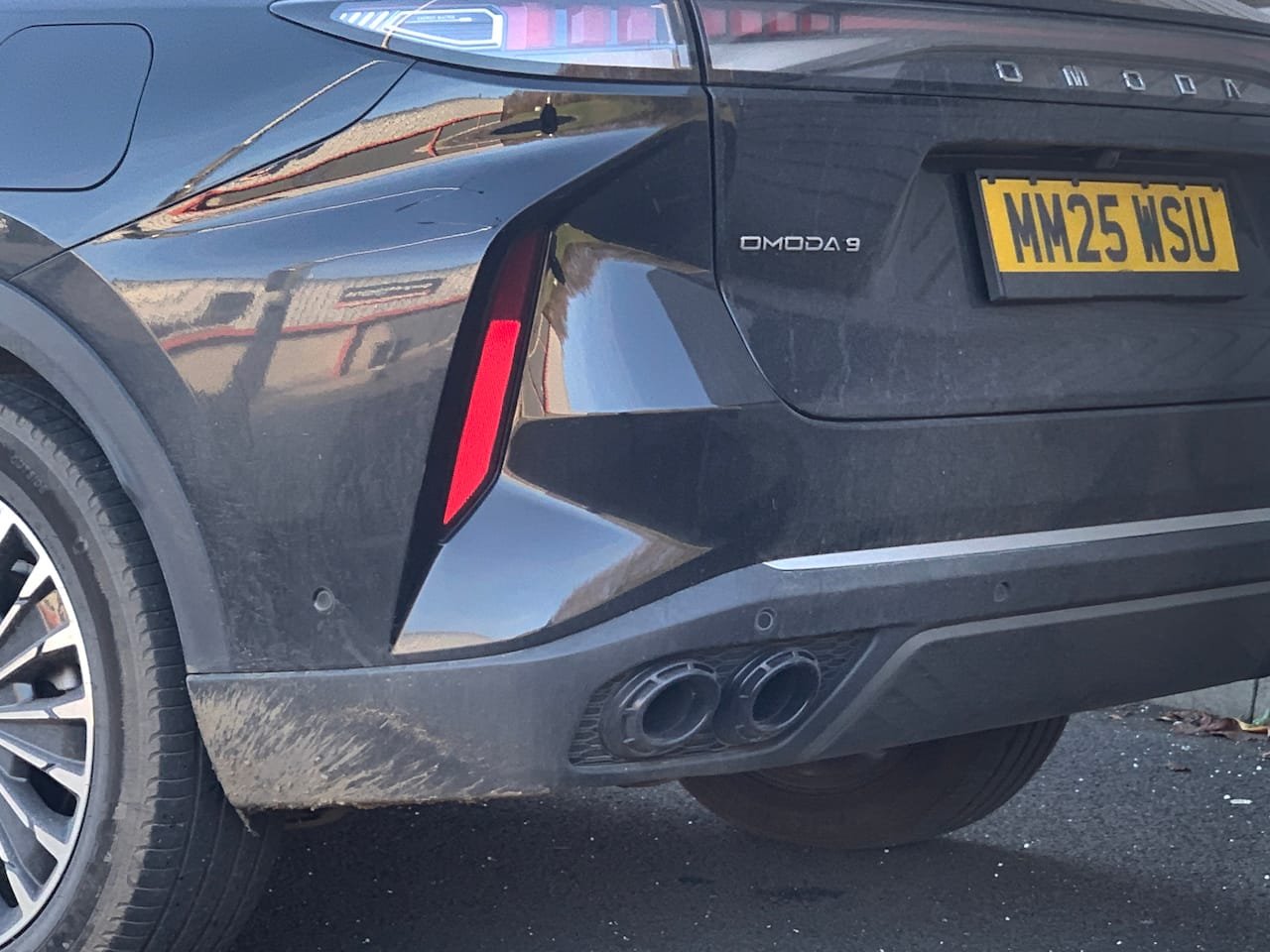
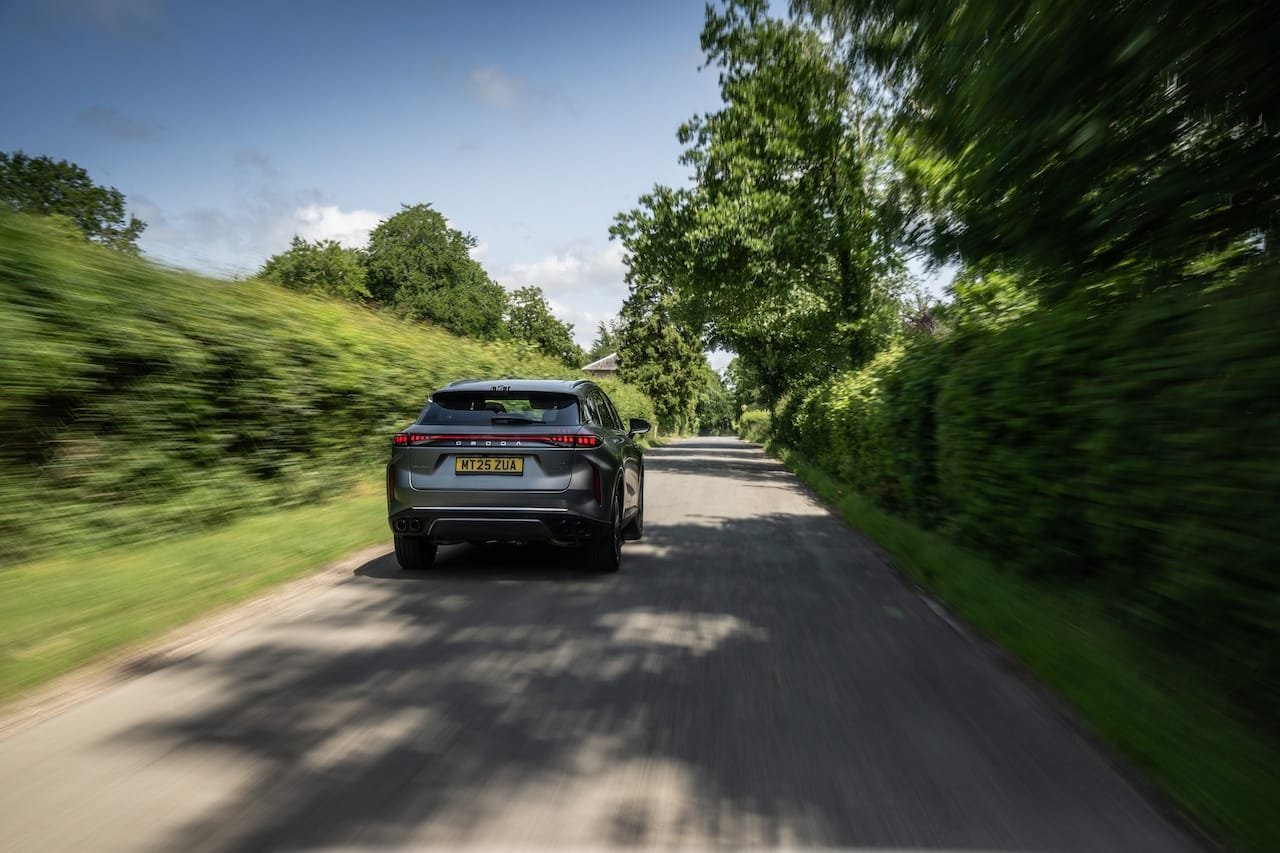
At the rear, a full-width LED light bar completes a modern, confident design, along with those sporty quad exhaust outlets.
Interior
The cabin is up to the challenge of matching the exterior for quality and it’s where the Omoda 9 makes its most persuasive argument.
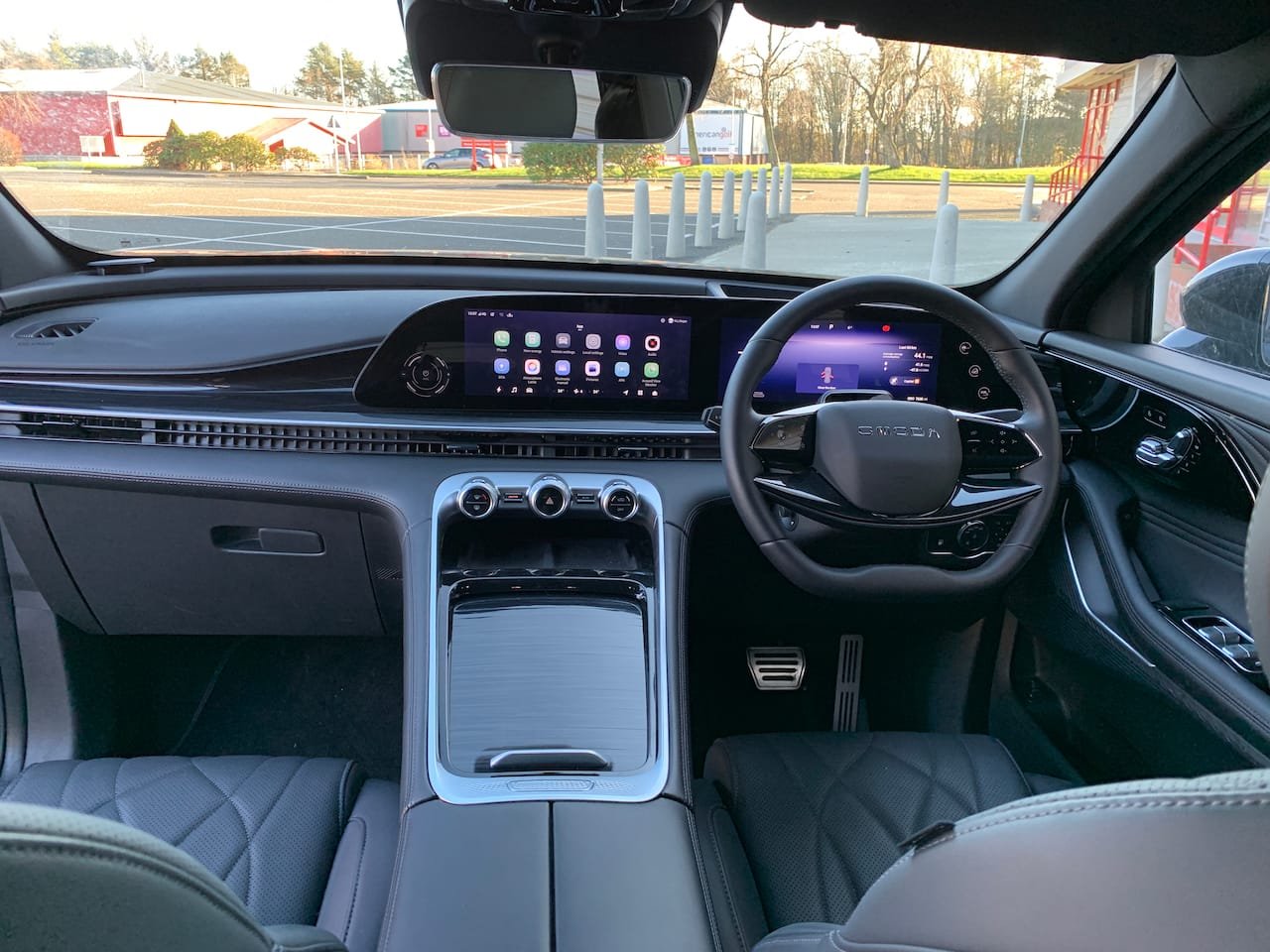
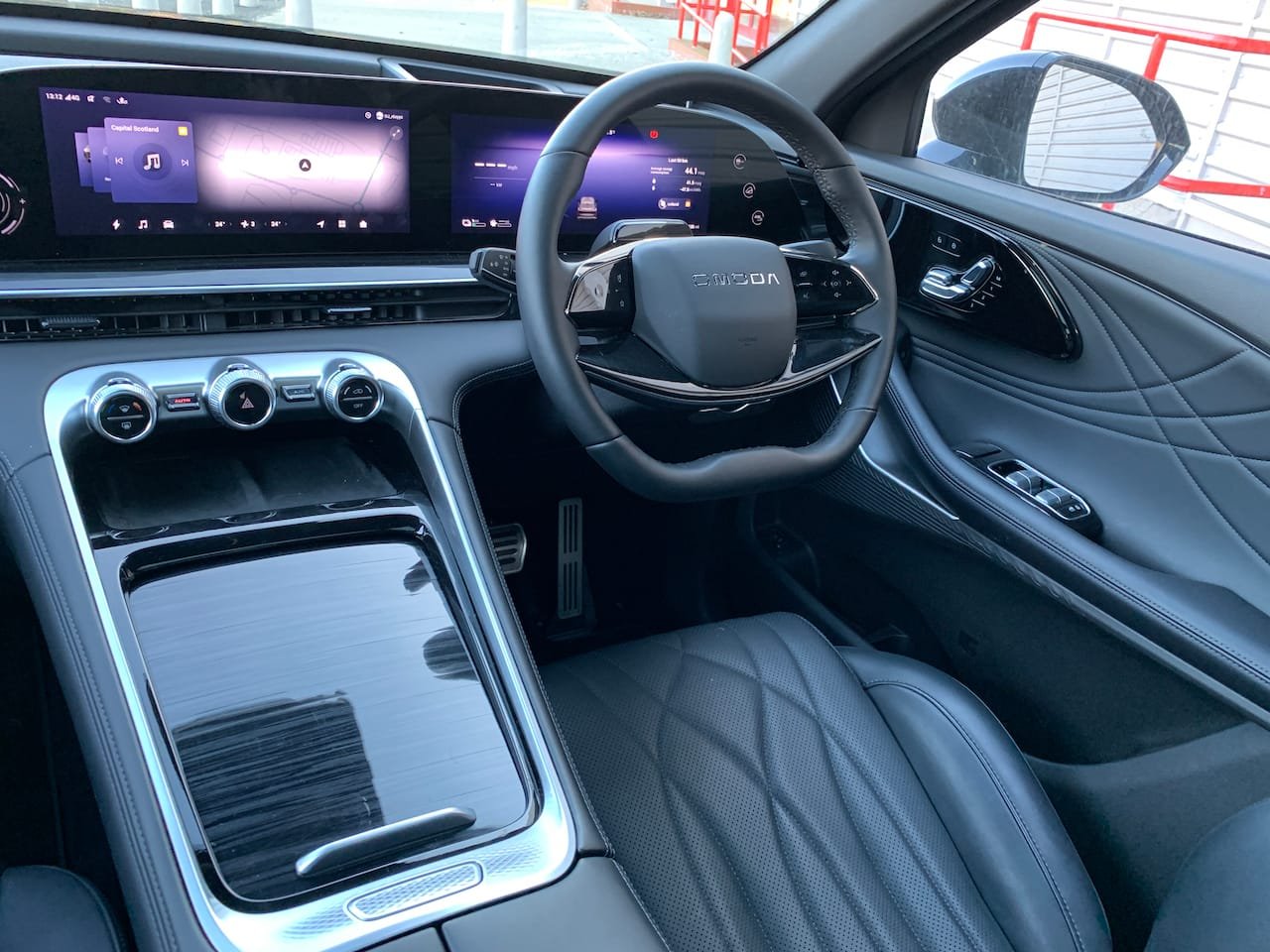
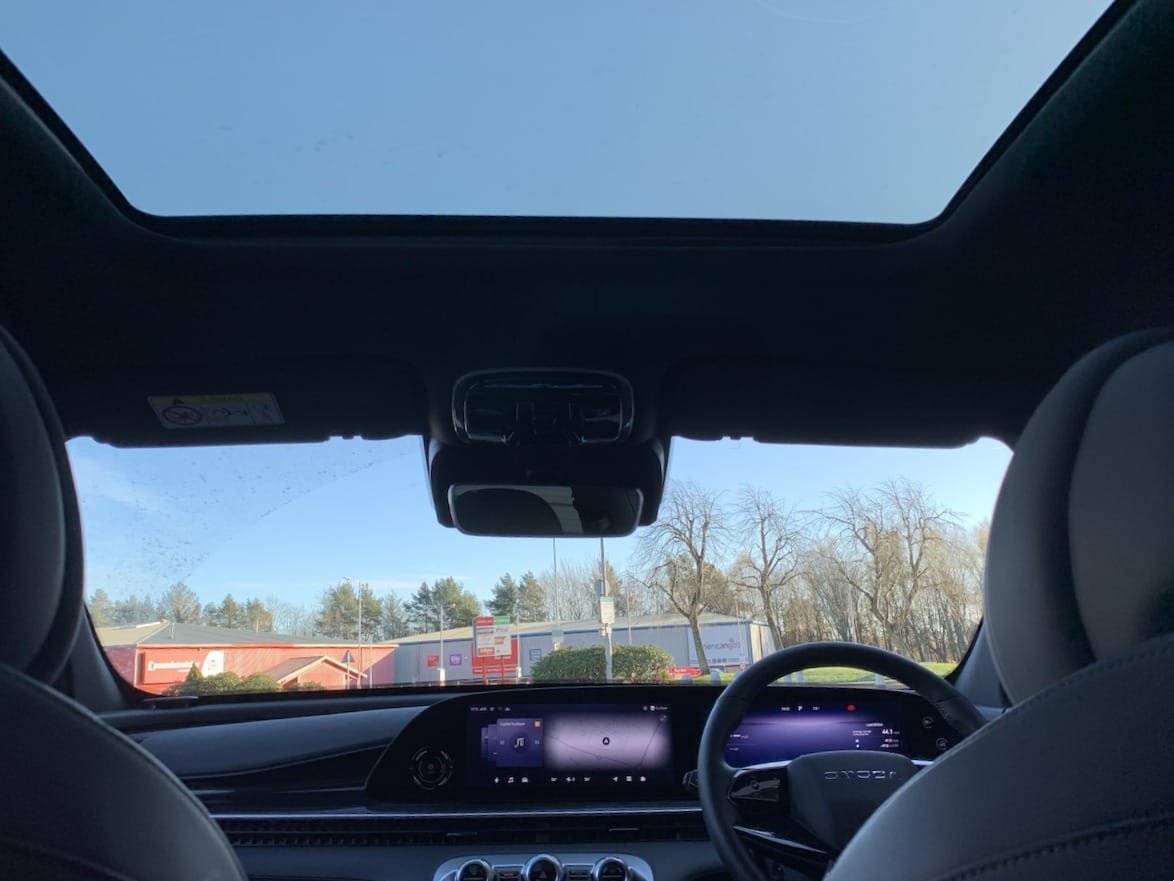
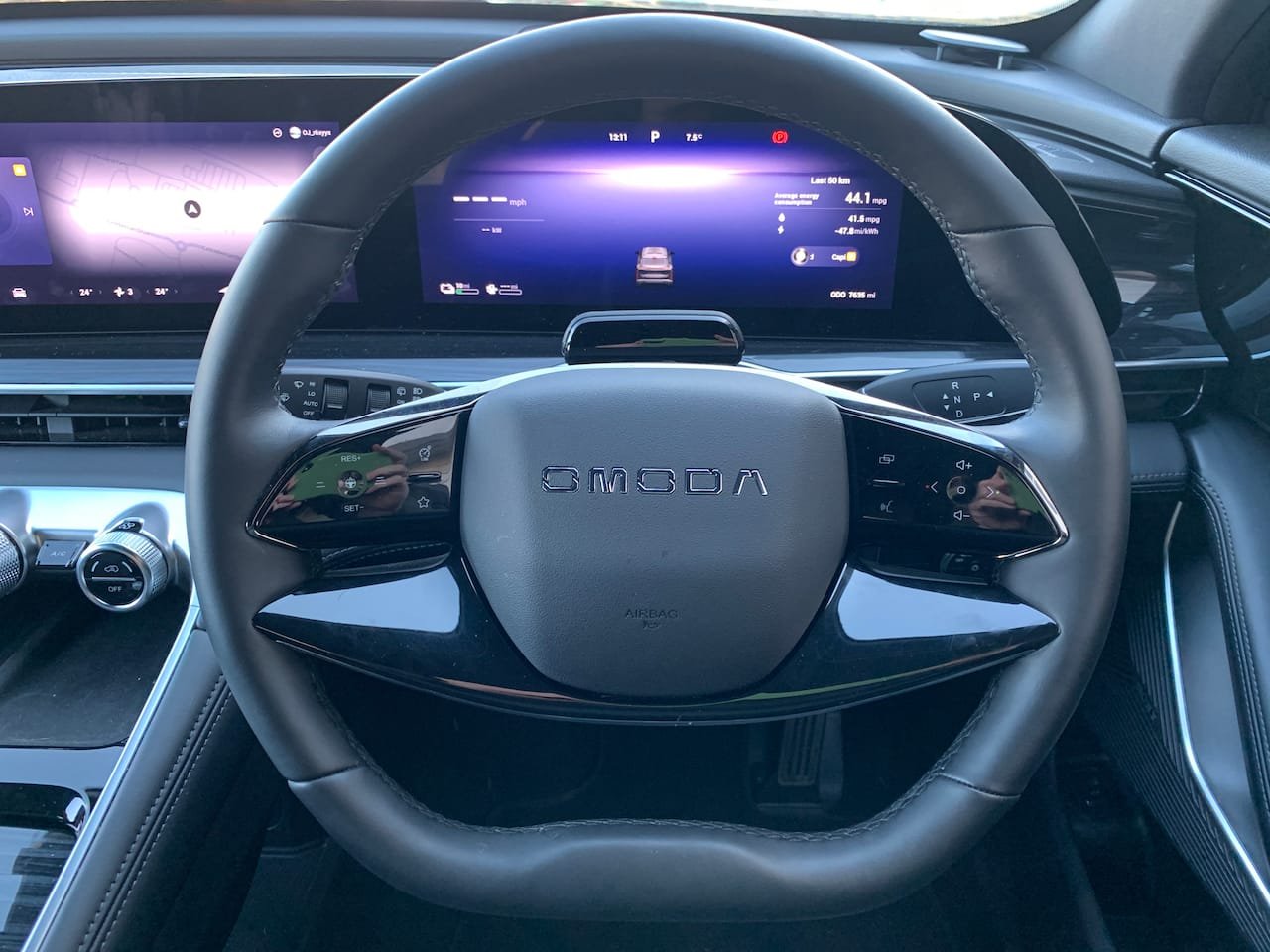
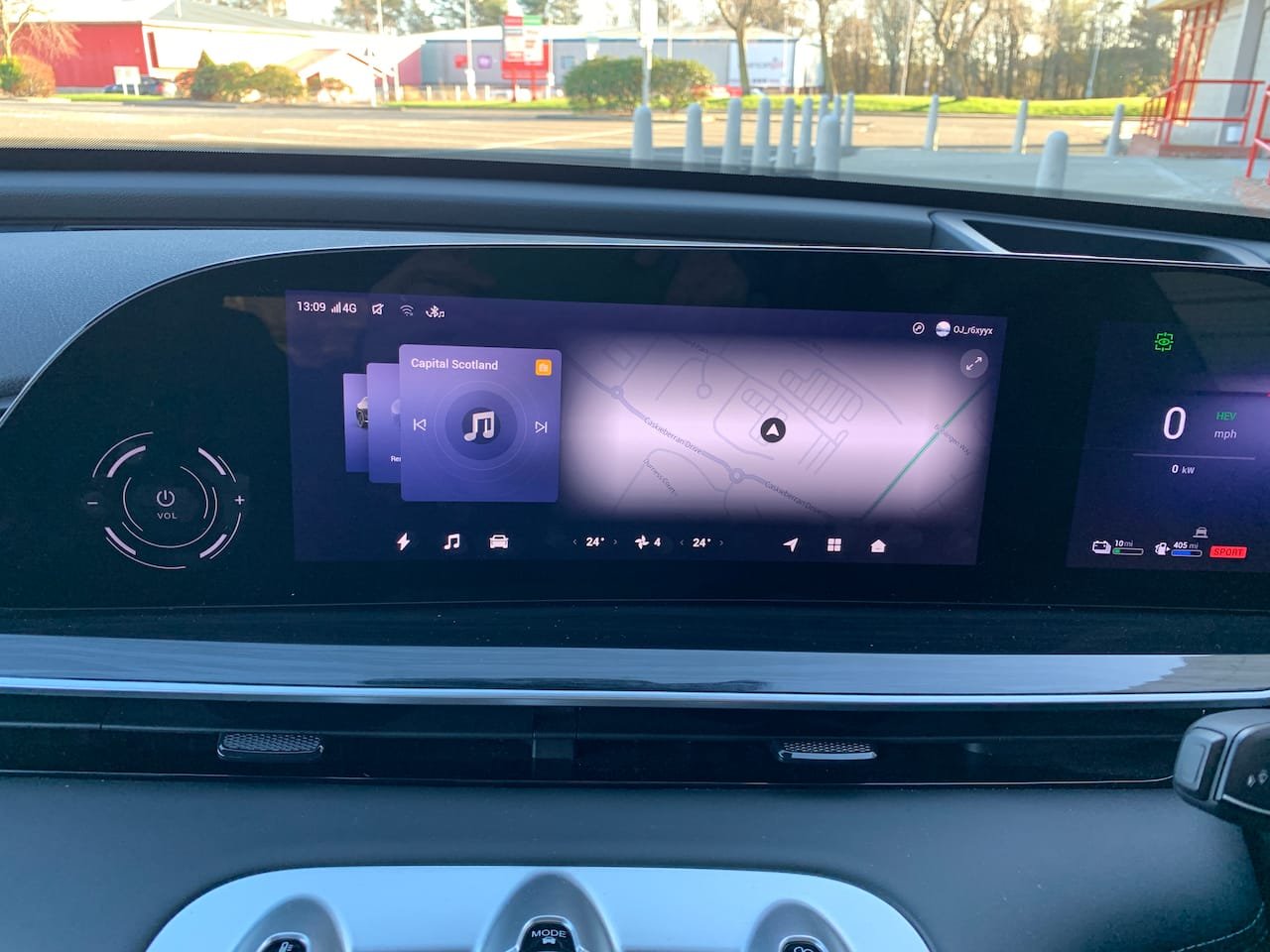
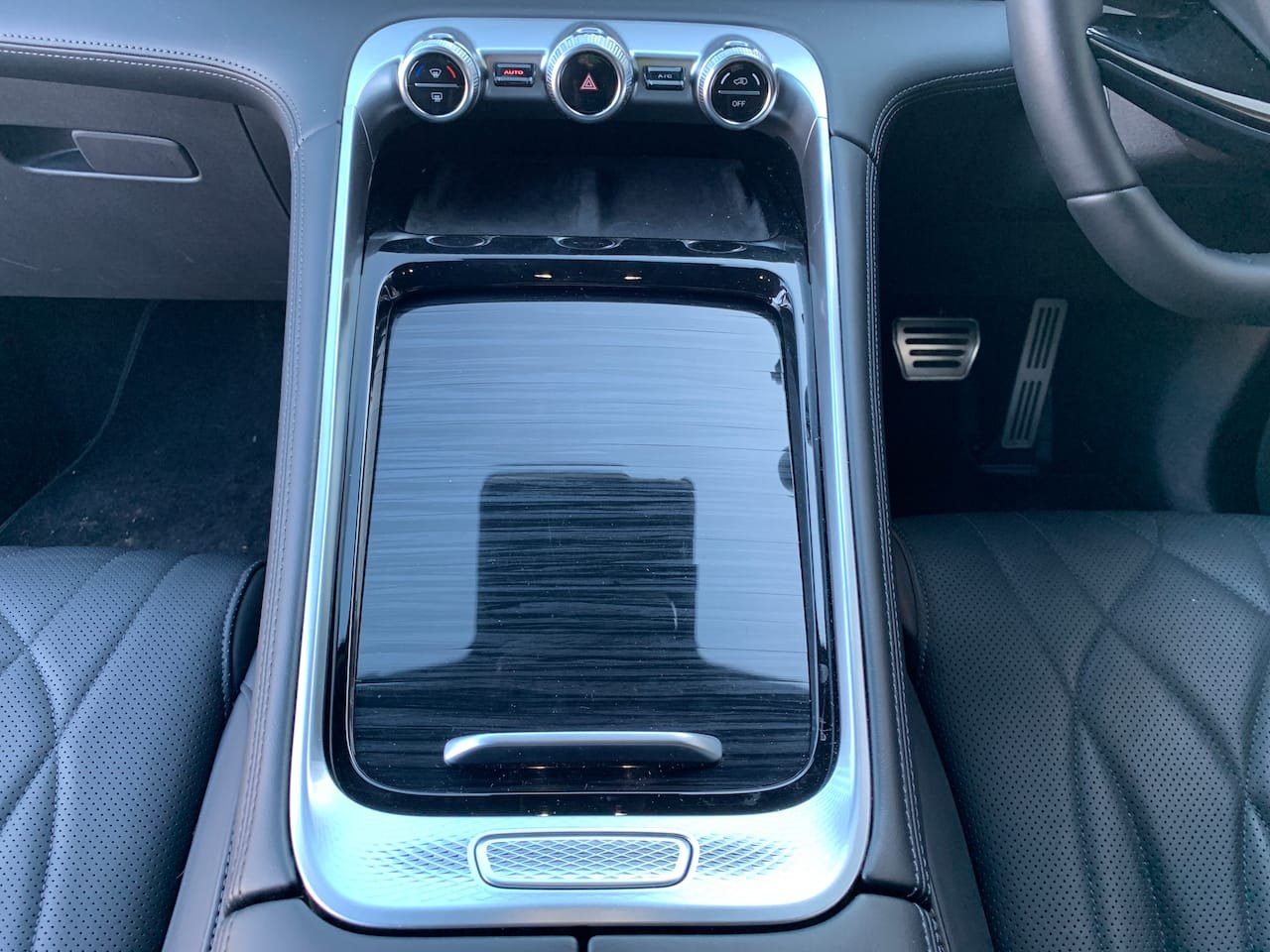
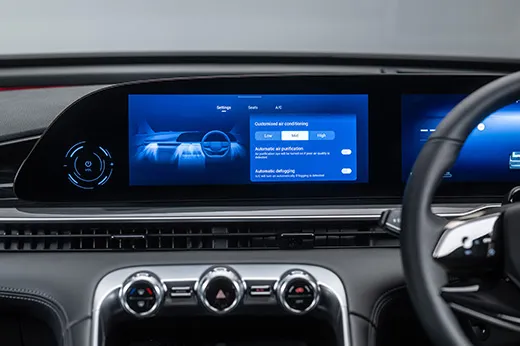
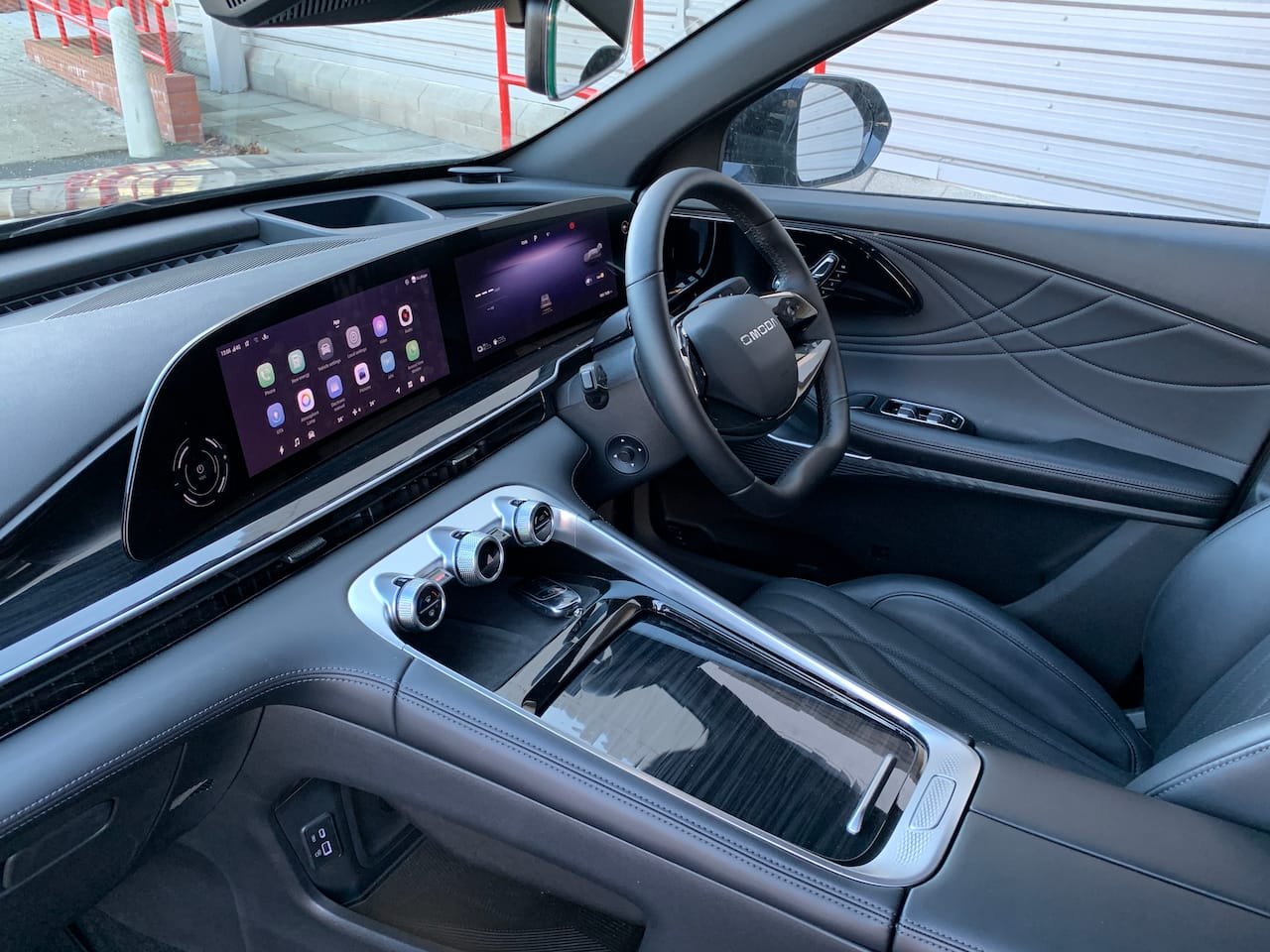
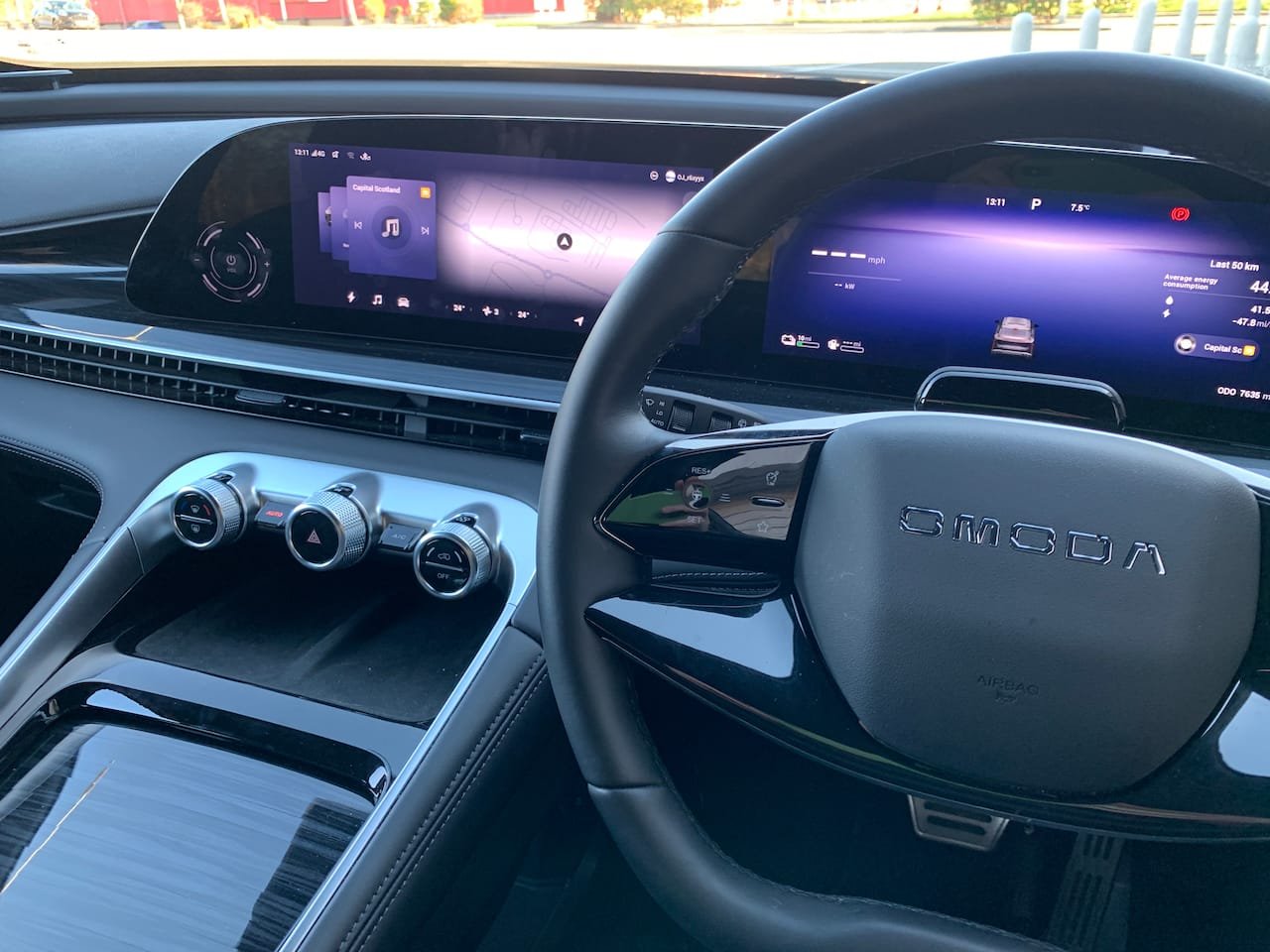
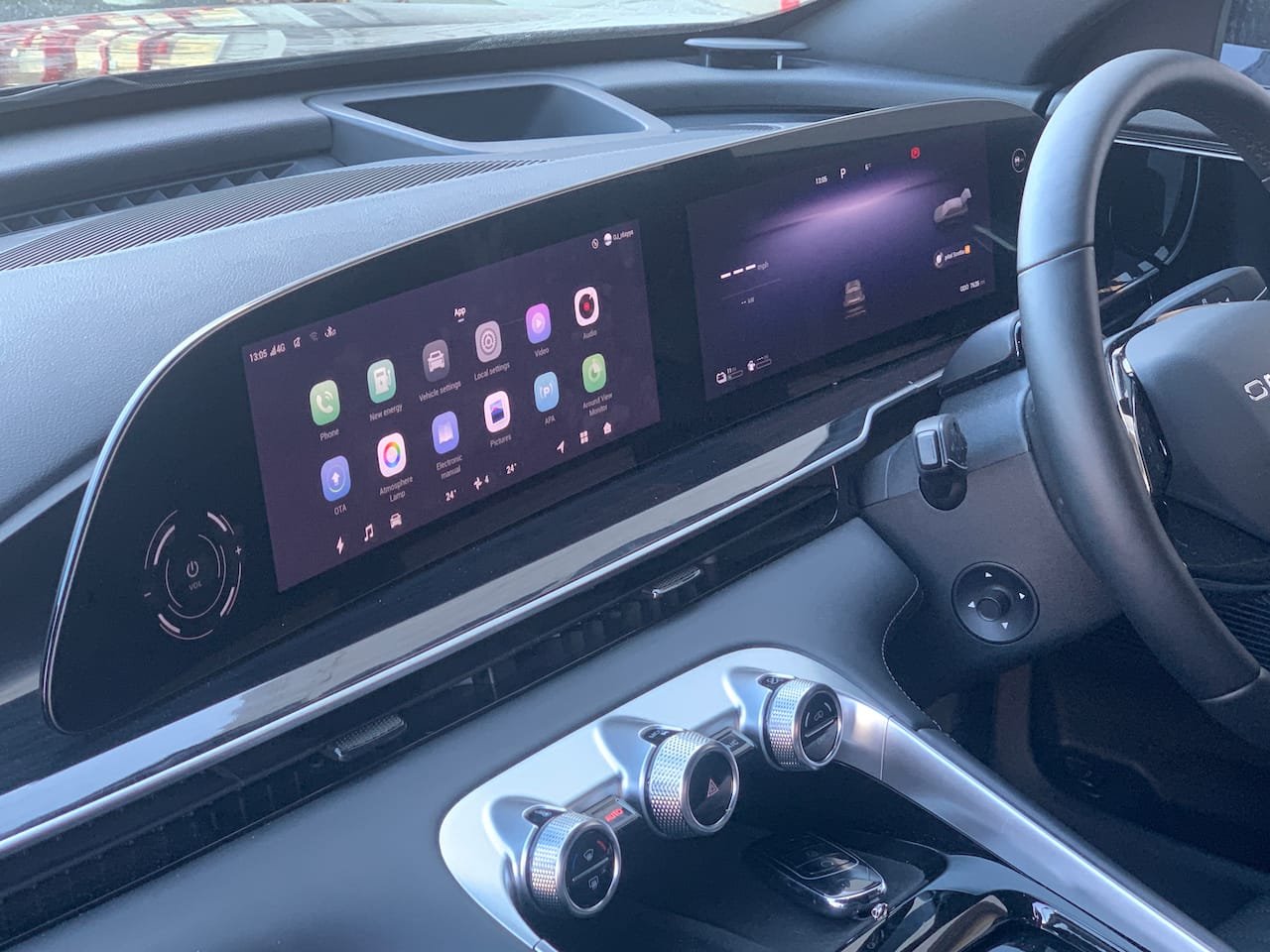
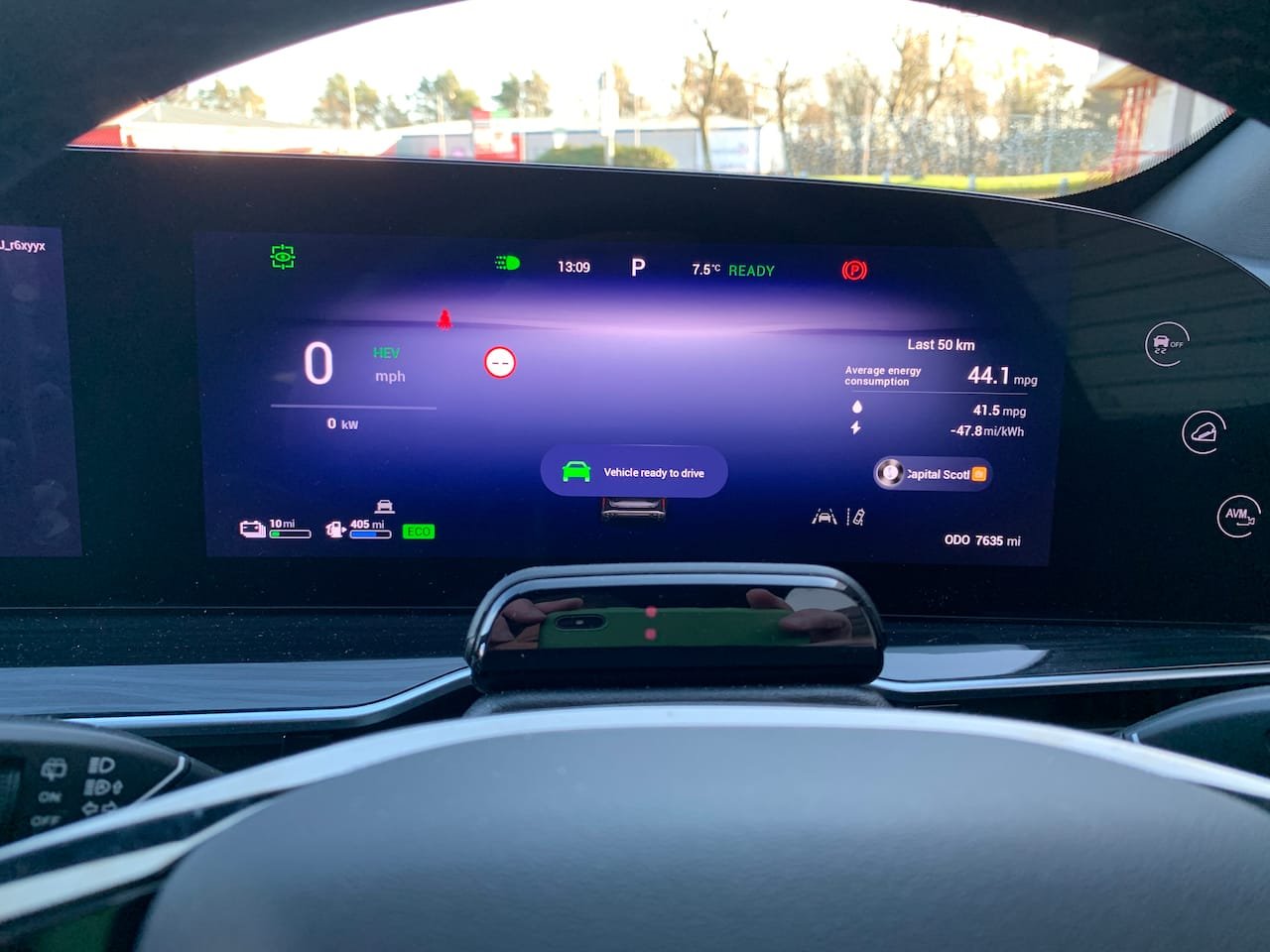
A sweeping dual-screen layout dominates the dashboard, housed beneath a single curved glass panel. The presentation is clean and contemporary, with sharp graphics and a responsive interface. Crucially, chunky, tacticle physical controls remain for essential functions, improving usability during everyday driving – a huge plus for me.
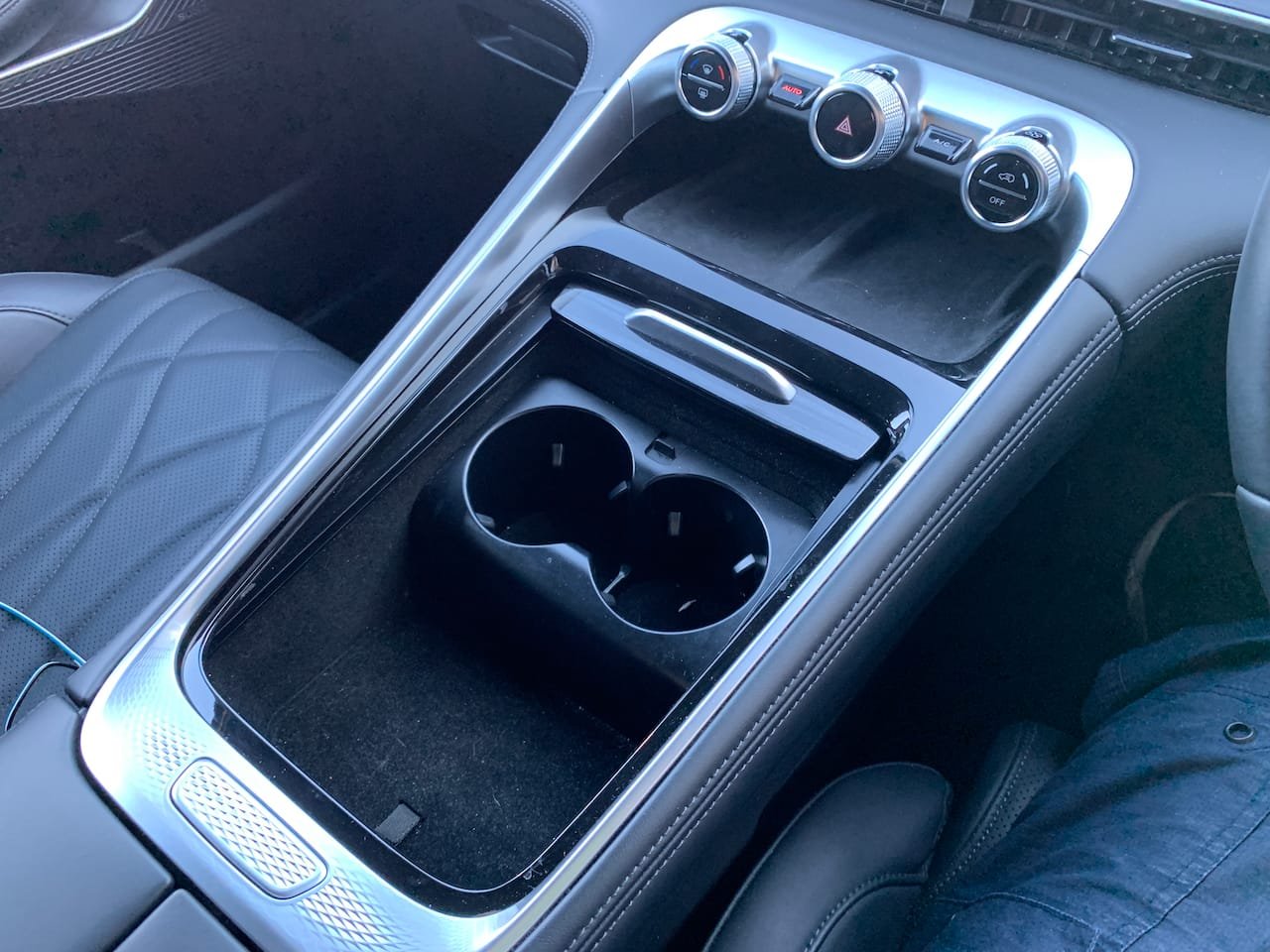
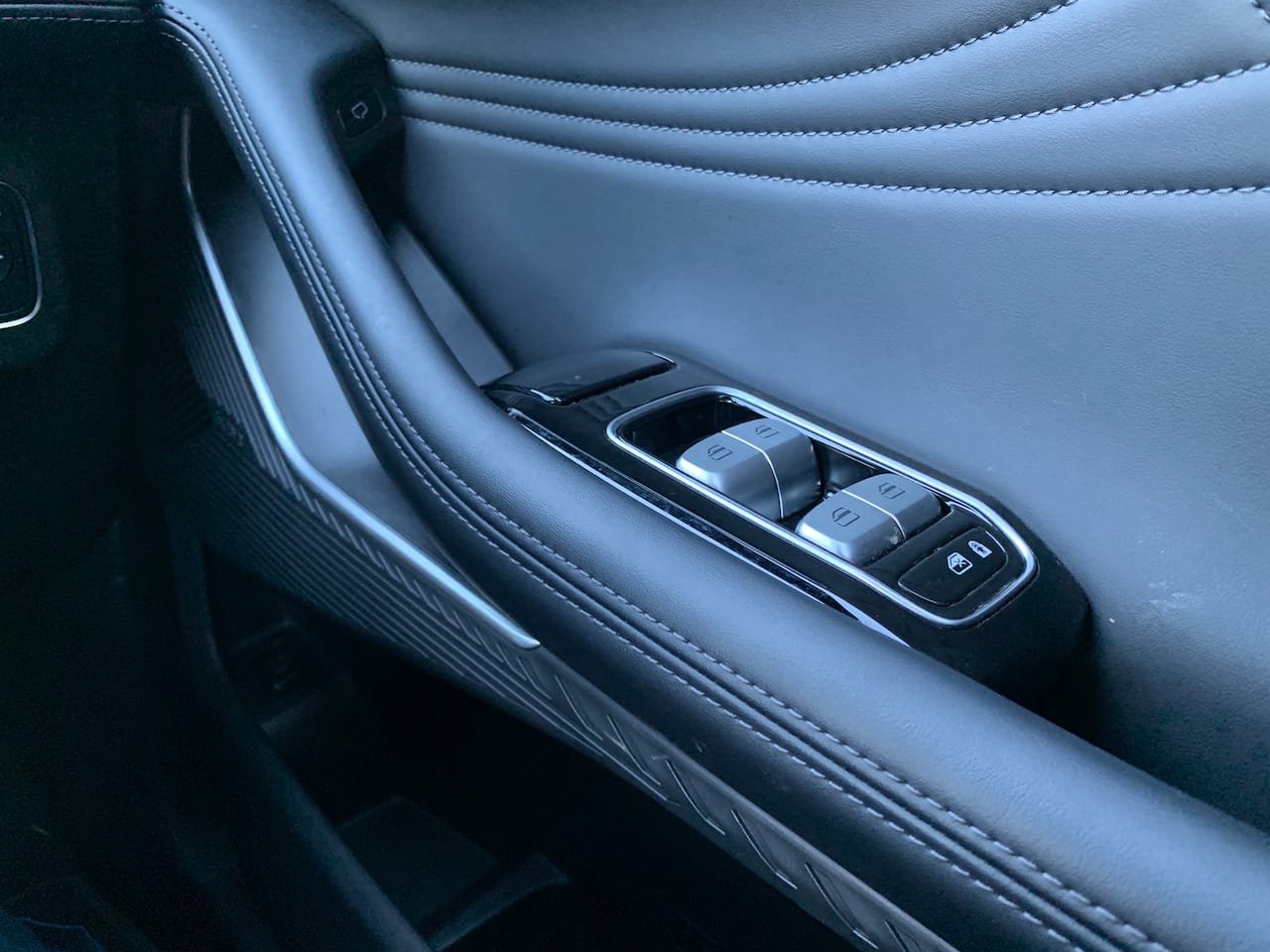
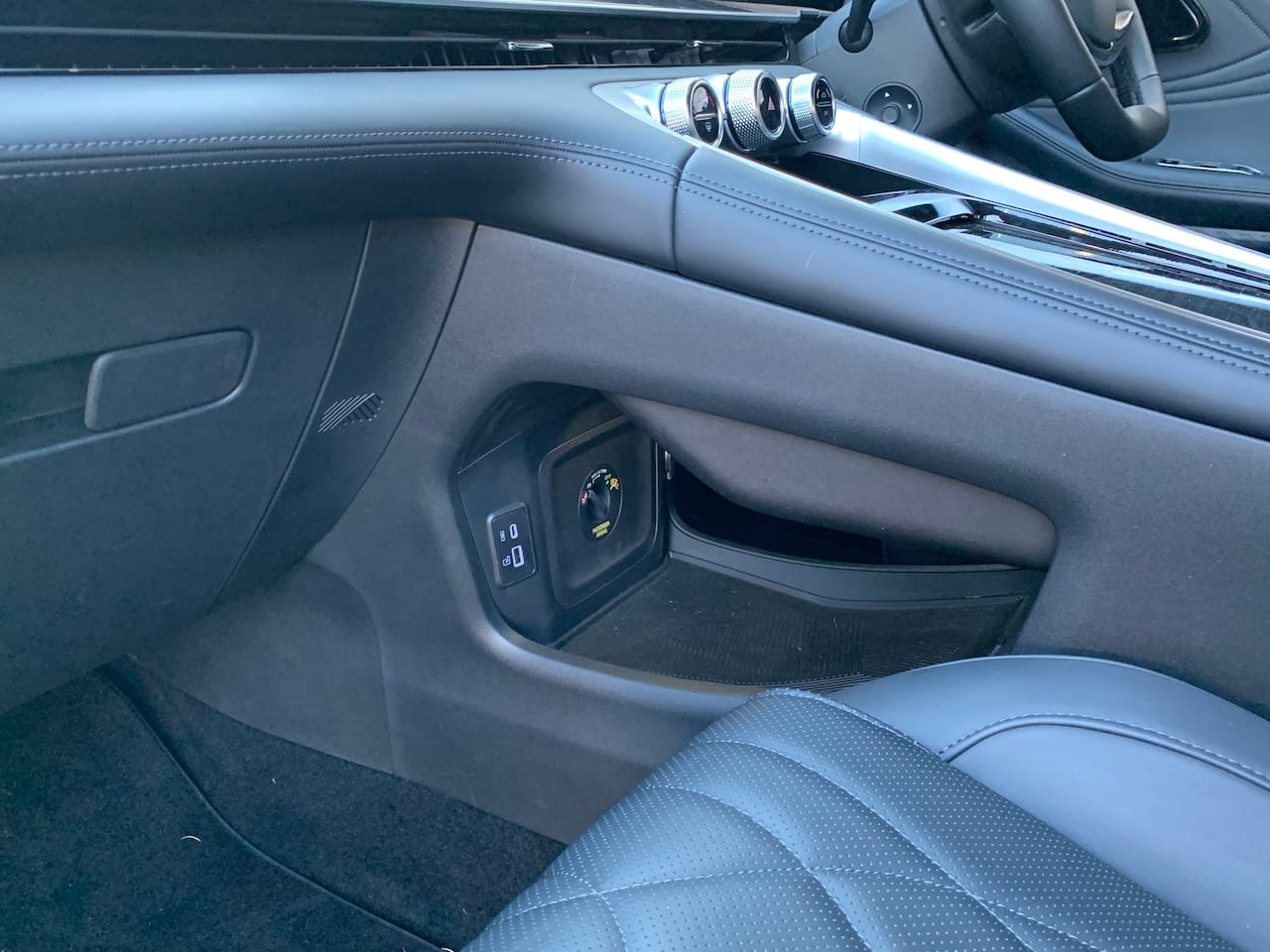
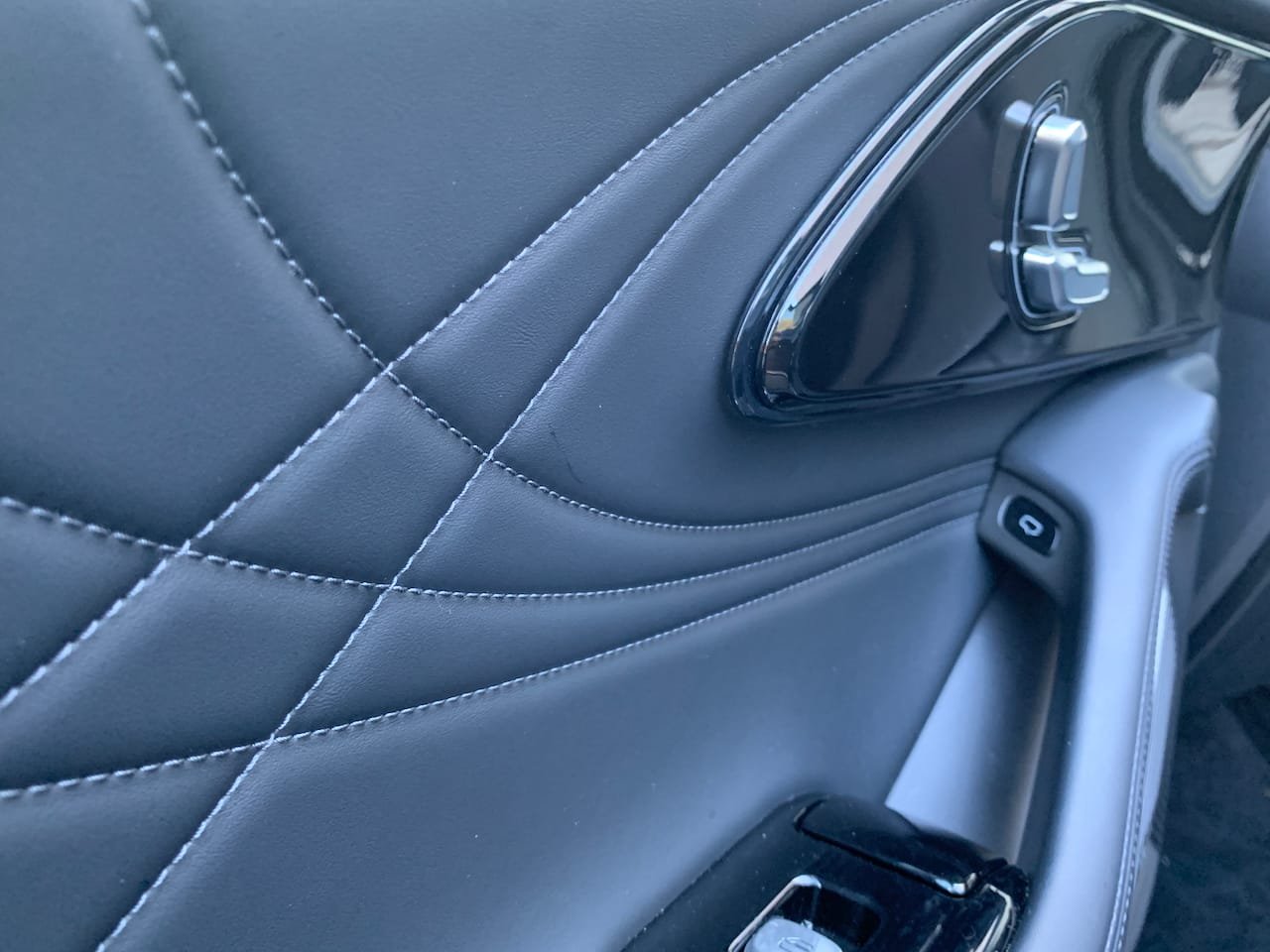
Material quality is strong for the price point. Soft-touch finishes extend across the upper dashboard and door panels, complemented by subtle stitching and metallic detailing. There is a reassuring solidity throughout the cabin, with consistent panel fit and well-damped switchgear.
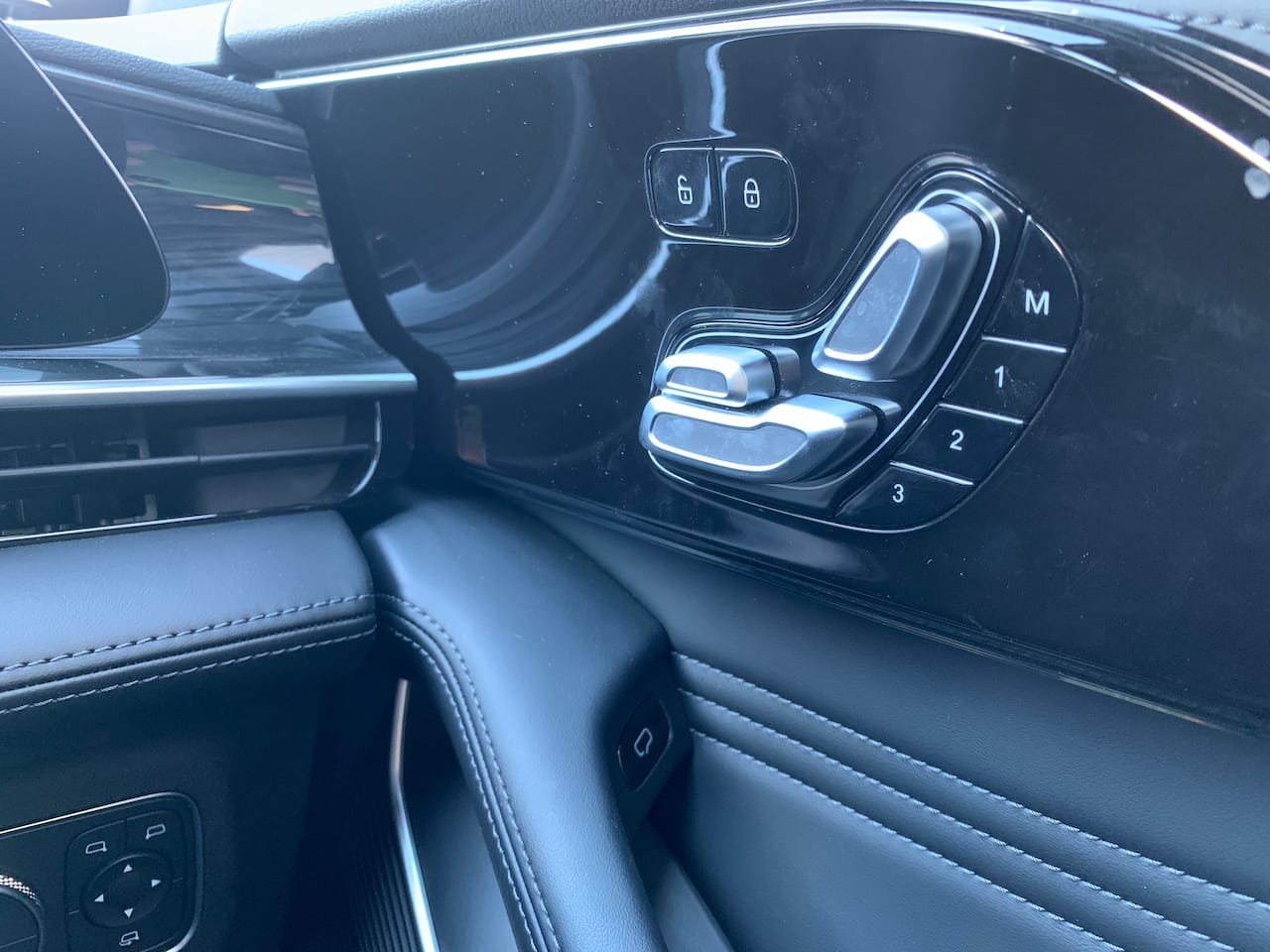
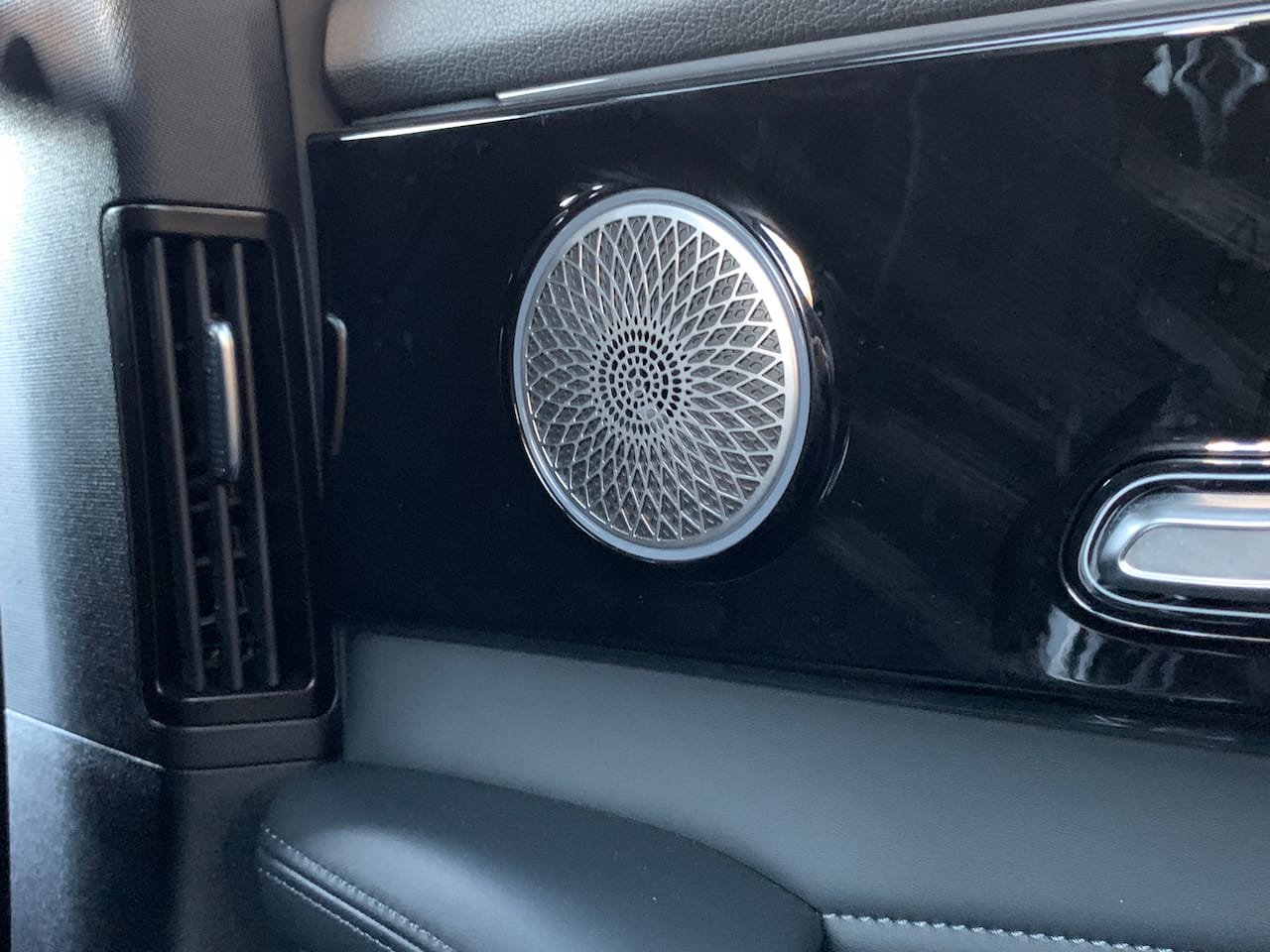
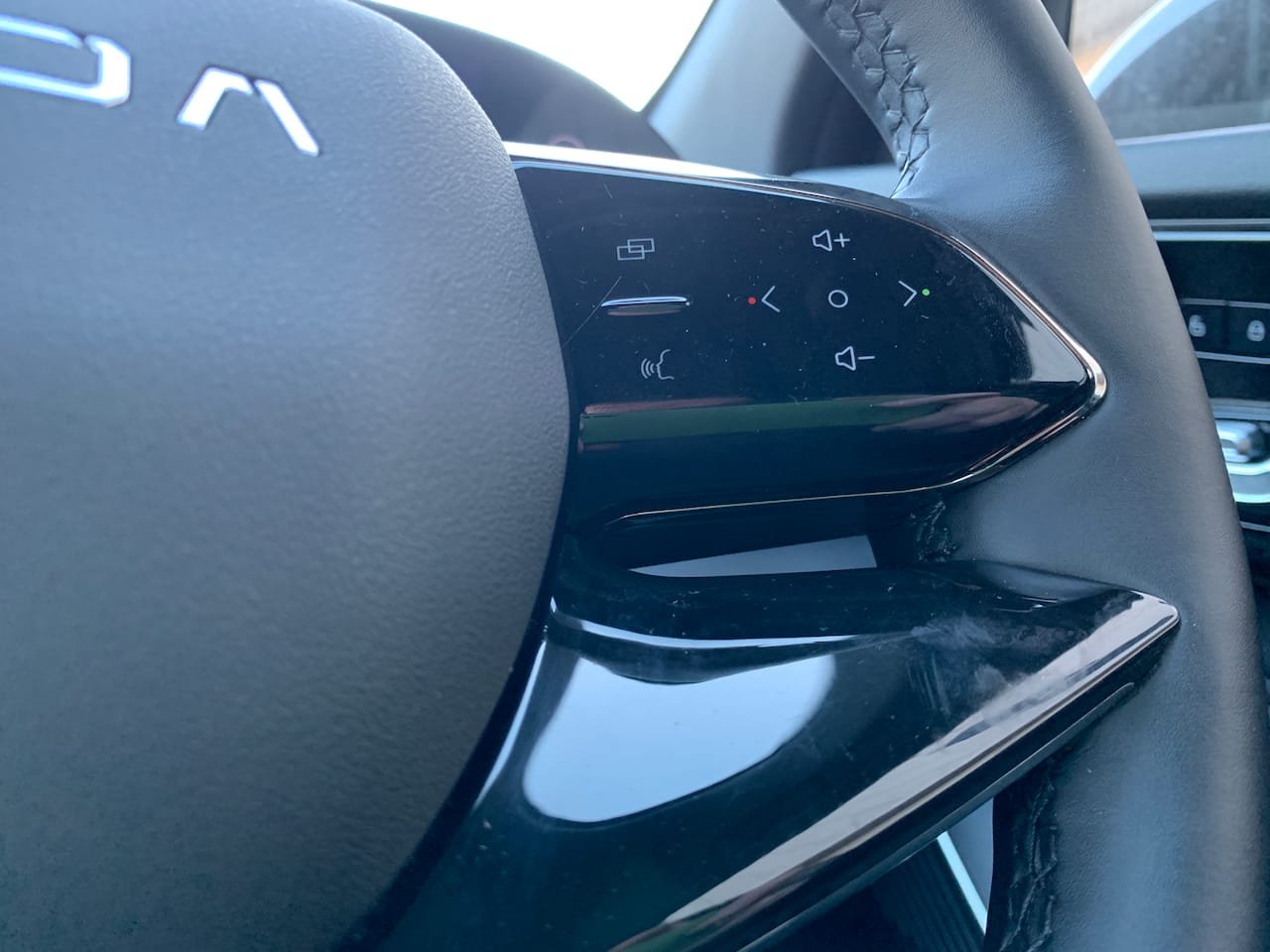
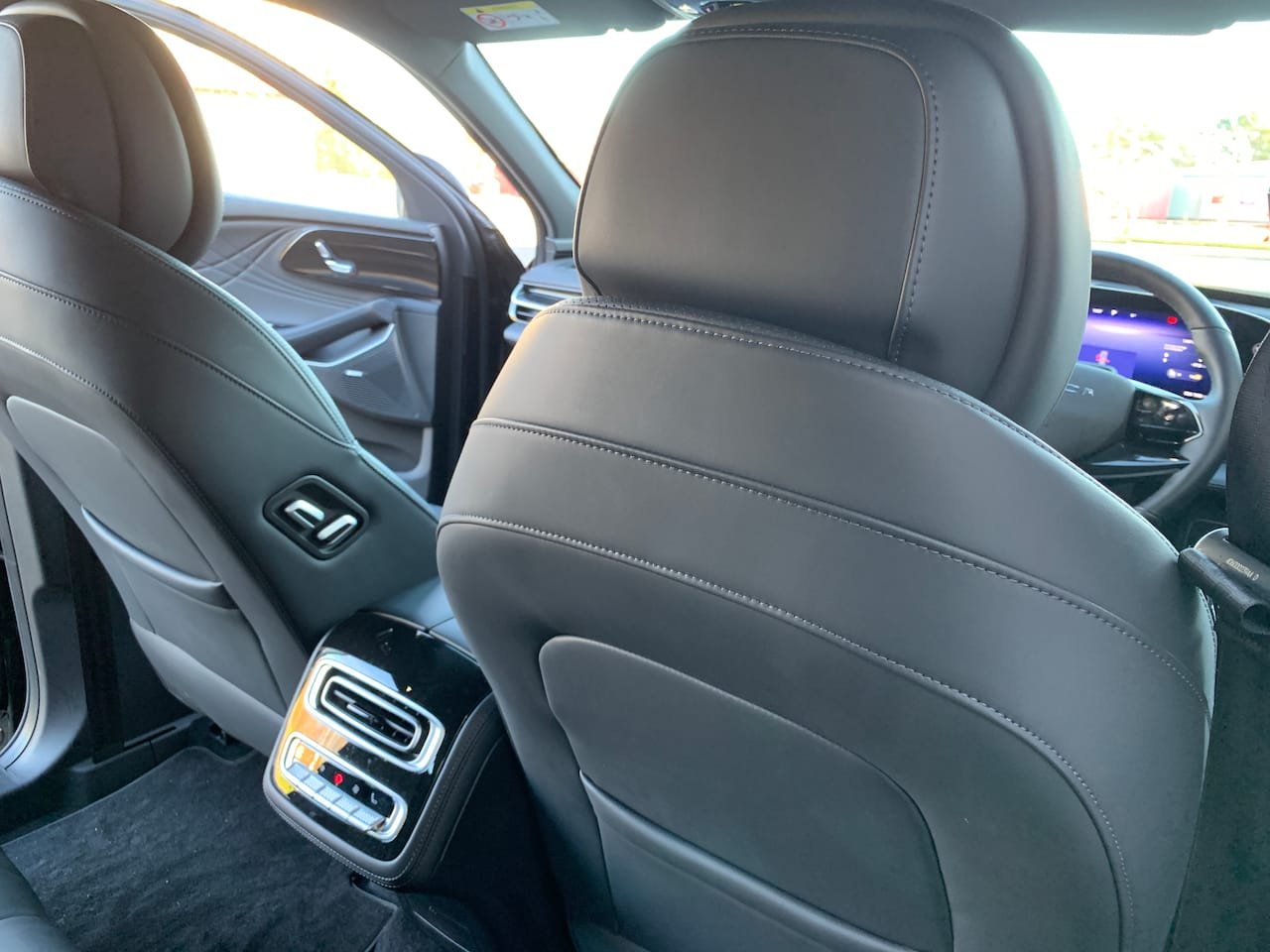
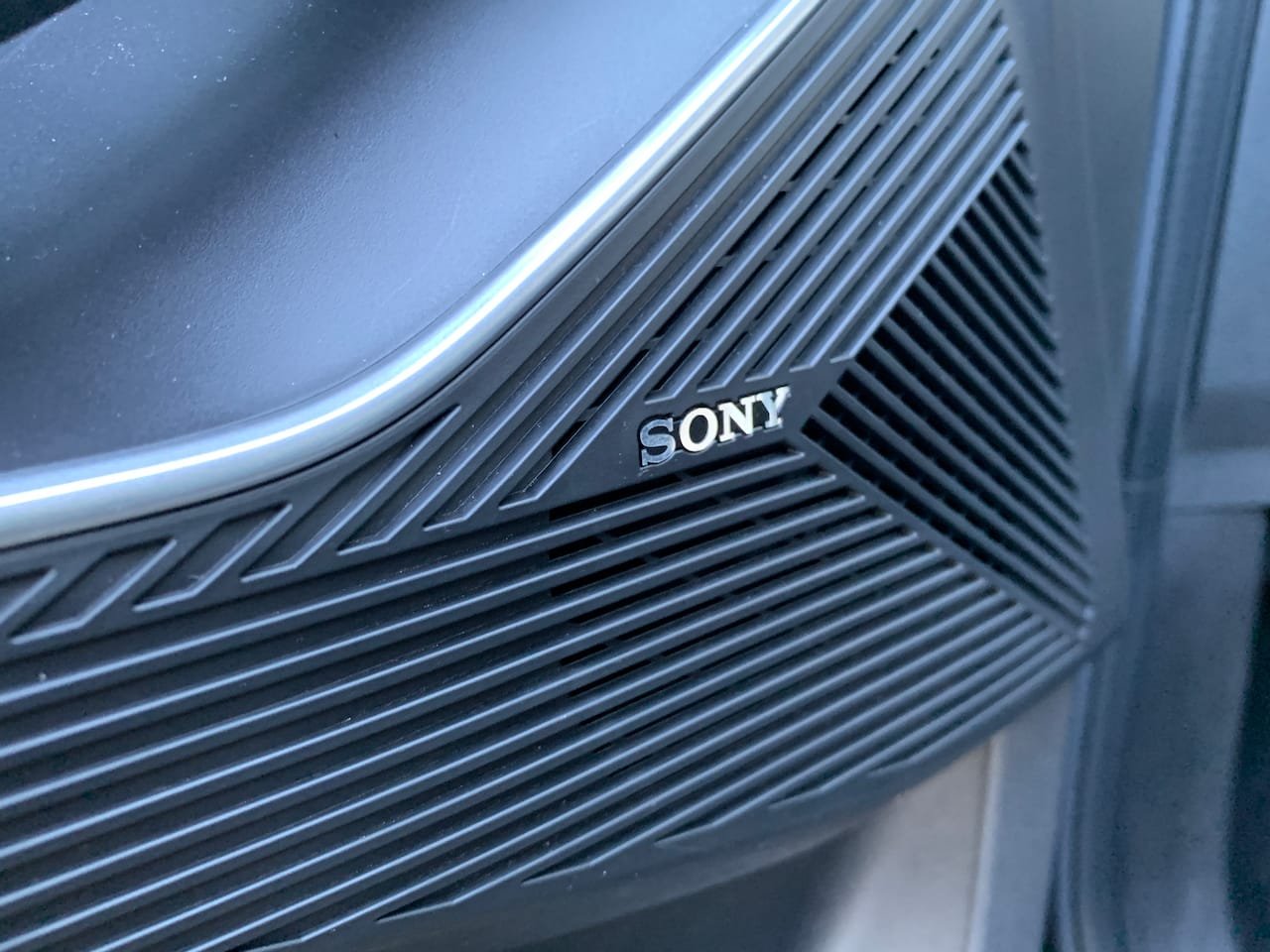
The front seats are broad and supportive without being overly firm. Adjustment is generous, making it easy to establish a comfortable, commanding driving position. Both front seats are heated and ventilated with the drivers head rest having its own speaker so you can take calls and listen to music without disturbing your sleeping travelling companions. A nice touch that works surprisingly well.
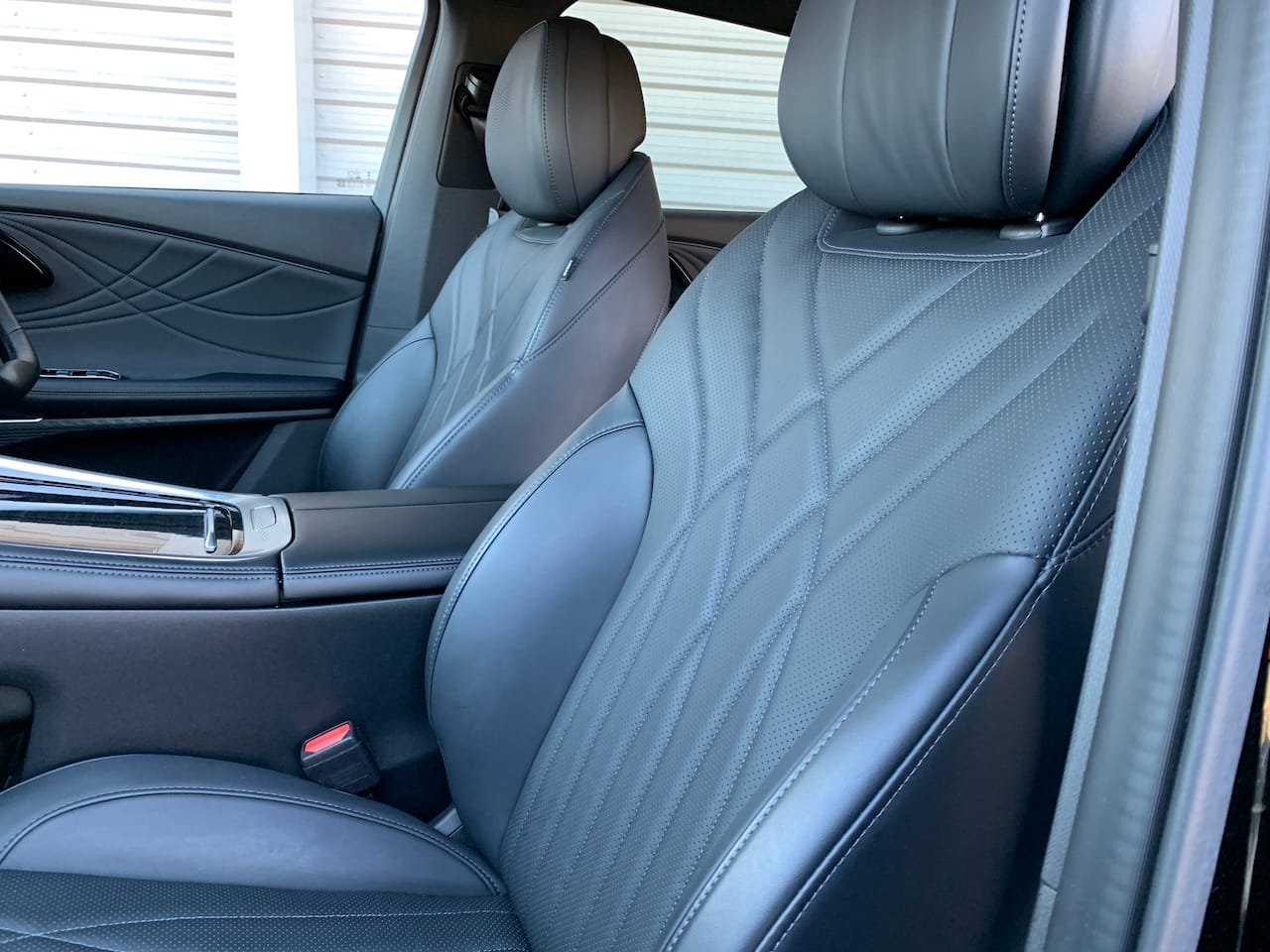
The overall ambience is calm and well judged, enhanced by discreet ambient lighting that adds atmosphere without distraction.
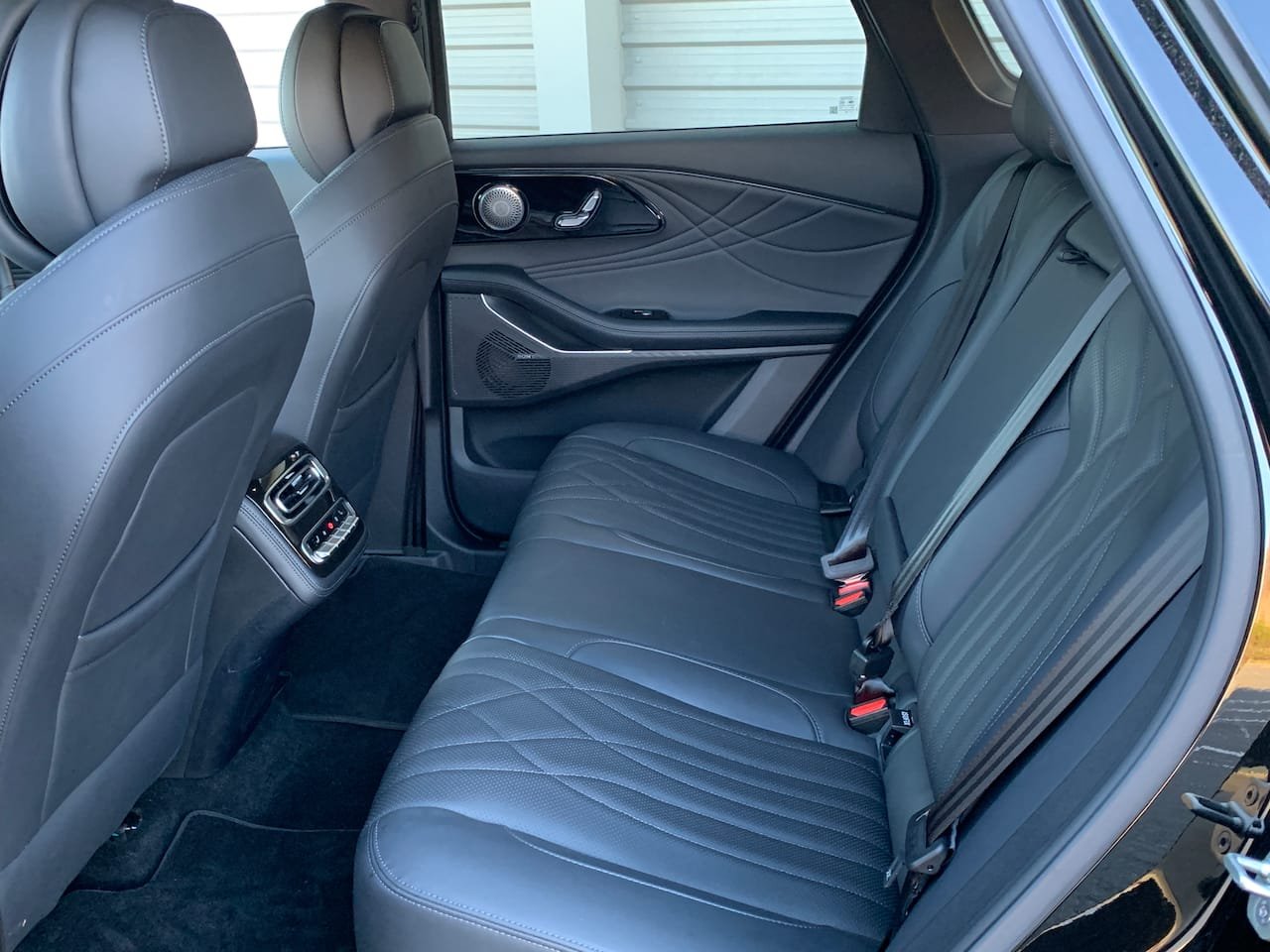
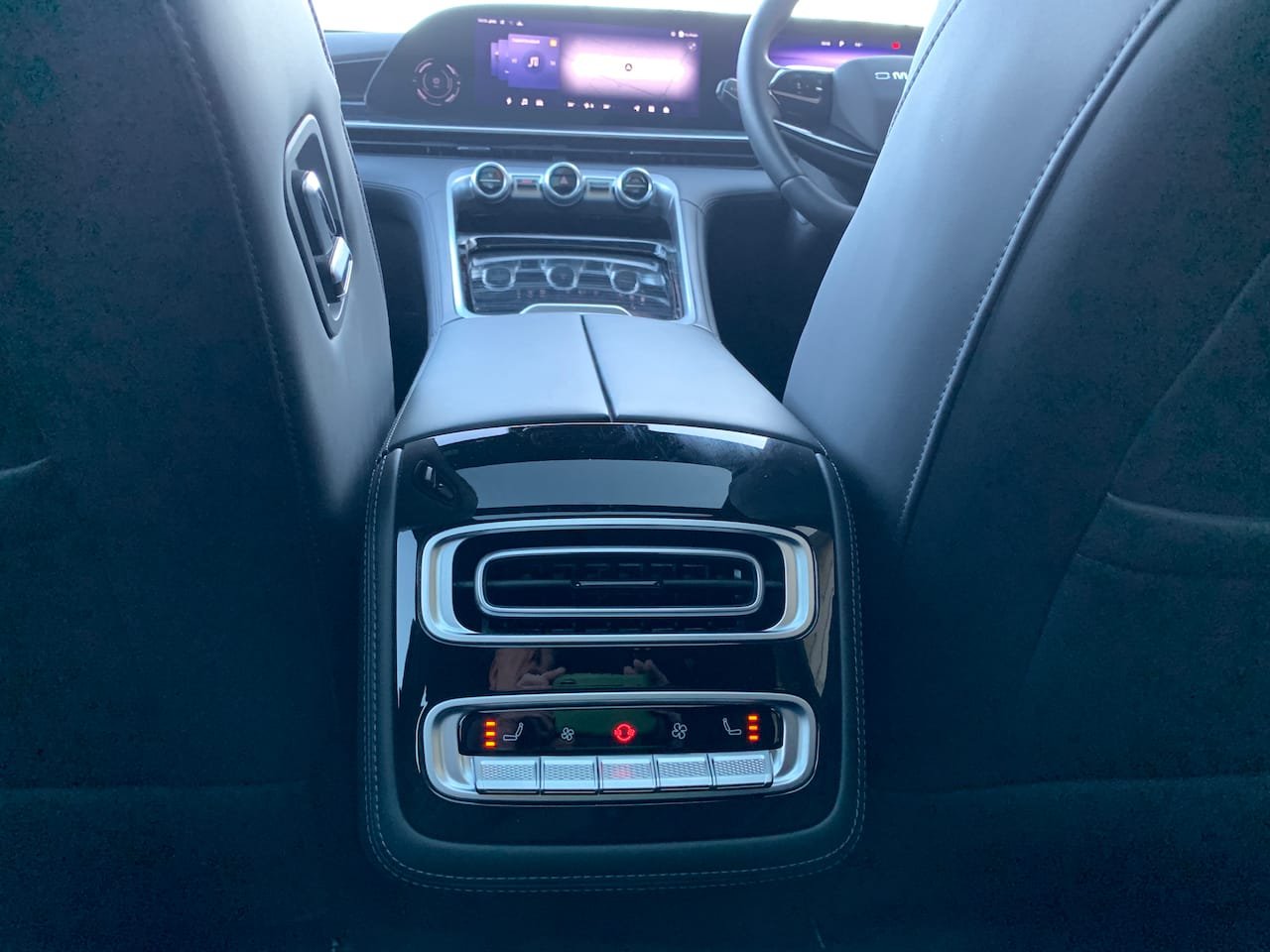
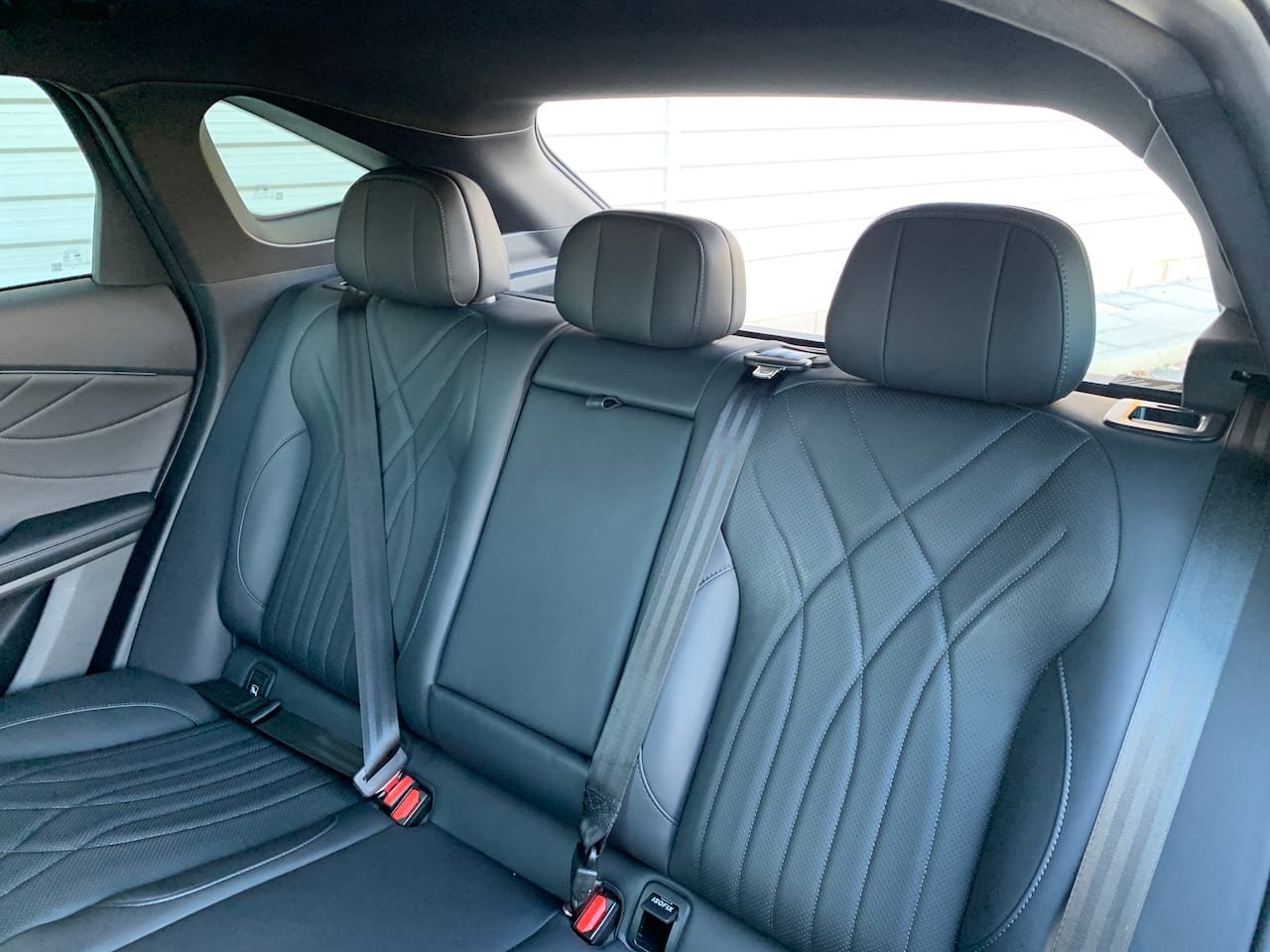
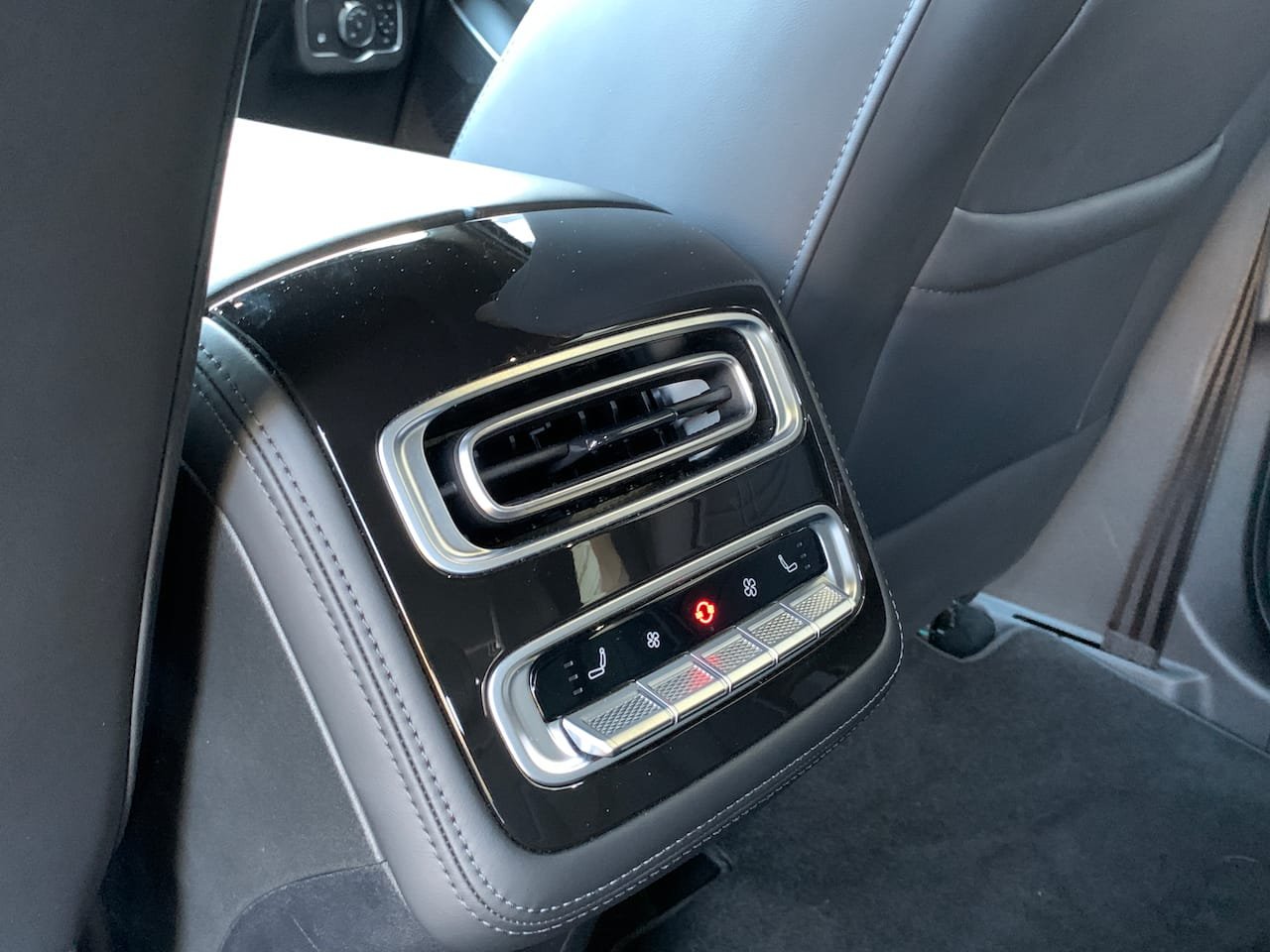
Rear accommodation is equally convincing. Legroom is generous, the floor is largely flat, and the cabin feels open rather than enclosed. It is clearly designed with family use in mind rather than purely visual impact. Rear passengers also get their own set of seat controls for heat or ventilation.
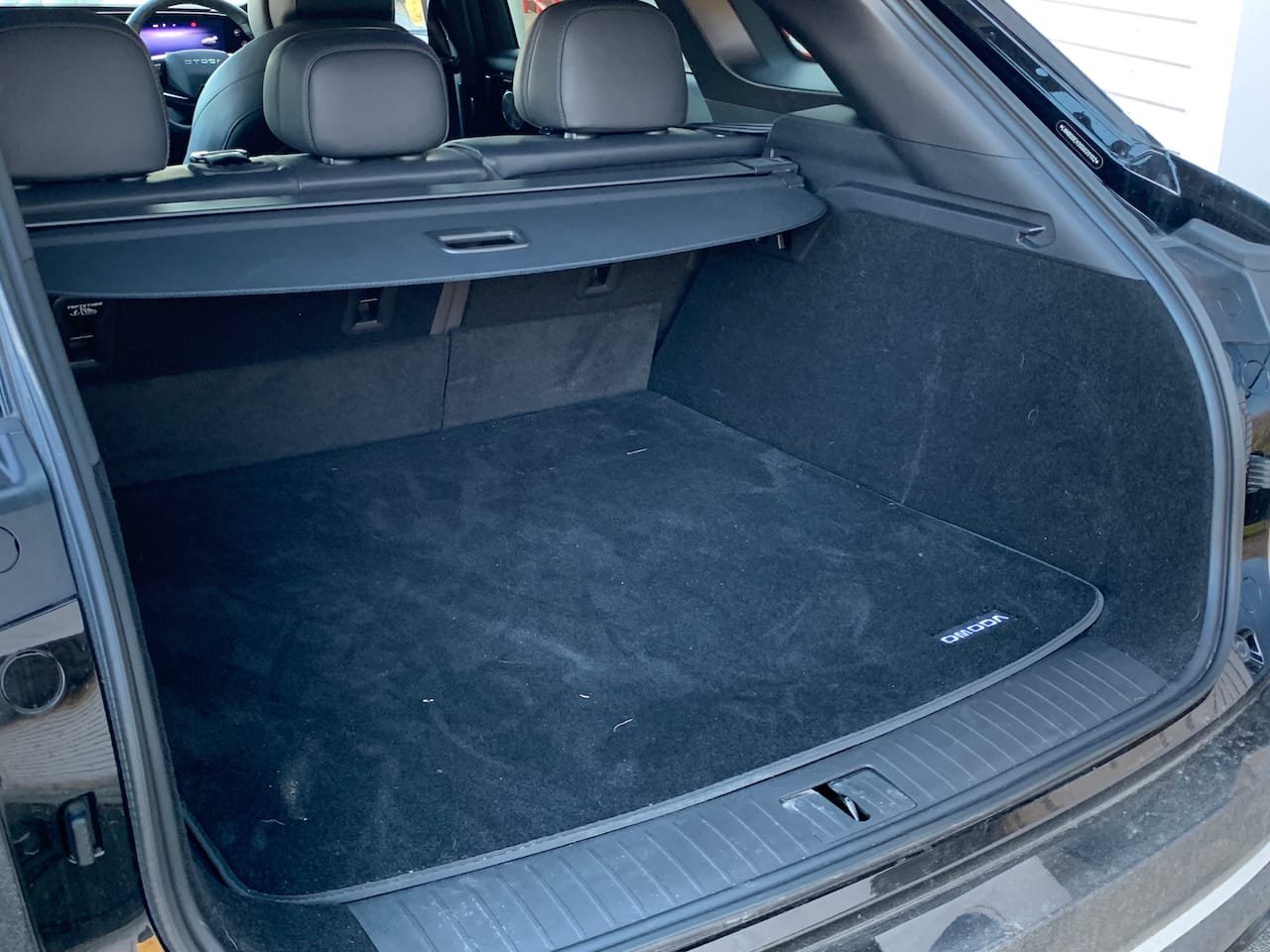
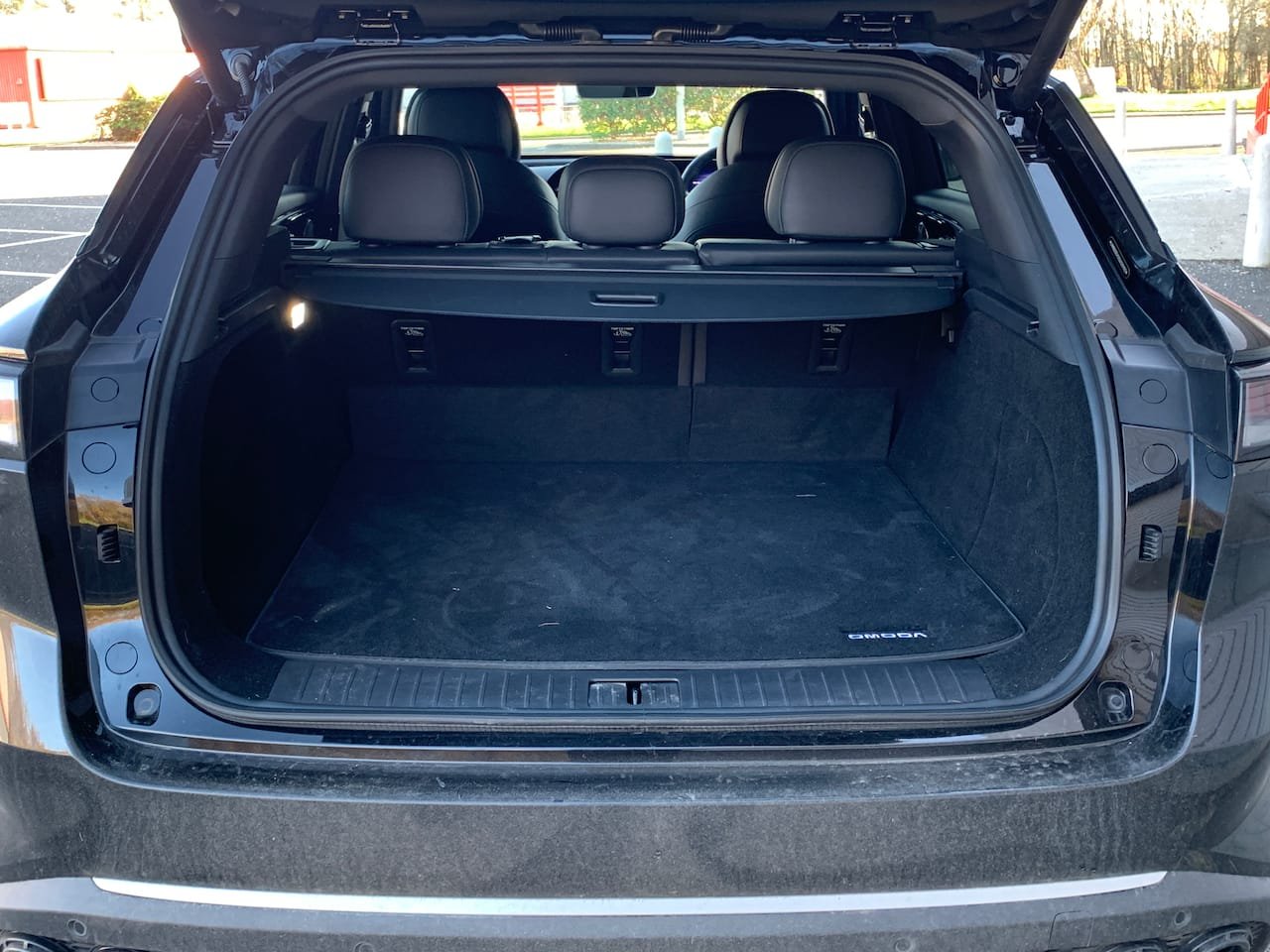
Boot space is a particular highlight. At 660 litres, capacity exceeds many rivals, and the square load area makes it genuinely practical. The loading lip is sensibly positioned, and the rear seats fold easily to create a broad, flat surface for larger items.
The inclusion of a 70-litre fuel tank alongside the sizeable battery underlines the vehicle’s dual-purpose engineering. It is not simply an electrified commuter with occasional touring ability; it is designed to handle both roles with confidence.
Taken as a whole, the interior feels refined and up-market. It delivers space, comfort and perceived quality in a way that supports the car’s flagship positioning.
Driving Impressions
With 449 bhp available, performance is undeniably strong. Yet the Omoda 9 does not present itself as a dramatic performance SUV. I’m sure it wouldn’t want to step on any Porsche toes . . .
In EV mode, progress is smooth and impressively quiet. The ability to travel up to 90 miles on electric power alone fundamentally changes the ownership experience. For many drivers, the petrol engine may remain unused for several days at a time.
Throttle response in electric operation is immediate but progressive, allowing for refined low-speed control. Around town, it feels composed, predictable and belies its size.
When full performance is requested, acceleration is forceful but measured. The 4.9-second sprint to 62mph feels entirely credible, and mid-range acceleration is particularly robust thanks to the broad torque band. Overtaking manoeuvres are completed with confidence and without hesitation.
The three-speed Dedicated Hybrid Transmission plays a key role in maintaining this composure. Unlike some hybrid systems that rely heavily on continuously variable transmissions, this setup behaves more like a conventional automatic. Power delivery feels natural, and transitions between electric and petrol propulsion are smooth and unobtrusive.
Ride quality prioritises comfort. The suspension absorbs road imperfections effectively, maintaining composure over uneven surfaces. While the vehicle’s mass is noticeable on tighter roads, body control remains disciplined and predictable.
Steering is accurate and well weighted at higher speeds, favouring stability over tactile feedback. This is not intended to be a sports SUV. Instead, it offers secure and confidence-inspiring handling suited to its size and purpose.

On motorways, refinement becomes one of its strongest attributes. Wind and road noise are well suppressed, and the cabin remains calm even at sustained cruising speeds. The combination of electric assistance and strong torque reserves makes long-distance travel relaxed and effortless.
Braking performance is similarly well judged. Regenerative braking blends seamlessly with conventional braking, maintaining consistent pedal feel and avoiding abrupt transitions.
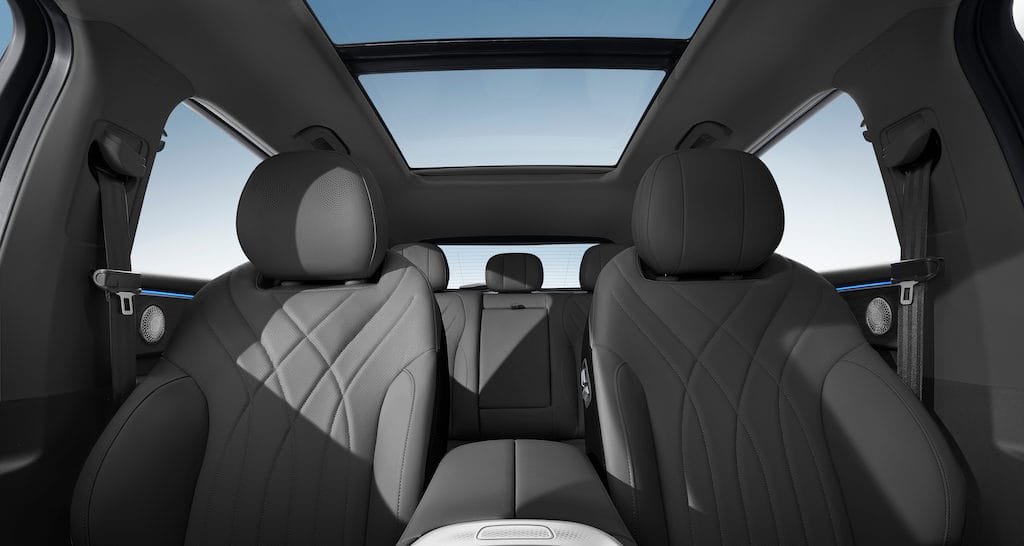
Overall, the driving experience reflects maturity. The Omoda 9 is quick when required, but its greater strength lies in refinement and everyday usability. Its comfort level don’t disappoint no matter which seat you are in.
Technology and Safety
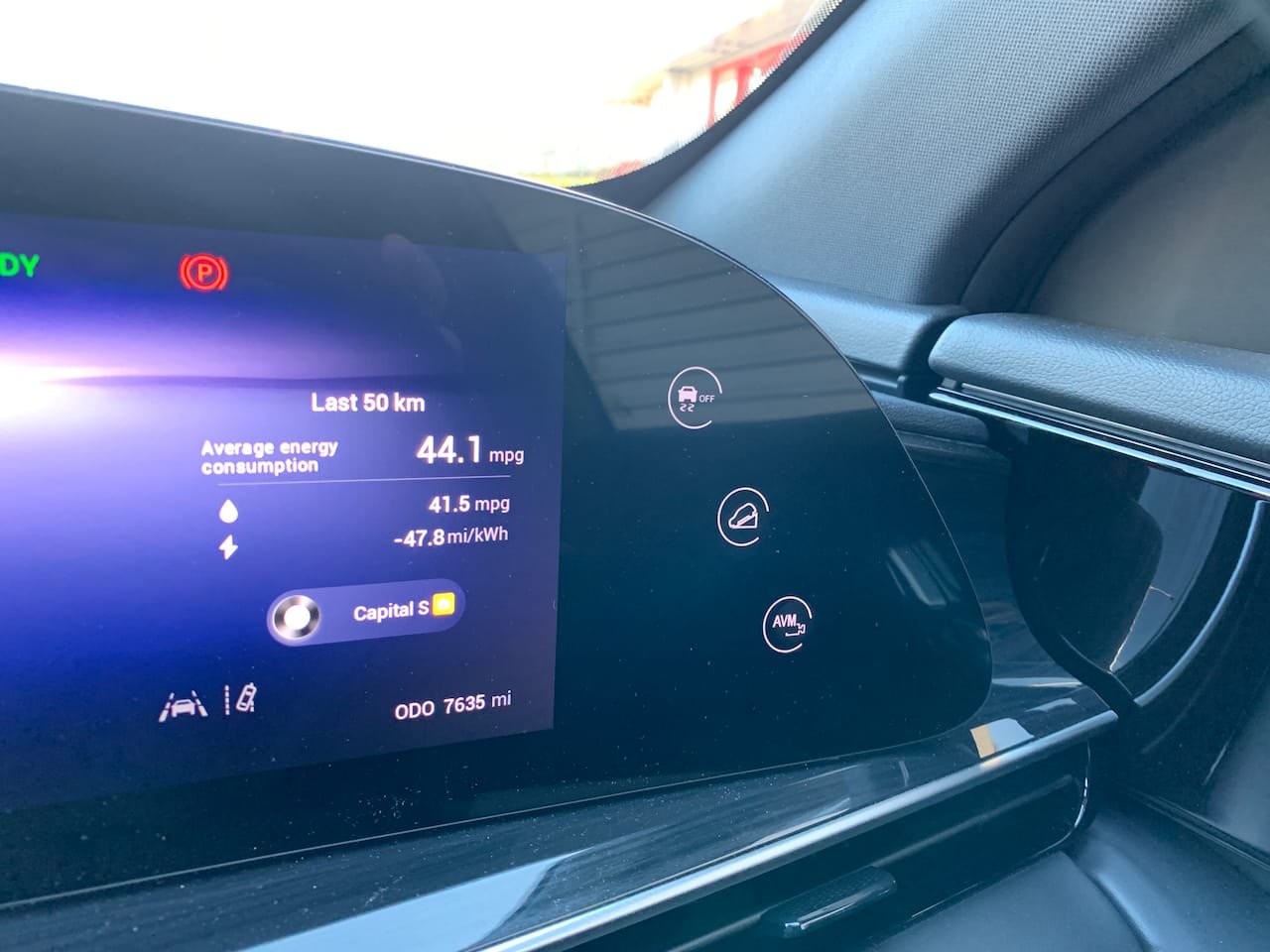
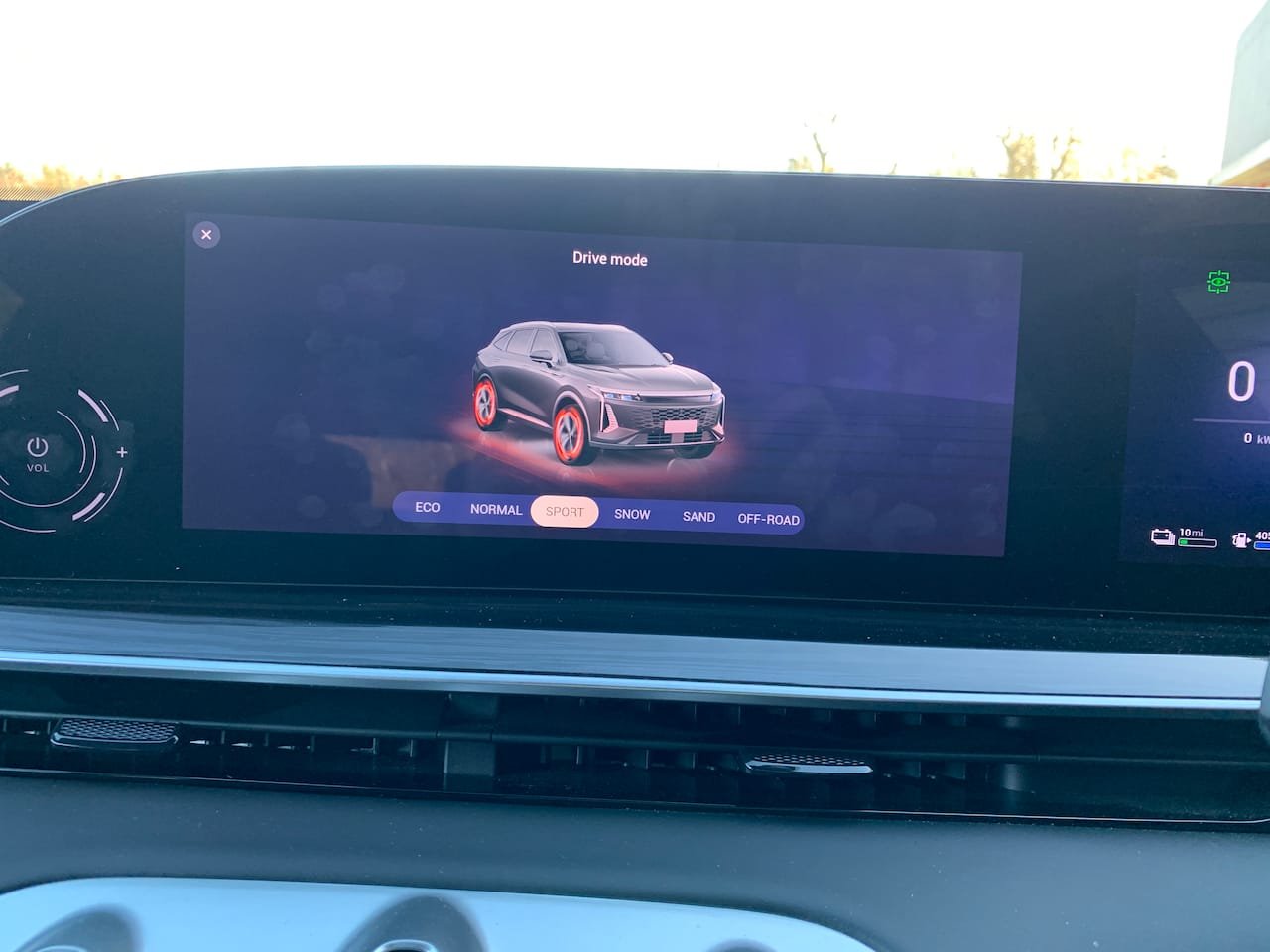
The infotainment system supports smartphone connectivity and provides clear navigation and media functions. The digital driver display is configurable and easy to interpret at a glance.
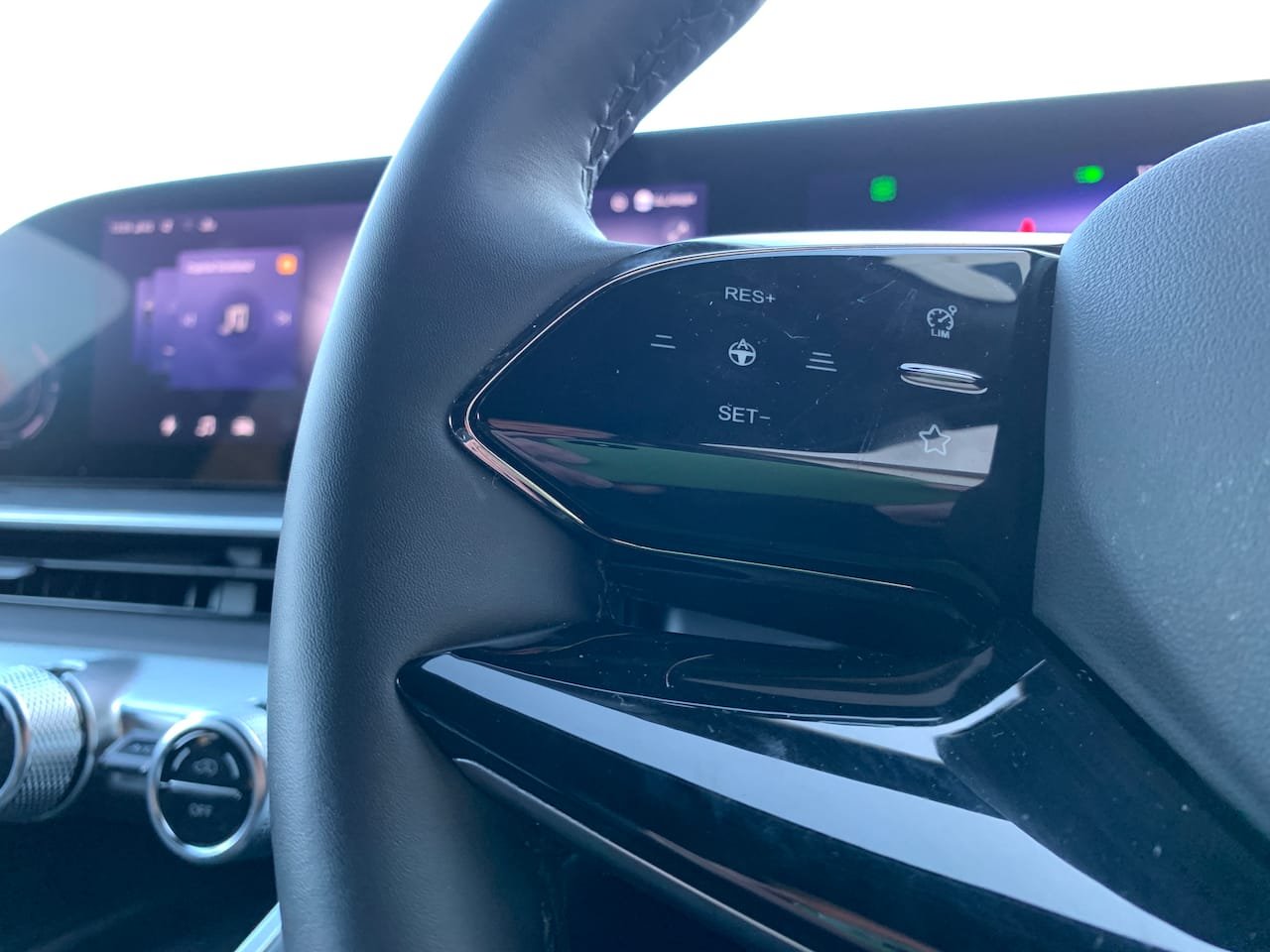
Driver assistance systems include adaptive cruise control, lane keeping assistance and blind-spot monitoring, among others. They operate effectively without constant correction, contributing to a reassuring rather than intrusive experience.
CO2 emissions are rated at 38g/km under WLTP testing, an appealing figure for company car drivers assessing Benefit-in-Kind costs.
Most significantly, the hybrid system itself represents meaningful technical ambition. Delivering 90 miles of electric range within a plug-in hybrid SUV enhances real-world flexibility in a tangible way.
Range, Charging and Practicality
The WLTP-rated electric range of 145km places the Omoda 9 among the most capable plug-in hybrids currently available at this price point.
In realistic mixed conditions, a range of 70 to 80 miles appears achievable. Combined with the 70-litre petrol tank, overall range comfortably exceeds 700 miles, making it well suited to extended journeys.
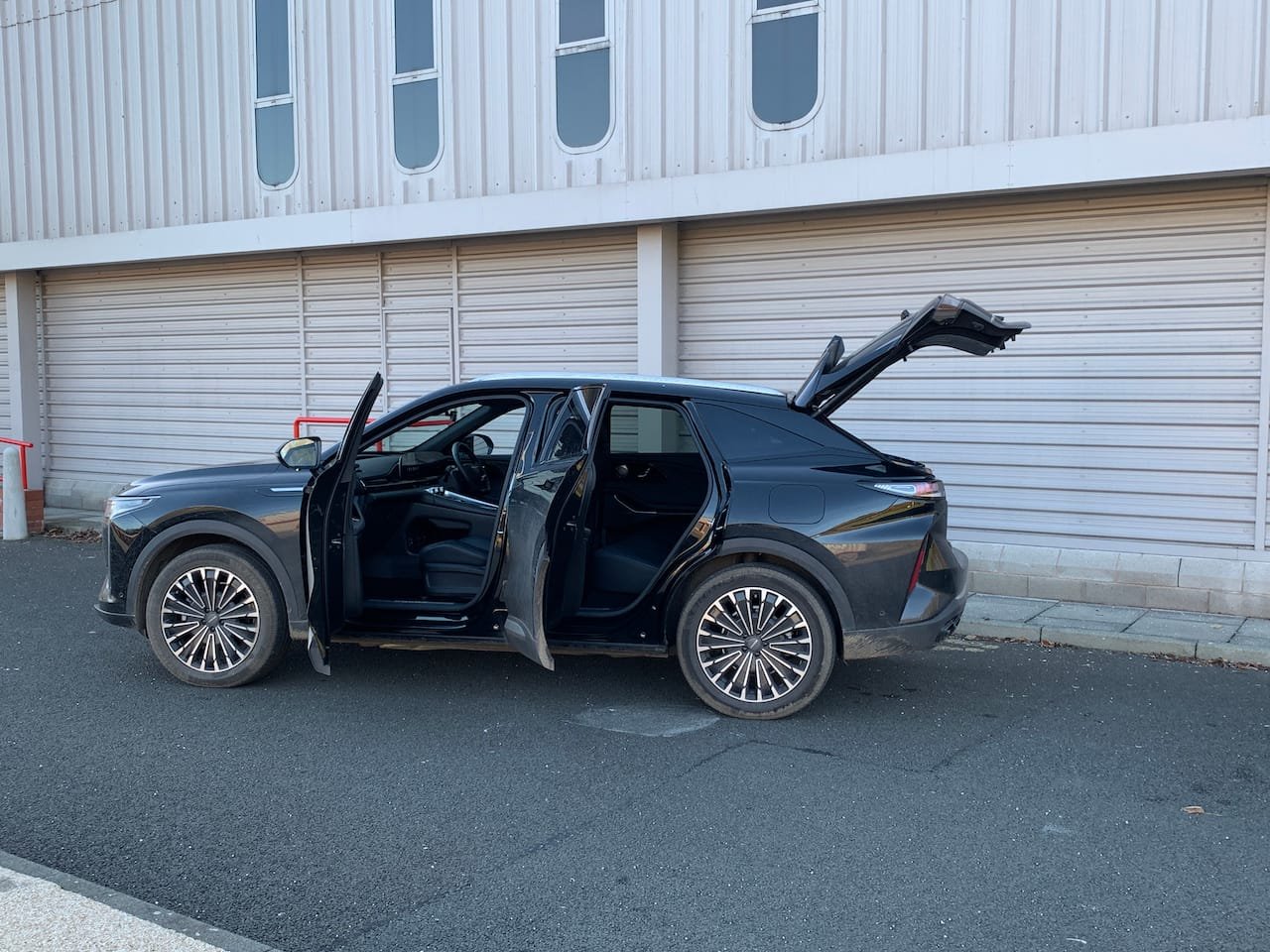
Five-seat practicality, generous rear space and a 660-litre boot ensure that electrification has not compromised usability. It functions convincingly as both a daily electric vehicle and a long-range family SUV.
Rivals
At £44,990 on the road, the Omoda 9 SHS competes directly with plug-in hybrids such as the Volkswagen Tiguan eHybrid and Hyundai Santa Fe PHEV, while undercutting many premium alternatives.
Few rivals offer this combination of power output and electric range at the same price. Established brands may provide longer-standing reputations and broader dealer networks, but on technical merit the Omoda 9 stands comfortably alongside them.
Brand recognition is still developing in the UK market. Long-term ownership experience will ultimately determine how quickly confidence builds.
Verdict
The Omoda 9 SHS is an ambitious and convincingly executed flagship.
It combines strong performance, unusually long electric range, impressive practicality and a well-finished interior at a price that challenges established competitors. The hybrid system delivers meaningful real-world benefit rather than headline figures alone.
For buyers willing to look beyond more familiar badges, the Omoda 9 SHS represents one of the more compelling electrified SUV propositions currently available.

At a Glance
- Make & Model: Omoda 9 SHS (UK-spec)
- OTR Price: £44,990
- Powertrain: SHS 1.5T petrol + multi-motor hybrid AWD (3DHT)
- Drive Power: 449 bhp
- Torque: 915 Nm (2,000–4,000 rpm)
- 0–62 mph: 4.9 seconds
- Top Speed: 111 mph
- EV Range (WLTP): 90 miles
- CO₂ (WLTP): 38 g/km
- Fuel Tank Capacity: 70 litres
- Boot Capacity: 660 litres
- Drive: All-wheel drive