THERE’S a moment when you collect a car for a road test when you start to form an opinion before you’ve even turned a wheel. With the Mazda6e, I was expecting a stylish, well-equipped electric car, but I’d also heard some reservations about how it drove.
Turns out I needn’t have worried quite so much . . .

My wife and I spent a week with the all-electric Mazda6e, covering more than 900 miles on a journey from our home in Fife, to my sister’s and brother-in-law’s farm in Rishworth, Yorkshire. We used the Mazda extensively to visit family and friends in Saddleworth, Leeds, The Peak District and Oldham, as well as making a trip to the Yorkshire Sculpture Park.
It was a proper test of the Mazda’s long-distance credentials and, overall, we were very impressed.
First impressions
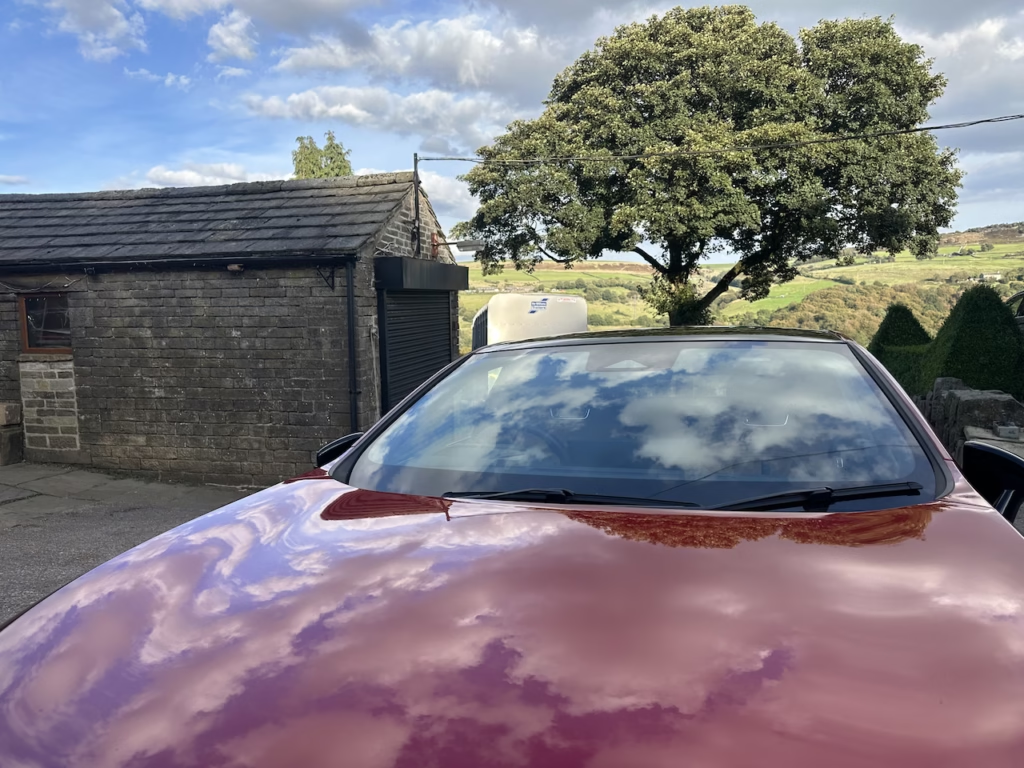
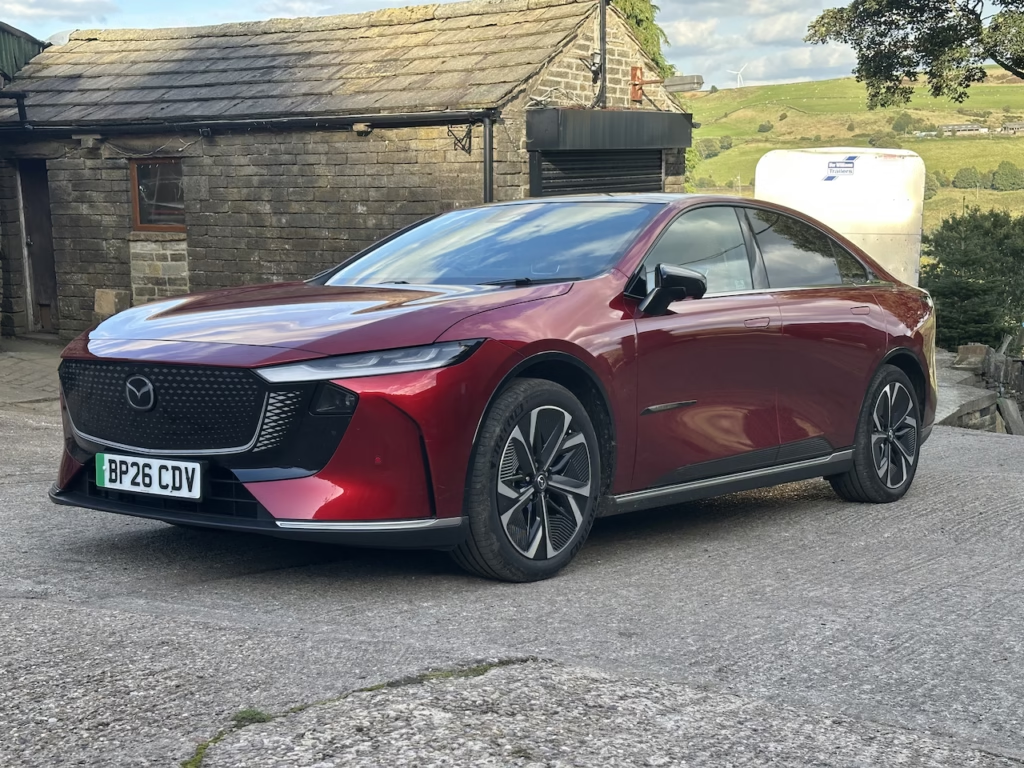
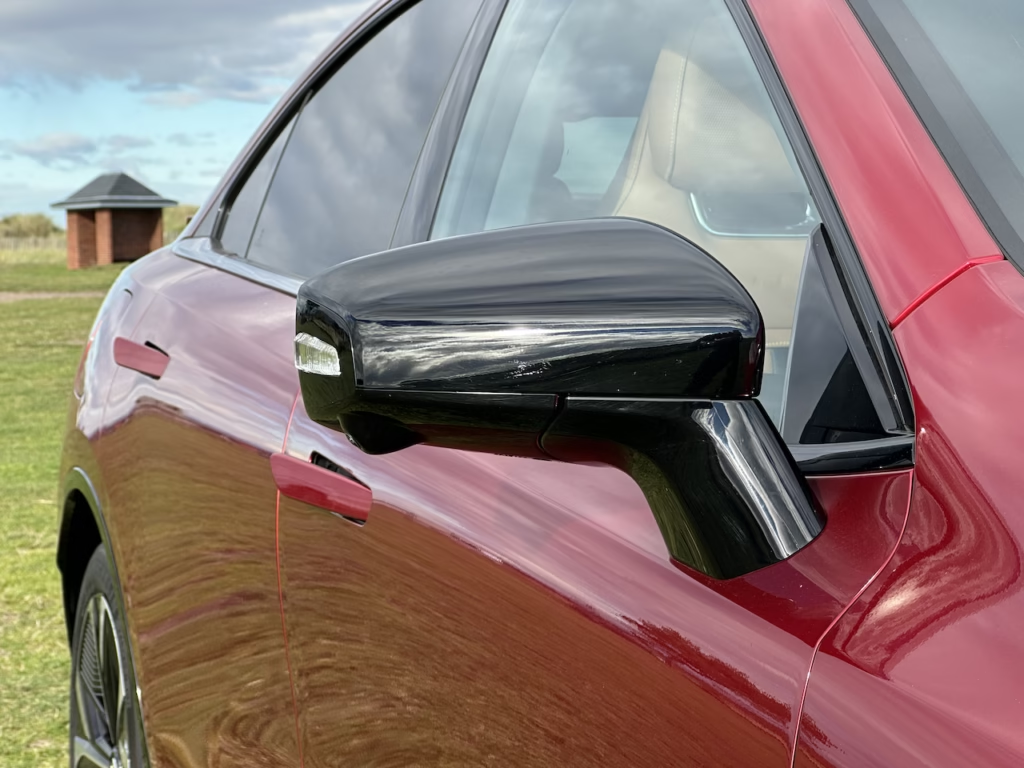
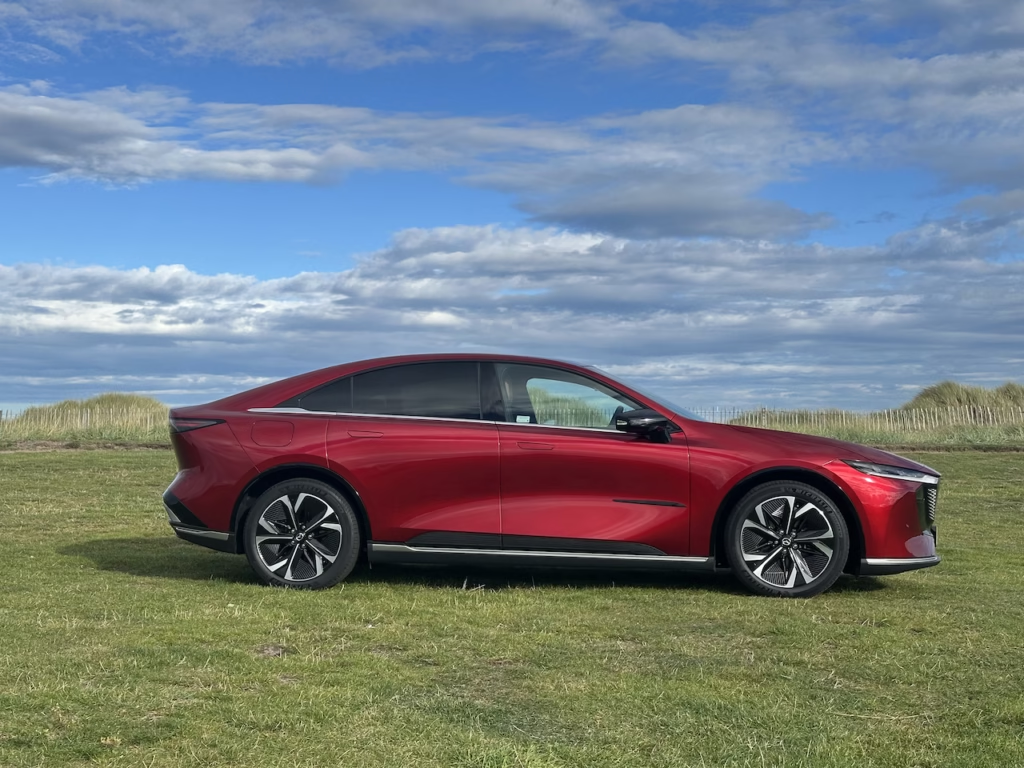
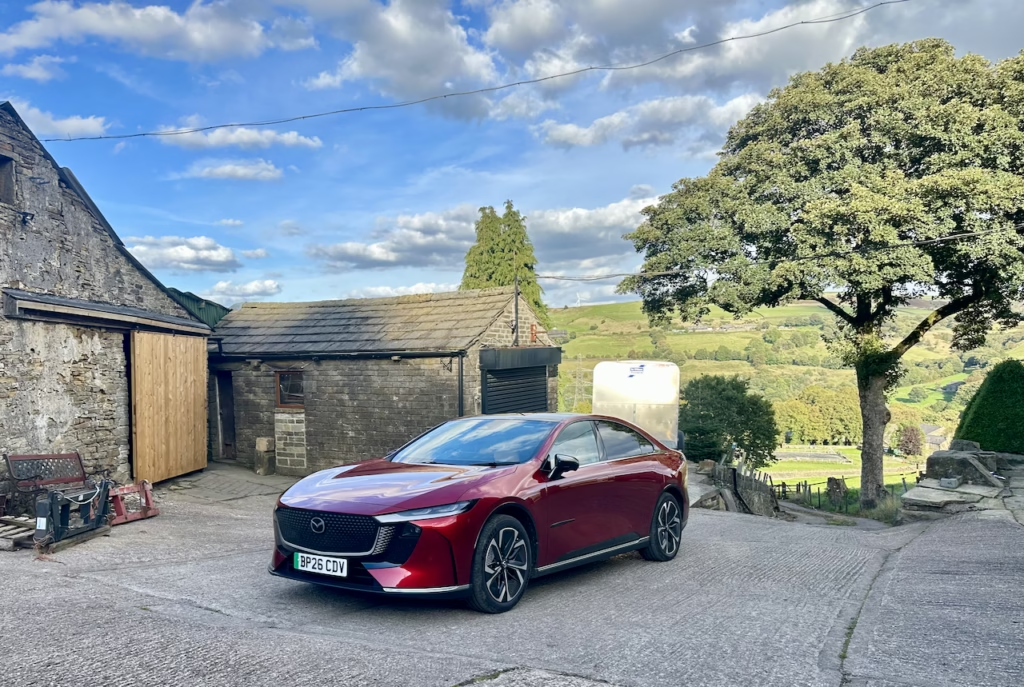
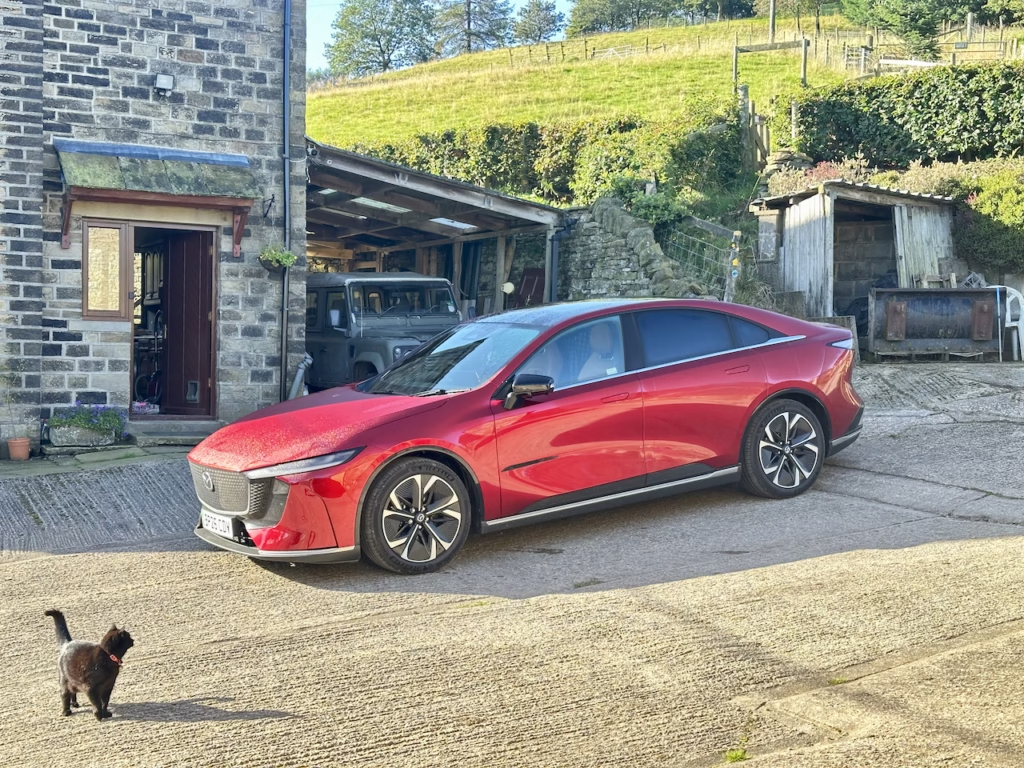
Finished in Soul Red Crystal, our Takumi Plus test car looked particularly handsome. The flowing bodywork, low roofline and coupe-like silhouette give it the presence of a stylish saloon, while the large rear hatch provides the practicality of a five-door family car.

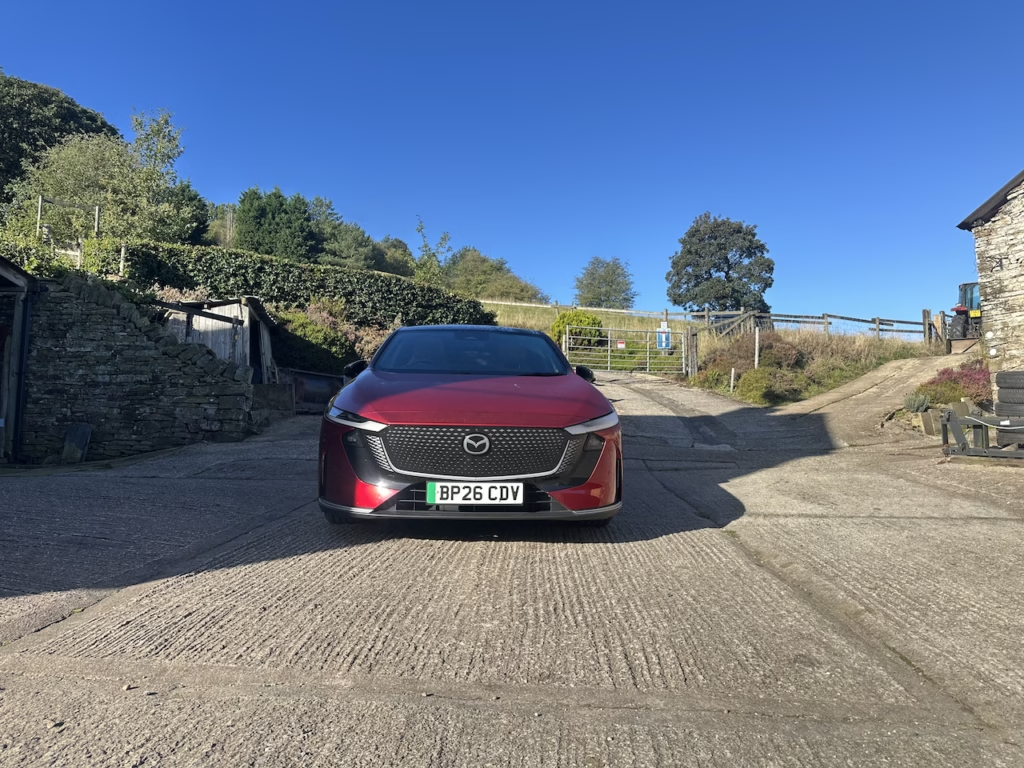
Mazda has always understood the importance of design, and the 6e is no exception. Its frameless doors, distinctive illuminated front grille and slim lighting signatures give it a classy look without screaming ‘electric!’ – or ‘Mazda!’ come to think of it.
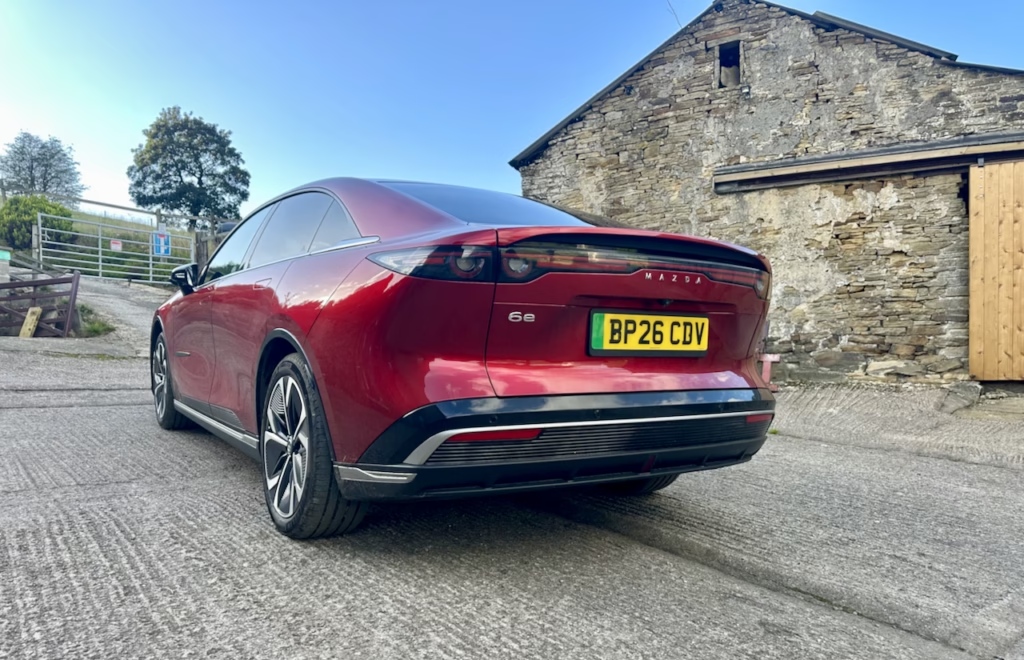
At the rear, an electrically extending spoiler adds a sporting touch, while the overall proportions are sleek and well balanced. It’s a car that looks expensive without being unnecessarily showy.

The design has already received significant recognition, winning the 2026 World Car Design of the Year award, and, having lived with it for a week, I can understand why.
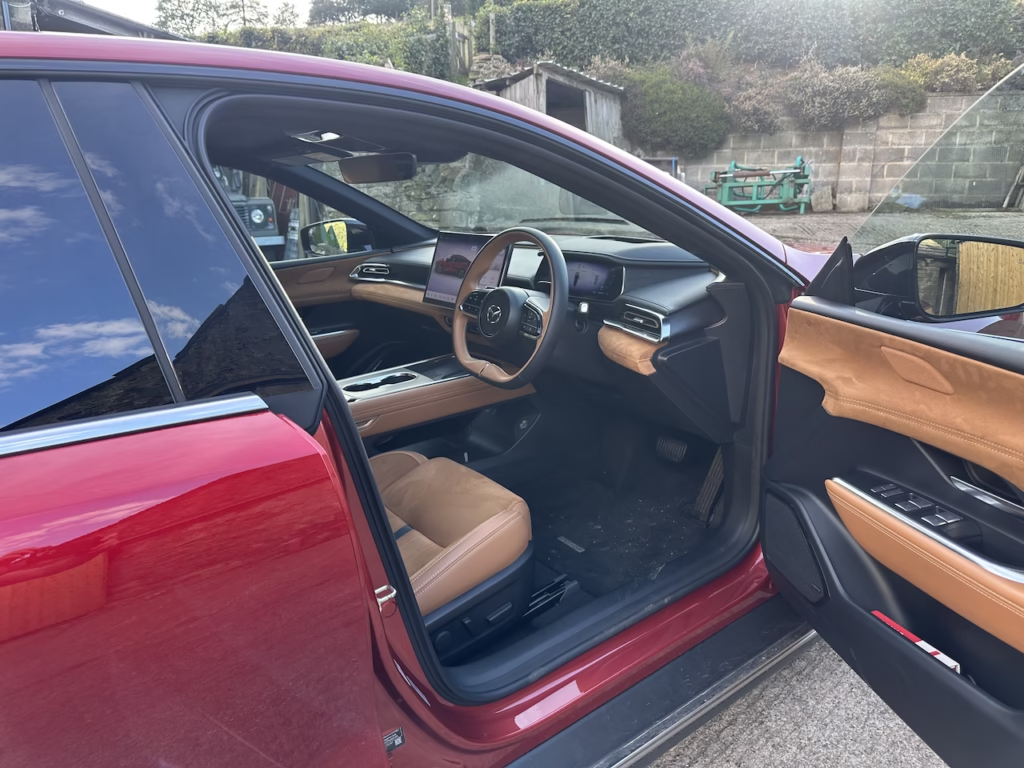
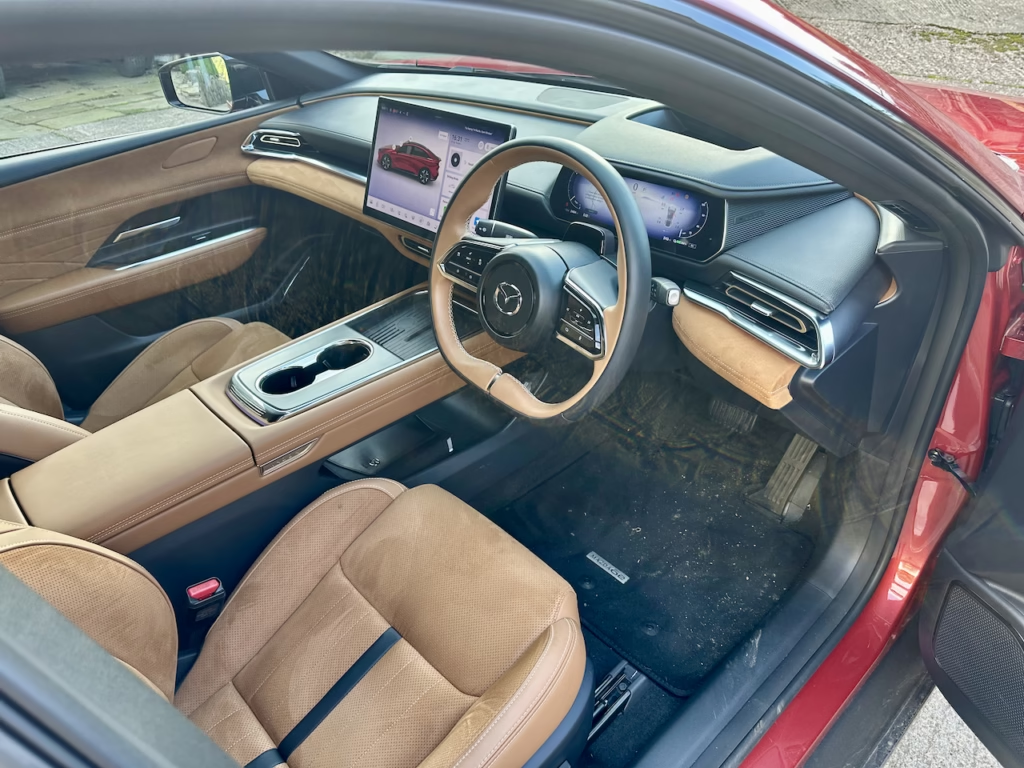
The interior continues the premium theme. There’s a panoramic glass roof, a floating centre console and a clean dashboard design, with our Takumi Plus model featuring tan Nappa leather and artificial suede trim. It feels spacious, airy and comfortable, making it a pleasant place to spend several hours at a time.
Driving
There is an important piece of background to the Mazda6e that helps explain some of its character. Despite the familiar Mazda badge and the company’s involvement in tuning the car for European roads, the 6e isn’t an entirely home-grown Mazda project.

It is built on the Changan EPA platform, sharing its underlying architecture with the Changan Deepal SL03. Changan is one of China’s major automotive manufacturers, and this relationship is an important part of understanding what the Mazda6e is – and why some aspects of the ownership experience feel rather different from what long-standing Mazda customers might expect.

That isn’t necessarily a criticism. The Chinese automotive industry has developed rapidly, particularly in electric vehicles, and the Mazda6e demonstrates that collaboration can produce a stylish, well-equipped and genuinely capable car. Mazda’s contribution is evident in the way the suspension, steering and overall driving characteristics have been tuned to suit European tastes.

Indeed, the way the 6e handled during our 900-mile-plus week away was one of its biggest strengths (and surprises). It was composed, comfortable and reassuring, without the bouncy ride that I’ve encountered in some other Chinese-developed cars. It felt like a proper Mazda from behind the wheel.

It handled well, with a reassuringly composed ride and predictable responses. Over the varied roads we encountered between Fife and Yorkshire and also around the Peak District it felt settled and comfortable rather than constantly bobbing about over undulations.
The Mazda6e felt like a car developed by people who understand that driving still matters.

Power comes from a rear-mounted electric motor producing 258ps and 290Nm of torque, driving the rear wheels. The 0-62mph sprint takes 7.3 seconds, which is more than adequate for everyday driving and makes overtaking straightforward.

As with most electric cars, acceleration is delivered smoothly and promptly. There is no need to wait for a gearbox to find the right ratio, and the Mazda feels brisk without being unnecessarily aggressive.
The steering is predictable, the suspension keeps the body under control and the car feels stable at motorway speeds. It may not be a sports saloon in the traditional sense, but it has enough driver appeal to distinguish it from some of the more anonymous electric alternatives.

Most importantly, it drove very much like a Mazda.
Our week with the 6e involved plenty of motorway miles, country roads and trips between towns and villages. It was here that the car’s comfort and refinement really came into their own.

The cabin is impressively quiet, with low levels of road and wind noise. The seats were comfortable over long distances, and the spacious interior meant neither of us felt cramped after several hours behind the wheel.
The panoramic (?) roof adds to the sense of space, while the overall design creates a calm environment. The Sony sound system was another highlight, delivering good-quality audio on our travels.

In short, the Mazda6e is a very good long-distance car.
The official combined WLTP range is 348 miles from its 78kWh lithium iron phosphate battery. Of course, real-world range depends on driving style, speed, weather and road conditions, but our experience confirmed that the Mazda is capable of covering substantial distances without charging becoming an obsession.

Setting off with a full battery, we covered more than 900 miles during the week, with charging adding up to around £130 according to the excellent Electroverse app. We eventually arrived home with a good 40% charge.
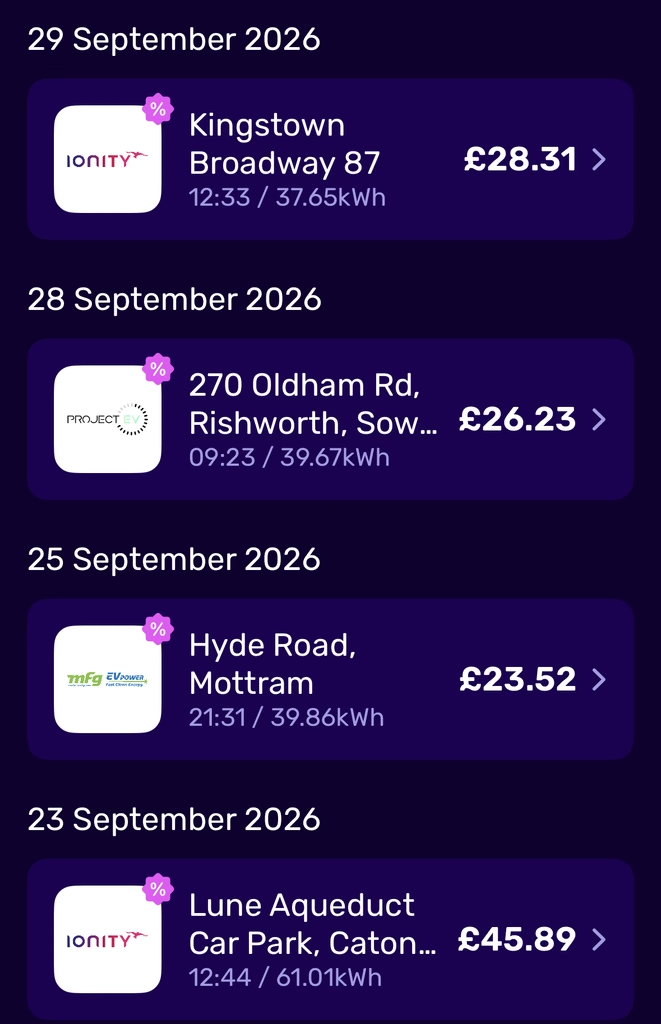
It is worth stressing that this was the cost of our particular journey and charging pattern, rather than a universal running-cost figure. Public charging prices vary considerably, and where you plug in makes a significant difference.

Nevertheless, we found charging perfectly manageable. The key was choosing the right chargers and not automatically relying on motorway service stations, where prices can be considerably less attractive.
The Mazda6e supports DC rapid charging at up to 200kW, with a claimed 10-80 per cent charge taking around 24 minutes under suitable conditions. That makes longer journeys entirely practical, provided you plan charging stops sensibly.

Our experience was reassuring. We didn’t find ourselves constantly worrying about the battery, and the car proved perfectly capable of handling a busy week away from home.
Practicality
The Mazda6e’s sleek styling might suggest a conventional saloon, but the large rear hatch makes it much more useful.
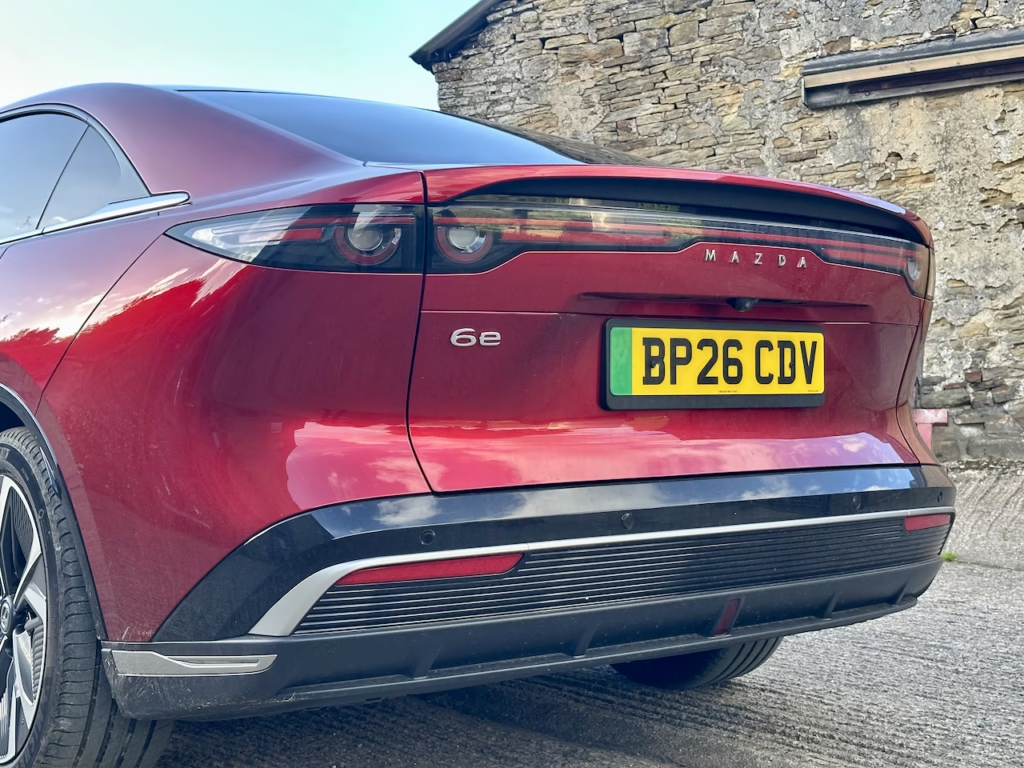
The boot offers 337 litres in its standard configuration, while loading to the roofline increases capacity to 466 litres. Fold the rear seats and there’s up to 1,074 litres available.There’s also a 72-litre front boot, ideal for storing charging cables.

That combination of hatchback practicality and front storage is particularly welcome in an electric car. It means the charging cable doesn’t have to compete with luggage, shopping or weekend bags.

Passenger space is generous, too, making the Mazda a credible alternative to a traditional family saloon or estate. Leg room for rear-seat passengers is particularly good.

Technology – the good and the bad
Some of the Mazda6e’s software quirks make more sense when you consider its Chinese engineering origins. The underlying platform and much of the car’s technology come from a different automotive environment, where touchscreen interfaces and software-led controls have become increasingly common.

The trouble is that not every decision translates particularly well to everyday driving in the UK.
Having to navigate menus to adjust the door mirrors or change wiper settings is a good example. These are basic functions that most drivers expect to operate immediately, without having to work their way through a digital interface.

Then there are the more distracting quirks. On the narrow, steep climb to my sister’s farmhouse in Rishworth, the repeated warning that the road was ‘Too steep. 360 degree view is enabled’ became irritating very quickly.
The automatic switch to the 360-degree camera view whenever I used the indicators was equally frustrating, repeatedly interrupting the navigation display for several seconds. Not good if you’re navigating a series of unfamiliar town centre turns.

None of these issues is proof that the car’s Chinese origins are directly responsible for every individual software decision. But together, they suggest that the technology hasn’t been integrated with quite the same sensitivity to the driver’s needs that Mazda has demonstrated in its chassis tuning.
Mazda has clearly worked hard to make the 6e drive as European customers would expect. The same attention needs to be applied to its software, particularly where basic controls and driver information are concerned.
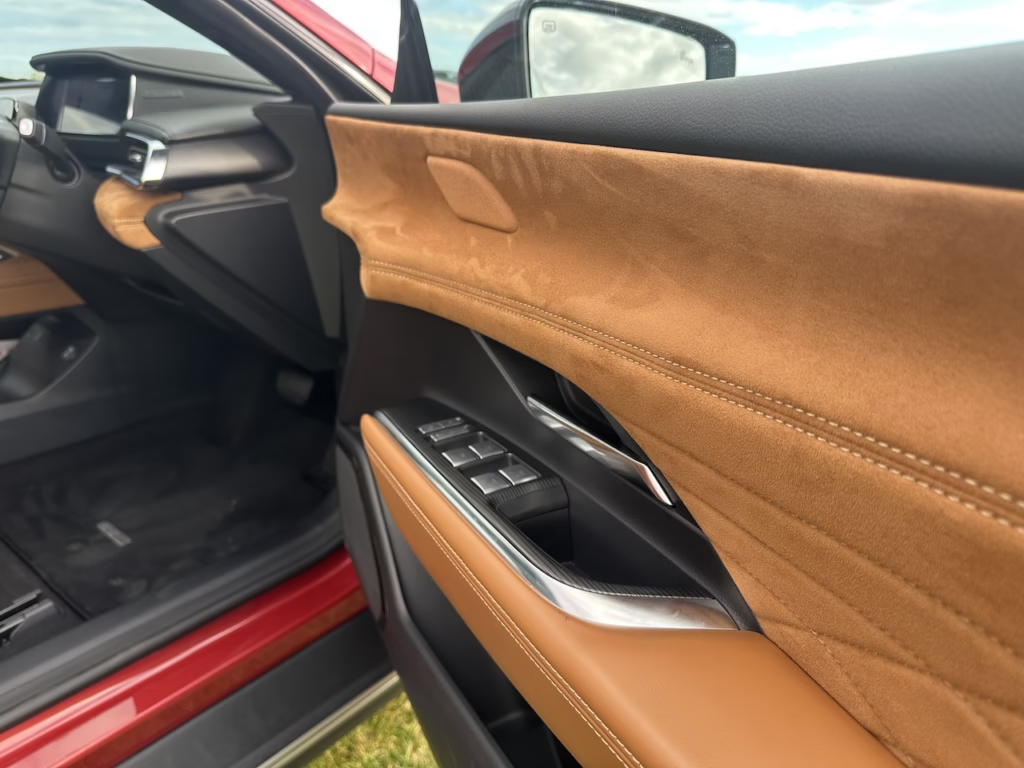
To be fair, the system isn’t without its good ideas.
One particularly useful feature is the programmable star button on the steering wheel. I used it to disable the over-speed warning, making it easy to switch off a feature that I found intrusive without having to hunt through menus every time.
The 14.6-inch central touchscreen is large and clear, and the built-in navigation is straightforward enough once you’re familiar with the interface. Wireless Apple CarPlay and Android Auto are included, while the Sony sound system with 14 speakers provides an enjoyable soundtrack.

The equipment list is generous, too. Our Takumi Plus included premium tan Nappa leather, heated and ventilated front seats, a heated steering wheel, panoramic glass roof with electric sunshade, wireless phone charging and a comprehensive suite of driver assistance systems.
The key is that these features should make life easier, rather than forcing the driver to spend too much time managing the technology. The Mazda gets much of it right, but there are still some rough edges.

Value and specification
The UK Mazda6e range is refreshingly straightforward, with two trim levels: Takumi and Takumi Plus.
Prices start at £38,995 for the Takumi, rising to £39,995 for the Takumi Plus. Our test car was finished in Soul Red Crystal, a £1,000 option, bringing the total to £40,995.
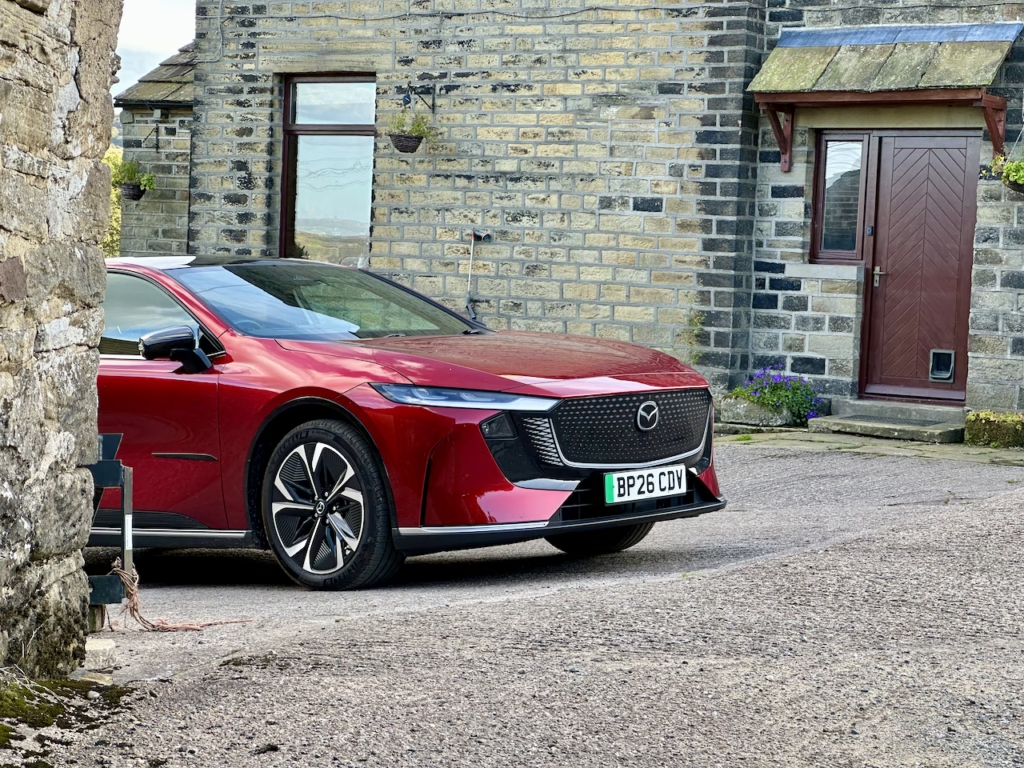
Both versions use the same 78kWh battery, rear-wheel-drive layout and 258ps motor, with a claimed 348-mile WLTP range.
The Mazda6e also comes with a six-year/100,000-mile vehicle warranty and an eight-year/100,000-mile battery warranty.
There is plenty of competition in the electric family-car market, but the Mazda’s combination of styling, comfort, equipment and genuine driving ability makes it an appealing proposition.
Verdict
After more than 900 miles, I came away impressed by the Mazda6e. It looks terrific in Soul Red Crystal, is exceptionally comfortable over long distances and handles far better than I’d been led to expect. Charging was straightforward once we chose the right locations, and the car proved an excellent companion for our week travelling between Fife, Yorkshire, Derbyshire and Lancashire.
Its Chinese engineering roots shouldn’t be viewed as a weakness in themselves. The Changan EPA platform and its relationship with the Deepal SL03 are part of the reality of today’s electric-car industry, where partnerships and shared architectures are increasingly common. What matters is how successfully the finished car delivers on the promise of its badge.
In the Mazda6e’s case, the driving experience is convincing. The software experience is less so.

Some of the interface decisions feel as though they have been carried over from a different market without enough consideration of how British drivers actually use their cars. That’s frustrating because the rest of the package is so accomplished.

I’d happily undertake another long journey in the Mazda6e. It’s stylish, refined, practical and genuinely enjoyable to drive. But I’d also like to see Mazda take a firmer hand in refining the software and making the everyday controls more intuitive.

The Mazda6e is a very good electric car – and a particularly good long-distance companion. Sort out a few software niggles, and it could be an excellent one.


At a glance
- Price as tested: £40,995
- Powertrain: 78kWh LFP battery, rear-wheel drive
- Power: 258ps
- Torque: 290Nm
- 0-62mph: 7.3 seconds
- Maximum speed: 109mph
- Official WLTP range: 348 miles
- Maximum DC charging rate: 200kW
- Claimed 10–80% charging time: 24 minutes
- Warranty: Six years/100,000 miles (vehicle); eight years/100,000 miles (battery)