THERE’S something oddly refreshing about driving a normal hatchback in 2026.
Not “normal” in the sense of dull or forgettable, but normal in the sense that it sits lower to the ground, doesn’t pretend to be an SUV and doesn’t ask you to recalibrate your expectations around charging speeds, battery pre-conditioning or whether your home wallbox app has decided to stop talking to the car.

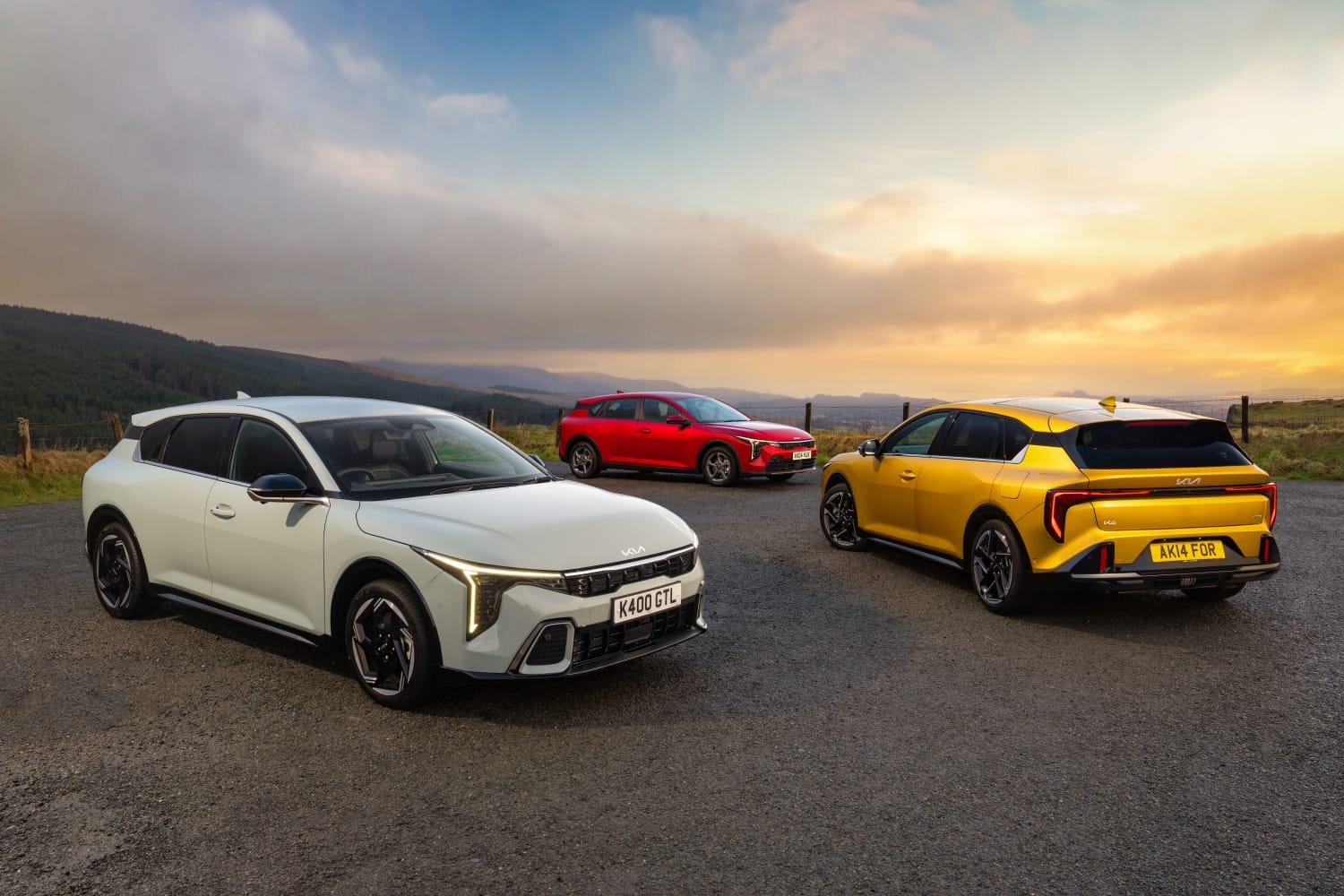
The Kia K4 is, at heart, a family hatchback – and after a run of electric SUVs, plug-in hybrids and coupe-crossovers, that in itself feels faintly rebellious.
That matters, because the market has been steadily abandoning cars like this. Manufacturers have rushed toward SUVs and electrification, often leaving the humble family hatch to fend for itself.
Kia, to its credit, hasn’t entirely given up on the format. The K4 arrives as a direct replacement for the Ceed, but it also feels like something of a statement: that there is still value in a lower-slung, petrol-powered hatchback with a sensible footprint, decent boot space and a driving position that doesn’t make you feel like you’re on stilts.
The version tested here was the K4 GT-Line 1.6 T-GDi 7DCT, finished in Moonlight Mint and priced at £32,095 OTR before the £620 premium paint option. It sits in the middle of the K4 range, but with the larger 1.6-litre petrol engine rather than the entry-level 1.0 mild-hybrid. On paper, that makes it something of a sweet spot – enough performance to feel usefully brisk, plenty of standard equipment, and none of the visual excess or cost creep of the range-topping GT-Line S.
Overview
The Kia K4 is Kia’s new entrant into the increasingly unfashionable non-SUV hatchback market. It replaces the Ceed in spirit if not entirely in name, and sits alongside the all-electric EV4 and XCeed crossover as part of Kia’s broadened approach to family transport. And more power to them, I say.
In the UK, the K4 is available in three trims – Pure, GT-Line and GT-Line S – and with a choice of petrol powertrains depending on grade.
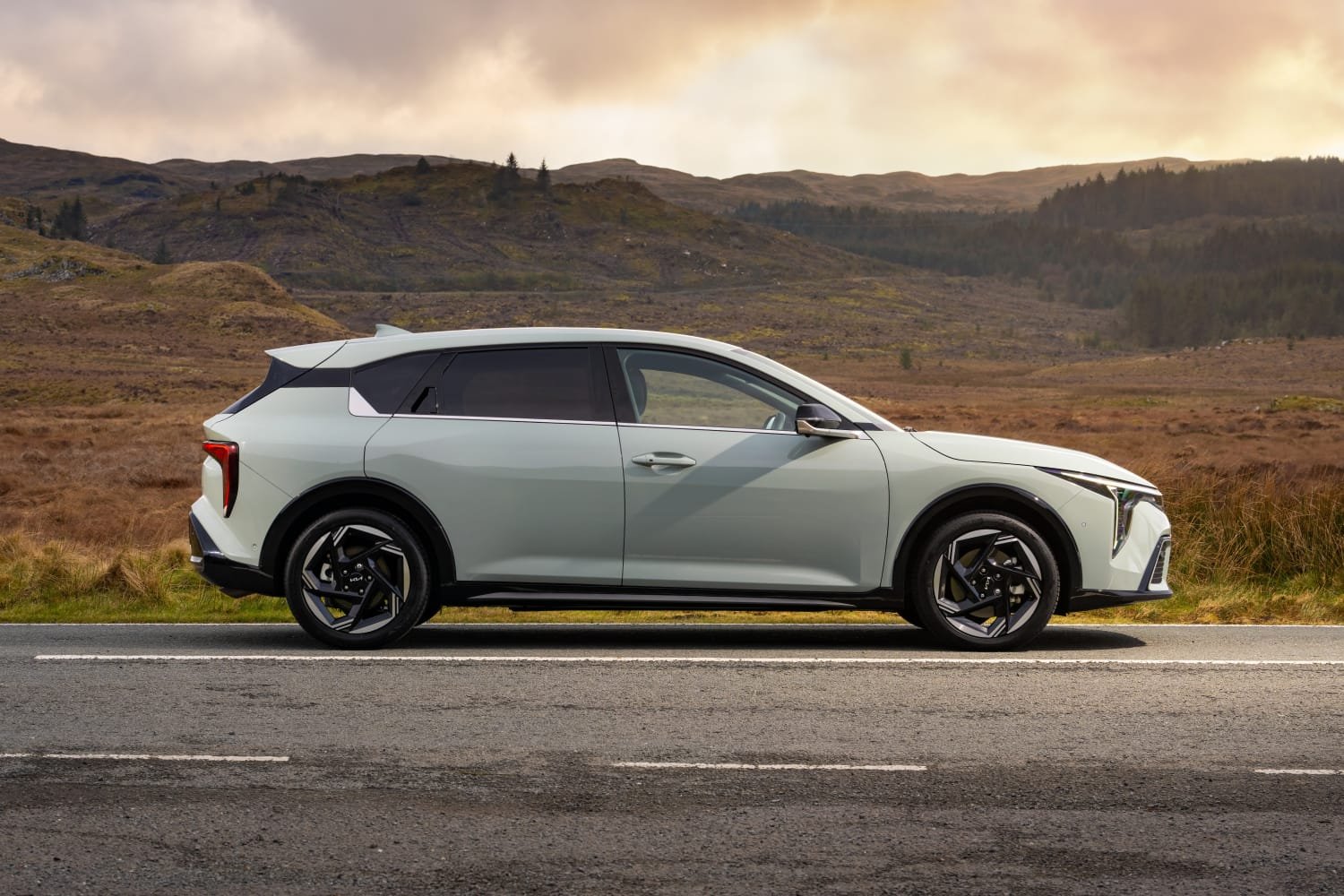
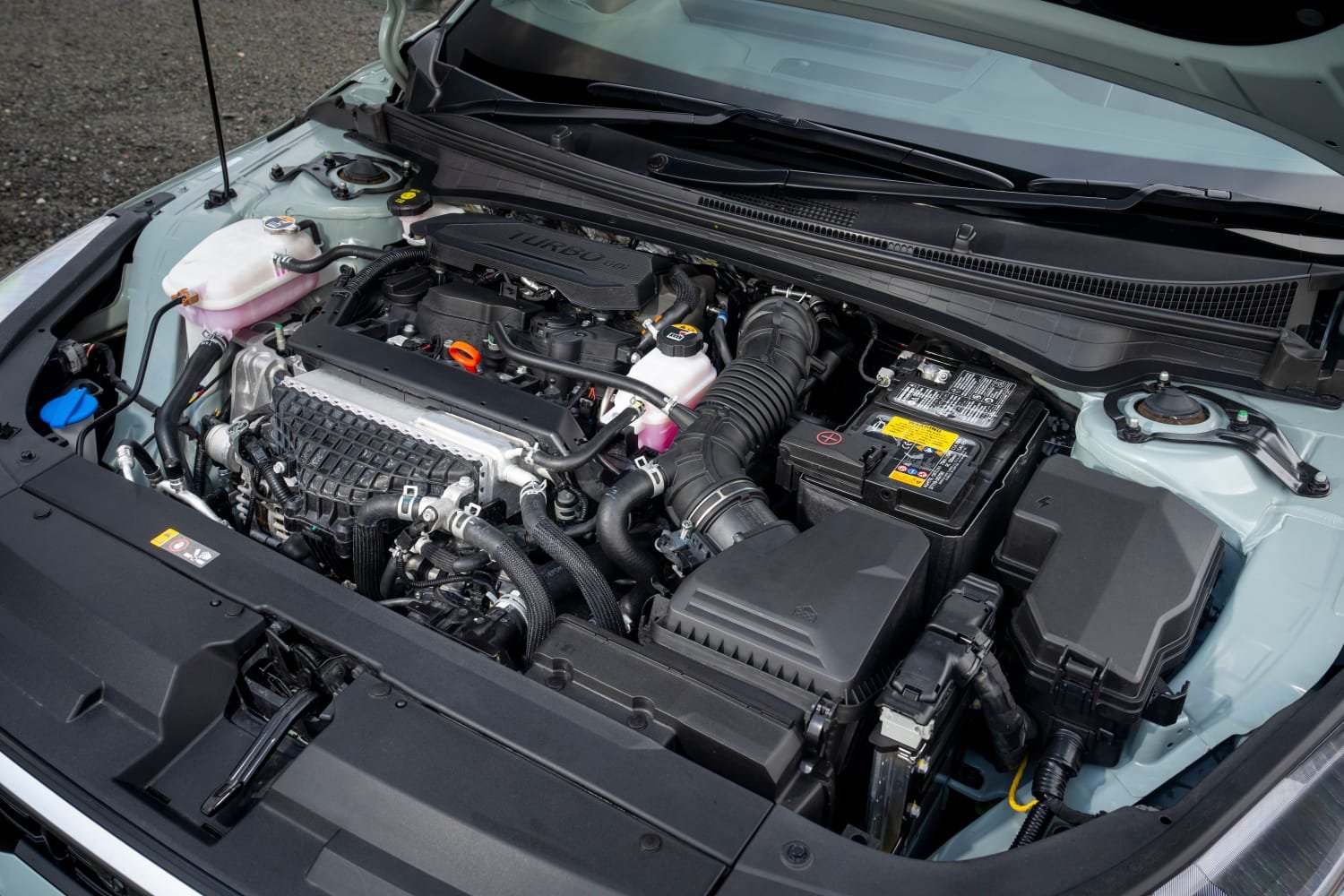
Entry-level cars use a 1.0-litre T-GDi mild-hybrid with 113bhp, while the GT-Line can be had with either that engine or the larger 1.6-litre T-GDi tested here. At the top of the range, the GT-Line S gets a more potent 177bhp version of the same 1.6-litre turbocharged unit.
My press car uses the mid-range 147bhp 1.6 T-GDi, paired with Kia’s seven-speed dual-clutch automatic gearbox. It produces 250Nm of torque, manages 0-62mph in 9.1 seconds and tops out at 127mph. Combined fuel economy is quoted at 43.6mpg, with CO₂ emissions of 148g/km.
Those numbers won’t set pulses racing, but that isn’t really the point. The K4 is aimed at buyers who still want the simplicity of petrol power, the convenience of a conventional hatchback and the familiarity of a car that doesn’t require a software update before it’ll unlock the glovebox.
What’s also worth noting is the K4’s size. At 4,440mm long and with a 2,720mm wheelbase, it’s larger than the old Ceed and edges closer to the territory once occupied by cars like the Ford Mondeo hatch. That extra size brings meaningful benefits in cabin space and boot capacity, without making the car feel unwieldy in town.
Design
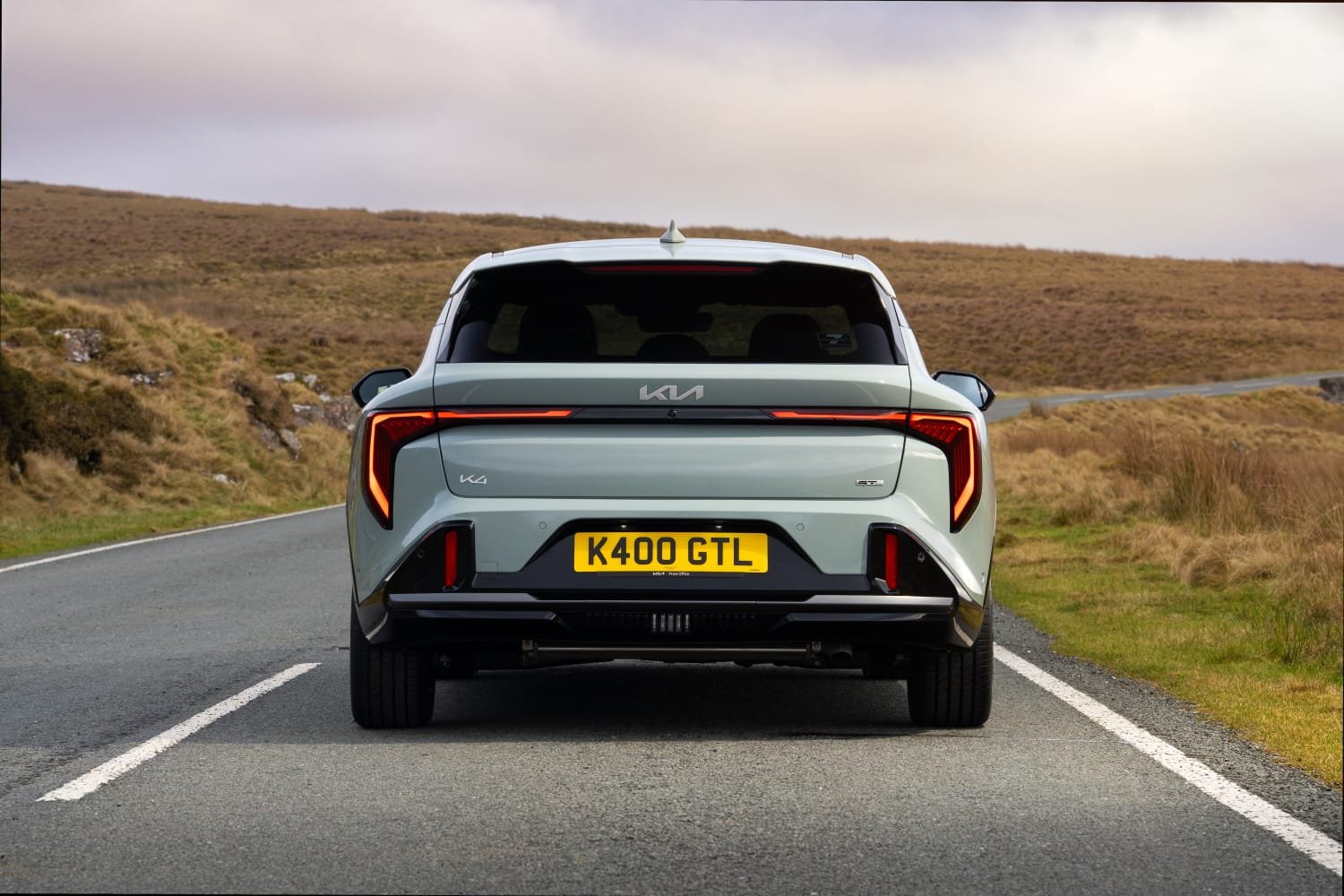
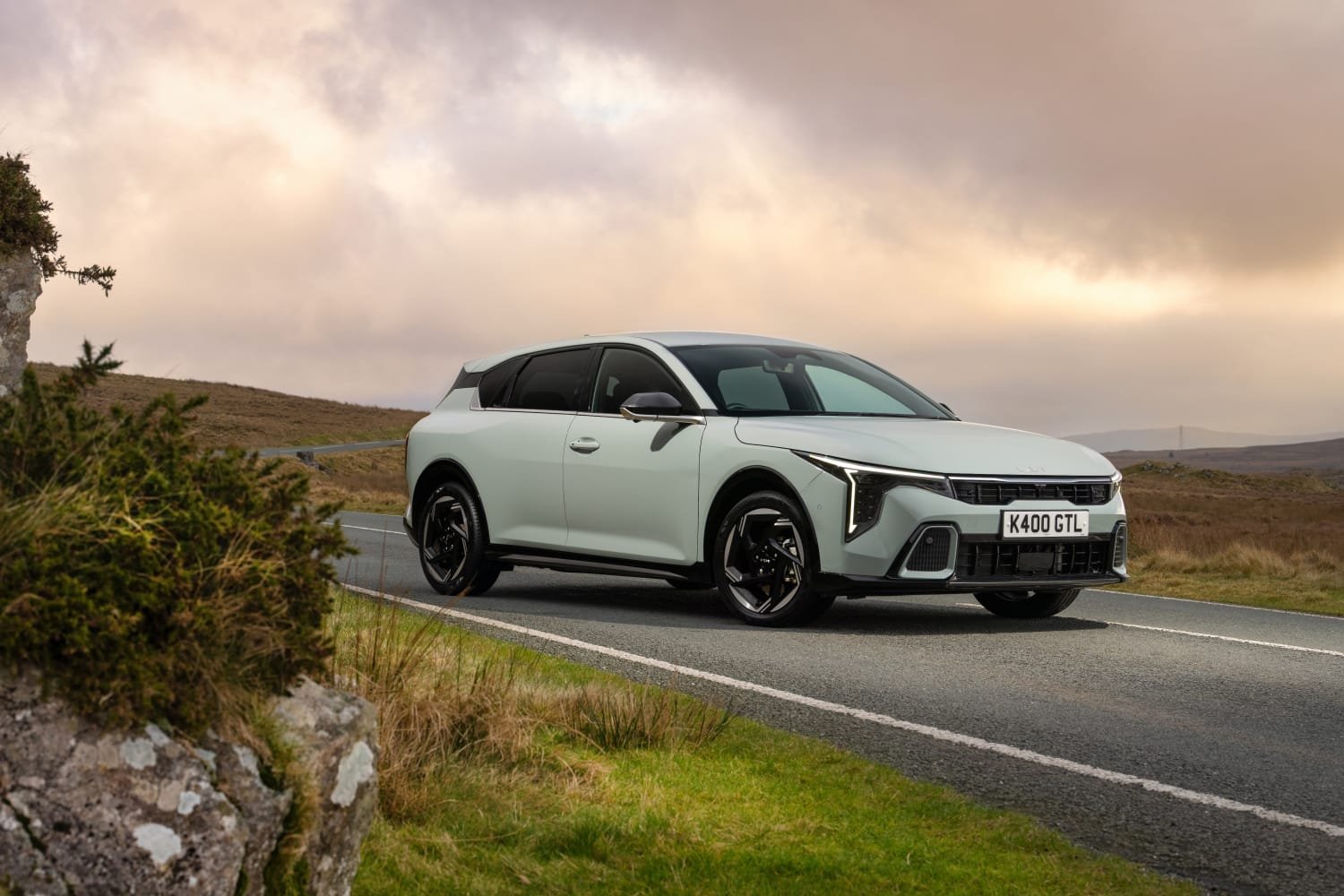
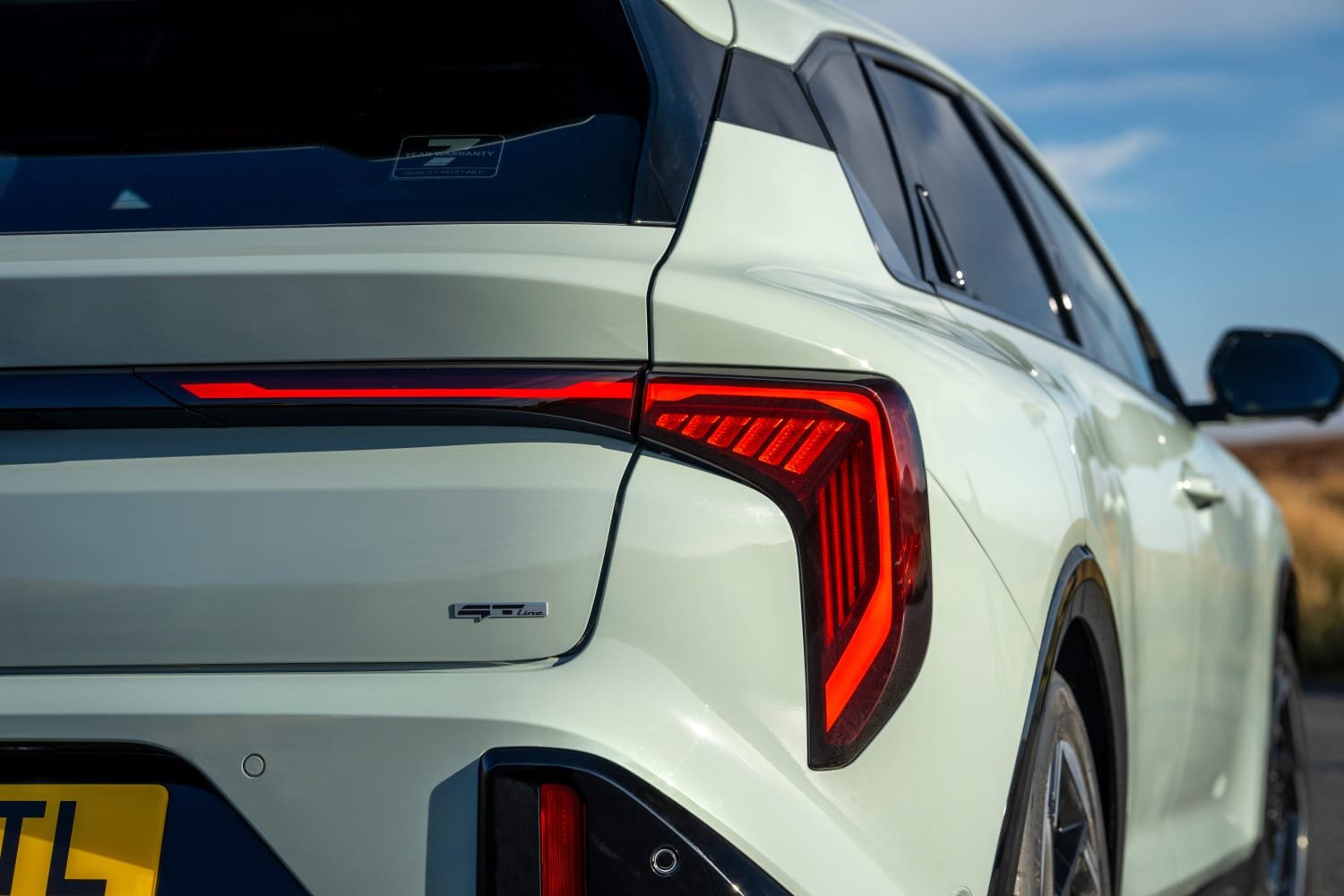
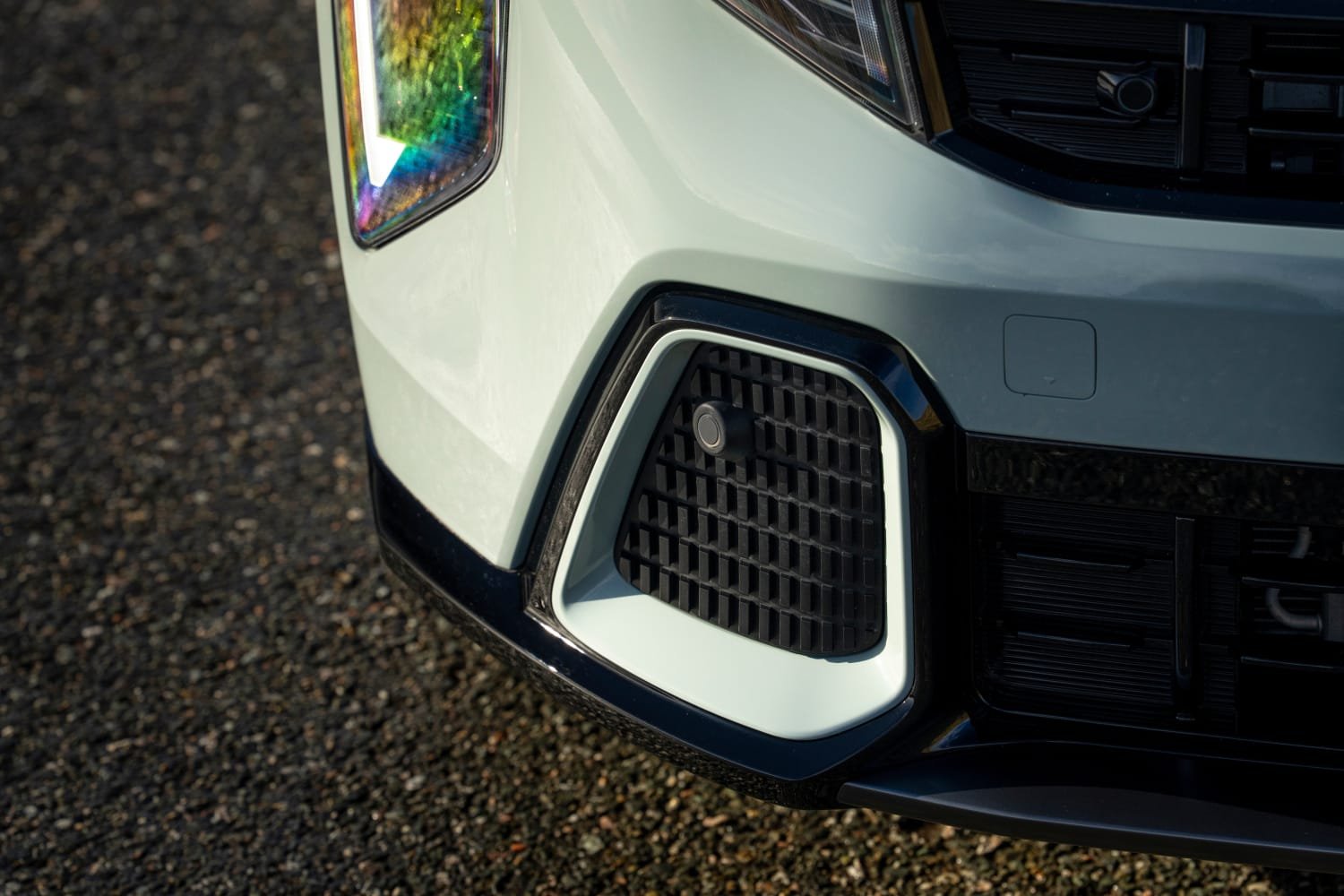
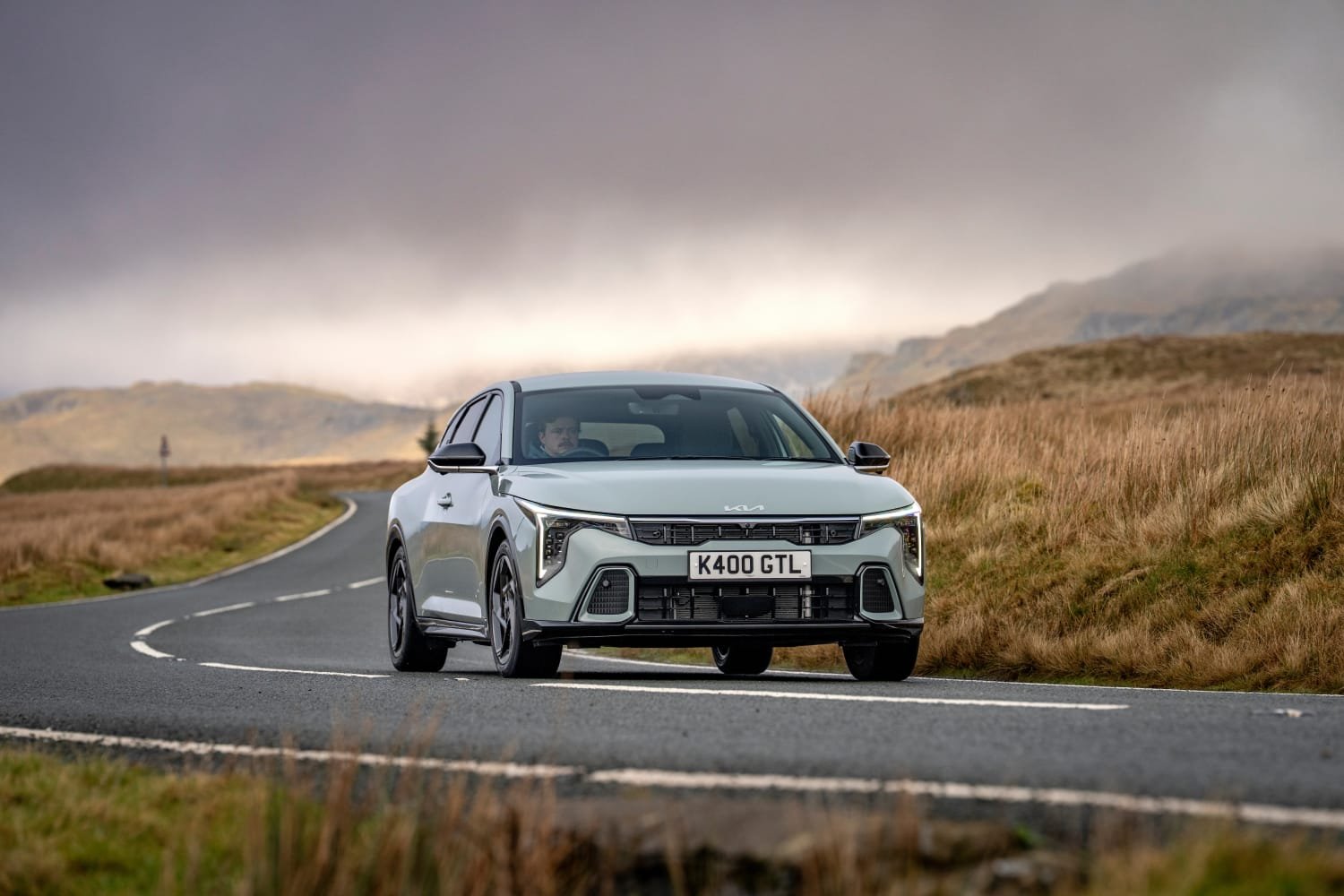
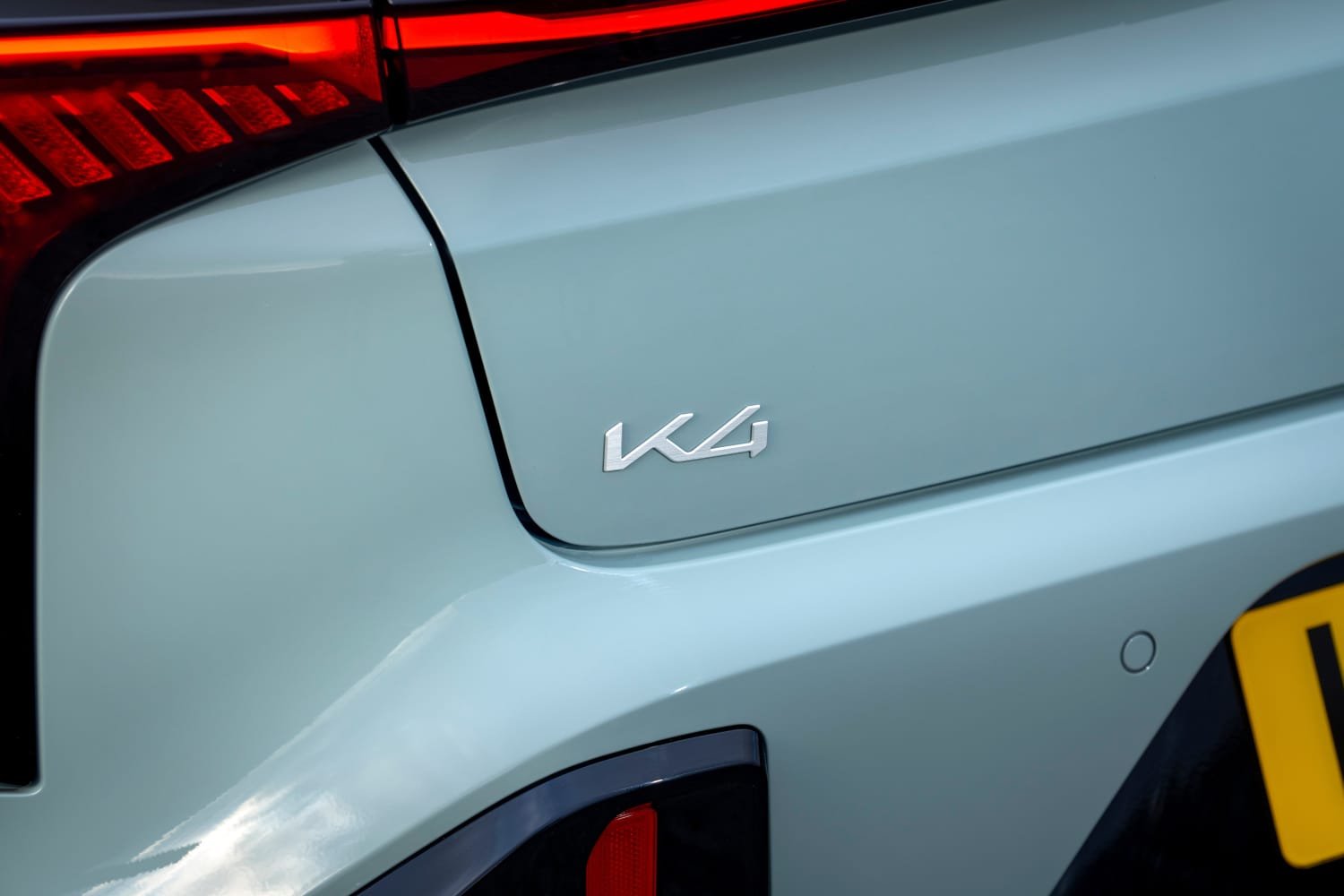
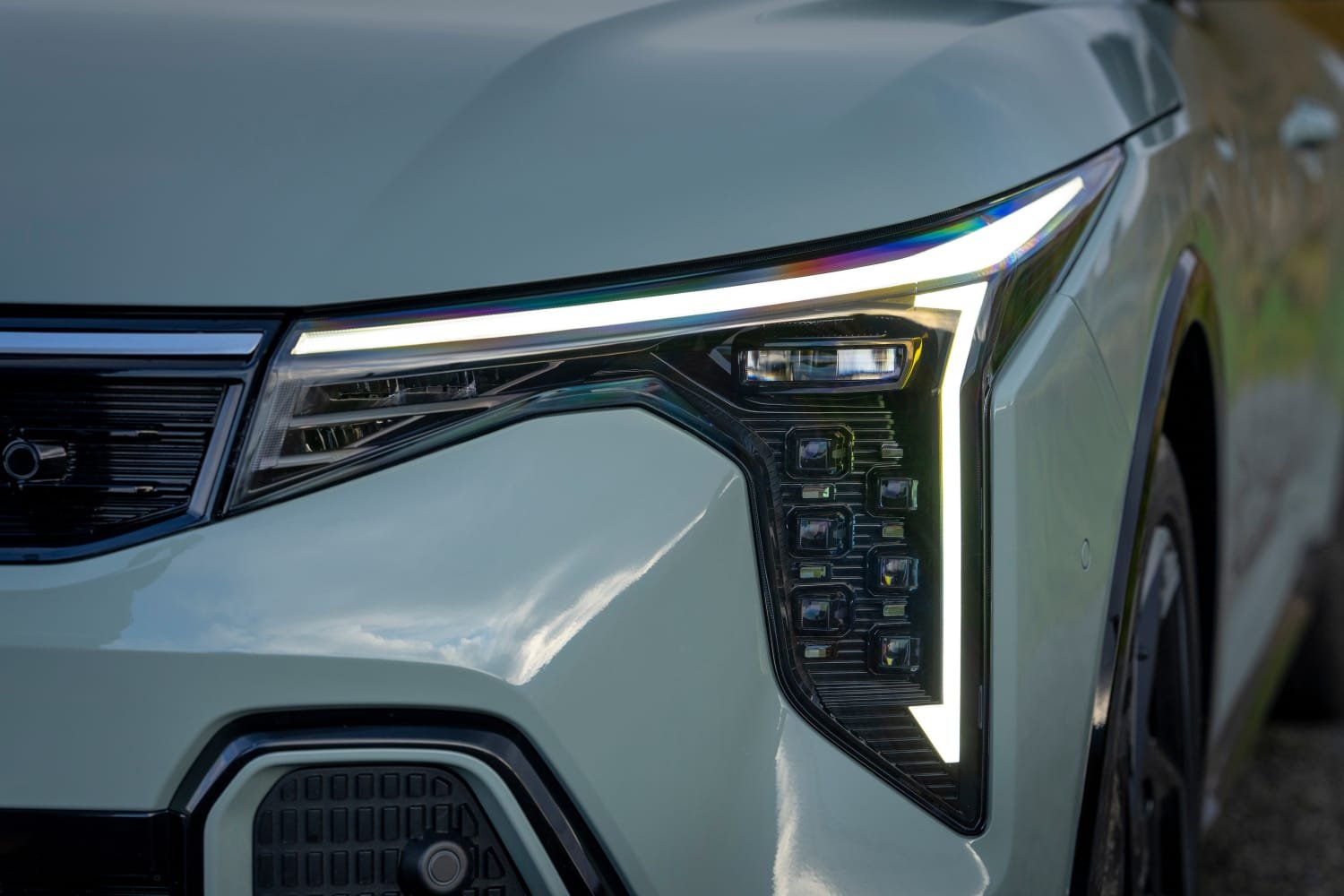
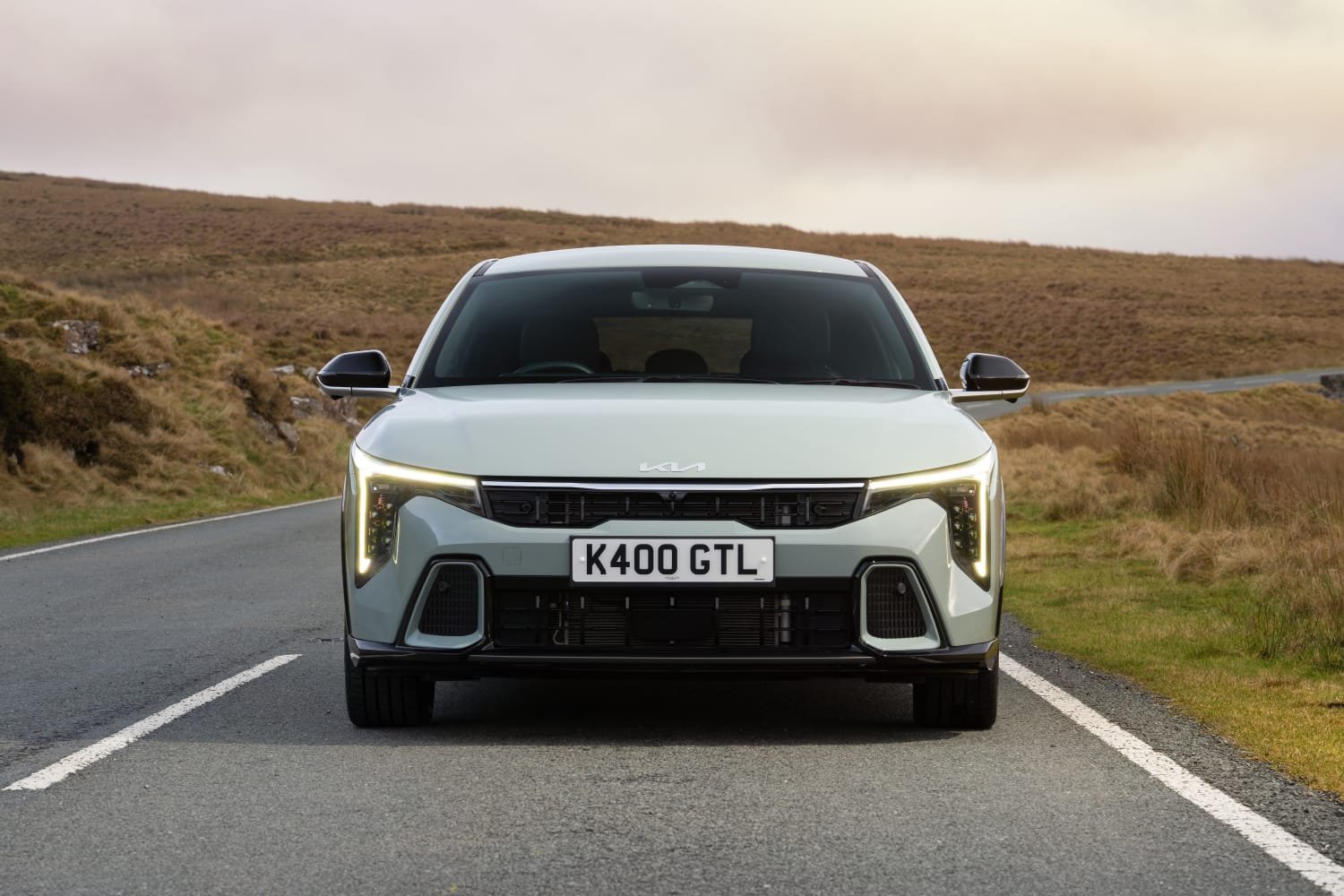
Kia’s current “Opposites United” design language has produced some genuinely distinctive cars, and the K4 follows that trend. The front end is sharp and slightly severe, with slim lighting, a broad grille treatment and enough creases to stop it disappearing into a supermarket car park.
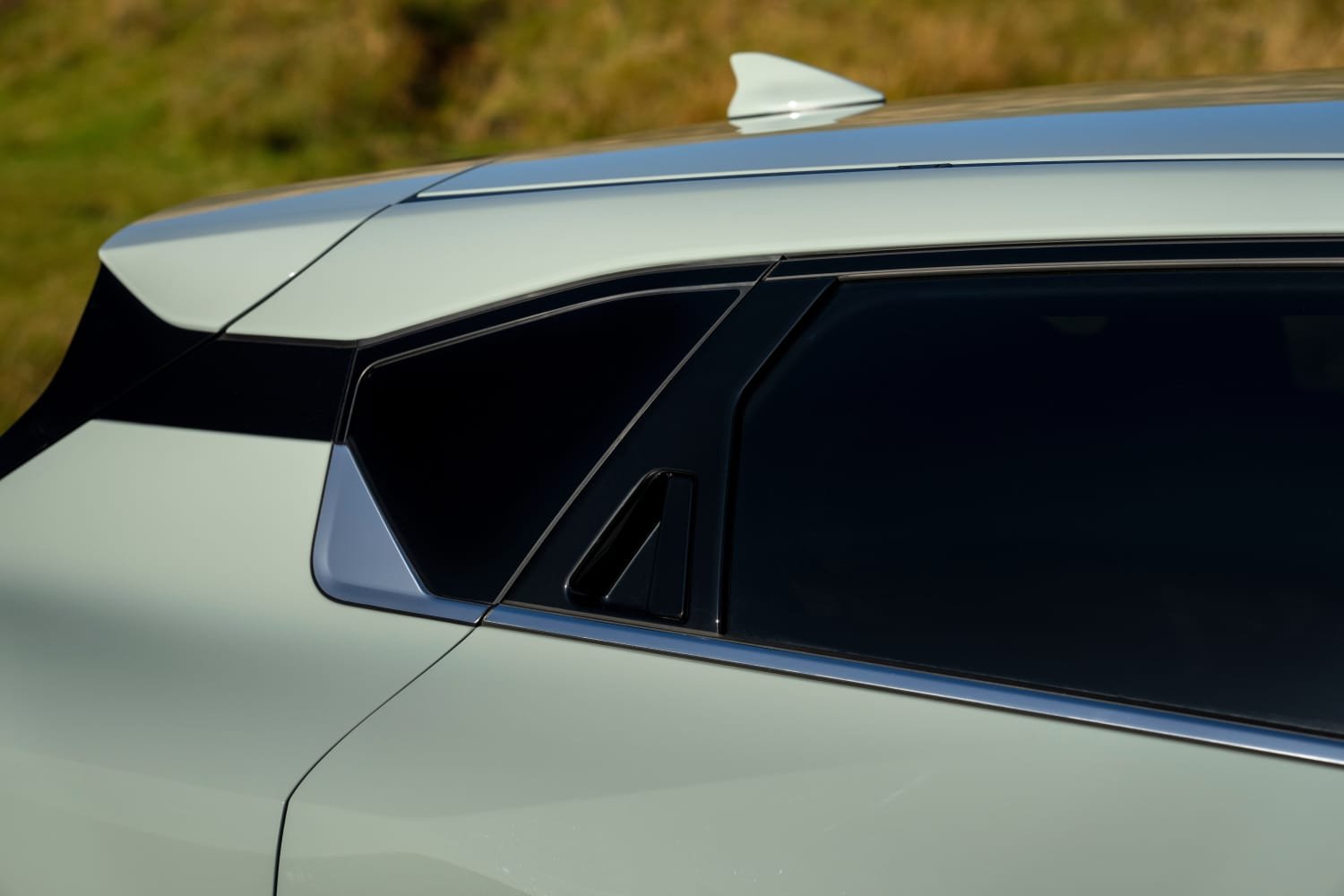
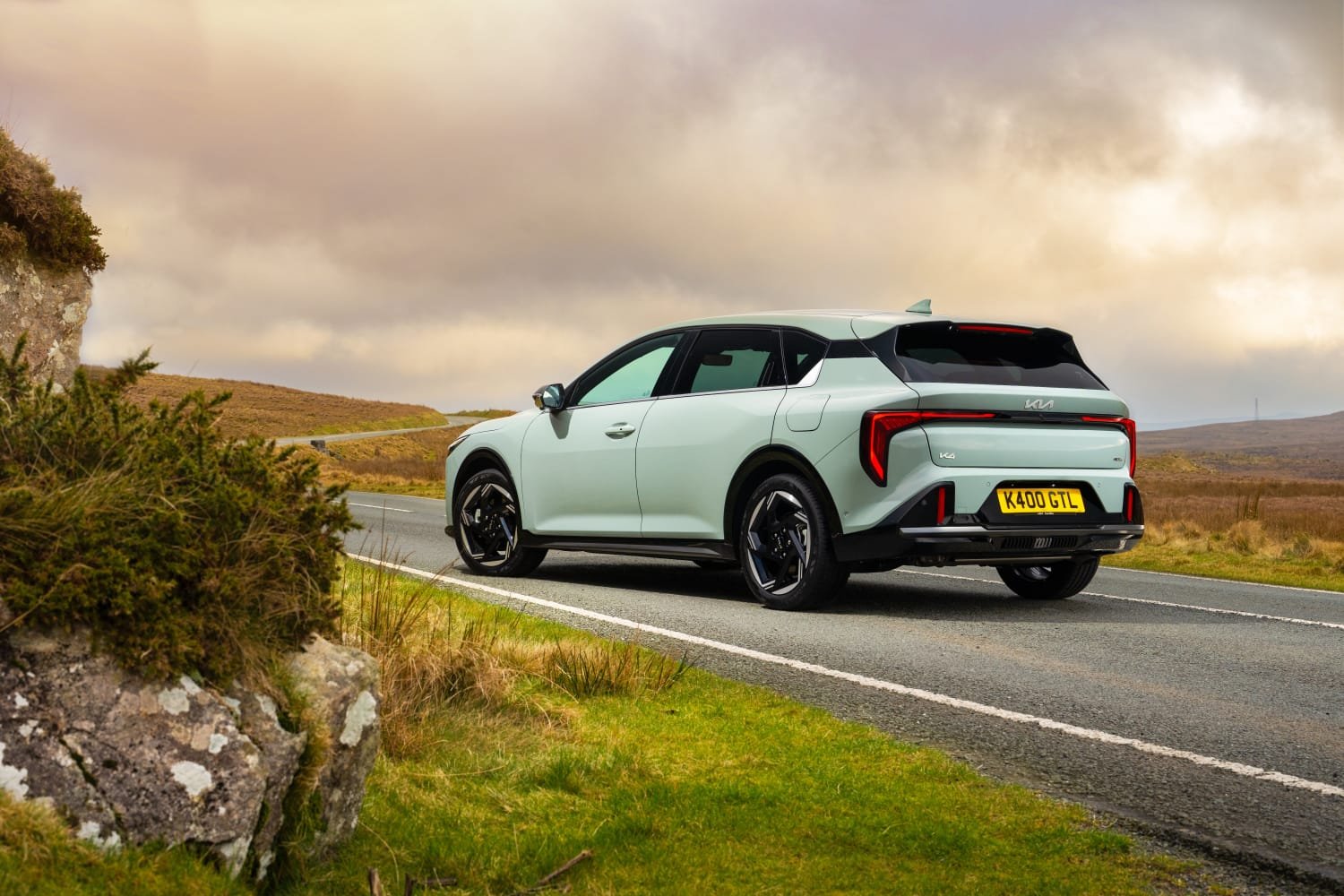
Around the back, the roofline tapers into a fastback-style tail, while the hidden rear door handles in the C-pillar give it a faintly concept-car flourish.
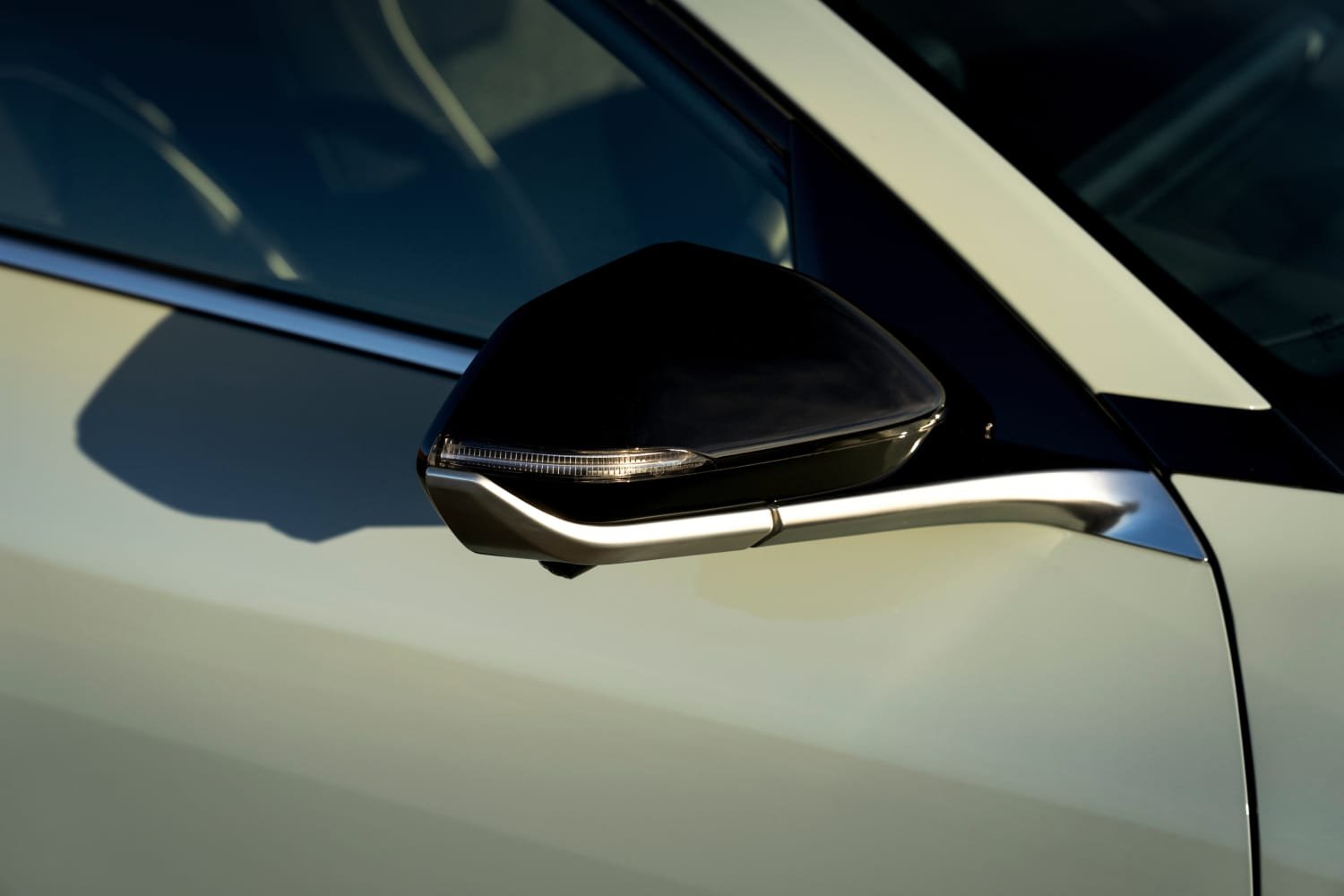
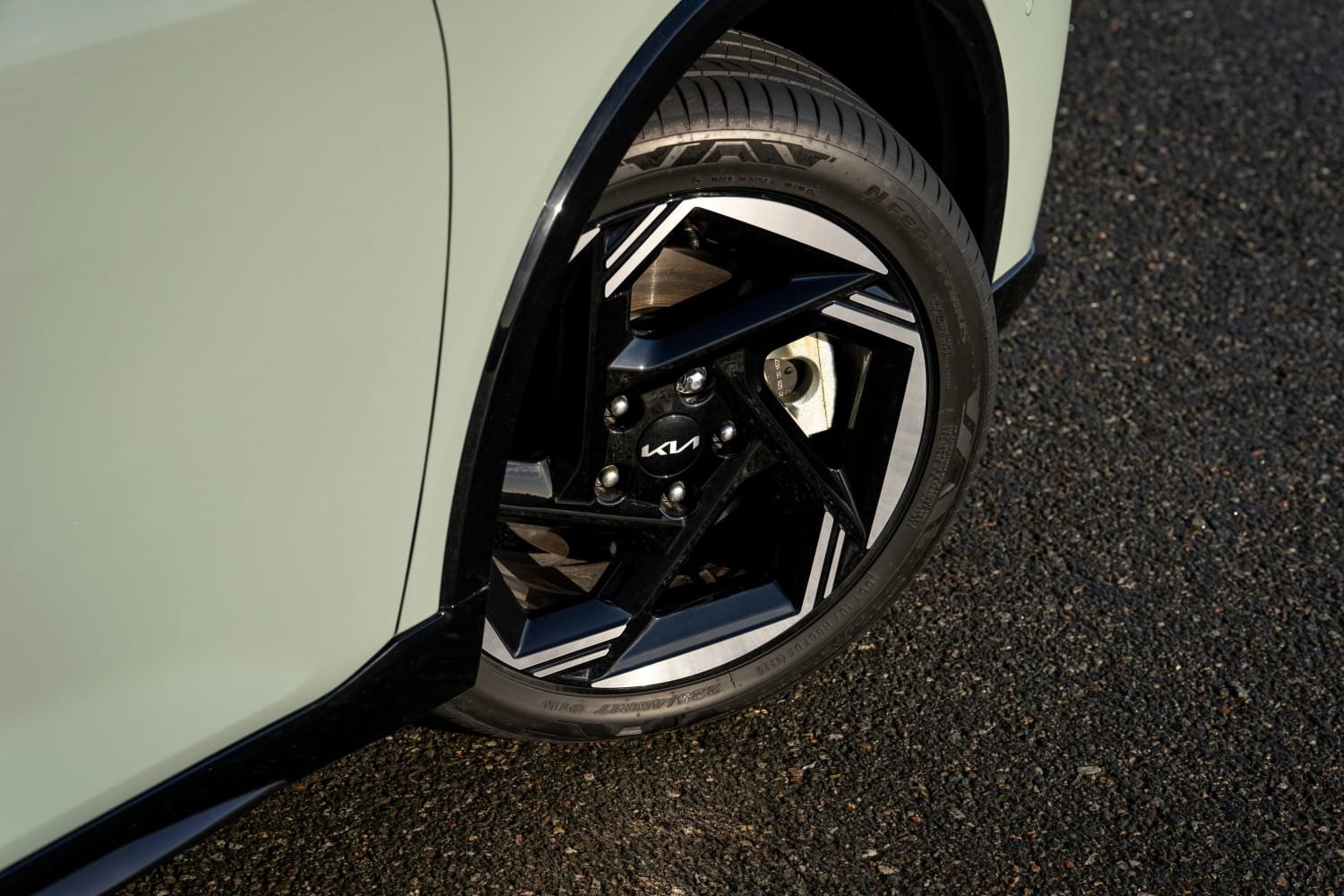
In GT-Line trim, things get a little more assertive. You get gloss black detailing around the mirrors and side sills, sportier bumpers and 17-inch alloy wheels, all of which help the K4 look more interesting than a default family hatch probably has any right to.
The Moonlight Mint paint of the test car also deserves a mention, because it suits the K4 rather well.
Most importantly, though, the K4 doesn’t feel like a car that’s been styled to within an inch of its life. It’s modern and a little dramatic, certainly, but it still looks like a hatchback first and a design statement second.
Interior
Inside, the K4 makes a strong first impression.
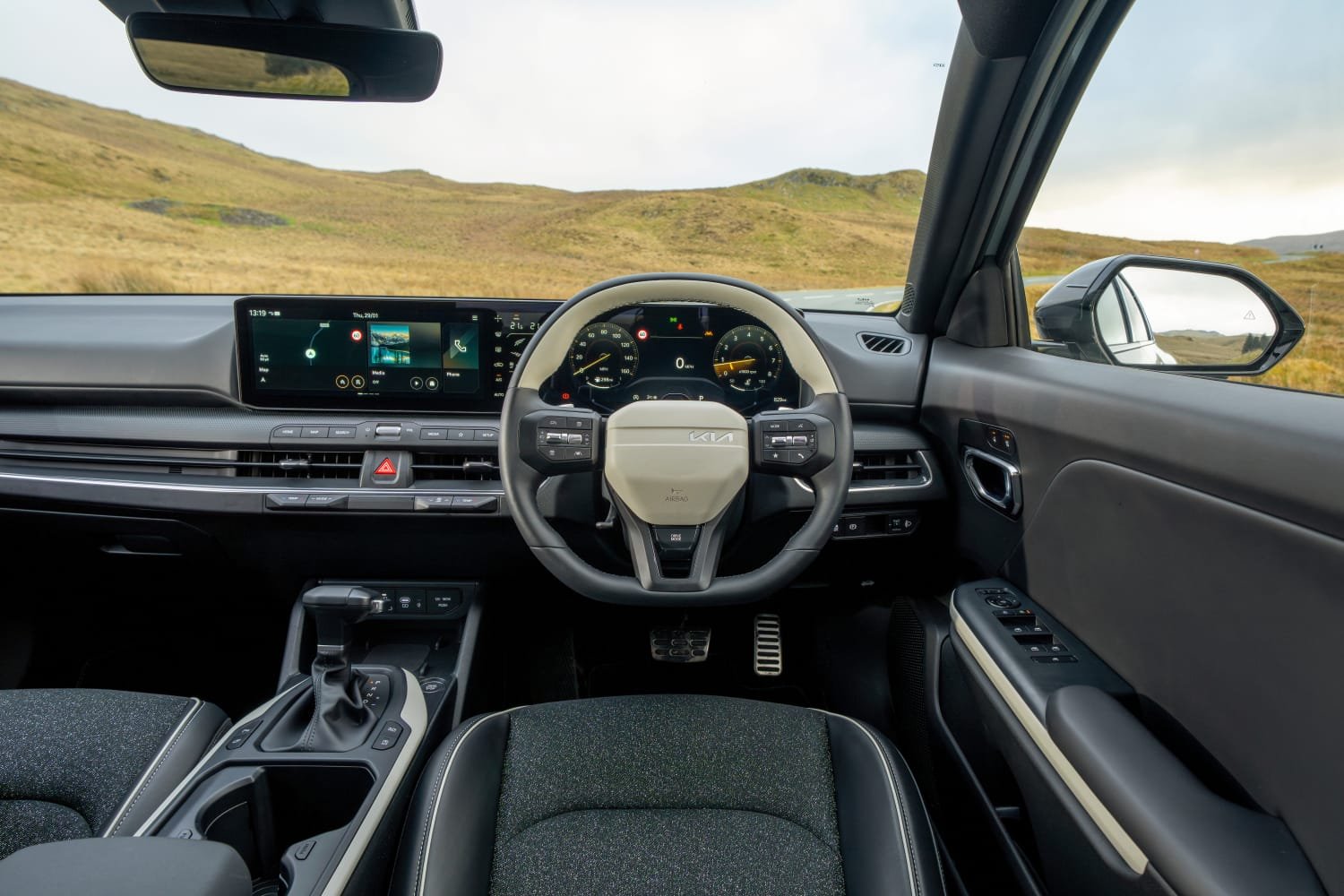
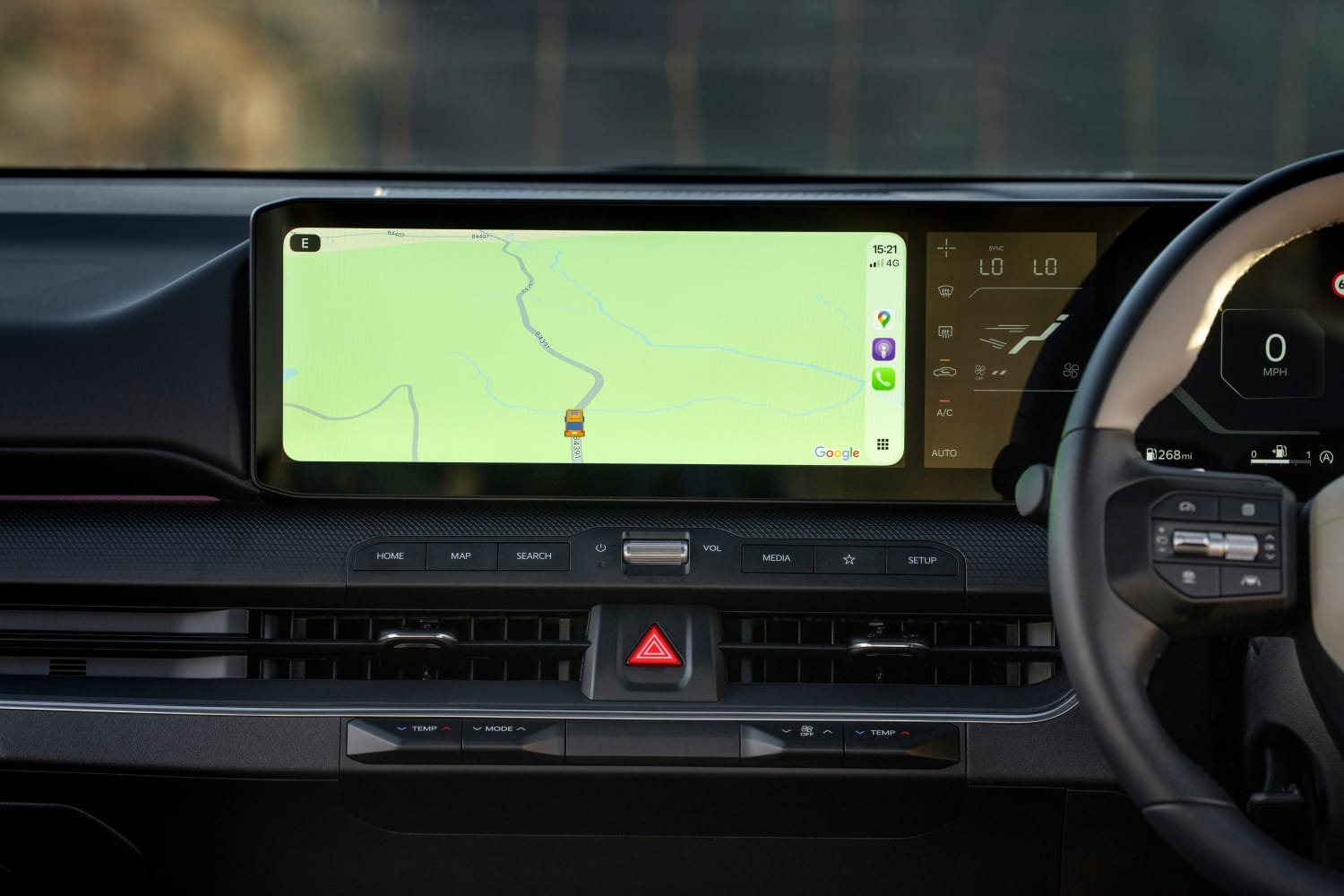
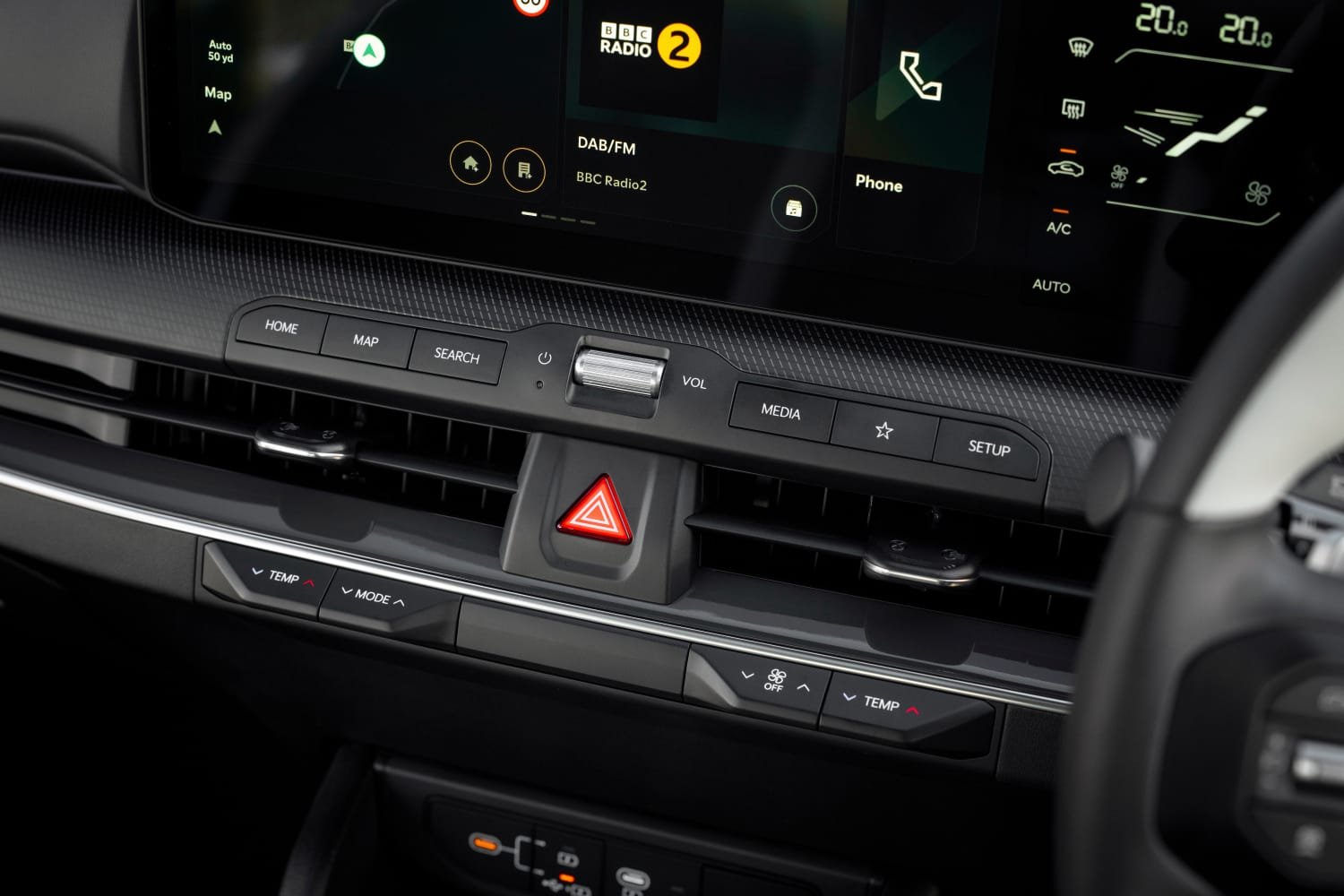
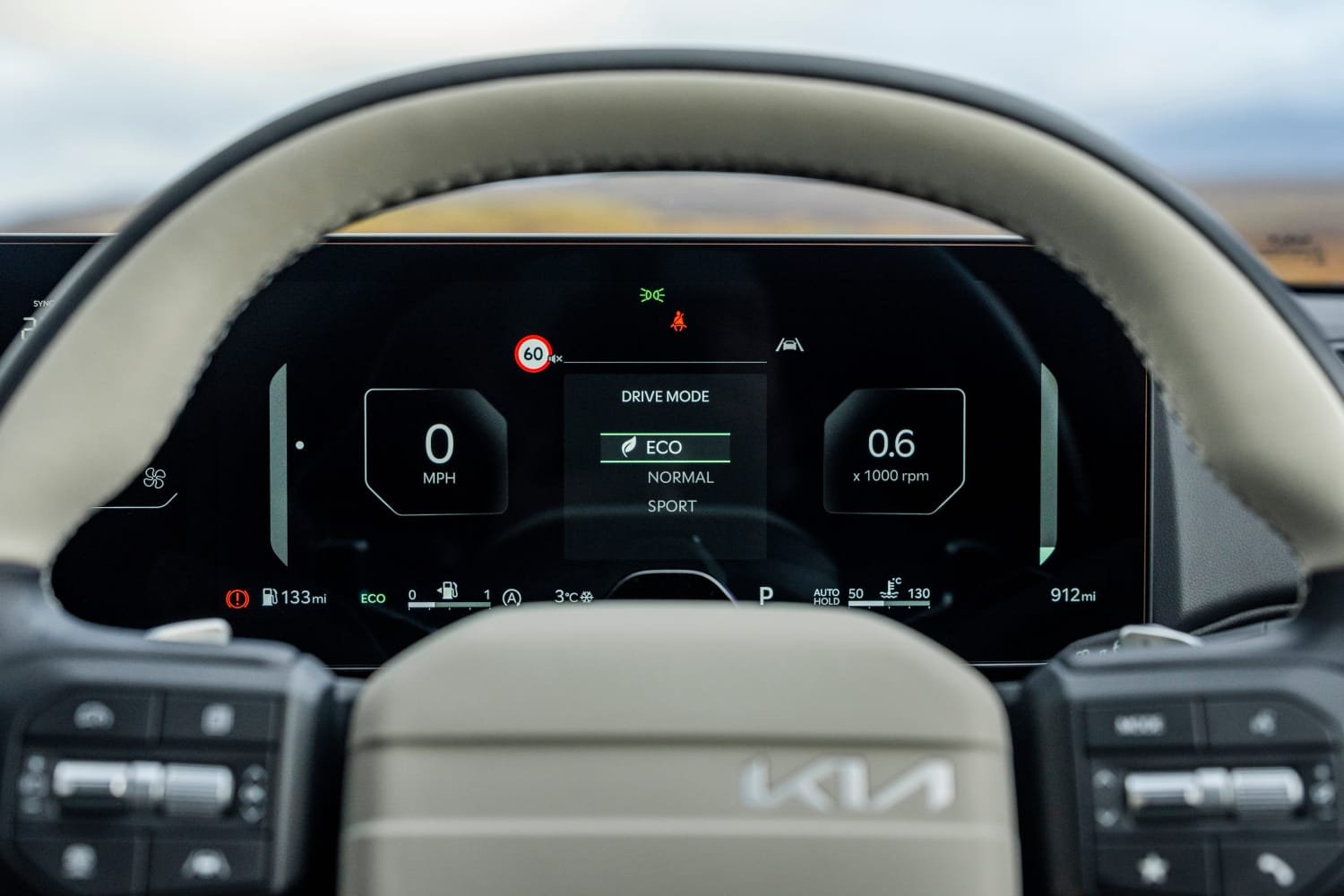
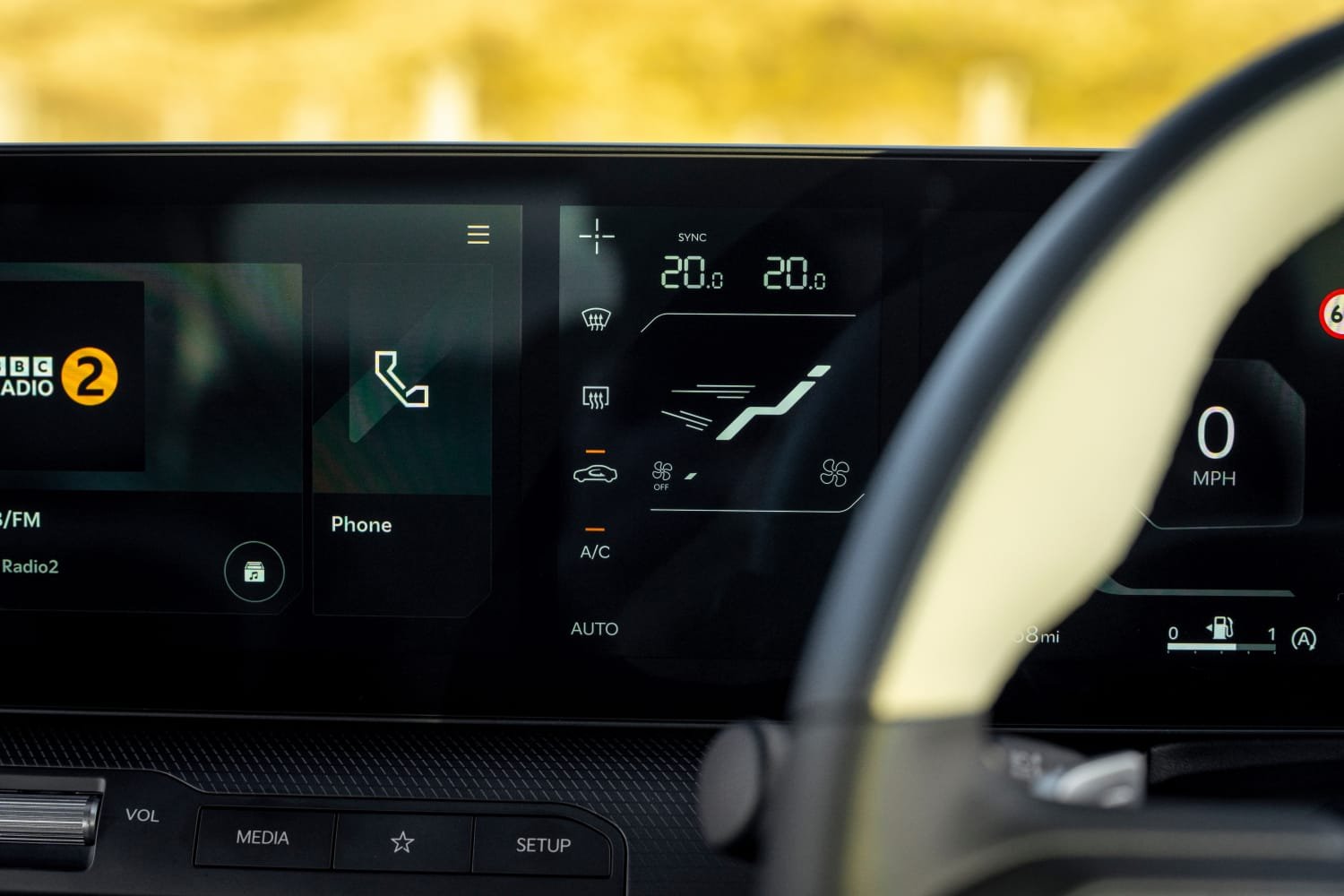
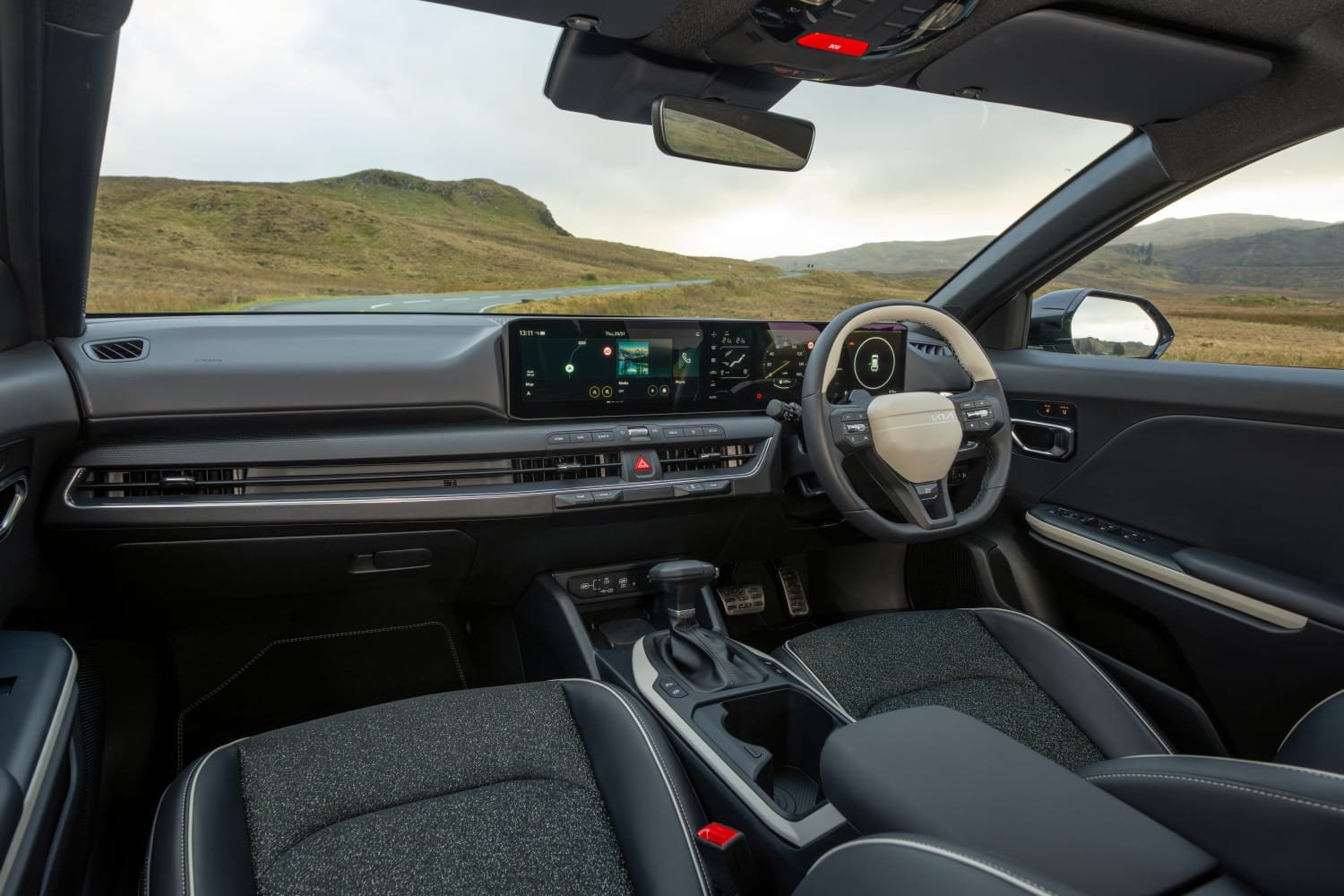
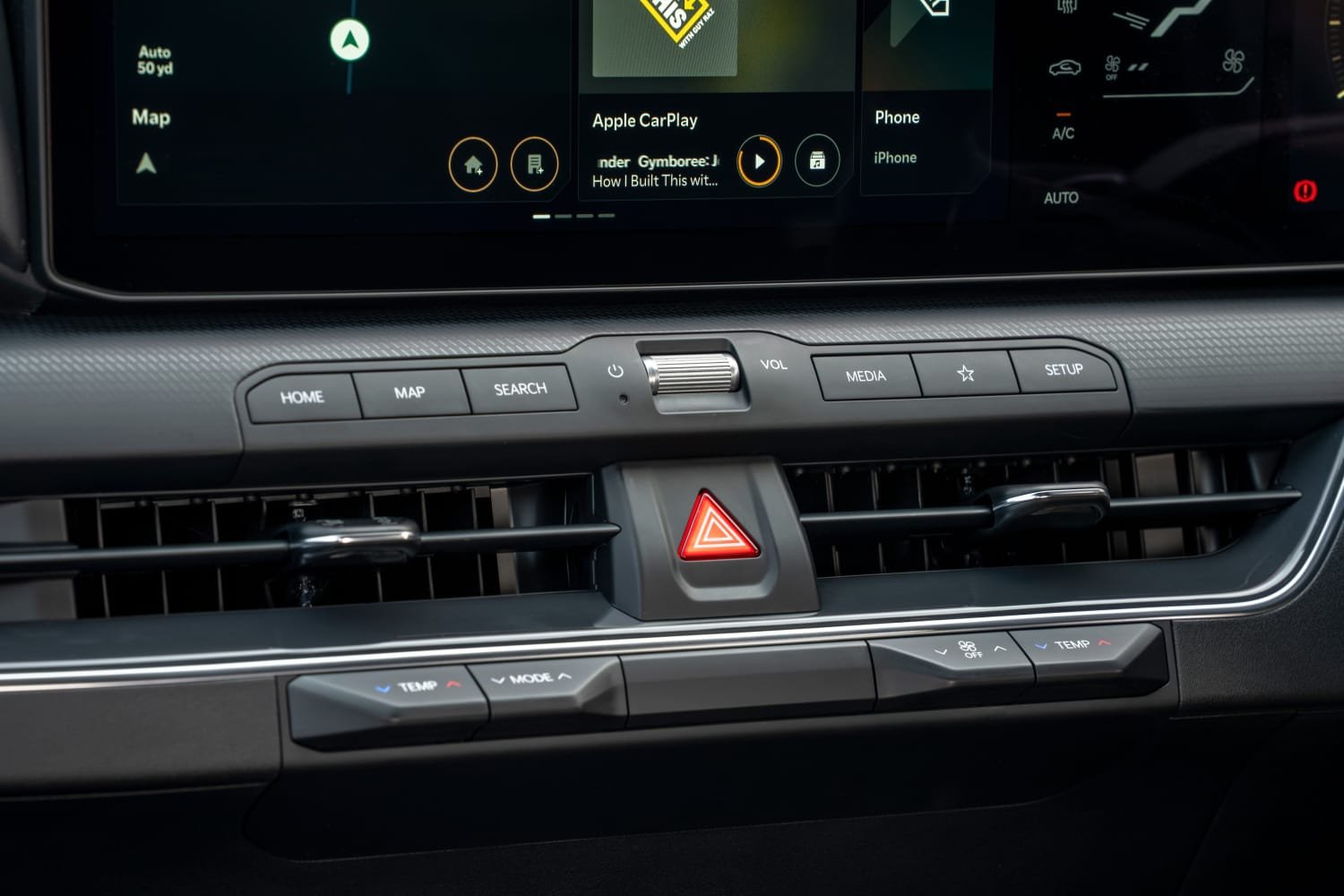
The dashboard is dominated by Kia’s now-familiar panoramic display setup, combining a 12.3-inch digital instrument cluster, a 5.3-inch climate display and a 12.3-inch central infotainment touchscreen into one broad horizontal panel. Visually, it’s very effective – modern without being needlessly fussy -and it gives the K4 a cabin that feels far more expensive than its price suggests.
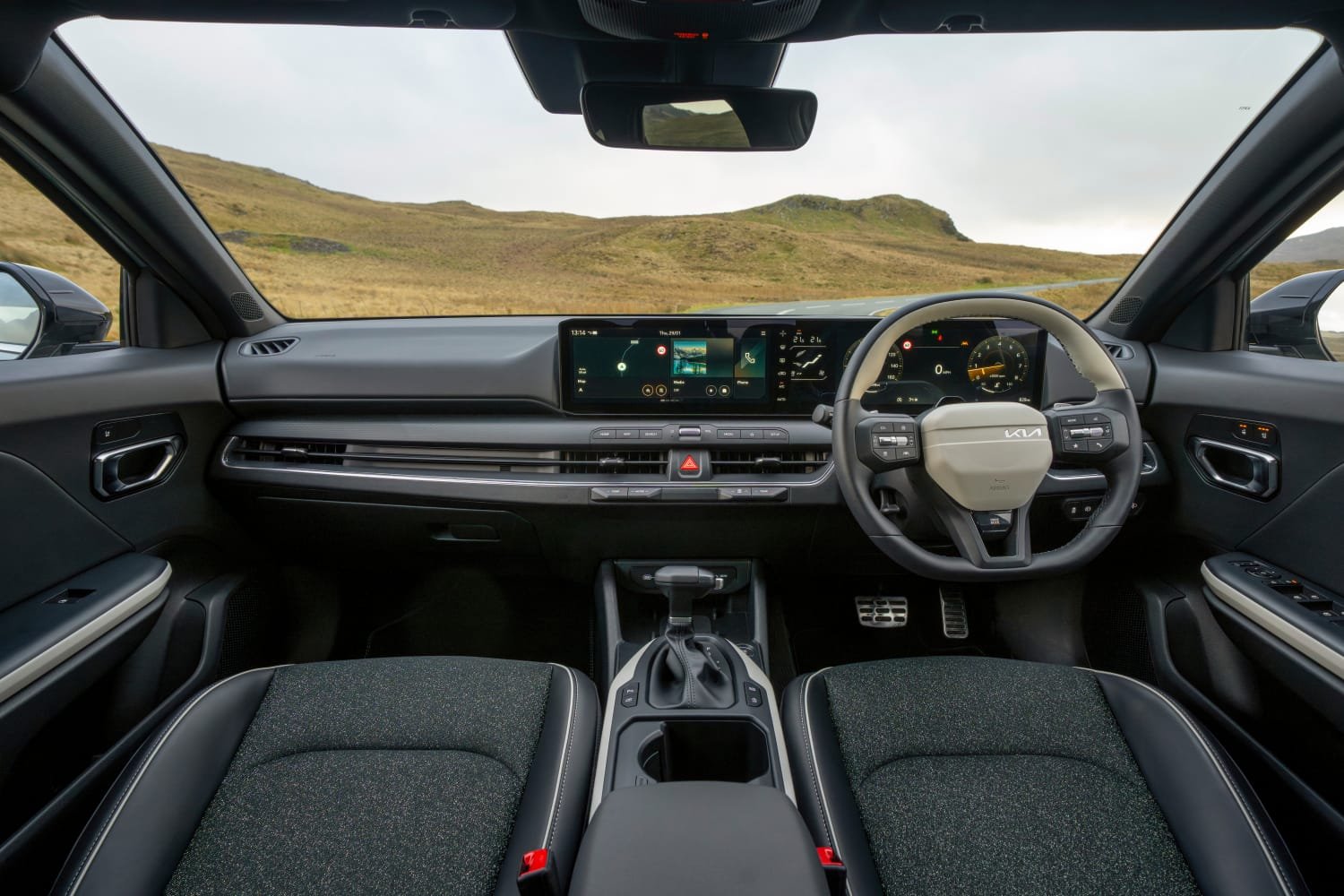
The GT-Line doesn’t get the full two-tone leather treatment of the GT-Line S, but its mix of black cloth and artificial leather upholstery, black headlining and sporty three-spoke steering wheel works well.
Material quality is good, if not exceptional. There are some harder plastics lower down, as you’d expect at this price point, but the parts you touch most often feel solid and well assembled. The general impression is one of durability rather than outright luxury – which, in a family hatchback, is probably exactly the right priority.
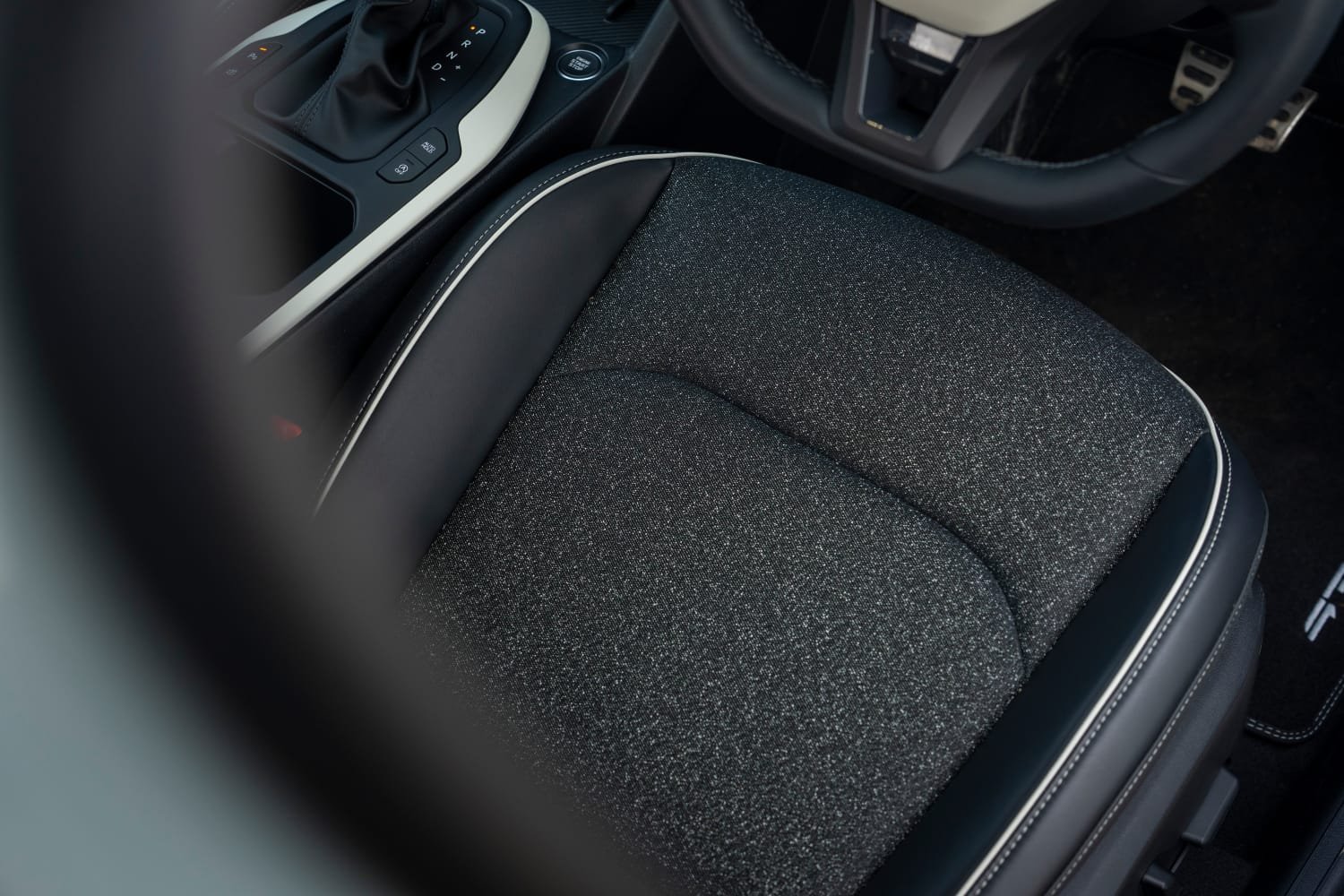
The front seats are comfortable, and the GT-Line adds heating, electric adjustment for the driver’s seat, and lumbar support. That’s a decent equipment haul for a car in the low-£30,000 bracket, and it makes the K4 feel more grown-up on longer trips.
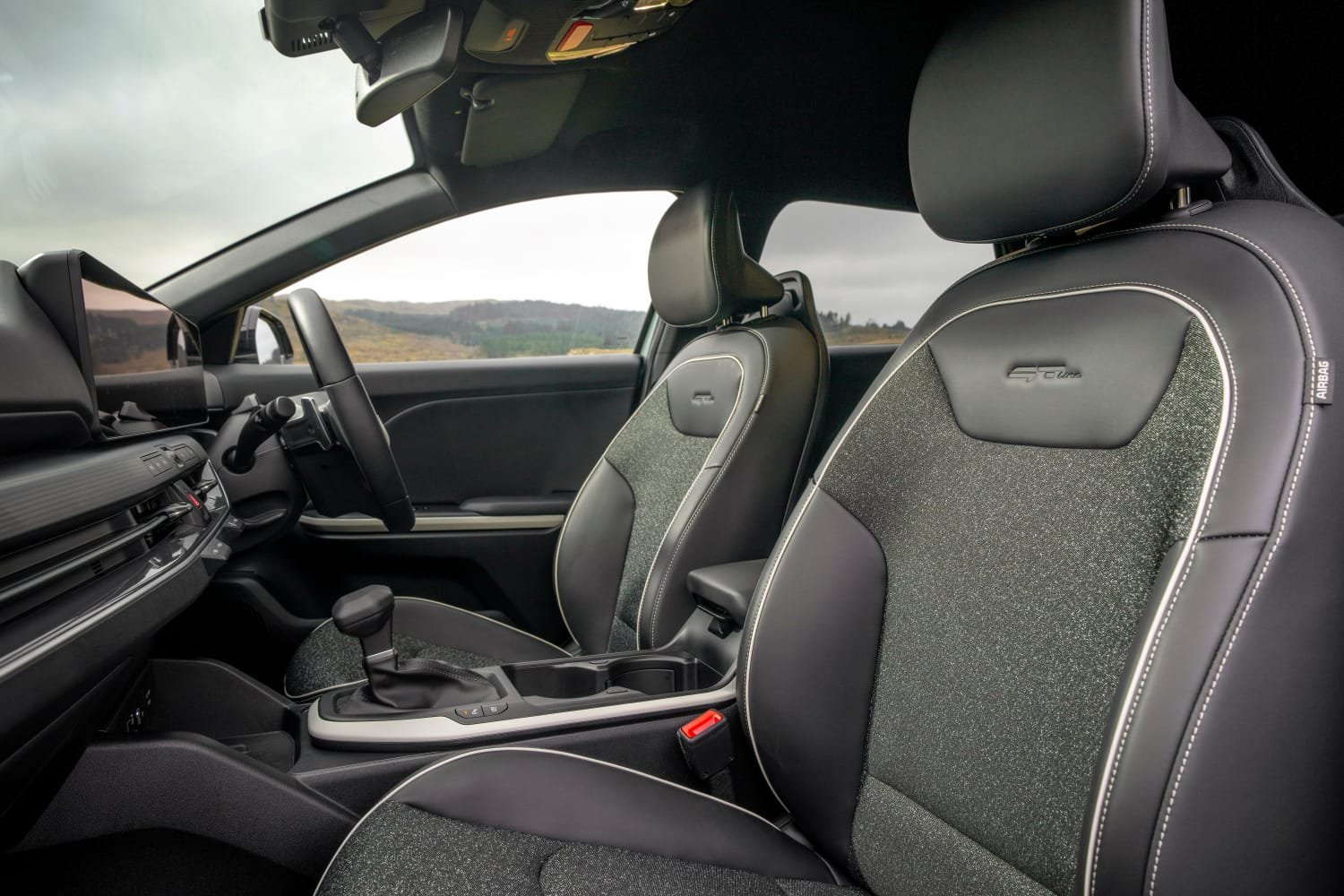
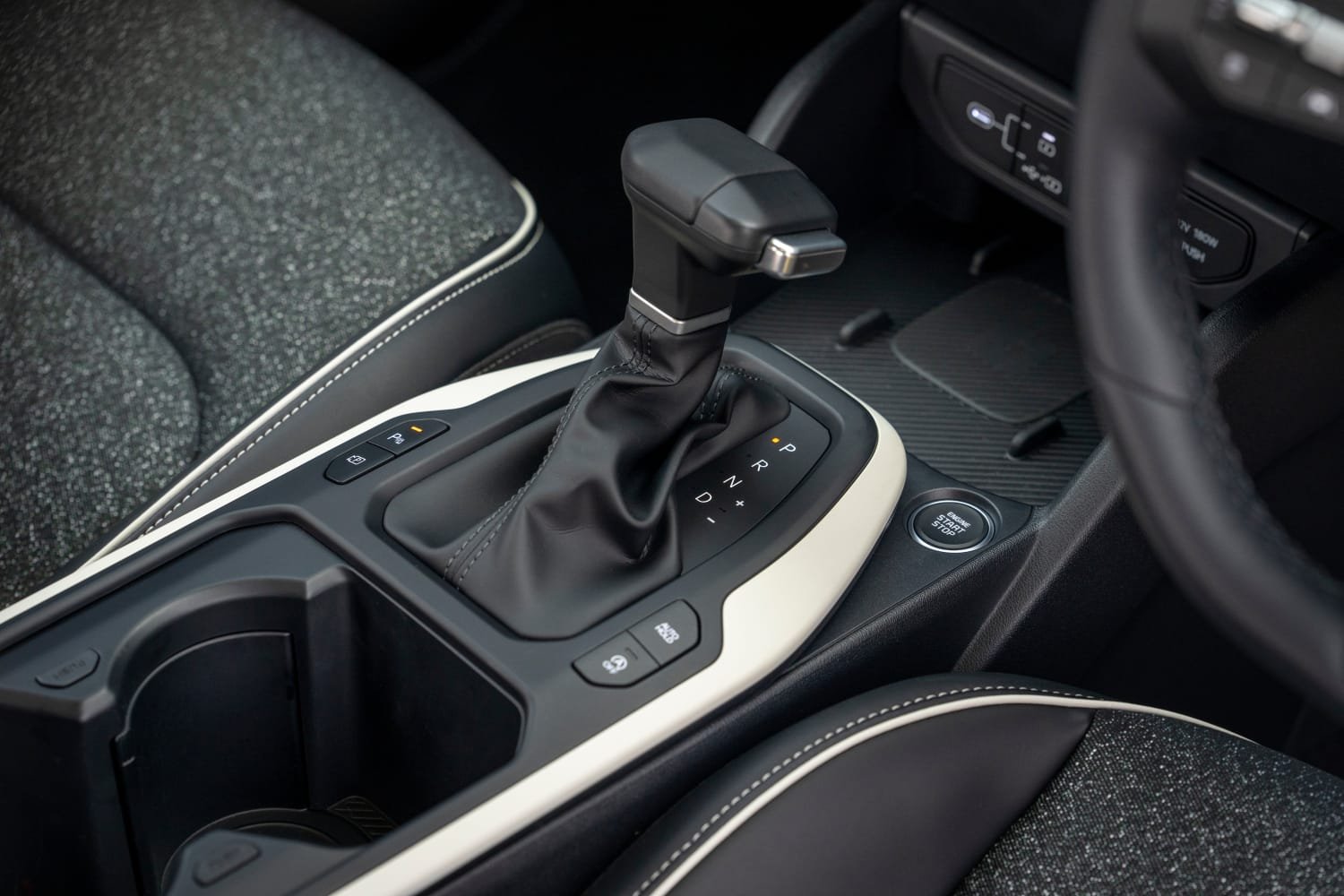
What I particularly liked, though, was the sense of familiarity. After so many SUVs and EVs with increasingly abstract cabin layouts, the K4 is refreshingly straightforward. The driving position is low enough to feel connected to the car, visibility is good, and while much of the functionality is handled through the screen, Kia has sensibly retained enough physical controls to stop everyday tasks becoming a chore.
Rear Space and Practicality
Despite its relatively low roofline, rear headroom is surprisingly generous, while legroom is more than competitive for the class. Kia quotes 964mm of rear legroom and 973mm of rear headroom, and it feels usefully spacious in practice. Adults will fit comfortably behind reasonably tall front-seat occupants, and there’s enough width to avoid the cabin feeling narrow or cramped.
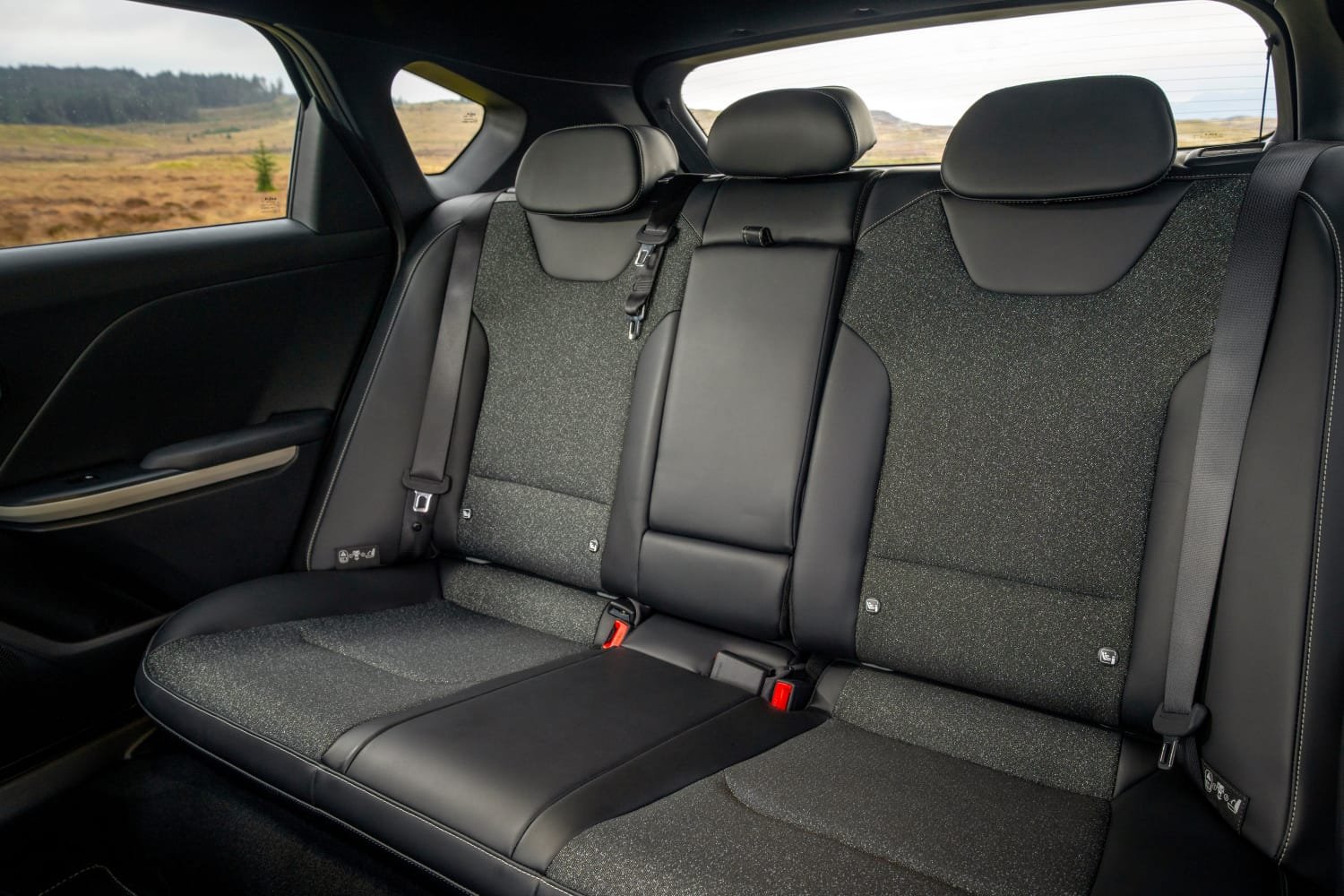
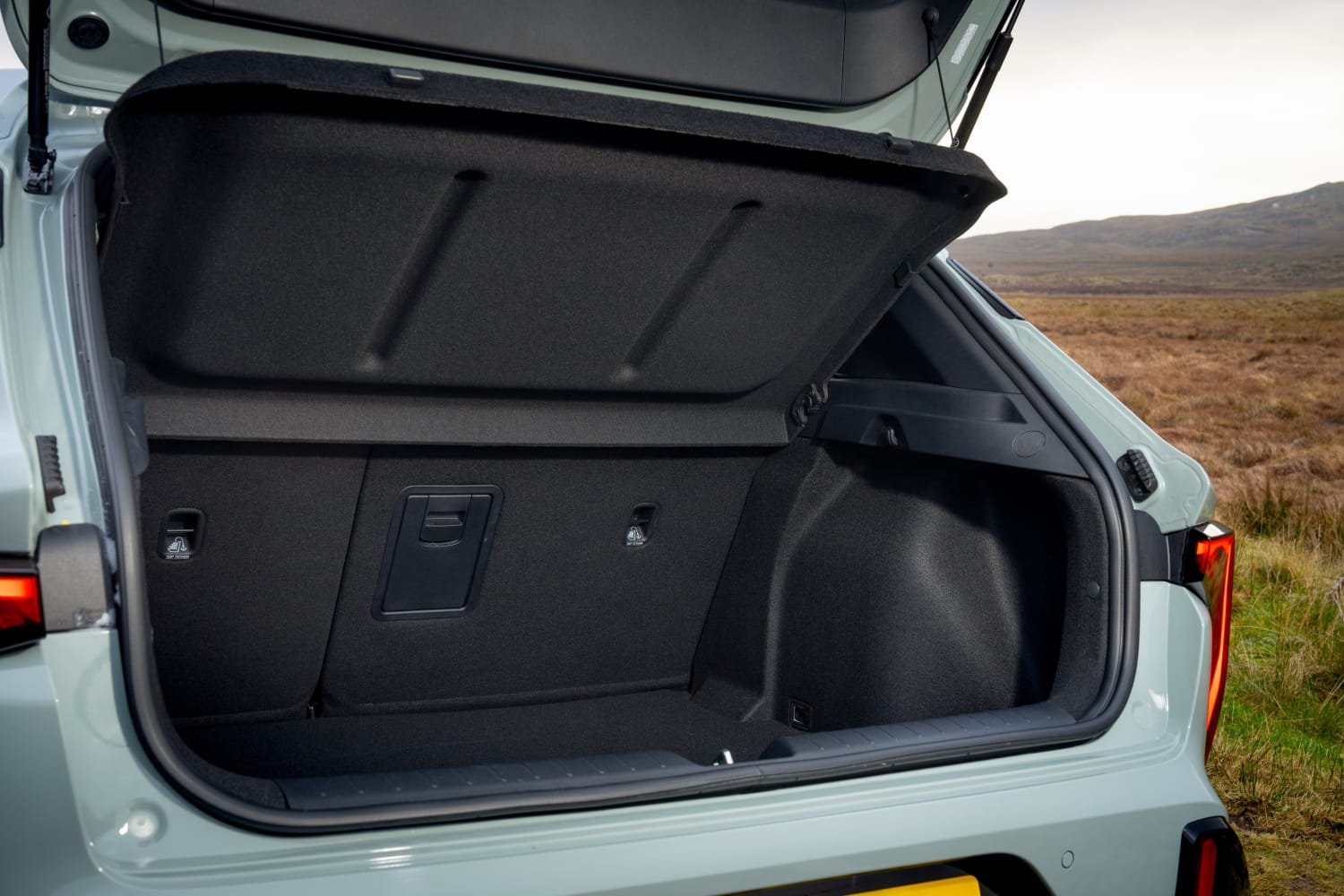
Boot space is another strong point. Because the 1.6-litre GT-Line uses a conventional petrol setup rather than the 1.0 mild-hybrid arrangement, it benefits from the larger boot: 438 litres with the rear seats in place, expanding to 1,217 litres when folded. That’s a healthy figure for the class and enough to make the K4 genuinely useful as a family car.
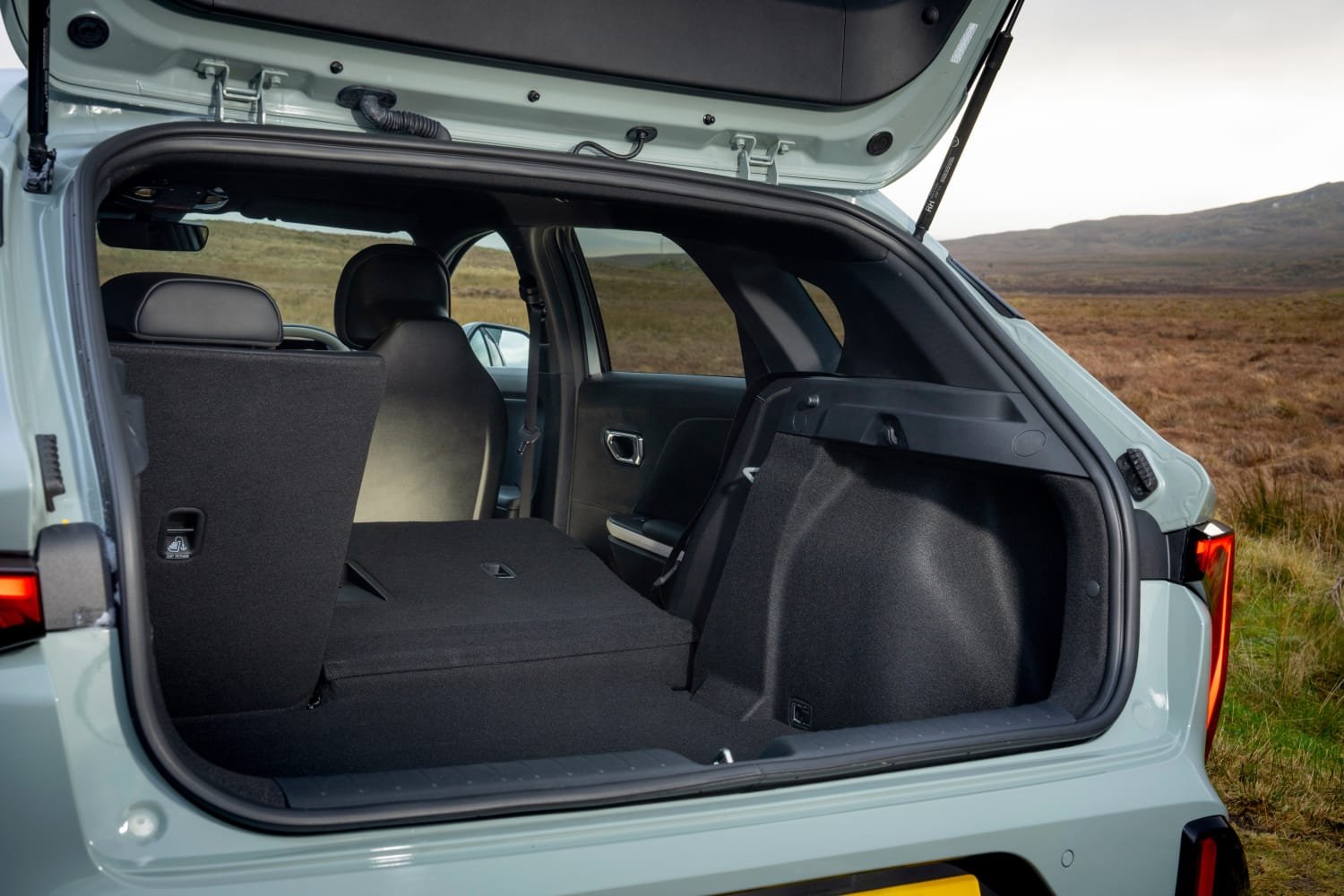
The load bay itself is square and sensibly shaped, and there’s a ski hatch through the middle of the rear seats for longer items. Kia has also done the basics properly, with useful door bins, a central storage box, cupholders and an illuminated glovebox all present and correct.
In short, it feels like a car designed by people who have, at some point, had to carry shopping, luggage or awkwardly shaped bits of flat-pack furniture.
Technology and Safety
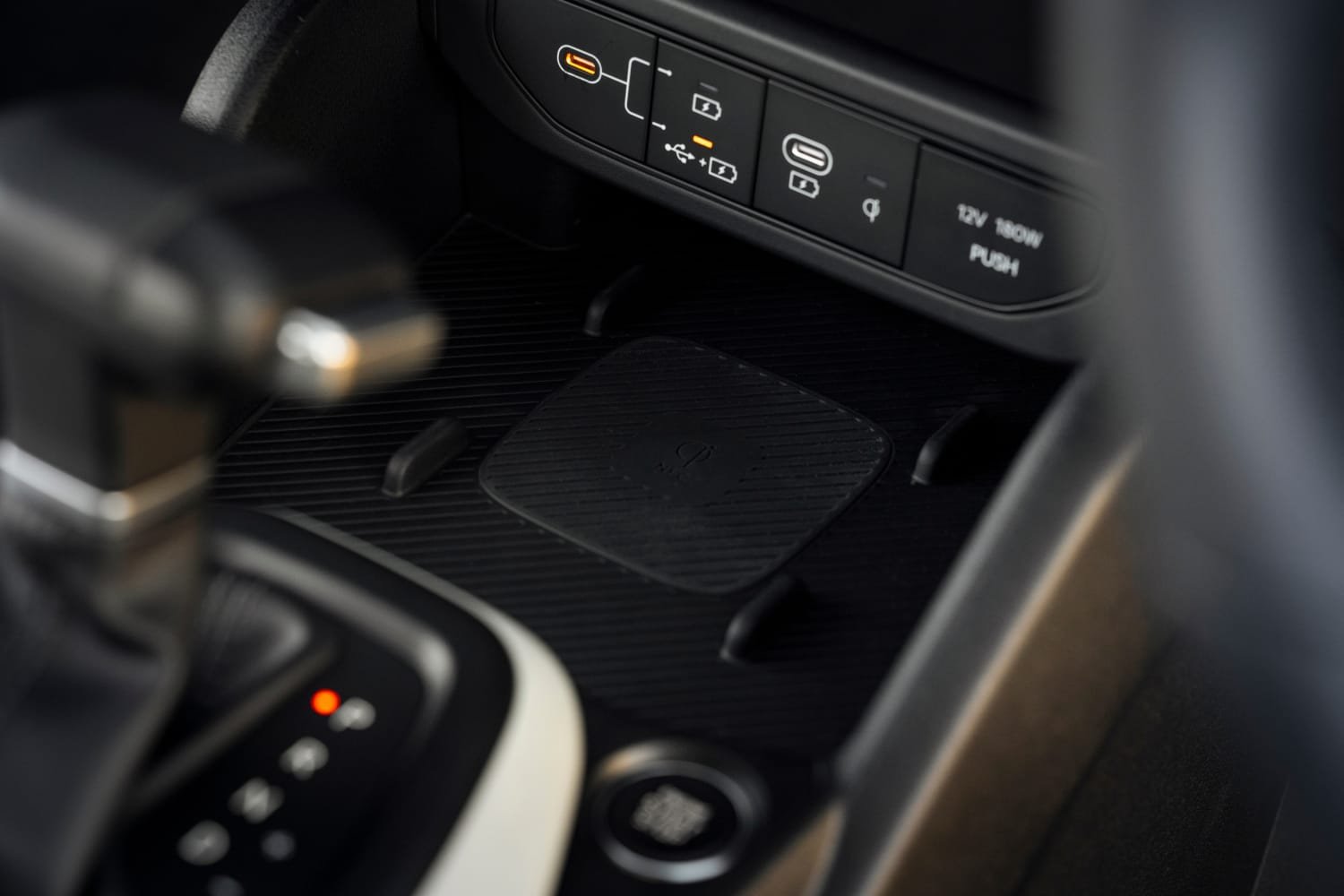
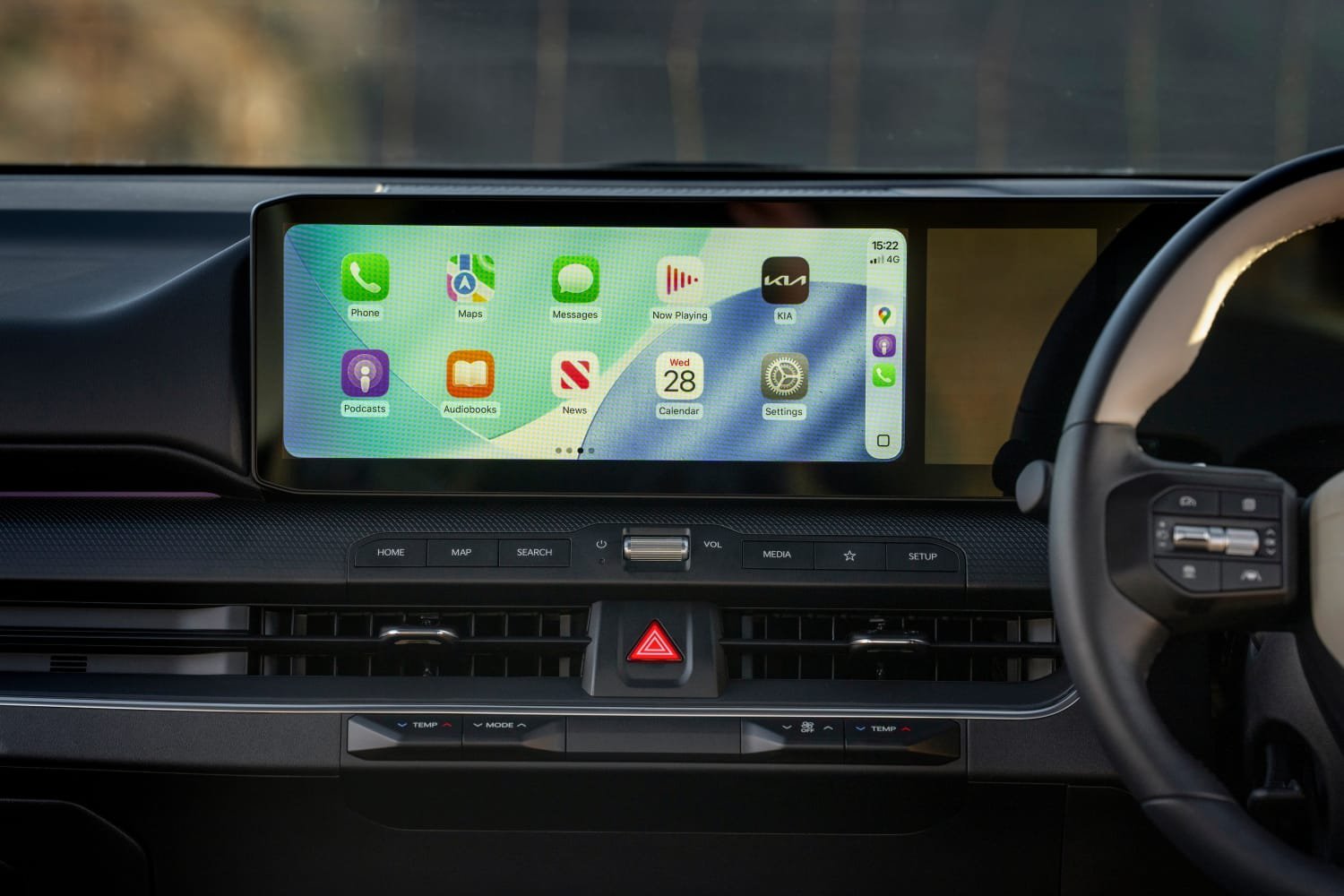
All versions get the full digital display arrangement, built-in navigation, wireless Apple CarPlay and Android Auto, over-the-air update capability and Kia Connect services. GT-Line models add a wireless phone charger, while the infotainment system itself is clean, quick to respond and easy enough to navigate once you’ve spent a little time with it.
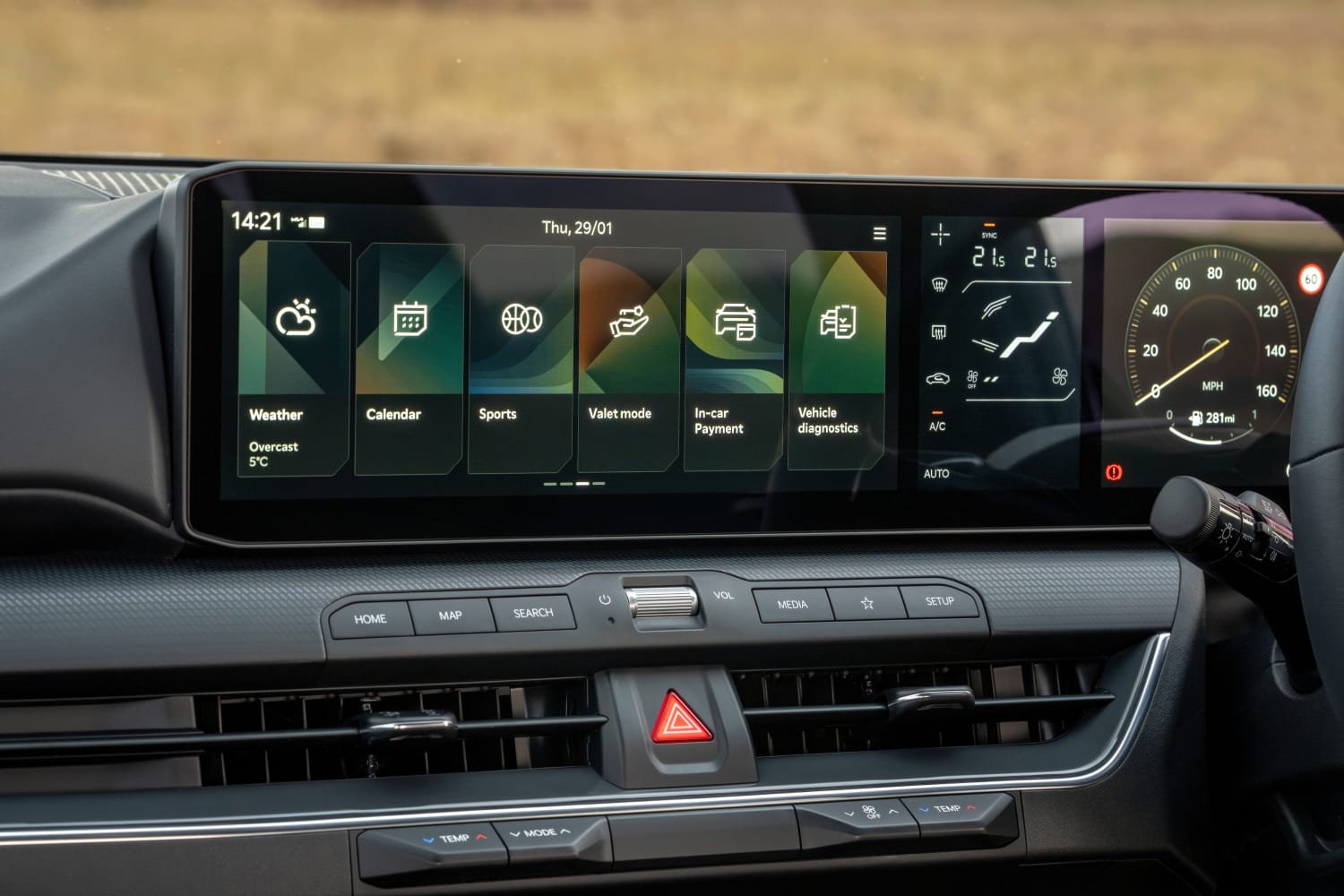
Kia is also leaning heavily into connected services and in-car entertainment. Through the Kia Connect store, the K4 can be equipped with music streaming, YouTube, games and even Netflix and Disney+ if you really feel the need to turn a motorway services stop into a private screening. There’s also an AI assistant powered by ChatGPT, because apparently every car now needs one.
As for safety kit, the GT-Line is generously equipped. It gets Highway Driving Assistant 2.0, Blind Spot Collision-Avoidance Assist, Forward Collision-Avoidance Assist, a 360-degree camera system, smart cruise control and the usual lane-keeping and speed-limit functions.
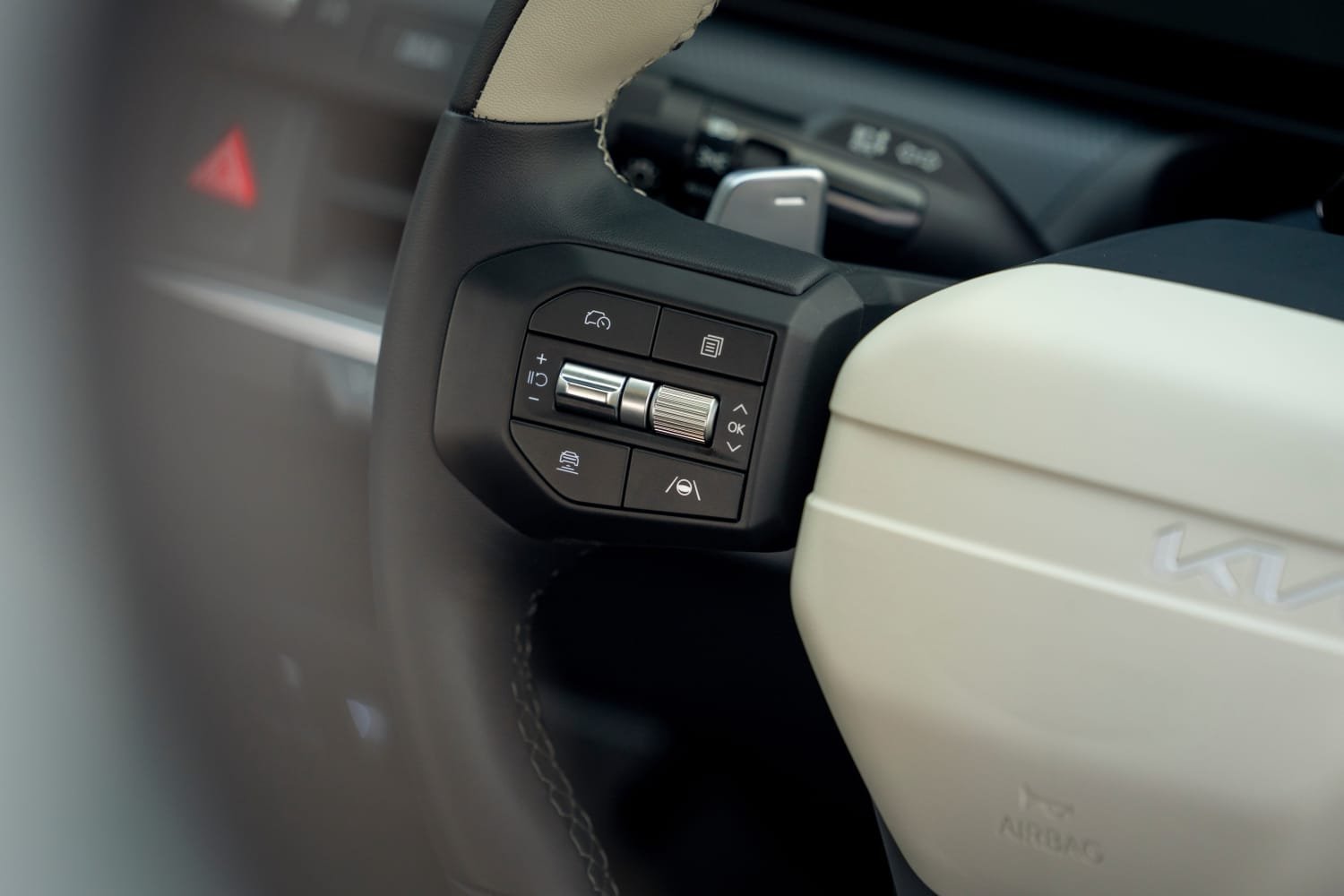
One particularly welcome touch is Kia’s shortcut for muting the car’s speed limit warning system: hold down the steering wheel volume dial for three seconds and the audible warning is silenced while the speed limit display remains active. It’s the sort of practical little feature that suggests somebody at Kia has actually used a modern car for more than five minutes.
Driving Impressions
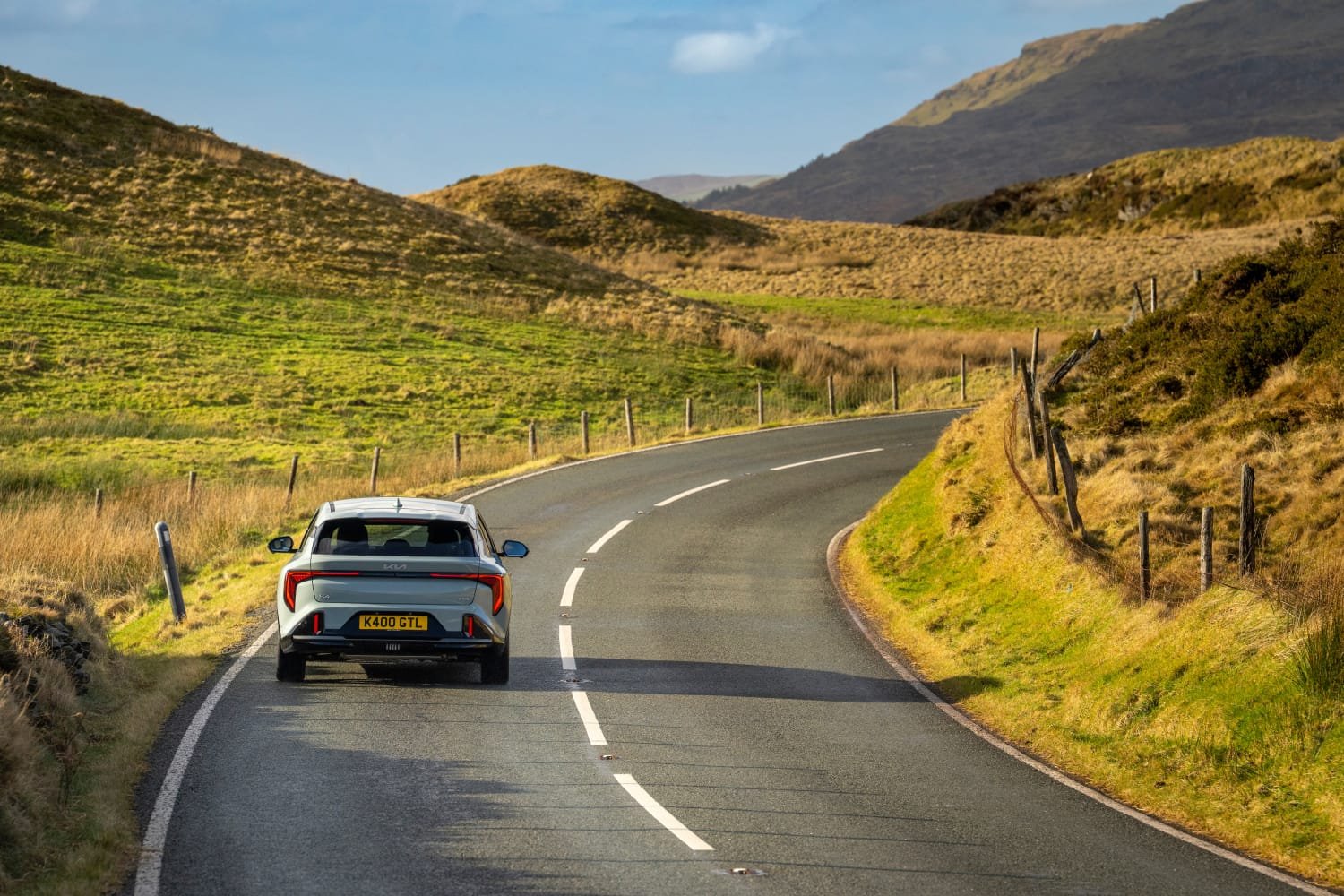
After weeks spent hopping between electric SUVs, plug-in hybrids and various crossovers with their elevated seating positions and occasionally floaty body control, the K4 feels immediately reassuring.
You sit lower, you feel more integrated with the car, and there’s a pleasing sense that your inputs are having a direct effect rather than being filtered through two tonnes of battery, ride height and tyre sidewall. Not quite an MX-5, but you see what I’m getting at . . .
The first thing you notice is that it feels like a proper hatchback.
That might sound absurdly obvious, but it matters. The lower centre of gravity gives the K4 a sense of composure and agility that many SUVs simply can’t match, no matter how much engineering is thrown at them. Turn into a bend and the nose responds cleanly, body roll is well controlled and there’s a lightness to the whole experience that feels increasingly rare.
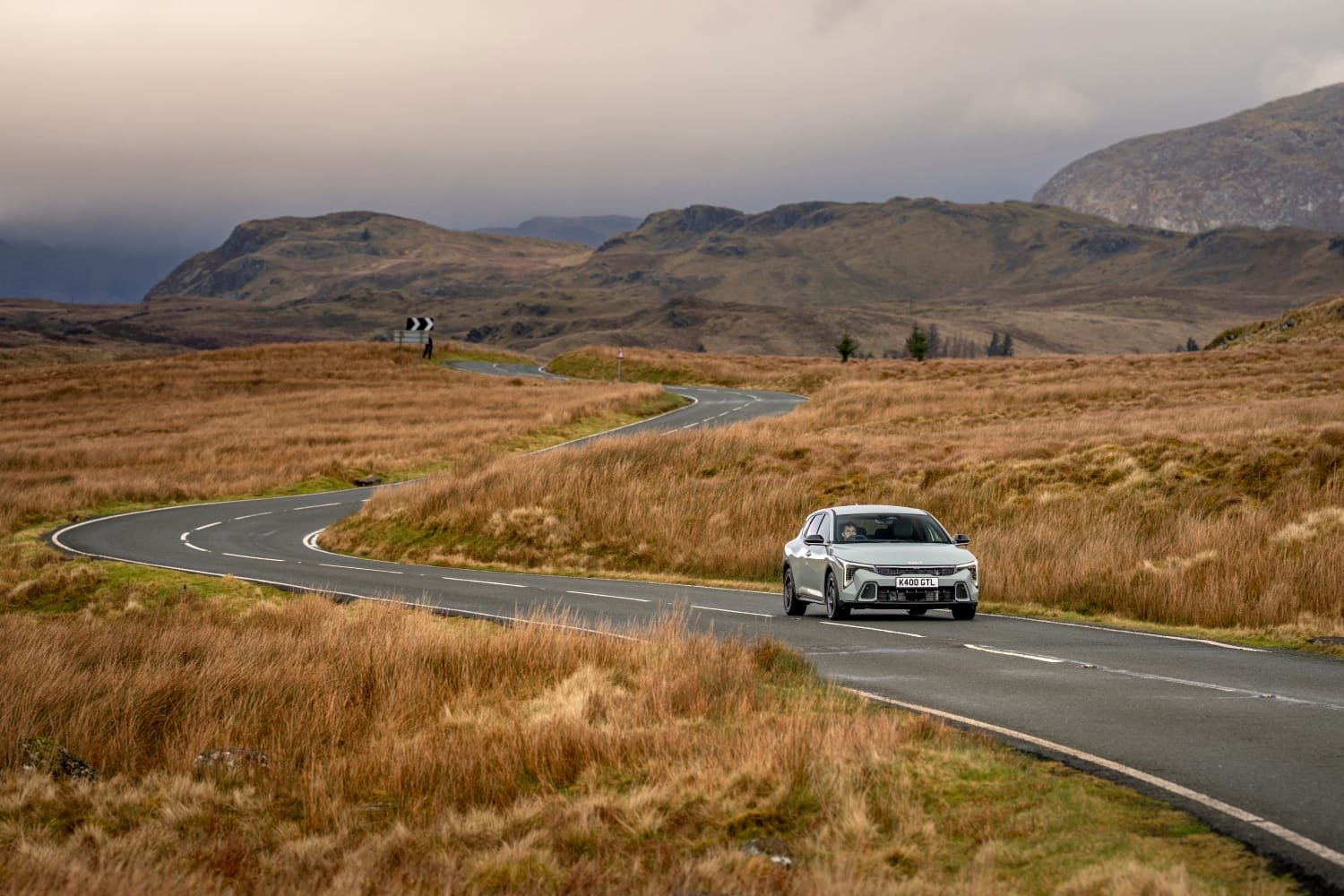
Kia makes much of the fact that every K4 gets fully independent suspension, and unlike some press-pack claims, this one actually translates into something meaningful on the road. The K4 rides with a nice sense of control, and while it isn’t a hot hatch or anything remotely close to one, it feels settled, tidy and confidence-inspiring in a way that many family SUVs do not.
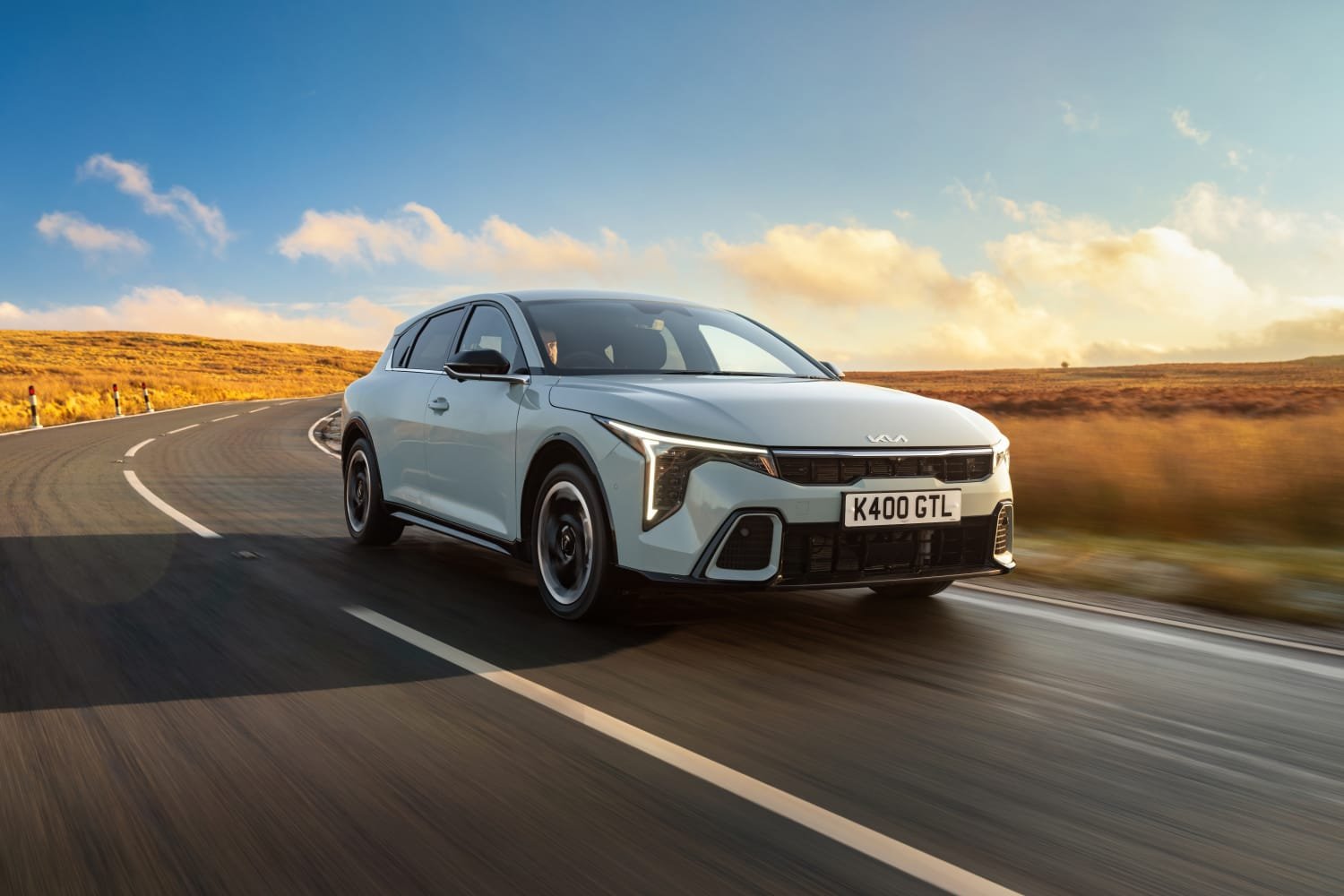
The 1.6-litre turbocharged petrol engine is also a better fit for the K4 than the numbers might suggest. With 147bhp and 250Nm, it’s not especially fast on paper, and the 9.1-second 0–62mph time confirms as much. But out on the road, it feels perfectly adequate. There’s enough mid-range pull to make overtakes straightforward, and the engine itself is smooth and unobtrusive when driven normally.
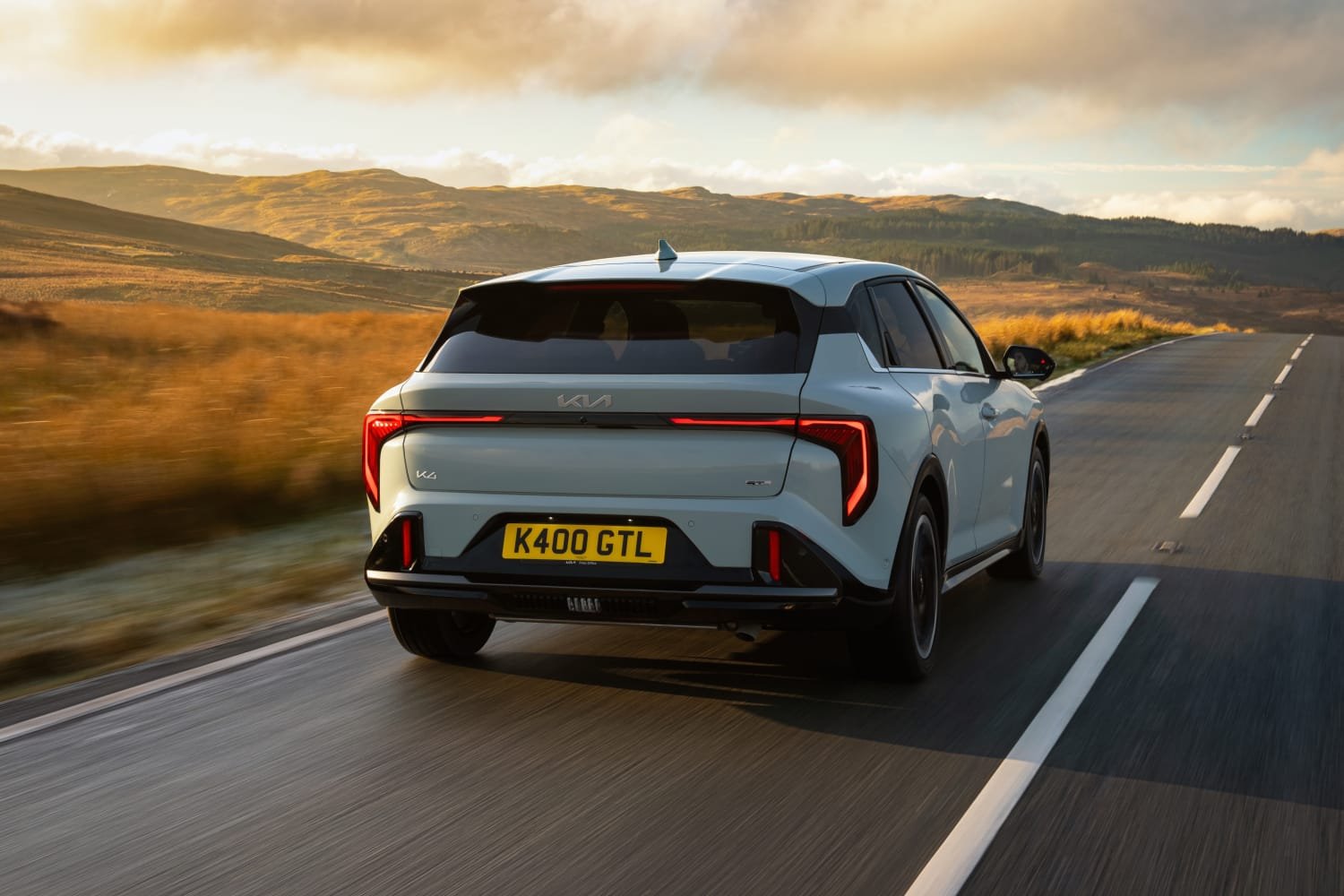
The seven-speed dual-clutch gearbox is mostly well behaved too. It suits the car’s relaxed nature and generally shifts cleanly, though like many DCTs it can occasionally feel a touch hesitant at very low speeds if you’re trying to be especially delicate with your inputs. It’s not a major issue, but neither does it quite have the silkiness of a good torque-converter automatic. To be honest, I’d have been happy with a 6-speed manual gearbox.
Where the K4 scores strongly is in its general road manners. The steering is light but accurate, the car feels stable at speed, and there’s a pleasing lack of drama about the way it covers ground. On the motorway it settles down nicely, with good refinement and enough straight-line stability to make long journeys easy work.
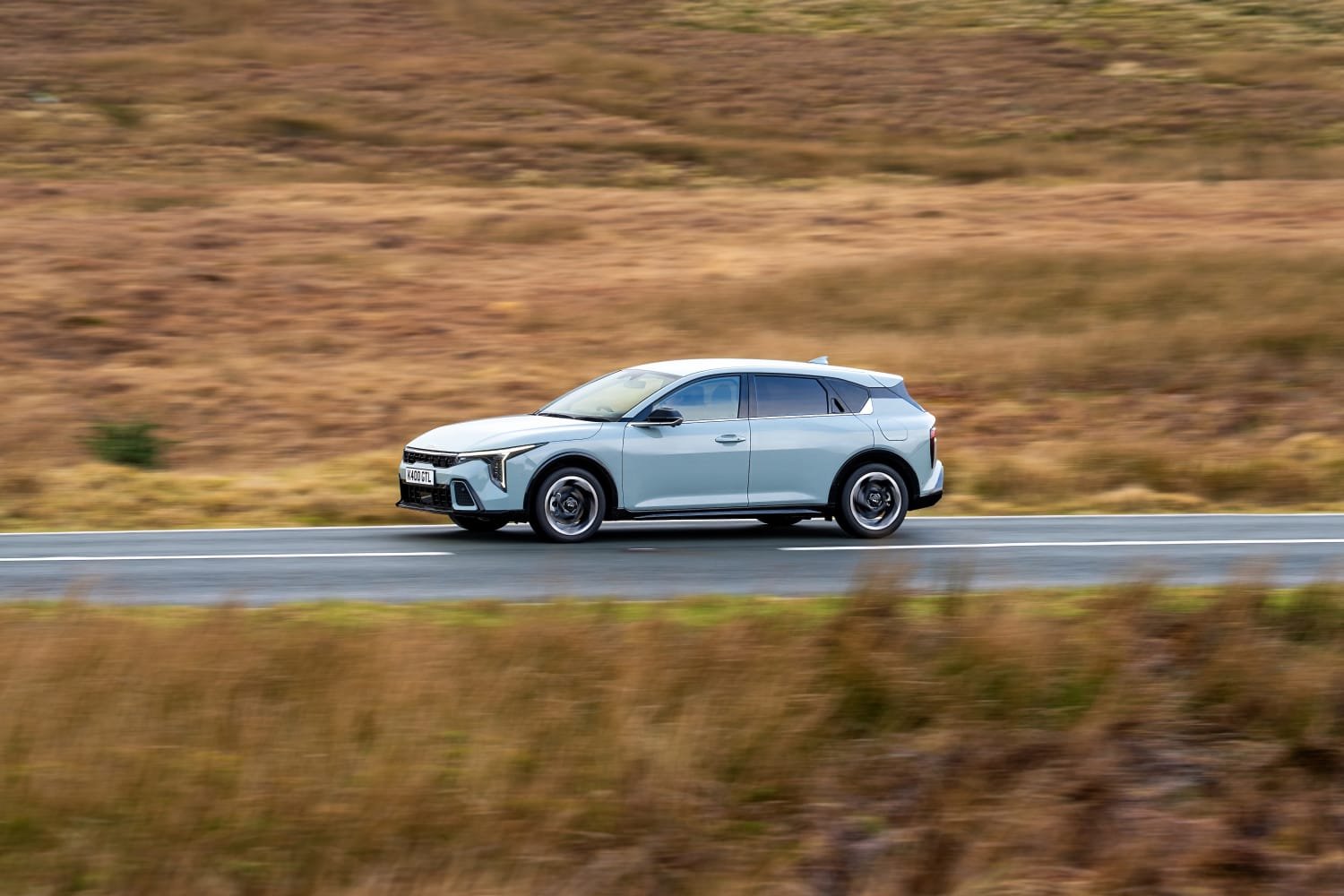
It also helps that the K4 simply feels less cumbersome than the SUVs that increasingly dominate this part of the market. There’s less weight transfer, less vertical movement and less of that sense that the car is trying to be both family transport and lifestyle statement at the same time.
That isn’t to say it’s perfect. If you’re expecting the K4 to inject genuine excitement into your commute, you’ll be disappointed. The steering doesn’t brim with feedback, and while the chassis is neatly sorted, it remains tuned for everyday ease rather than entertainment. But that’s fine. It knows what it is.
Running Costs and Ownership
The K4’s running costs won’t match those of a hybrid or EV, but they’re reasonable enough for a conventional petrol hatchback of this size.
The 1.6 GT-Line returns a claimed 43.6mpg combined, with CO₂ emissions of 148g/km. That’s respectable if not exceptional, and probably close enough to reality to avoid nasty surprises.
More importantly, the ownership proposition is strengthened by Kia’s familiar seven-year/100,000-mile warranty, which remains one of the best in the business. Service intervals are set at 12 months or 10,000 miles, and the K4 also benefits from Kia’s established dealer network and generally strong reputation for reliability.
Rivals
Traditional family hatchbacks aren’t as dominant as they once were, but buyers still have options. The obvious rivals include the Volkswagen Golf, Ford Focus, Mazda3, Toyota Corolla and, in Kia’s own showroom, the electric EV4 if you’re ready to make the jump to battery power.
The K4 doesn’t necessarily beat all of them in every area. The Golf still has a touch more badge cachet, the Mazda3 is arguably the more tactile thing to drive, and the Corolla makes a stronger efficiency argument. But the Kia counters with a generous standard specification, a roomy cabin, a large boot and a warranty package that few competitors can match.
Verdict
The Kia K4 GT-Line won’t change the direction of the car market on its own, but it does make a convincing case for the traditional family hatchback.
It’s spacious, well equipped, smartly styled and genuinely pleasant to drive. The 1.6-litre petrol engine gives it enough performance to feel usefully brisk without tipping into unnecessary expense, while the lower driving position and tidy body control are a welcome antidote to the endless stream of SUVs currently dominating the market.
It isn’t perfect. Some rivals still offer a little more polish or a touch more driver appeal, and the dual-clutch gearbox can occasionally remind you of its existence at low speeds. But judged as a practical, comfortable and well-specified family car, the K4 gets an awful lot right.


At a Glance
- Make & Model: Kia K4 GT-Line 1.6 T-GDi 7DCT
- Price (OTR): £32,095 (£32,715 as tested with Moonlight Mint paint)
- Powertrain: 1.6-litre turbocharged petrol, front-wheel drive
- Power: 147 bhp
- Torque: 250 Nm
- Transmission: 7-speed dual-clutch automatic
- 0–62 mph: 9.1 seconds
- Top Speed: 127 mph
- Fuel Economy (WLTP combined): 43.6 mpg
- CO₂ Emissions: 148 g/km
- Warranty: 7 years / 100,000 miles