FOR years, electric SUVs have seemed obsessed with proving something. They’ve chased ever larger touchscreens. Stranger styling. Faster acceleration. Bigger claims about reinventing the driving experience.
BMW could have followed the same path, but instead the new iX3 feels like a company that has stopped trying to prove it can build an electric car – and simply concentrated on building a very good BMW.
After the divisive styling of the original iX and an increasingly crowded premium EV market, the iX3 arrives looking surprisingly restrained. It still introduces BMW’s latest technology, still promises serious performance and – with a claimed WLTP range of up to 497 miles – makes a bold statement on efficiency. But it does all this in a quiet, revolutionary way . . .
Overview
Rather than creating something that deliberately distances itself from BMW’s existing range, the company has produced an SUV that feels immediately familiar. It’s unmistakably a BMW, only now underpinned by a platform developed specifically for electric propulsion.
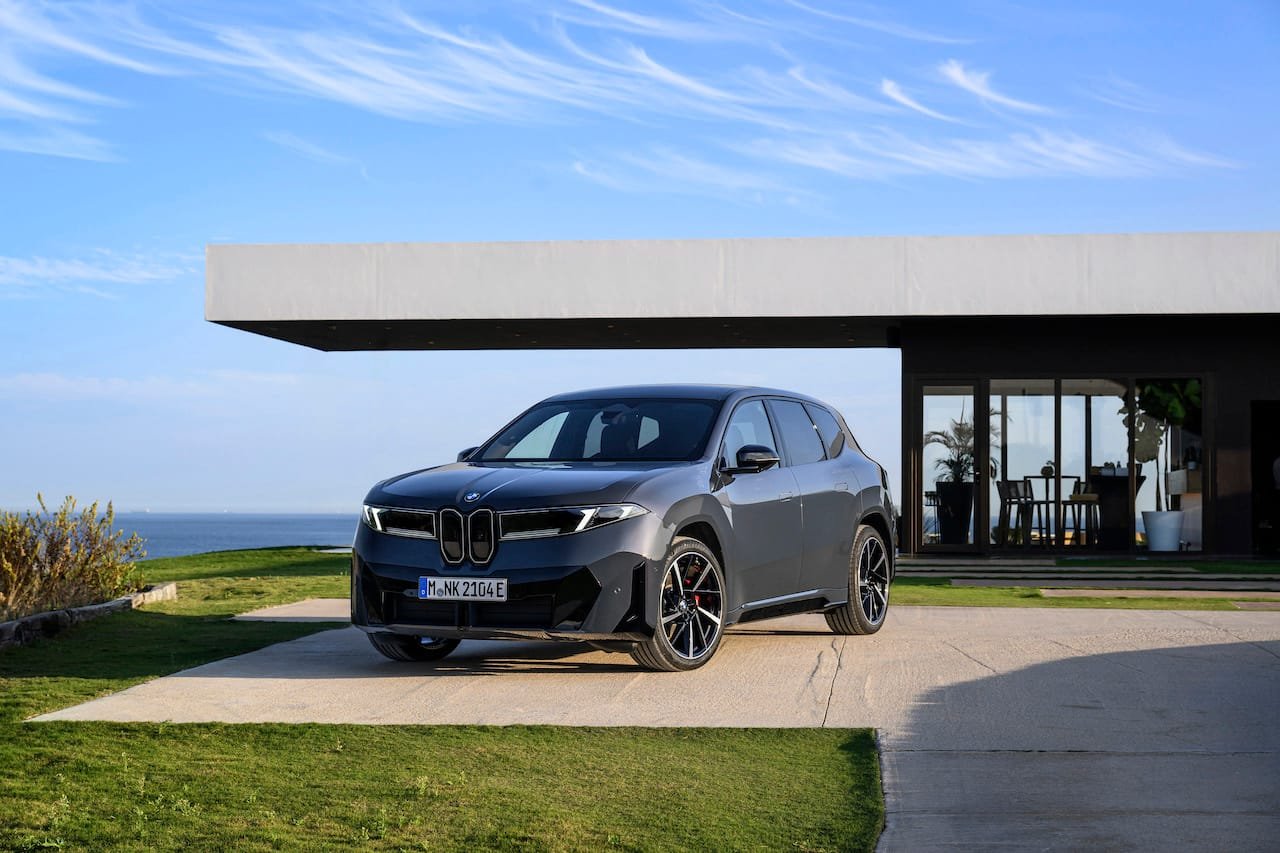
It makes a lot of sense. Many buyers entering the premium EV market aren’t necessarily looking for something radically different. They’re looking for the car they’ve always enjoyed driving – only powered differently. The iX3 aims to be exactly that.
Positioned as a premium five-seat family SUV, the iX3 50 xDrive combines dual electric motors with intelligent all-wheel drive, producing a substantial 463 horsepower and 645Nm of torque. Officially, that’s enough to dispatch the 0-62mph sprint in just 4.9 seconds before reaching an electronically limited top speed of 130mph.
But, as with so many modern electric vehicles, outright acceleration is only part of the story.
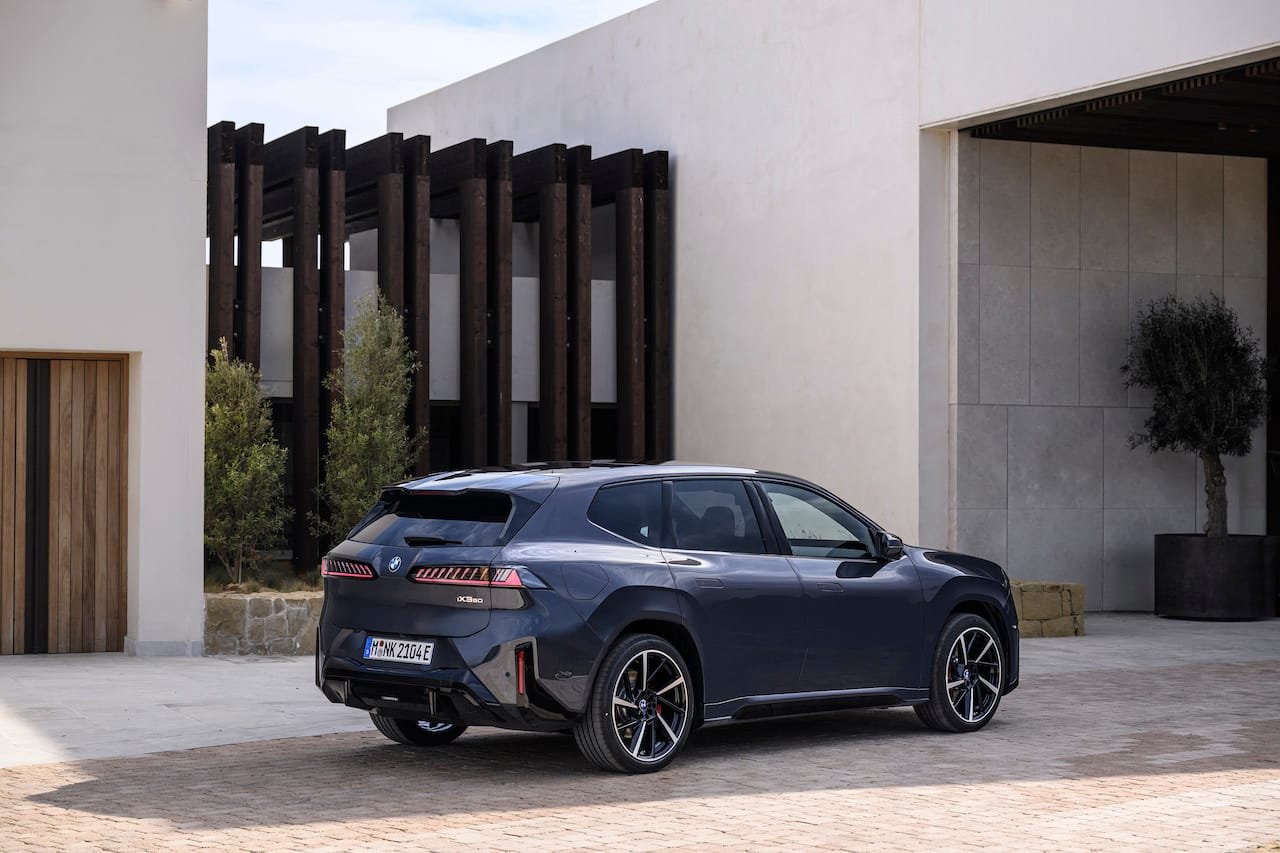
BMW claims energy consumption of just 15.3kWh per 100 kilometres, contributing to an official WLTP range of up to 497 miles. If those figures translate well into everyday driving, the iX3 immediately becomes one of the most compelling long-distance electric SUVs currently available.
The example tested here is finished in M Sport specification and carries a total on-the-road price of £65,562, including the Technology Plus Pack, Heated Steering Wheel, BMW Iconic Glow illuminated grille, Sun Protection Glass and upgraded 20-inch aerodynamic alloy wheels.
It’s undeniably a significant investment.
Design
BMW’s design language has attracted no shortage of debate over recent years. From oversized kidney grilles to increasingly dramatic bodywork, opinion has often been sharply divided.
However, the iX3 feels refreshingly restrained.
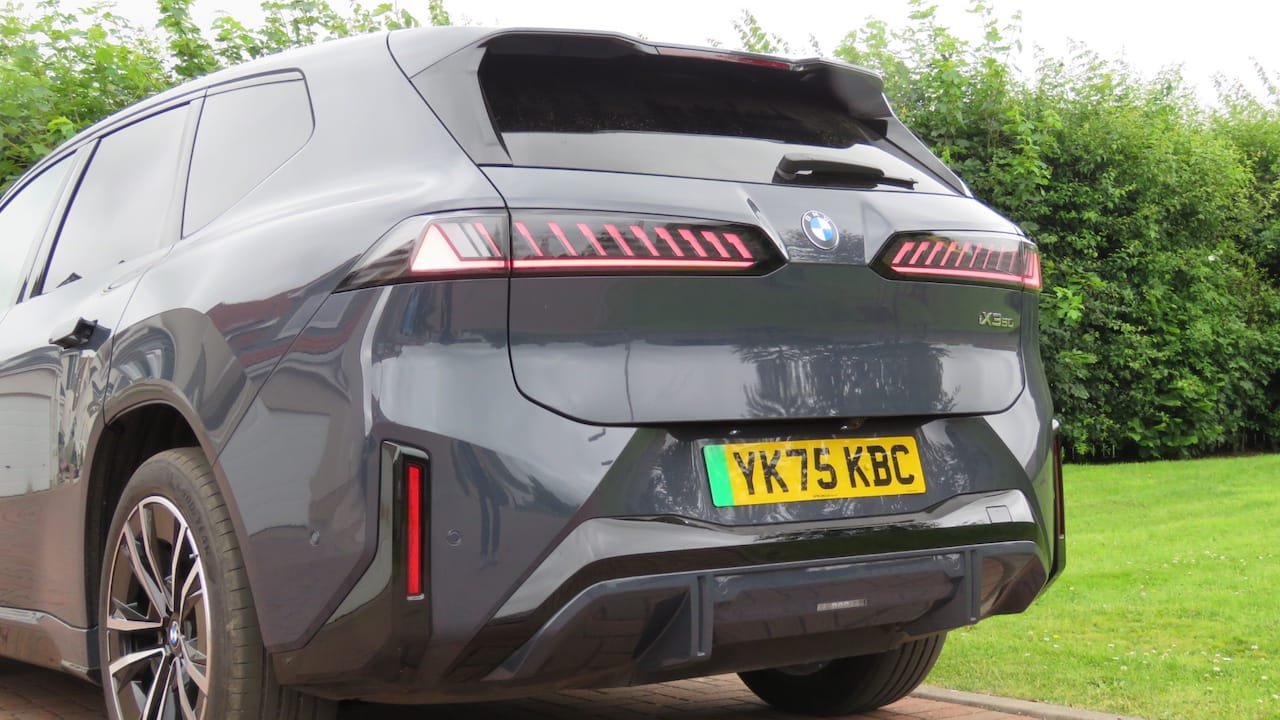
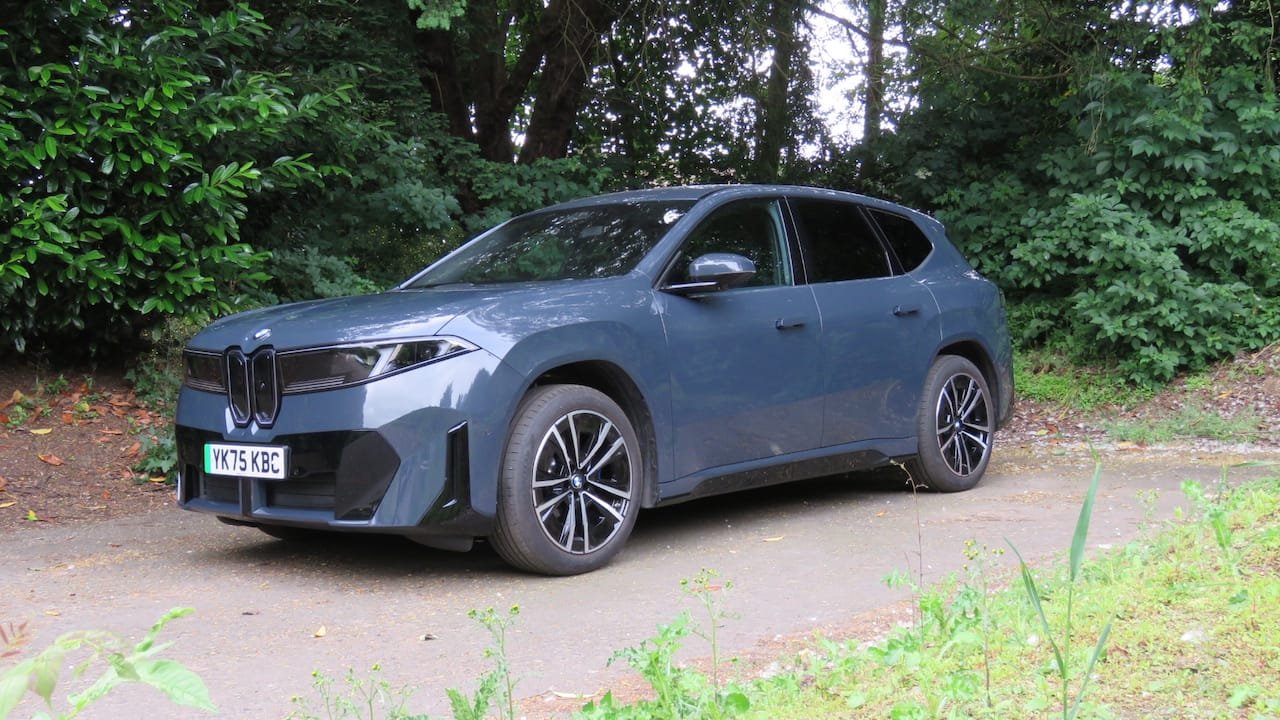
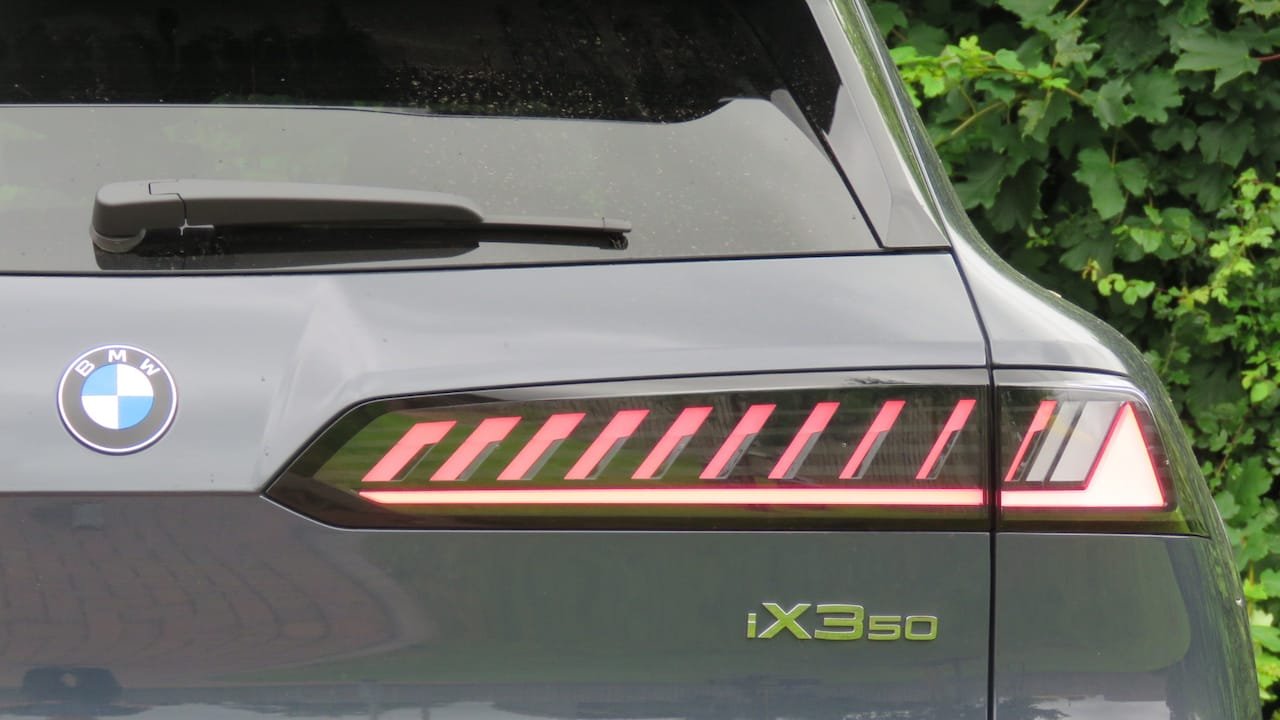
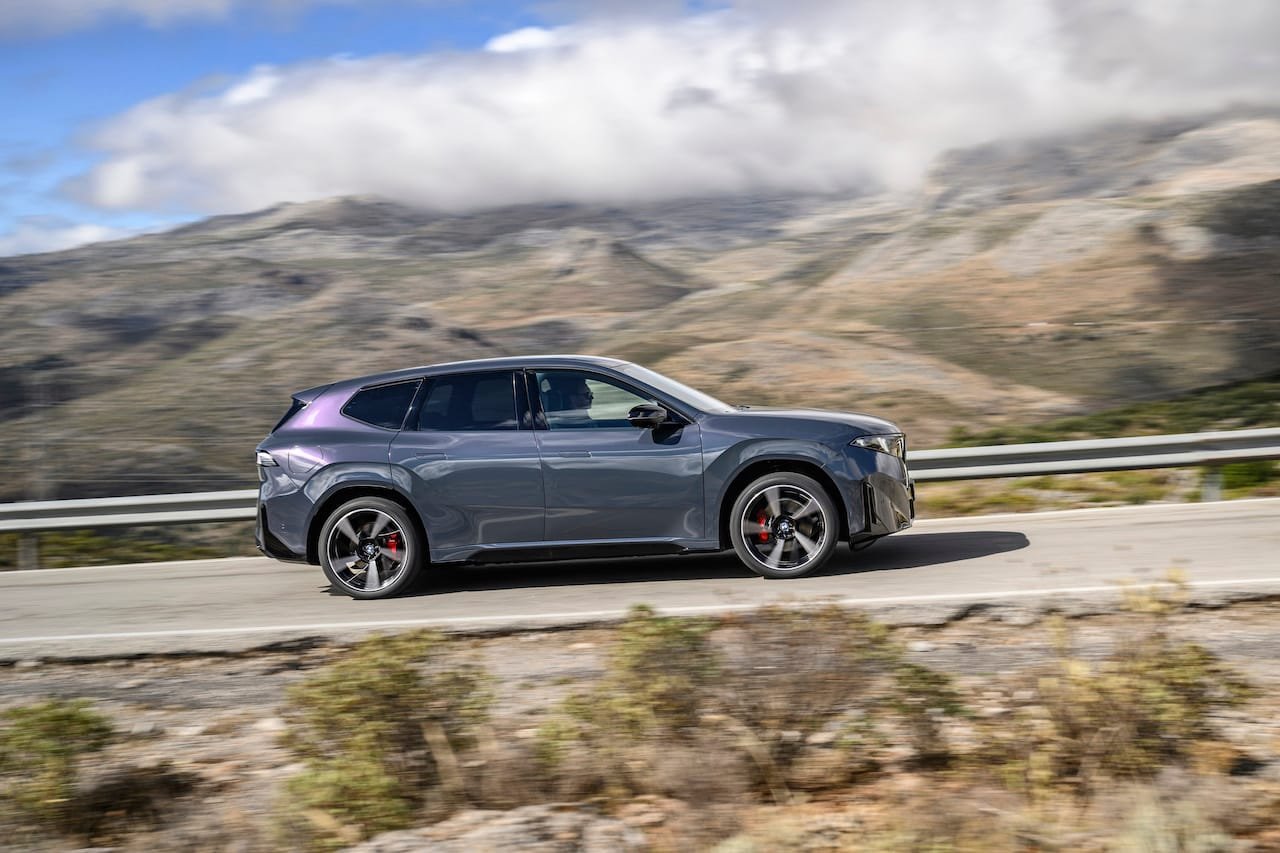
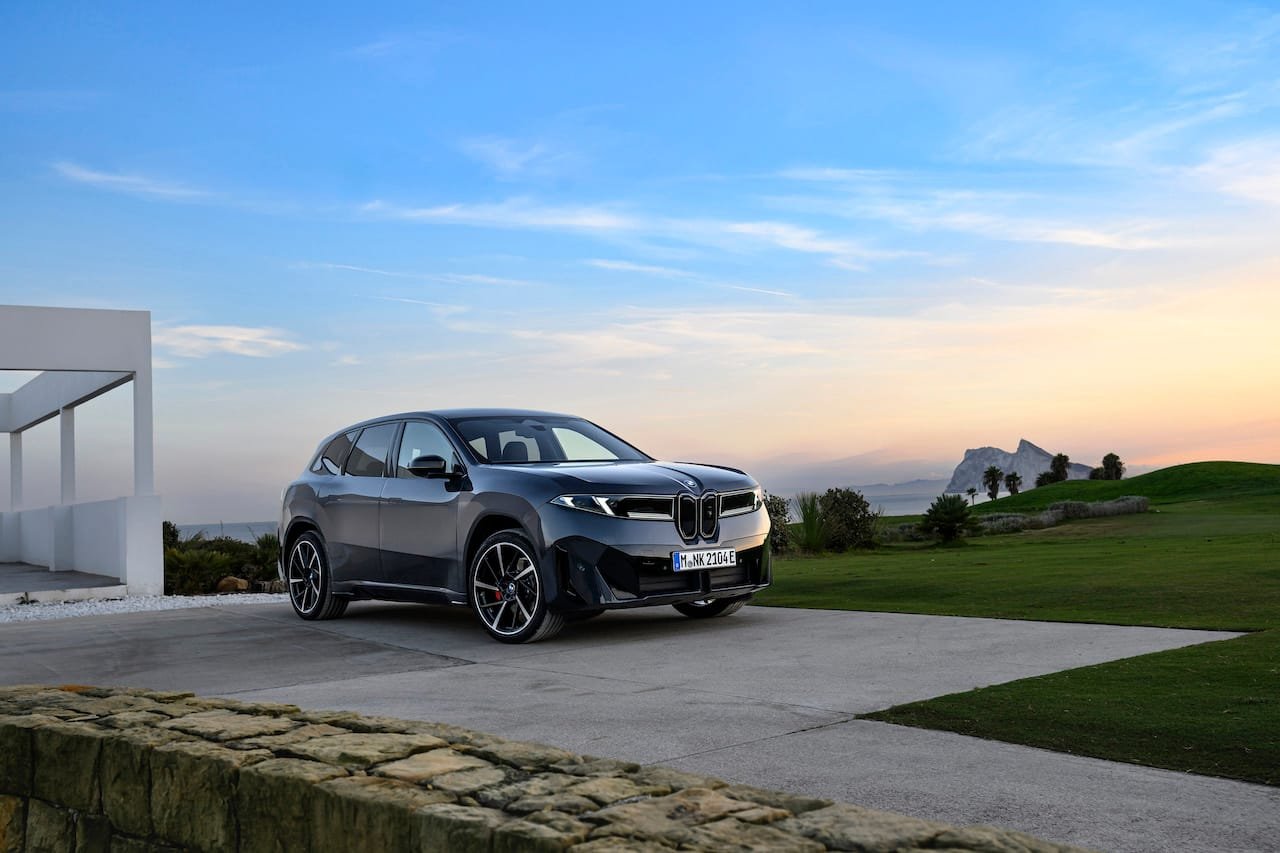
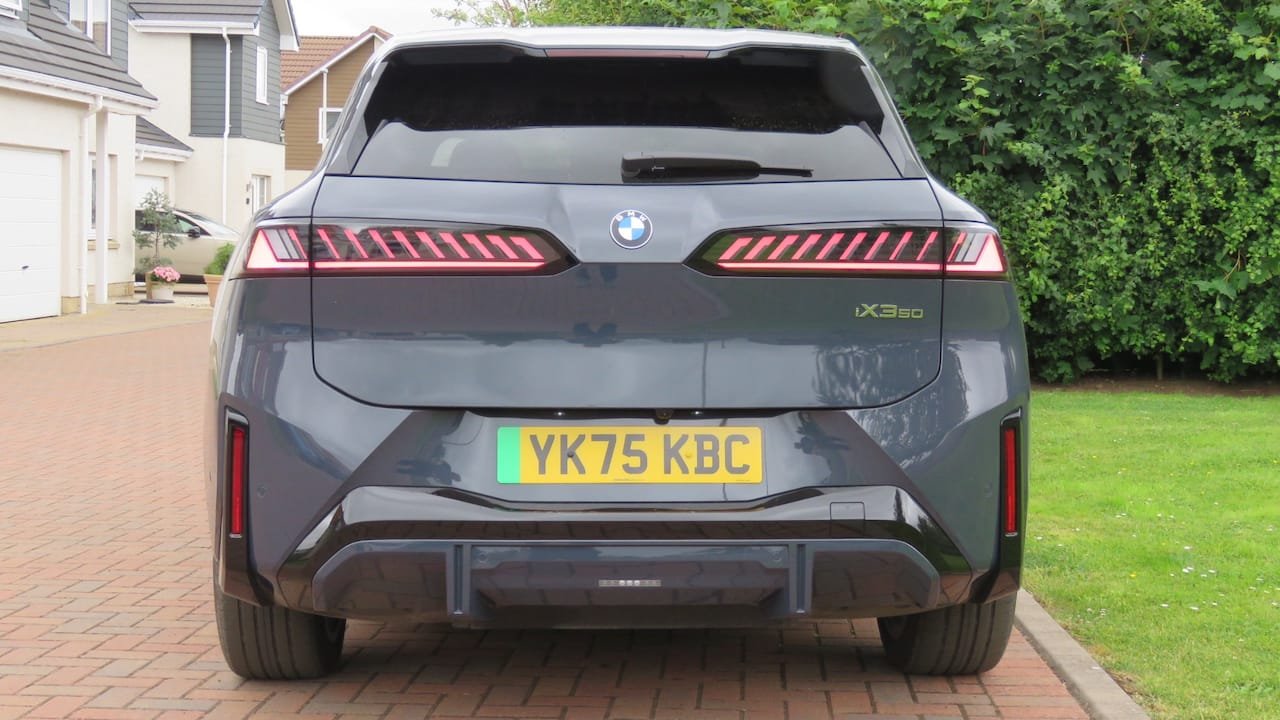
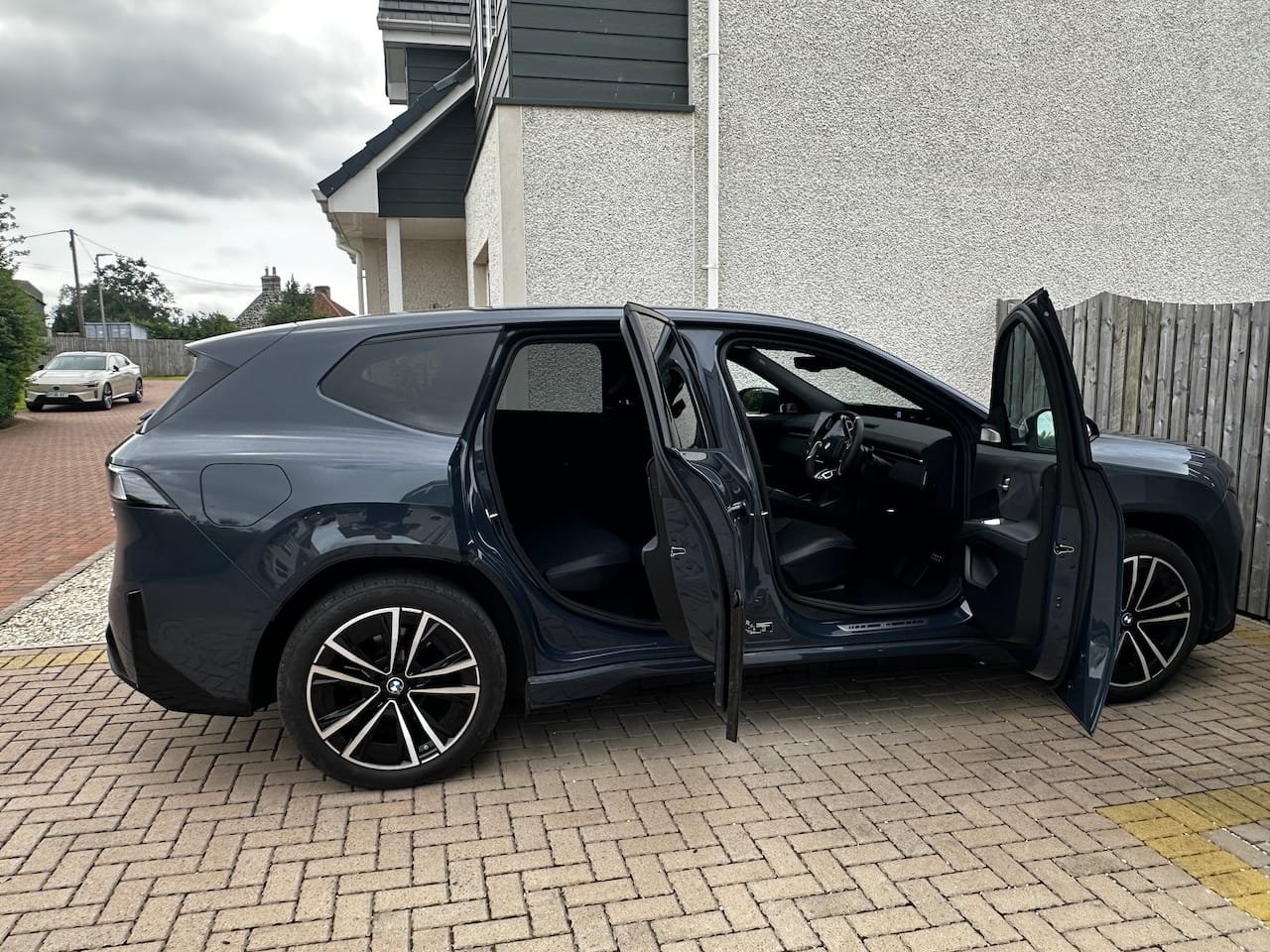
Its proportions are clean, balanced and unmistakably SUV, with crisp body surfacing replacing unnecessary creases and exaggerated styling flourishes. The familiar BMW silhouette remains intact, but subtle electric-specific detailing helps distinguish it without making the distinction feel forced.
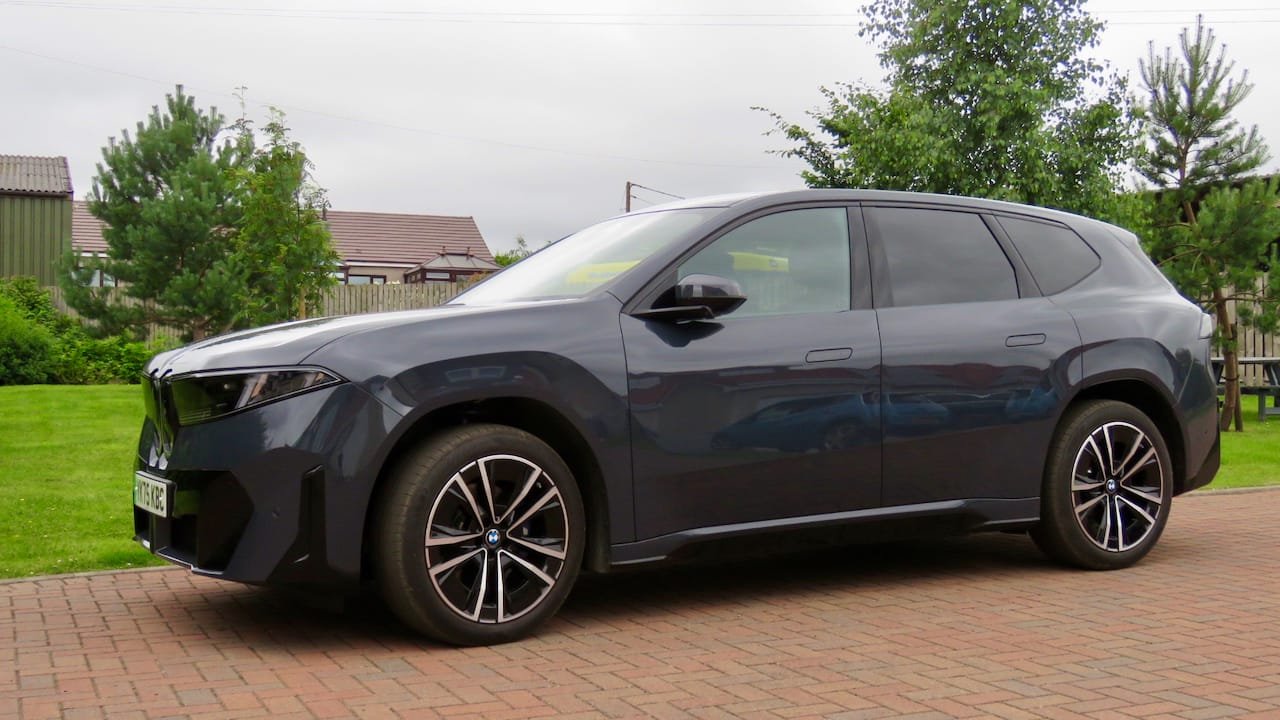
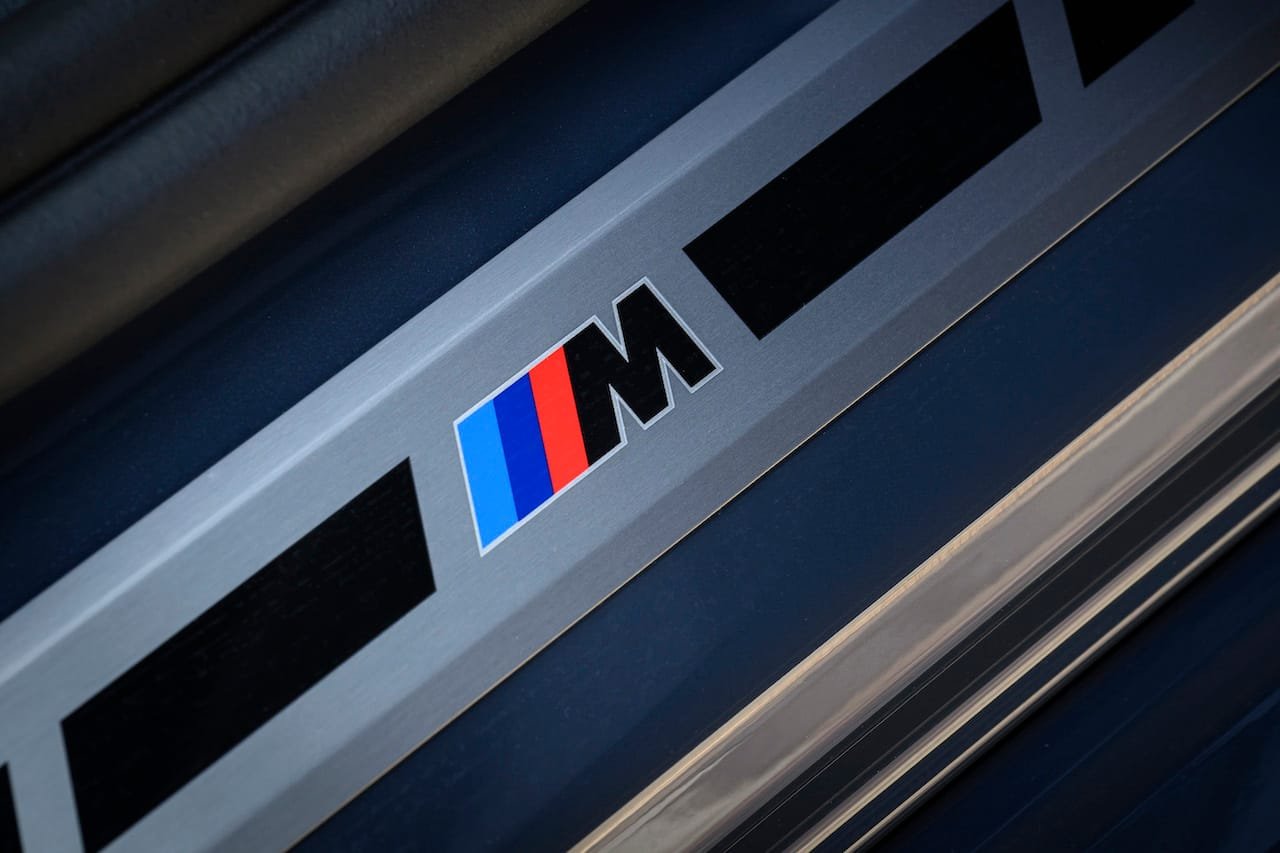
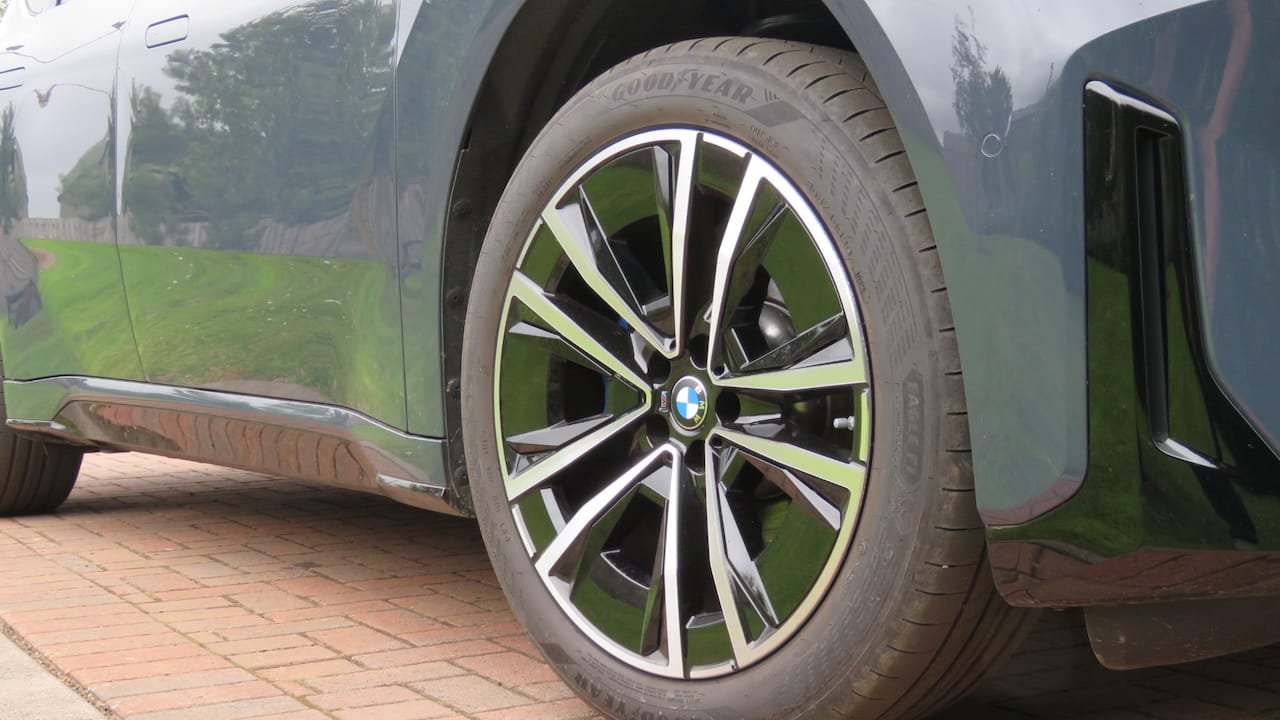
M Sport specification sharpens the appearance further without compromising that sense of maturity. Larger aerodynamic alloy wheels fill the arches neatly, while discreet M detailing adds just enough sporting intent without descending into visual clutter.
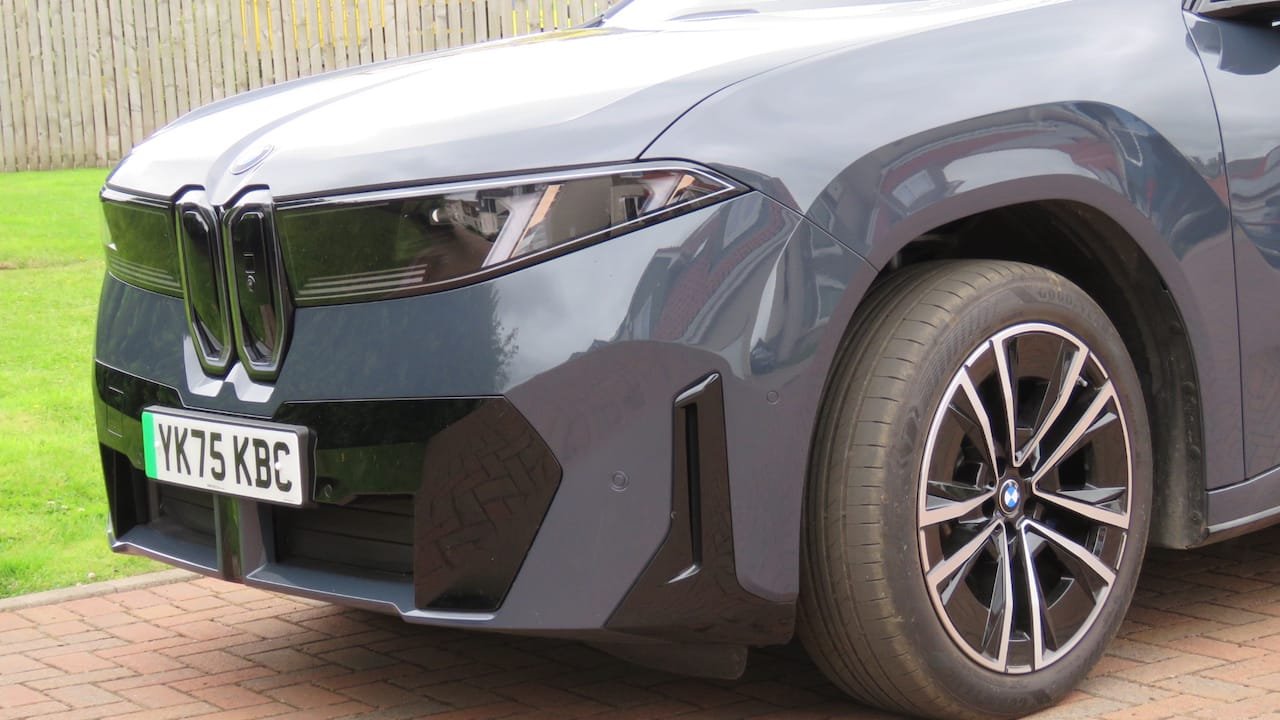
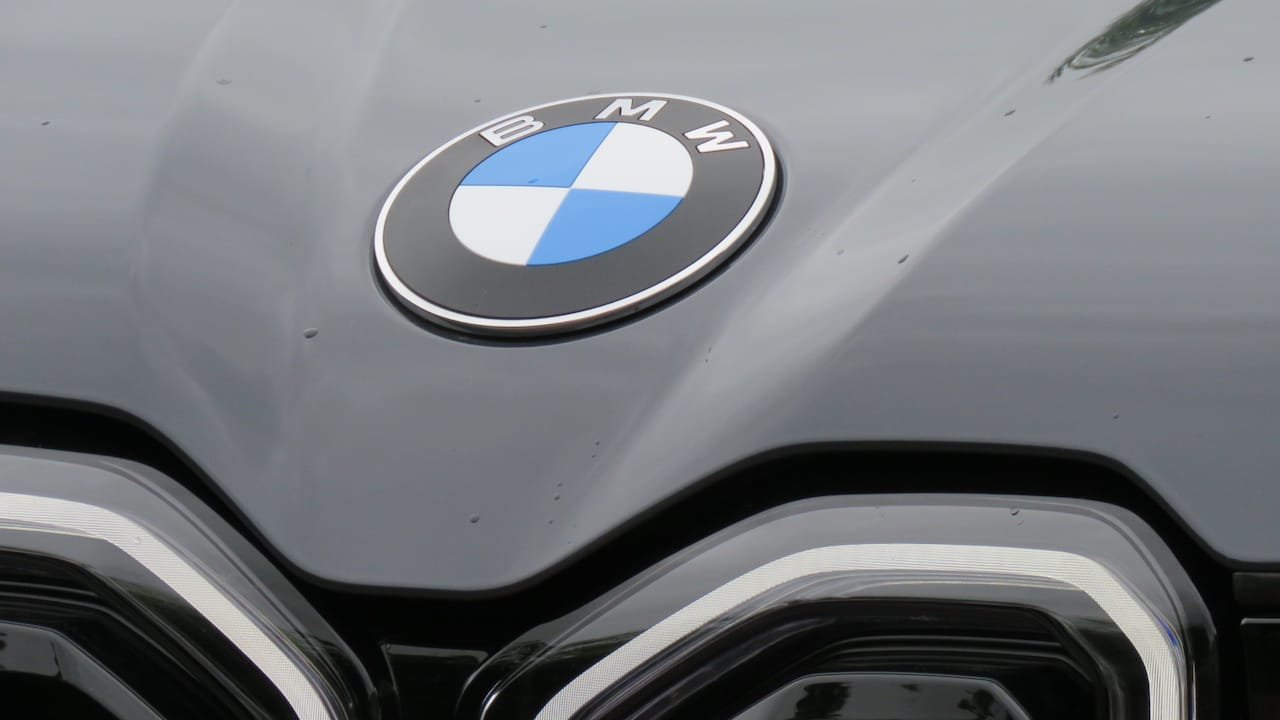
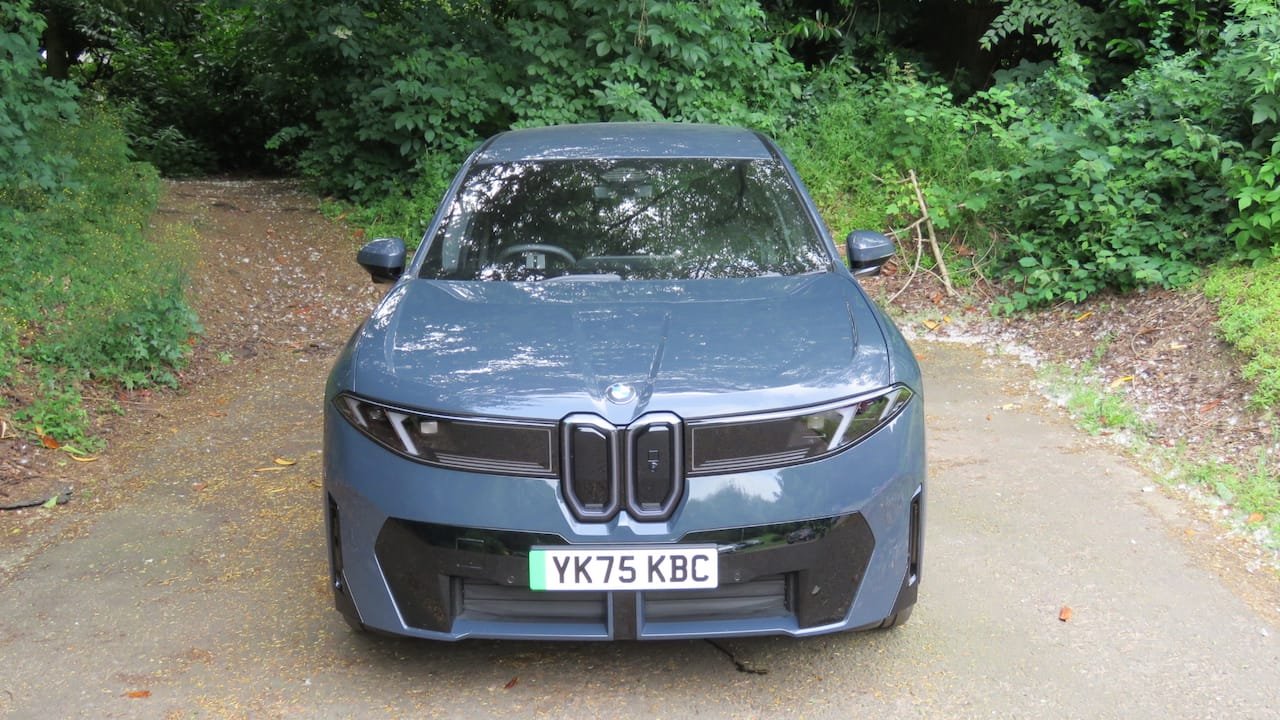
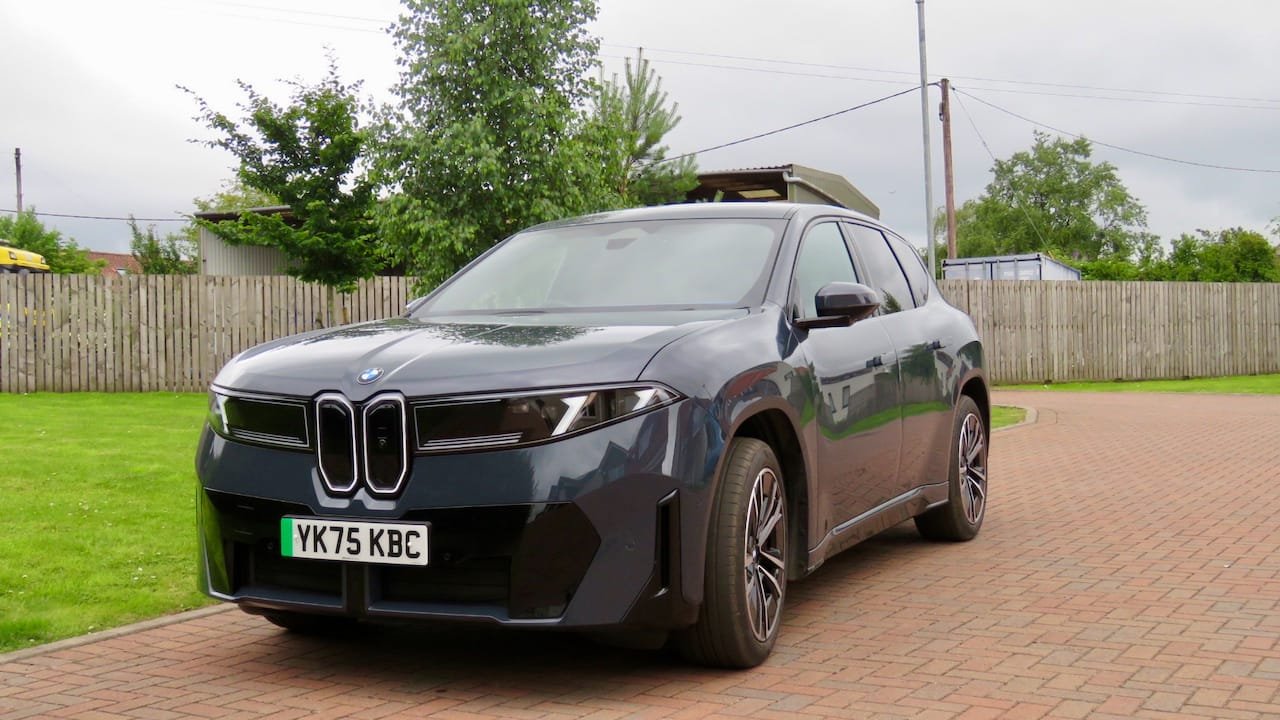
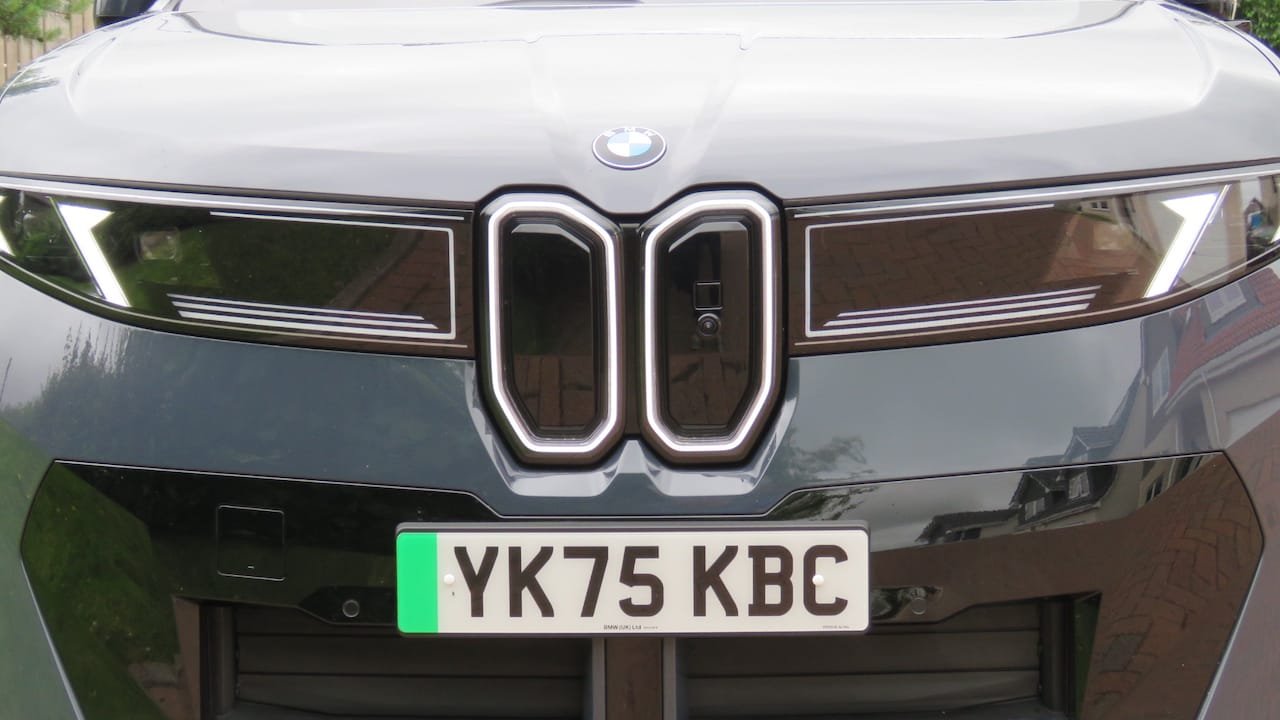
BMW’s Iconic Glow illuminated kidney grille has become something of a signature across its latest models. Some will love the futuristic appearance, while others may question whether an illuminated grille is entirely necessary.
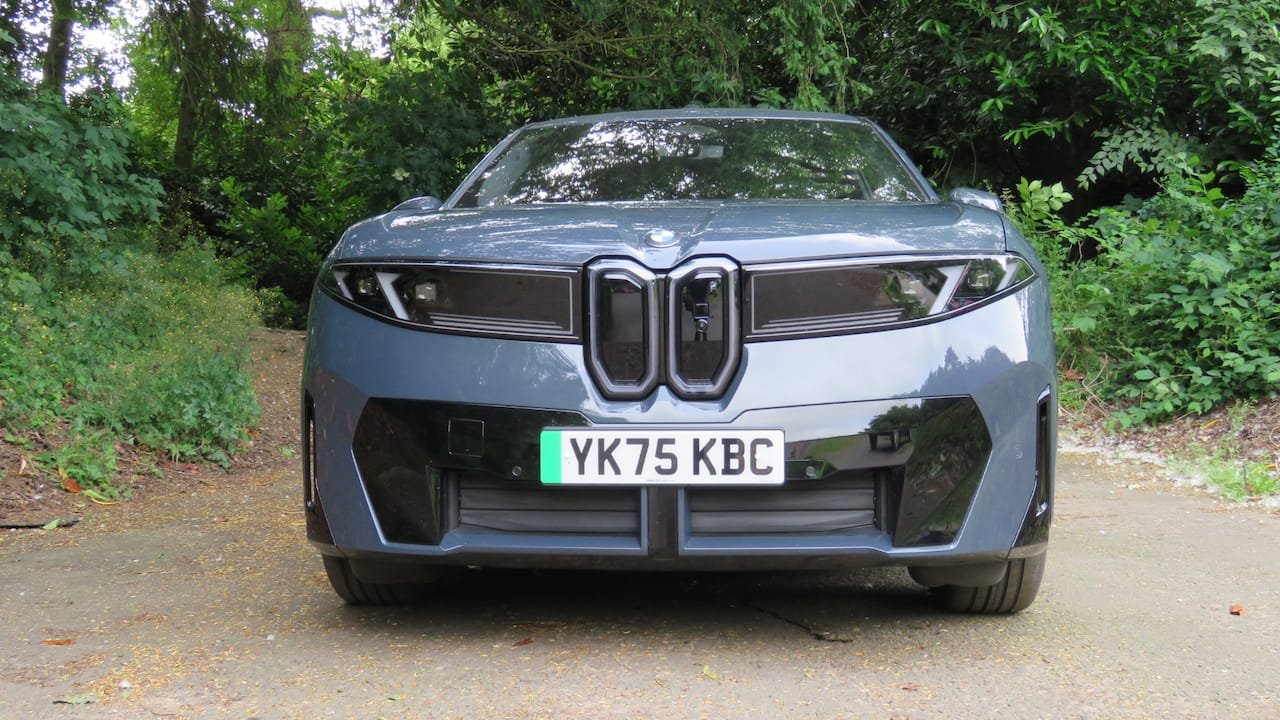
Personally, it works better here than on some of BMW’s larger models. Because the rest of the car is so understated, the lighting becomes an accent rather than the focal point. The more I look at the front end, the more I like it and I can move away from thinking it looks a little ‘hog’ like. Way better than the HUGE grills that went before, in my opinion.
Finished in Polarised Grey, the test vehicle demonstrates another strength of the design. It’s a colour that allows the body lines to speak for themselves. In bright sunlight (I believe) it reveals subtle metallic highlights, while under overcast skies (i.e. Scotland) it takes on a more purposeful, almost understated appearance. Either way, it complements the iX3’s character perfectly.
Interior
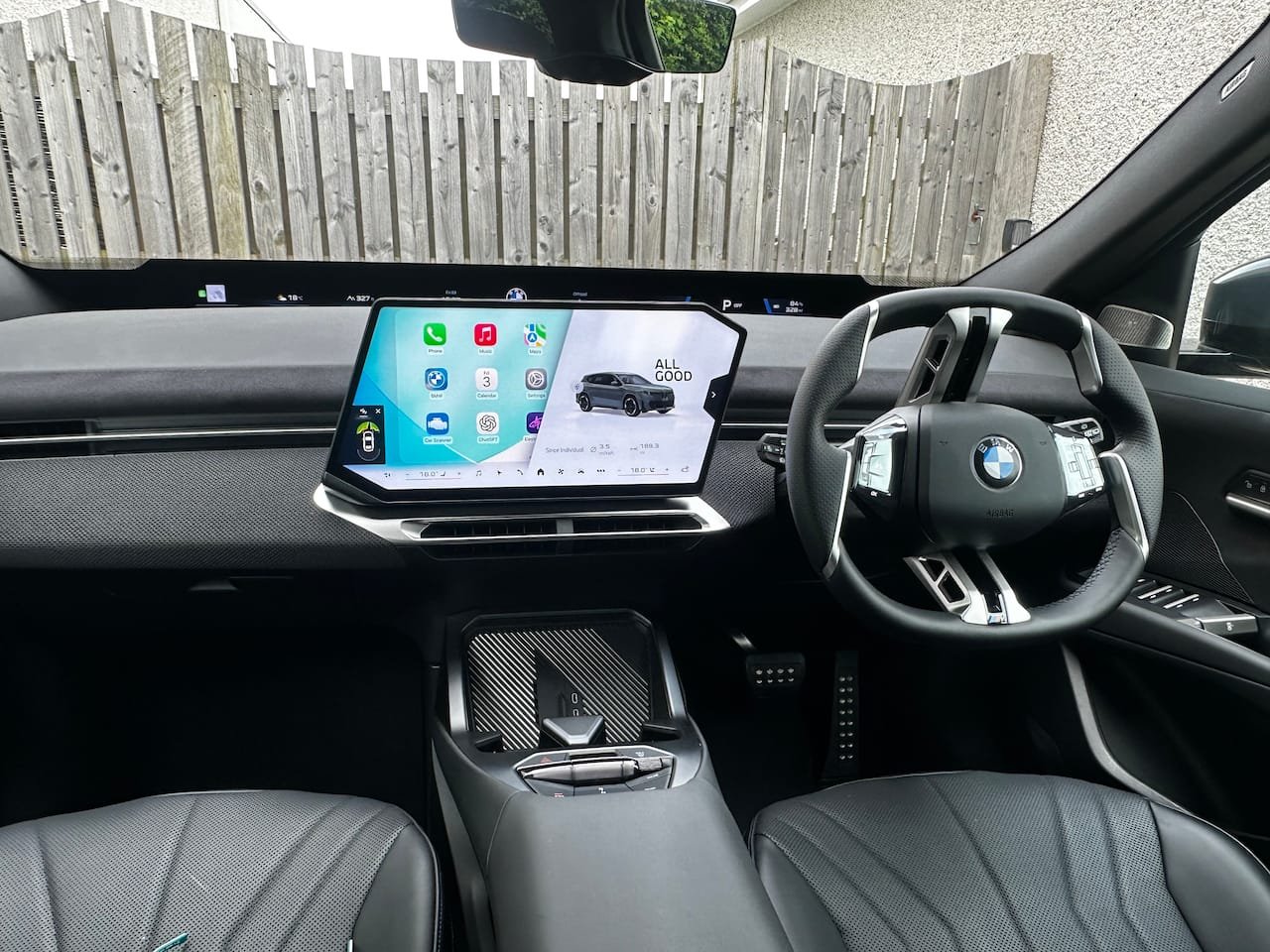
Step inside and it’s immediately obvious where much of BMW’s development effort has been spent. The cabin feels every bit as premium as buyers would expect, but more importantly it feels cohesive.
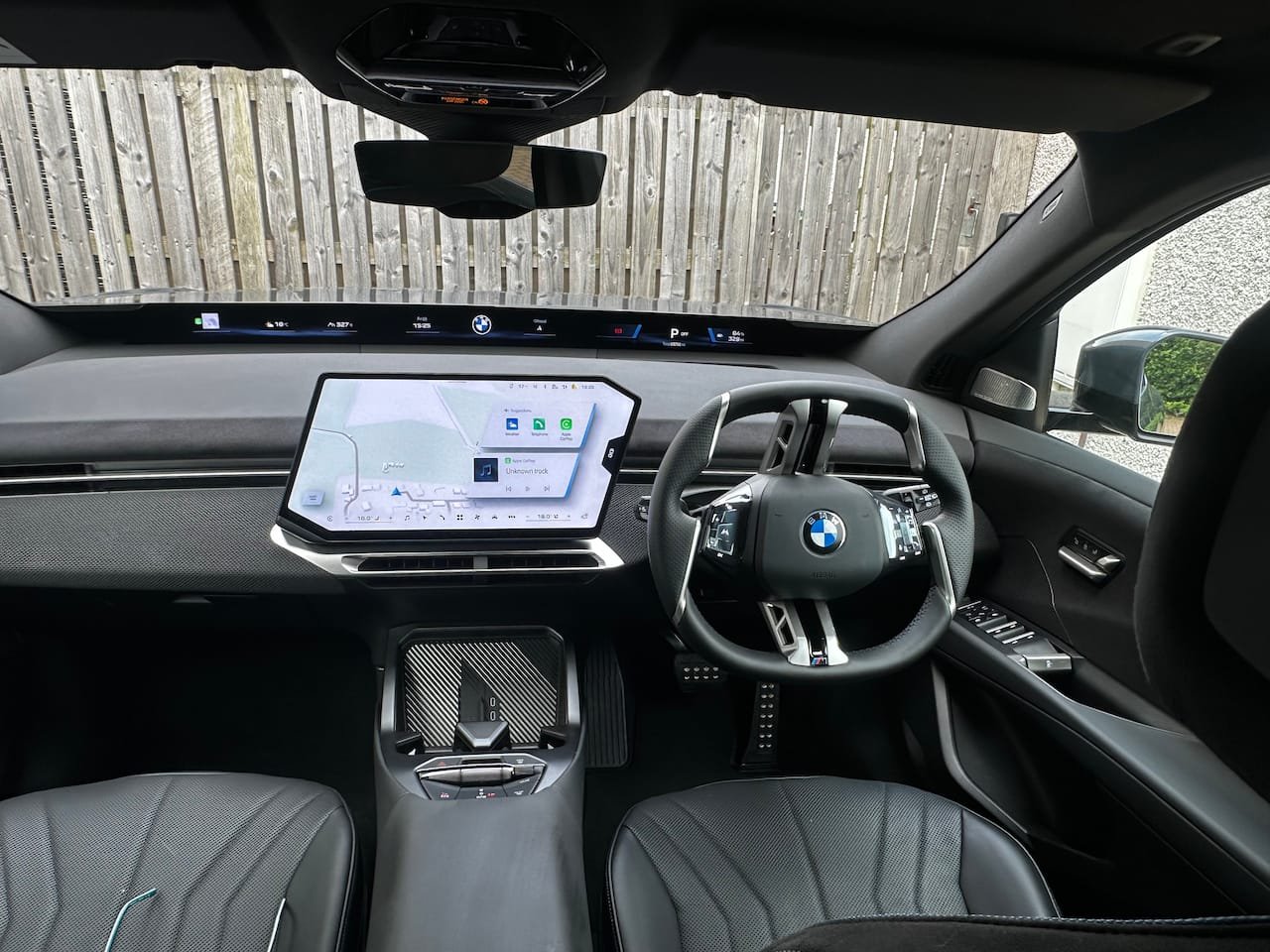
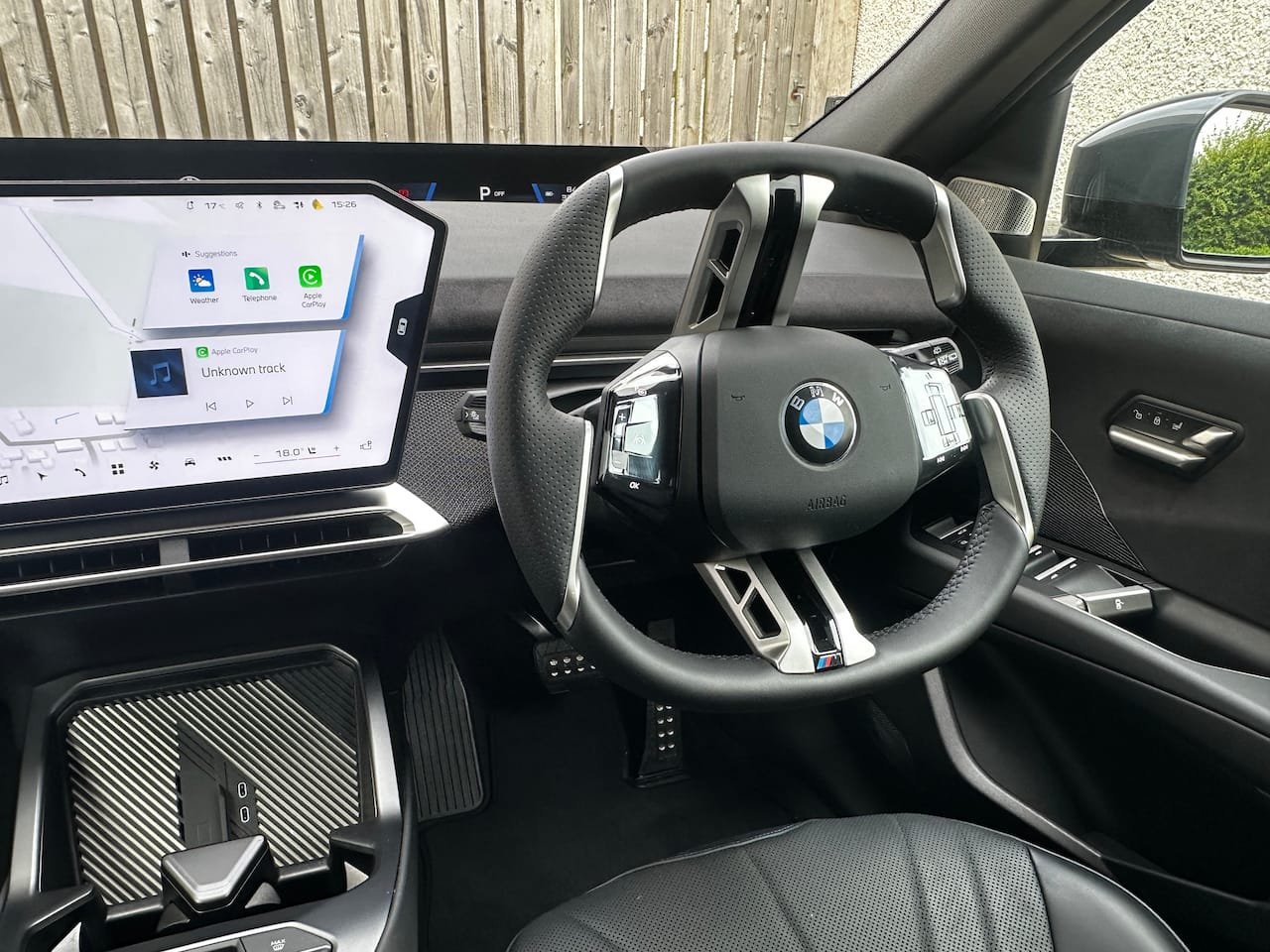
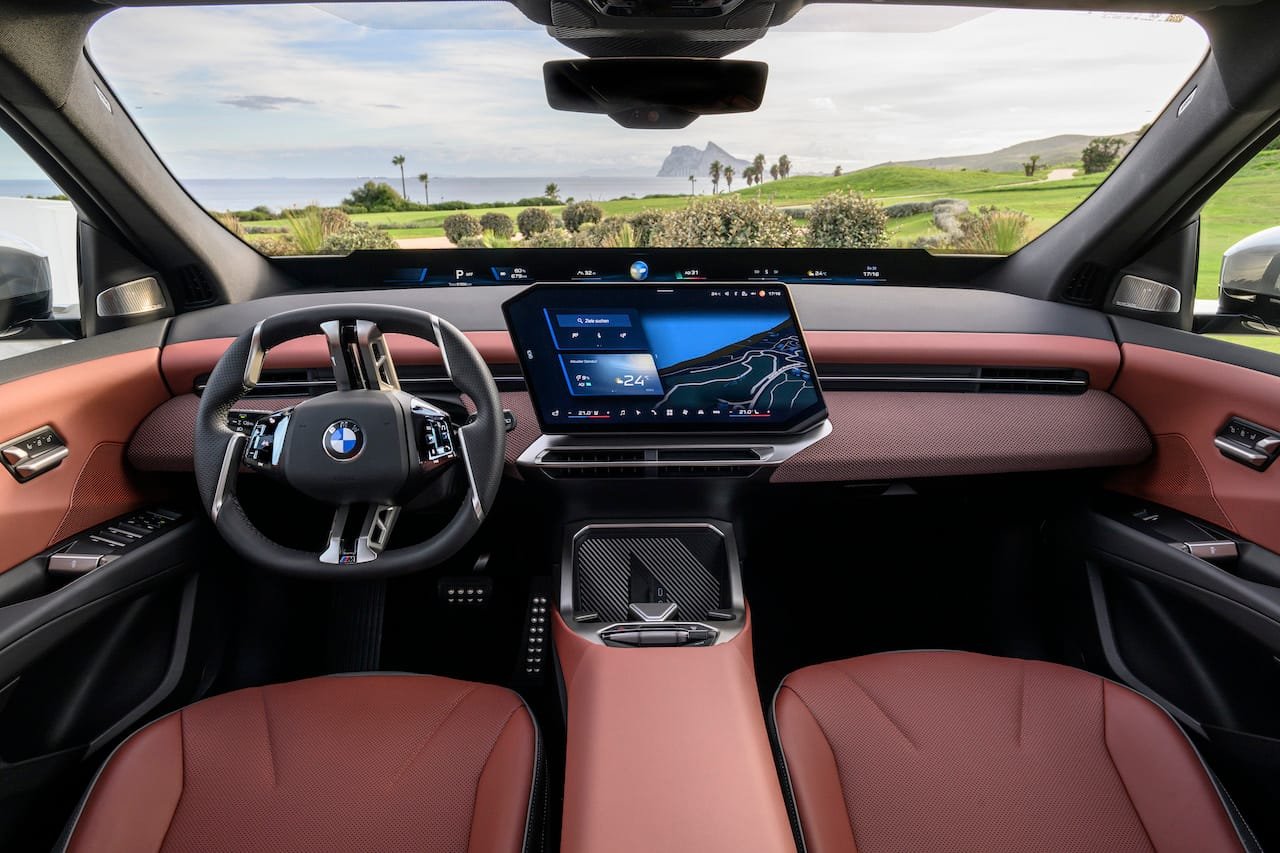
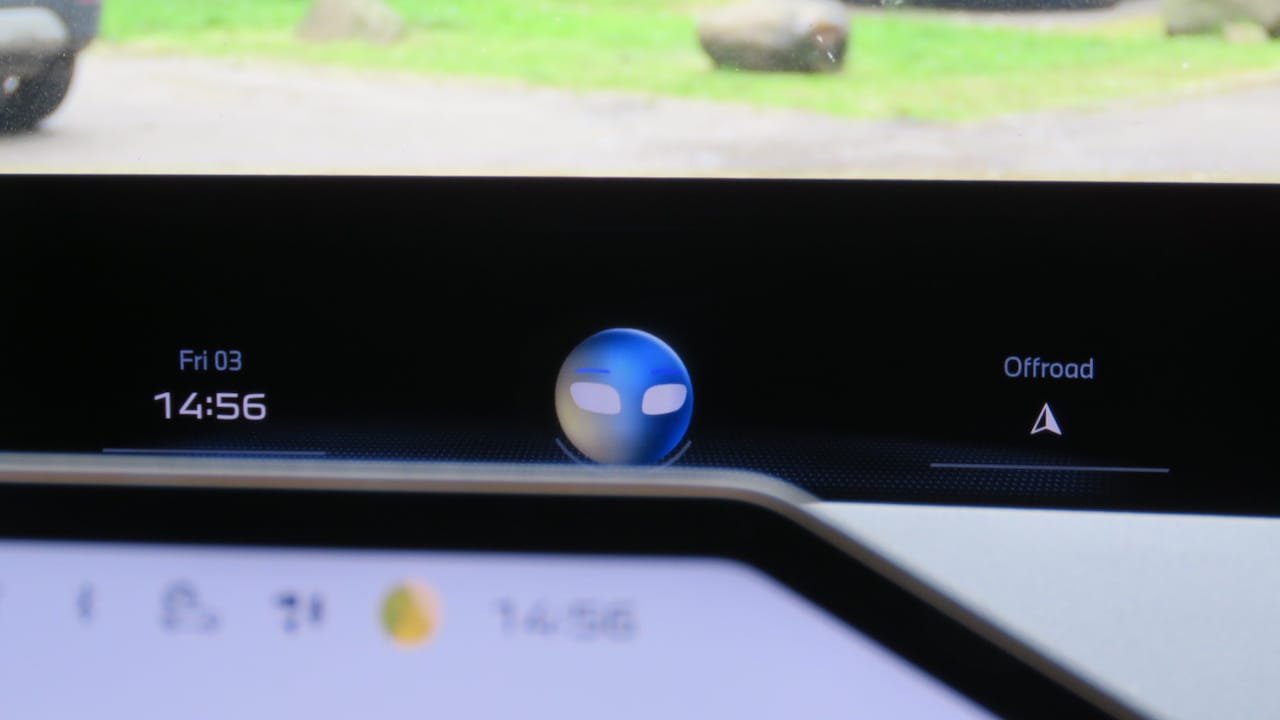
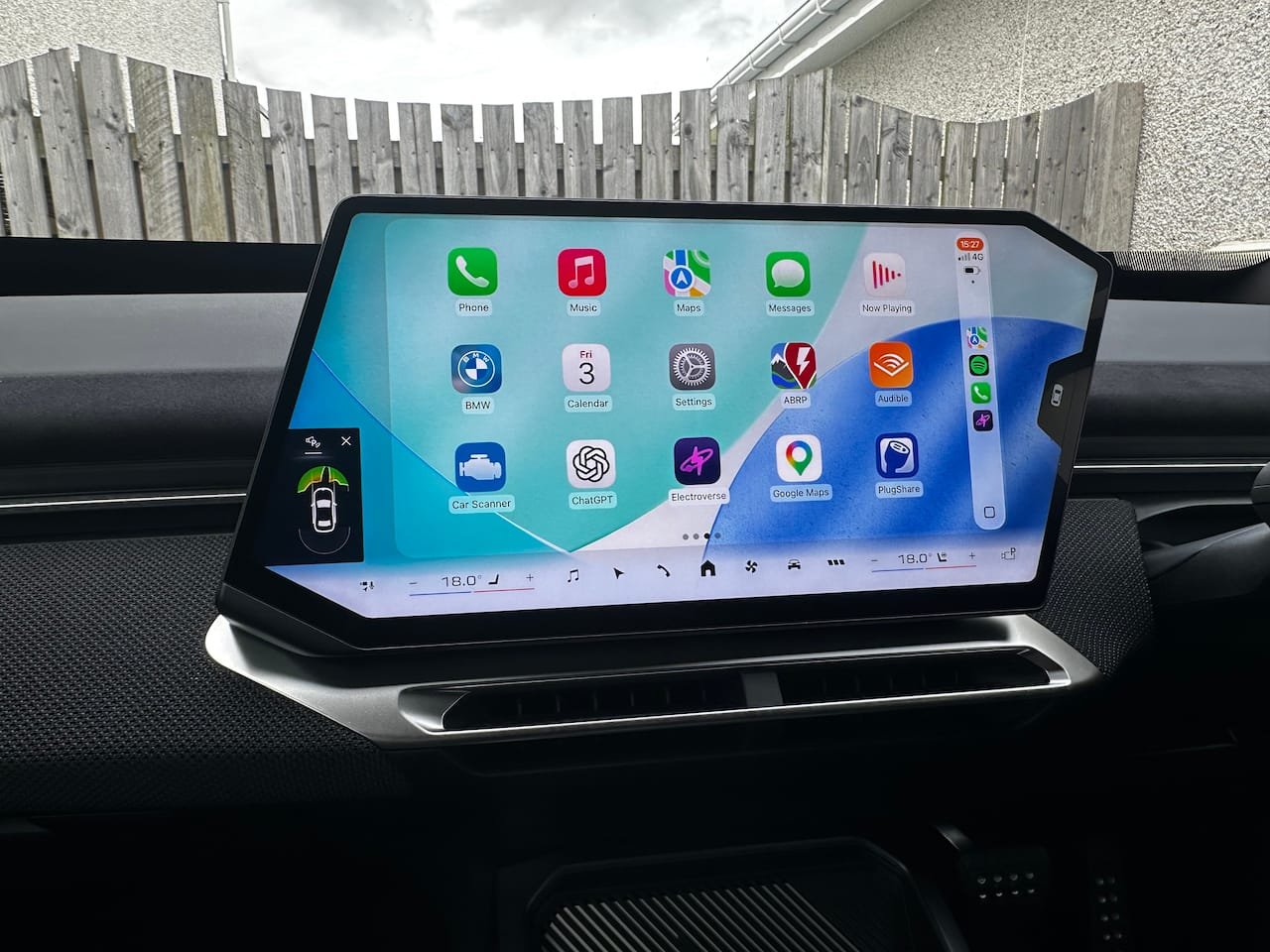
Rather than overwhelming occupants with technology for technology’s sake, BMW has integrated its latest systems into an environment that remains intuitive to use. The new Panoramic Vision display stretches naturally across the driver’s field of view, delivering key information without dominating the dashboard. It’s very impressive and configurable, too.
Combined with the available 3D Head-Up Display, it creates an experience that’s impressively sophisticated without becoming distracting.
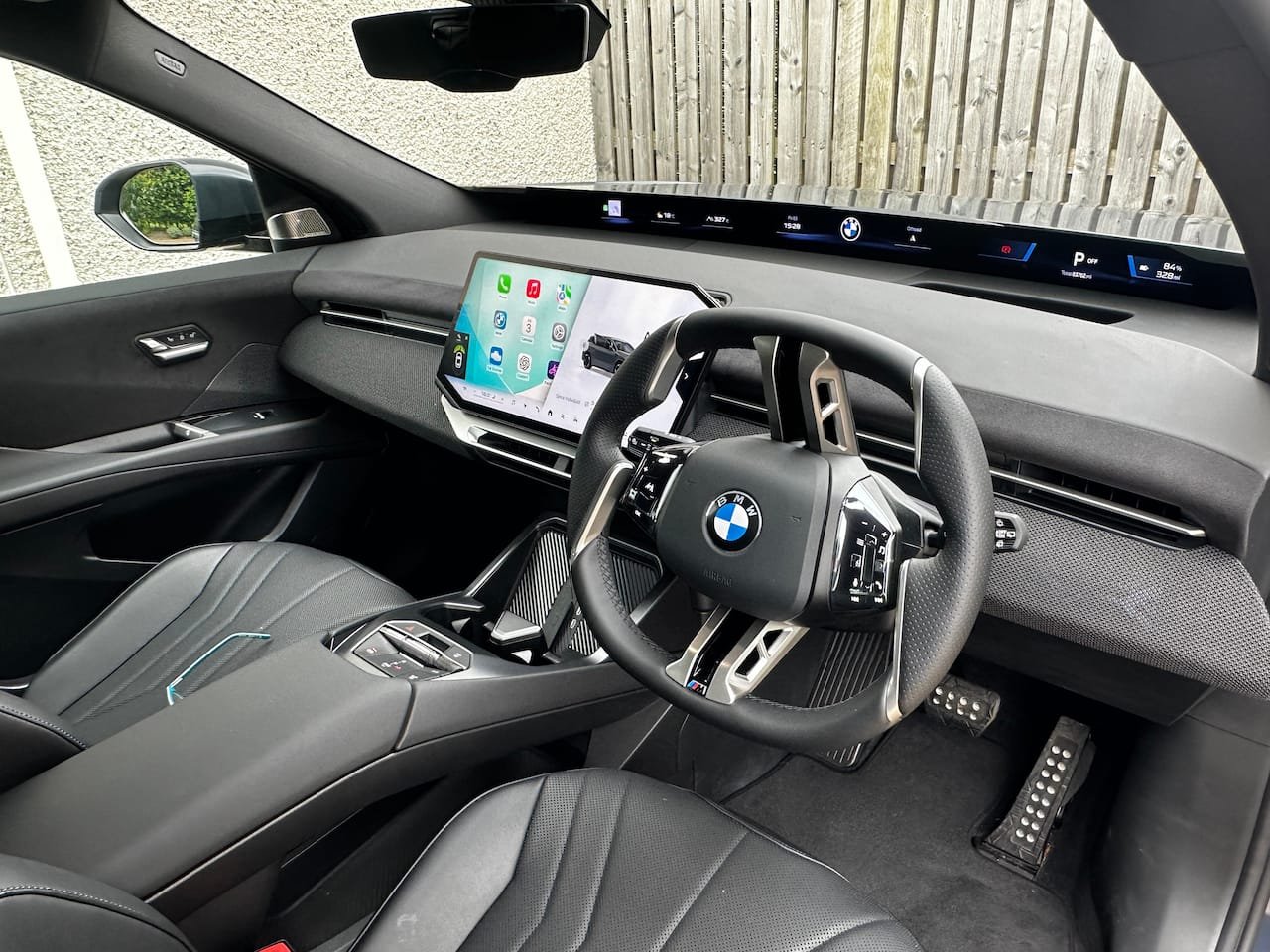
The M Black interior creates a smart, understated atmosphere, while ambient lighting adds subtle visual interest during night driving without becoming overly theatrical. It still feels a little gimmicky though.
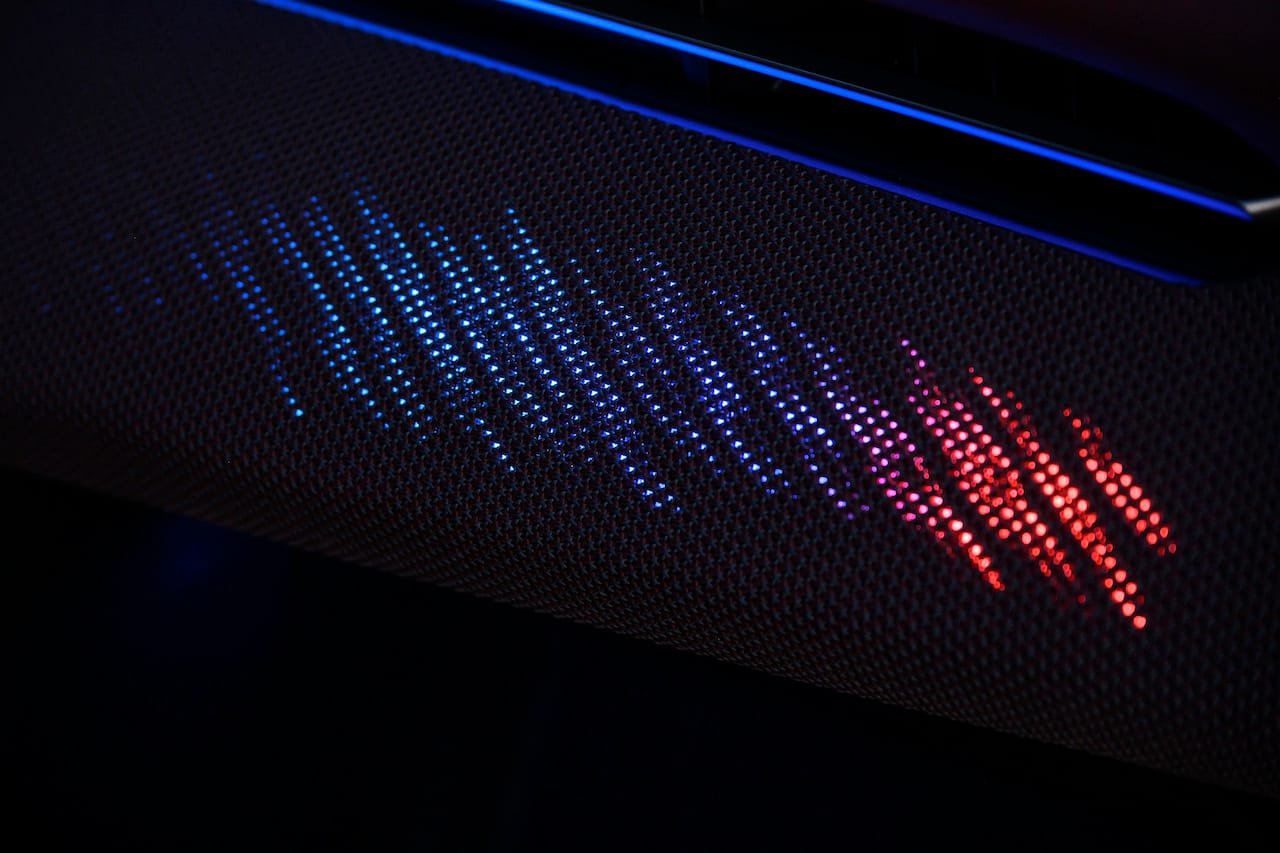
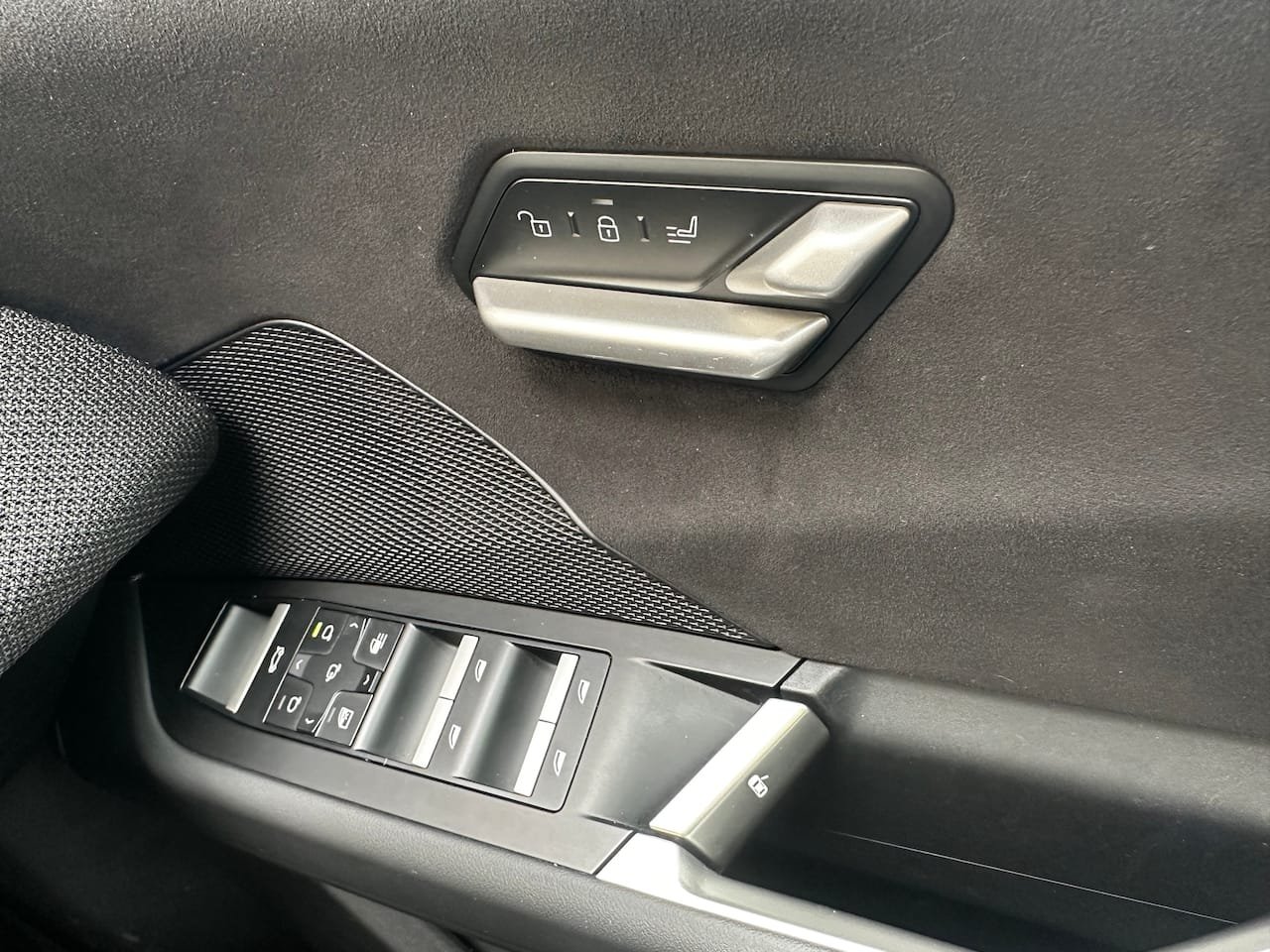
Heated front seats and a heated steering wheel come as welcome additions, particularly for Scottish winters, and the Harman Kardon surround sound system included within the Technology Plus Pack has the sort of audio quality long journeys deserve.
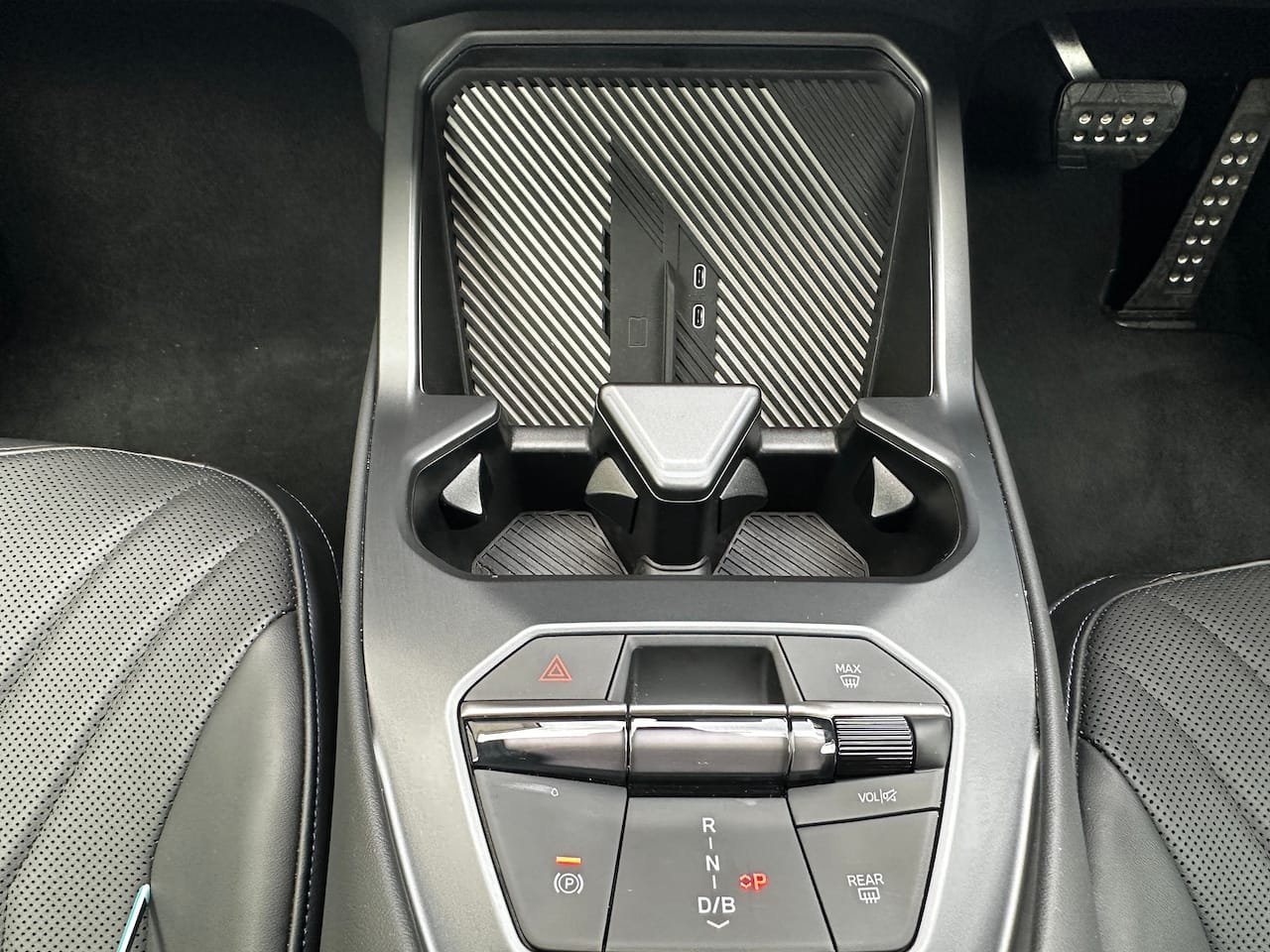
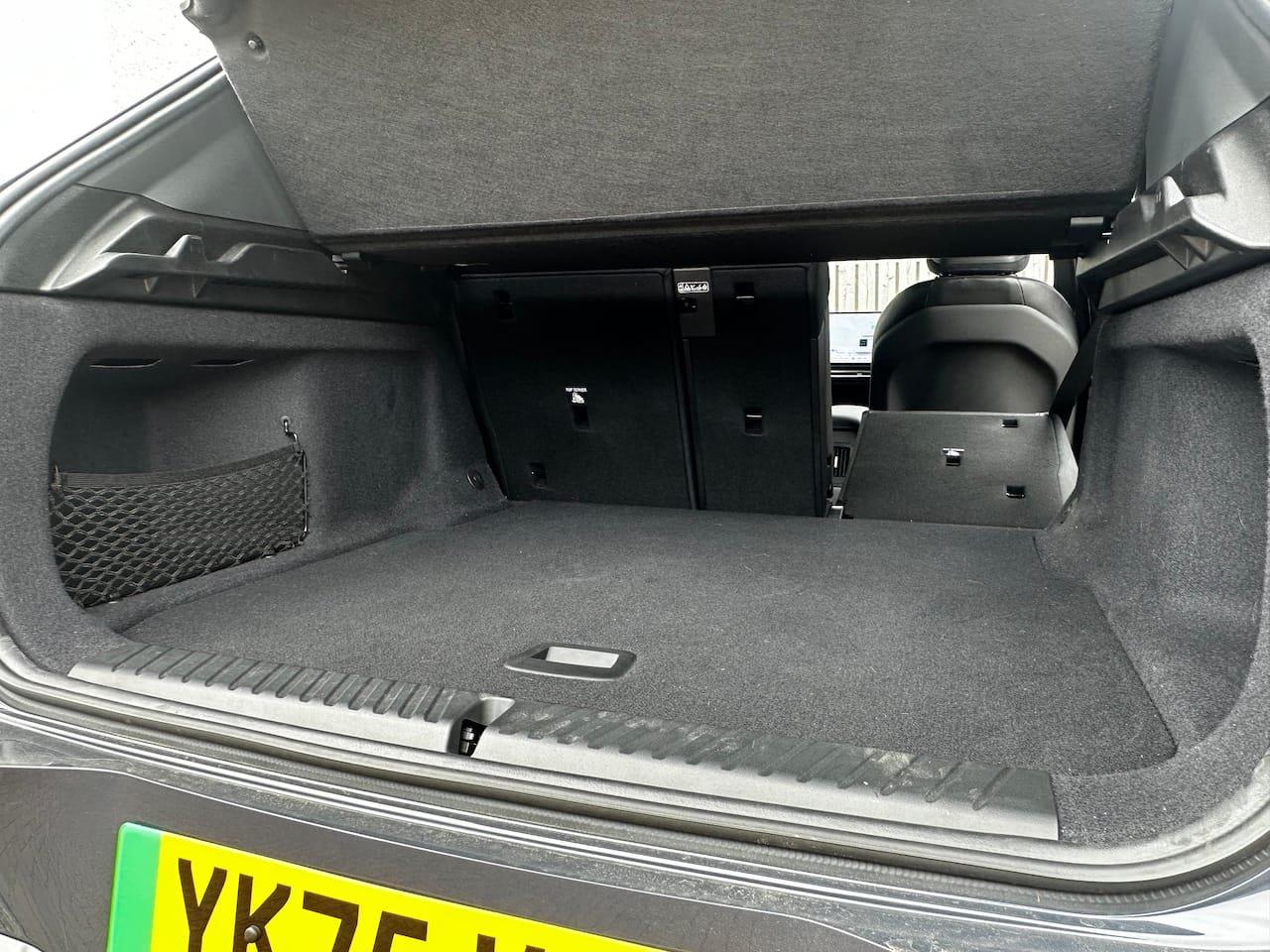
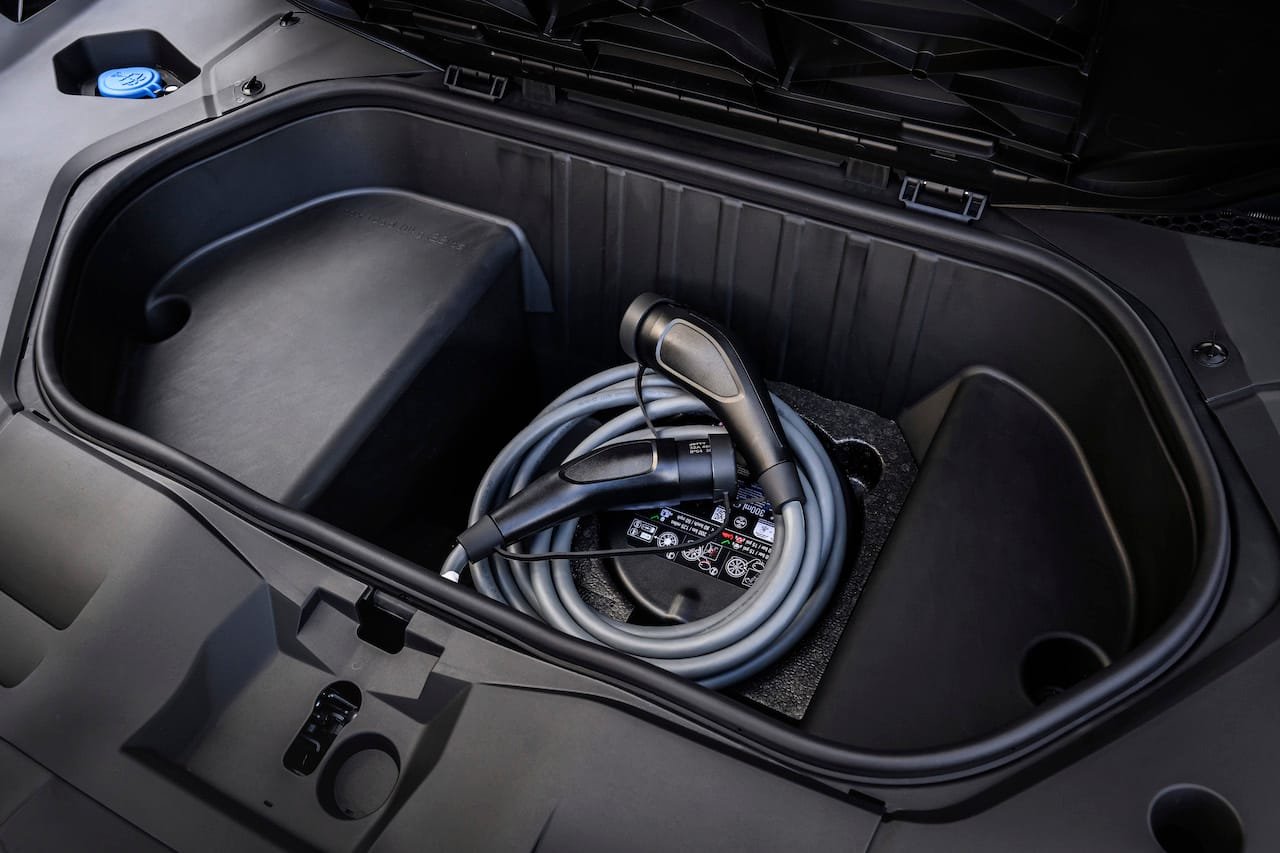
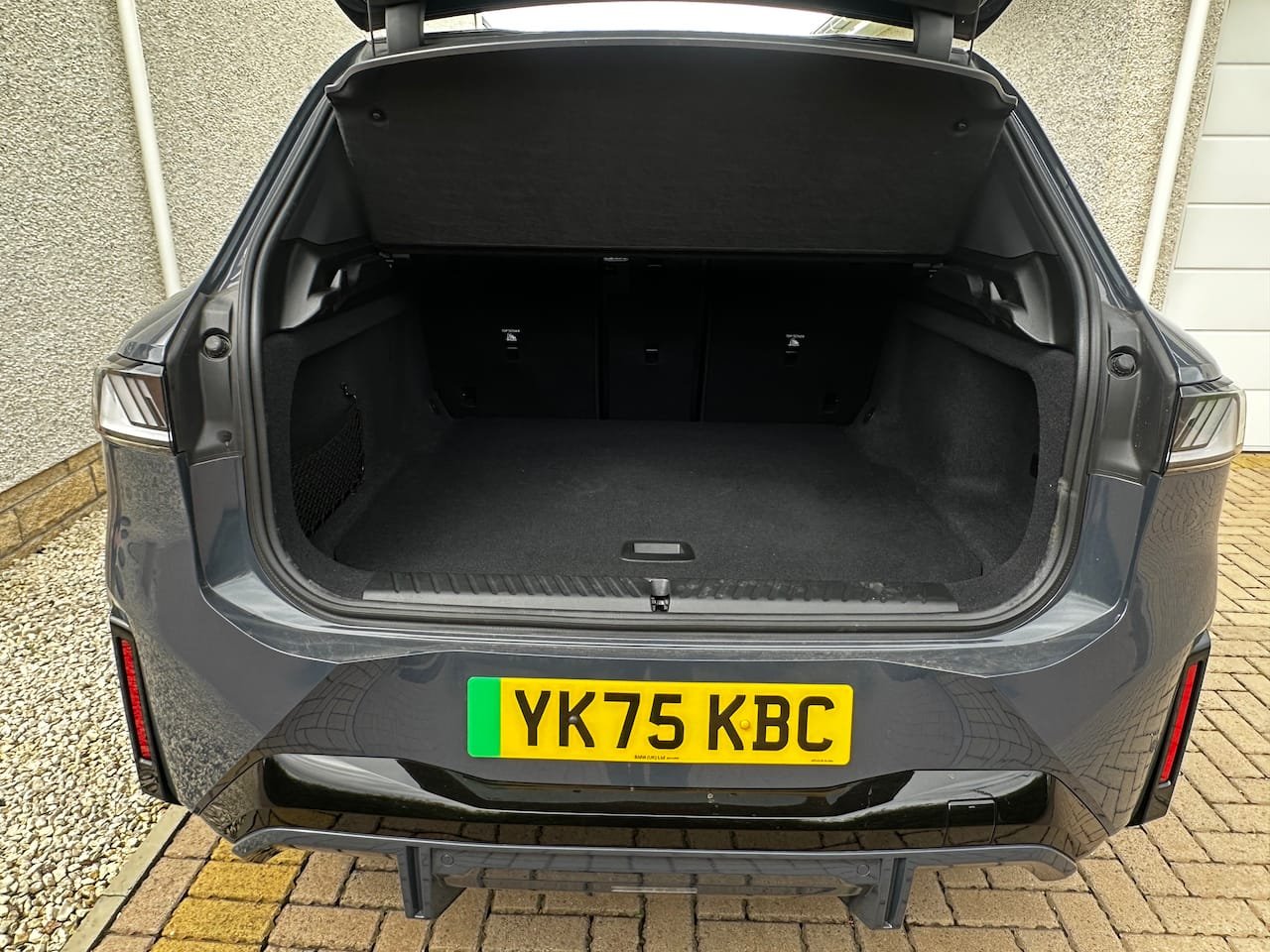
Wireless phone charging is included, storage is generous enough for everyday family life, and the overall layout reflects BMW’s long-standing emphasis on the driver without making passengers feel like an afterthought.
Perhaps most importantly, the cabin feels like somewhere you’ll genuinely want to spend time; calm, comfortable and reassuringly free from the temptation to replace every interaction with another touchscreen menu.
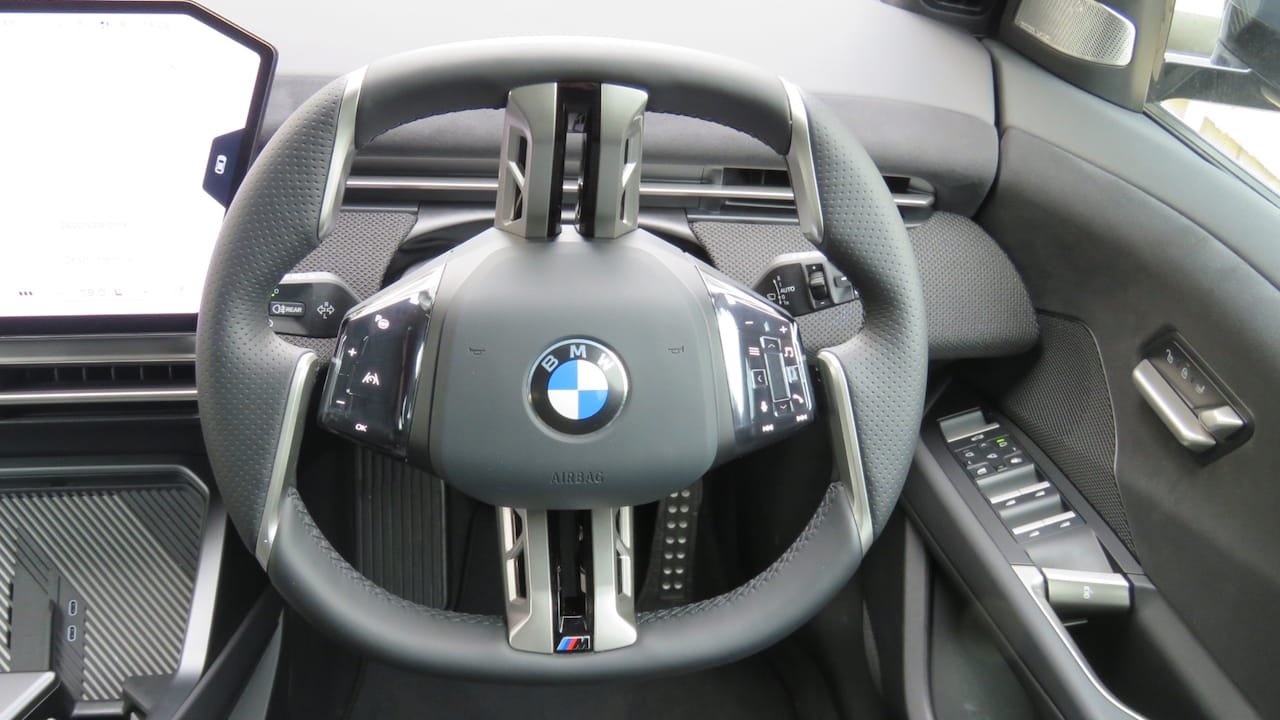
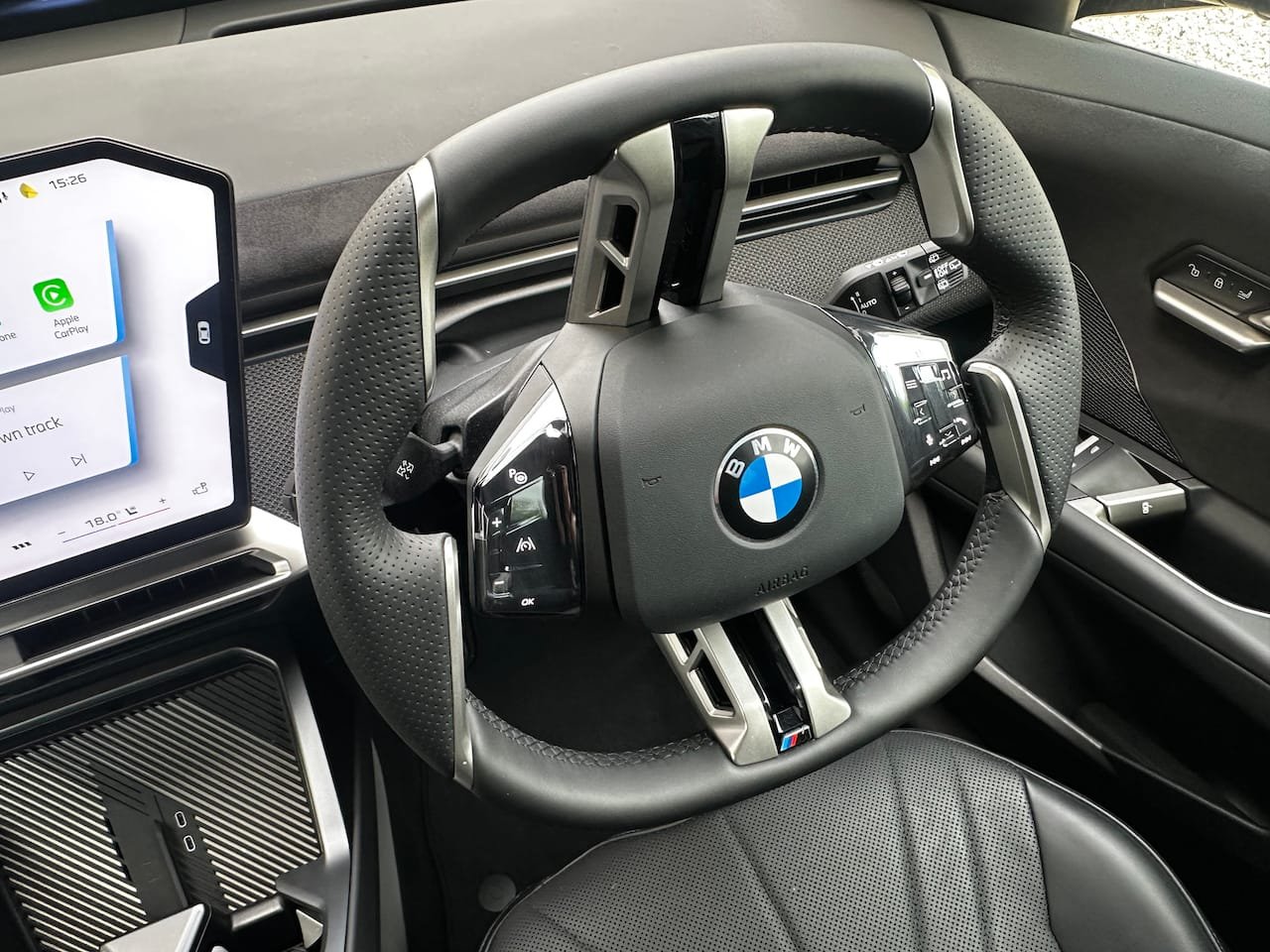
The excellent steering wheel feels and looks like something out of a fighter jet rather than a family SUV. The multi-function pads appear to ‘float’ on first glance.
After experiencing several premium EVs where digital minimalism sometimes comes at the expense of usability, the iX3 serves as a reminder that good design often means knowing when not to reinvent something that already works.
Rear passenger space and practicality
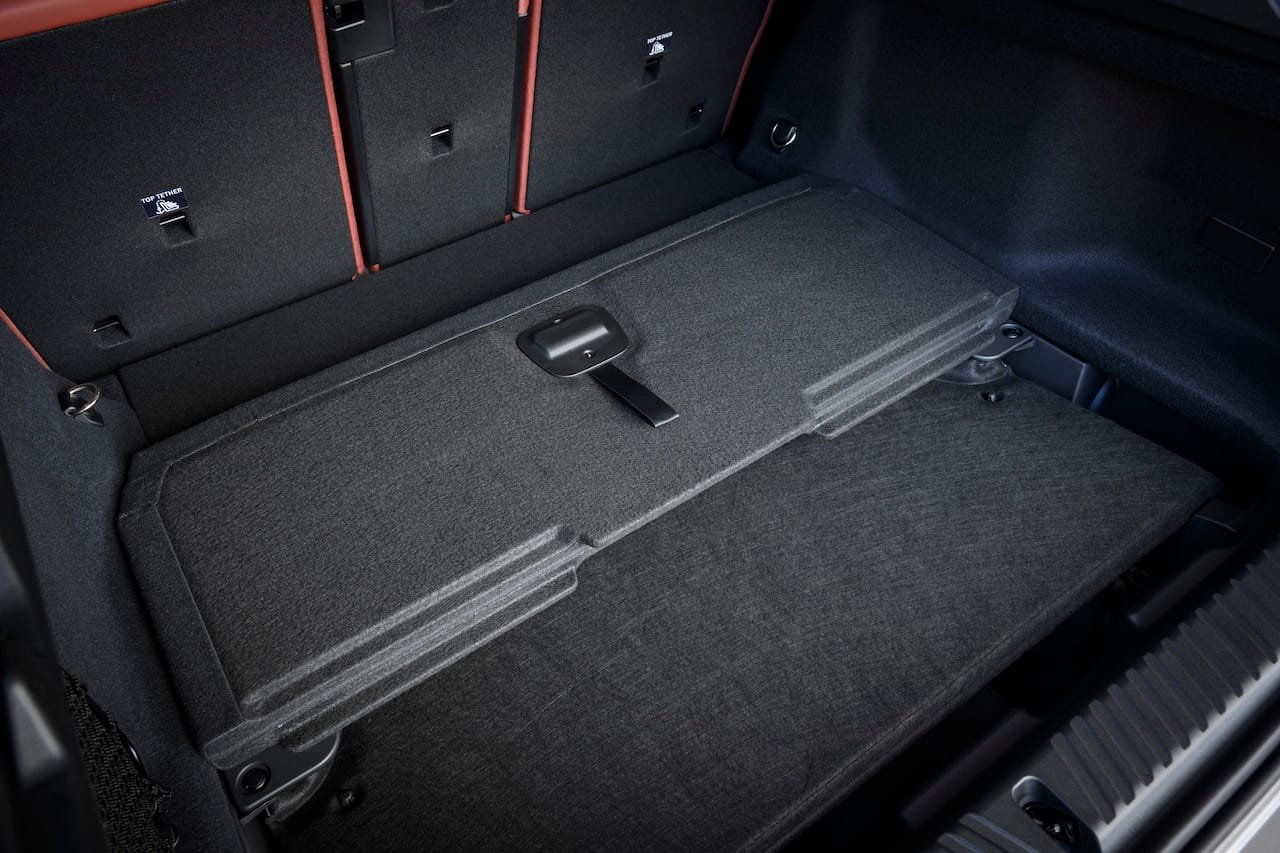
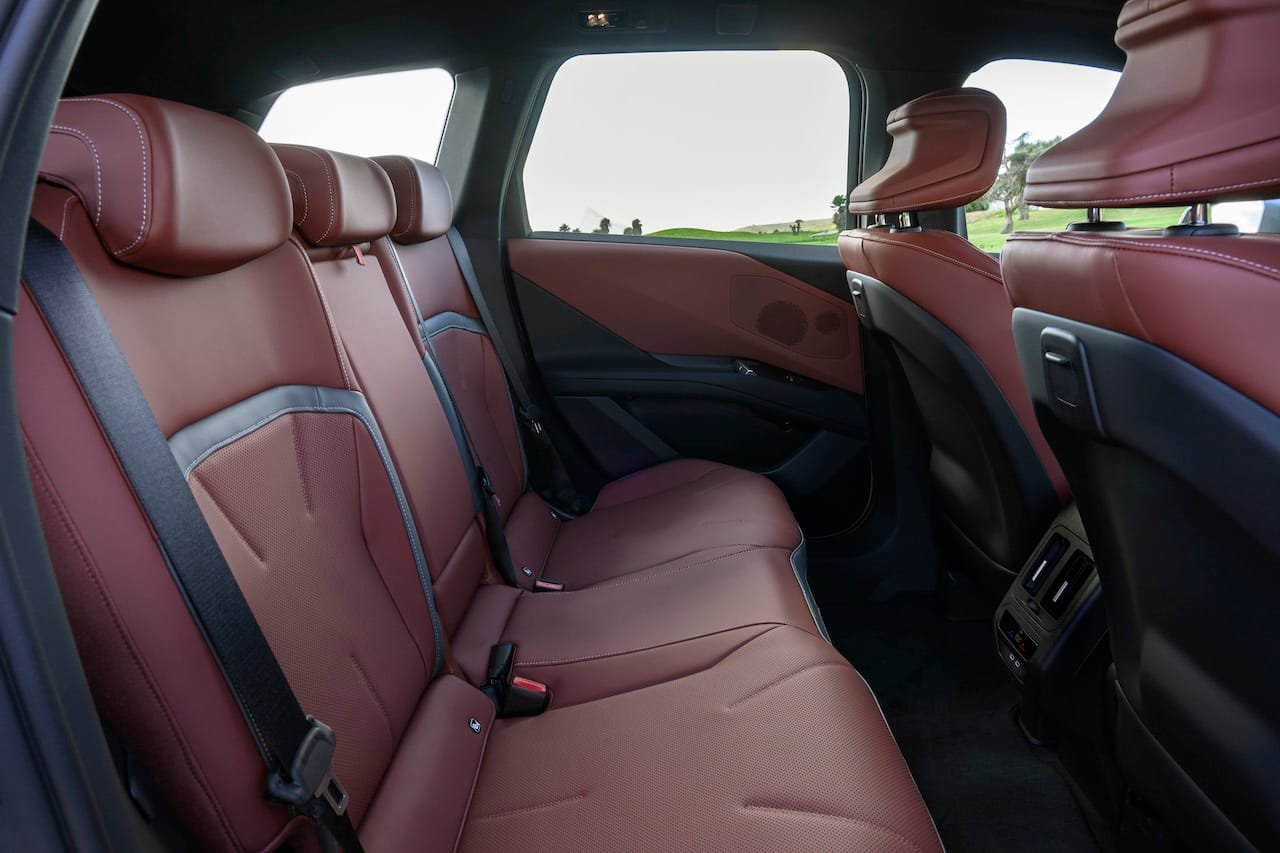
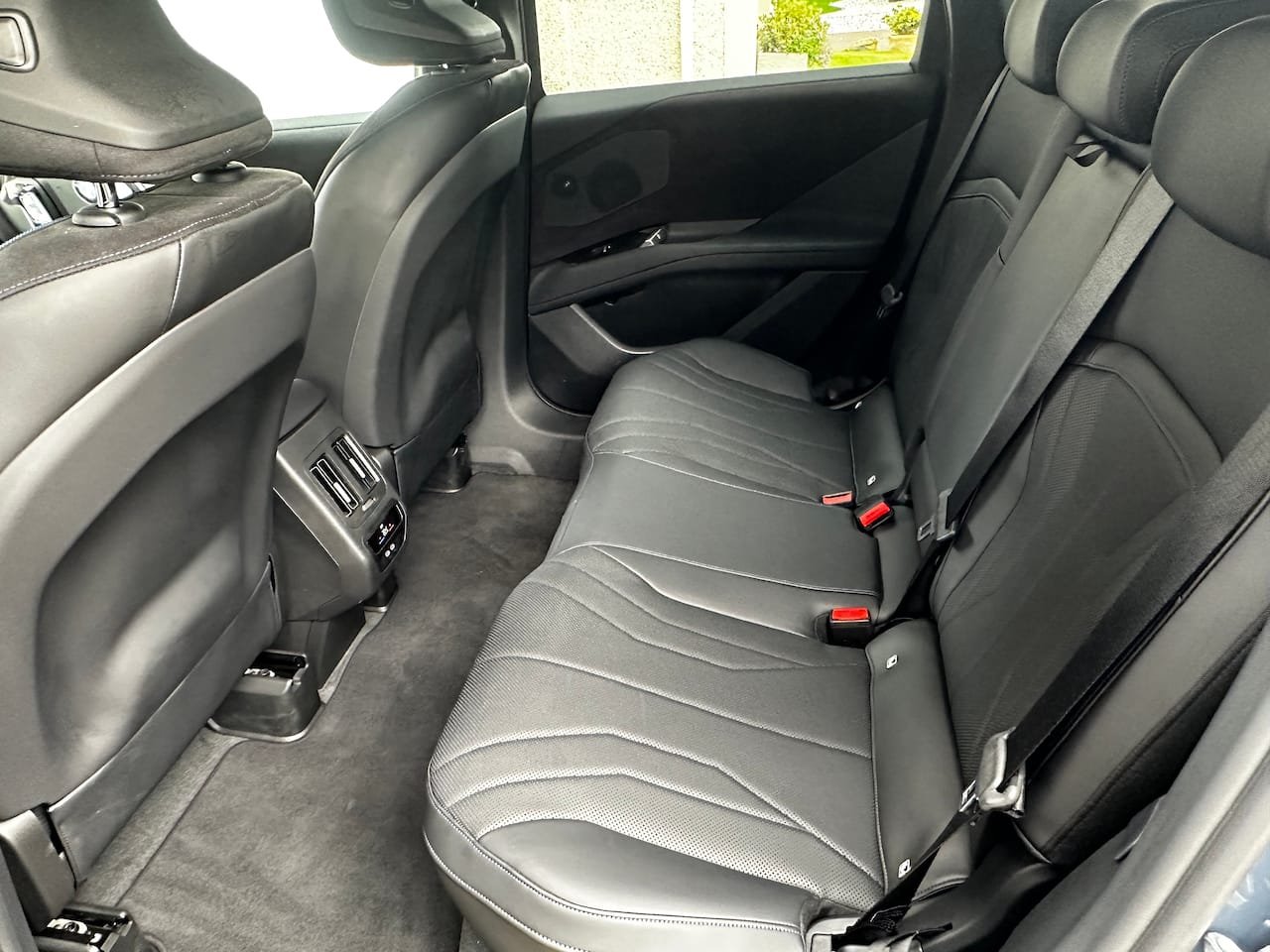
The iX3’s generous dimensions – measuring 4,782mm in length and offering seating for five – translate into a spacious cabin that should comfortably accommodate family life without ever feeling cumbersome from behind the wheel.
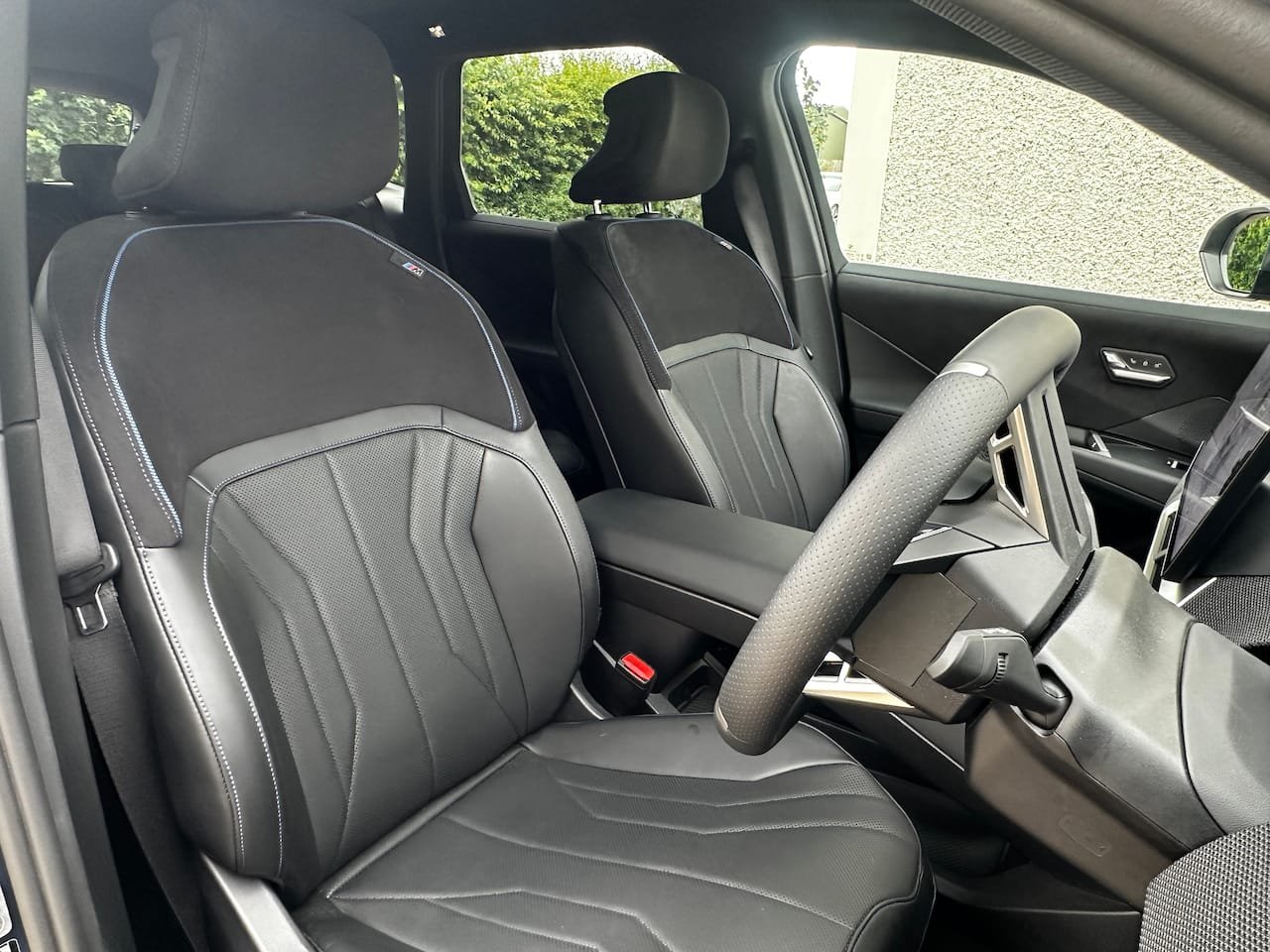
The upright seating position gives rear passengers a commanding view out, while the substantial width allows three occupants to travel with far fewer compromises than many more style-focused SUVs.
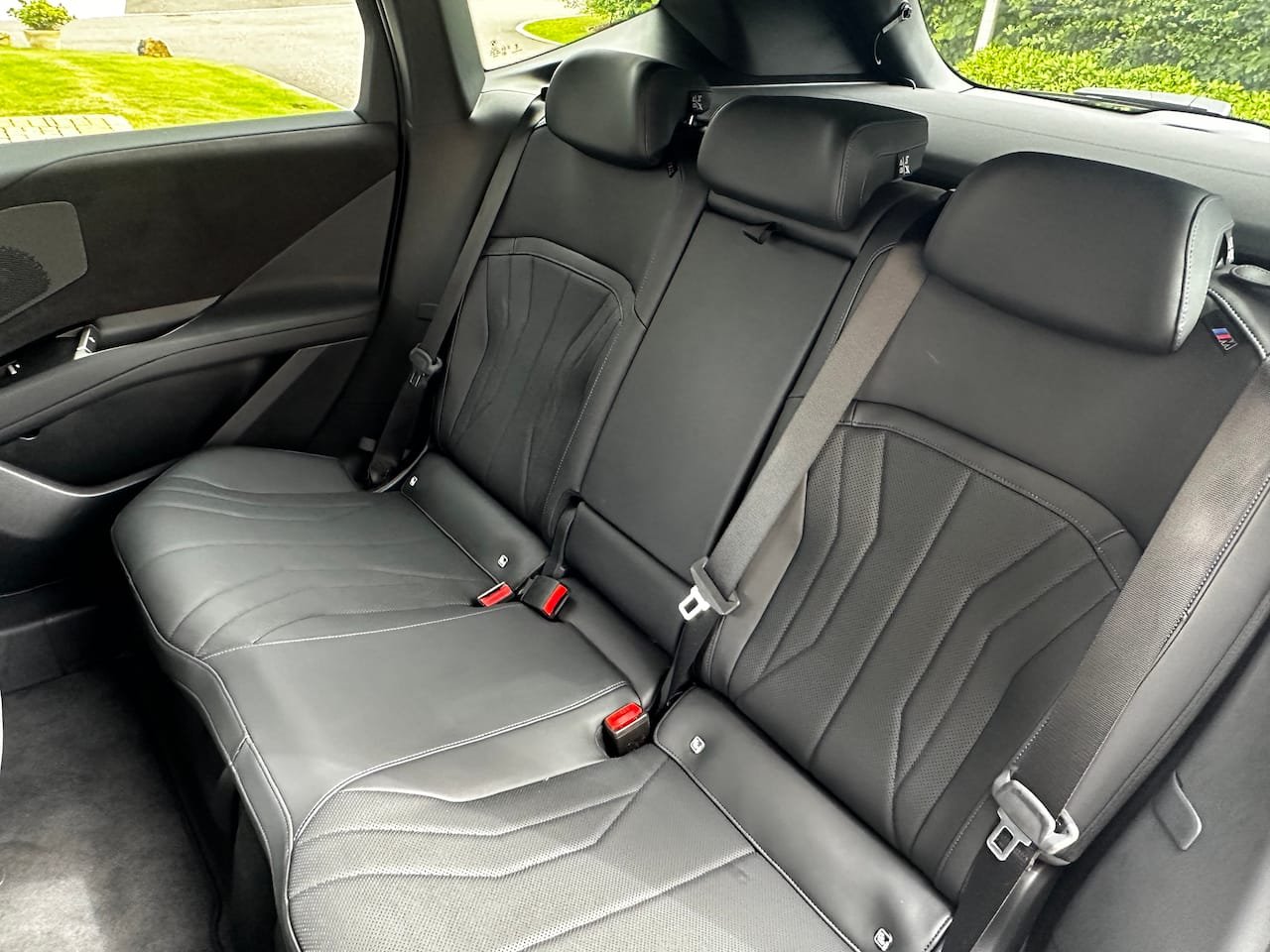
Unlike the growing number of coupe-SUV alternatives, the iX3 retains a traditional roofline that prioritises headroom and visibility.
Wireless charging keeps devices neatly tucked away, while the wide centre console and generous door bins ensure the usual collection of bottles, cables and everyday essentials can be stored without difficulty.
Technology and safety
The new BMW Panoramic Vision system immediately becomes the focal point of the cabin, projecting key information naturally across the base of the windscreen rather than relying solely on a conventional instrument binnacle.
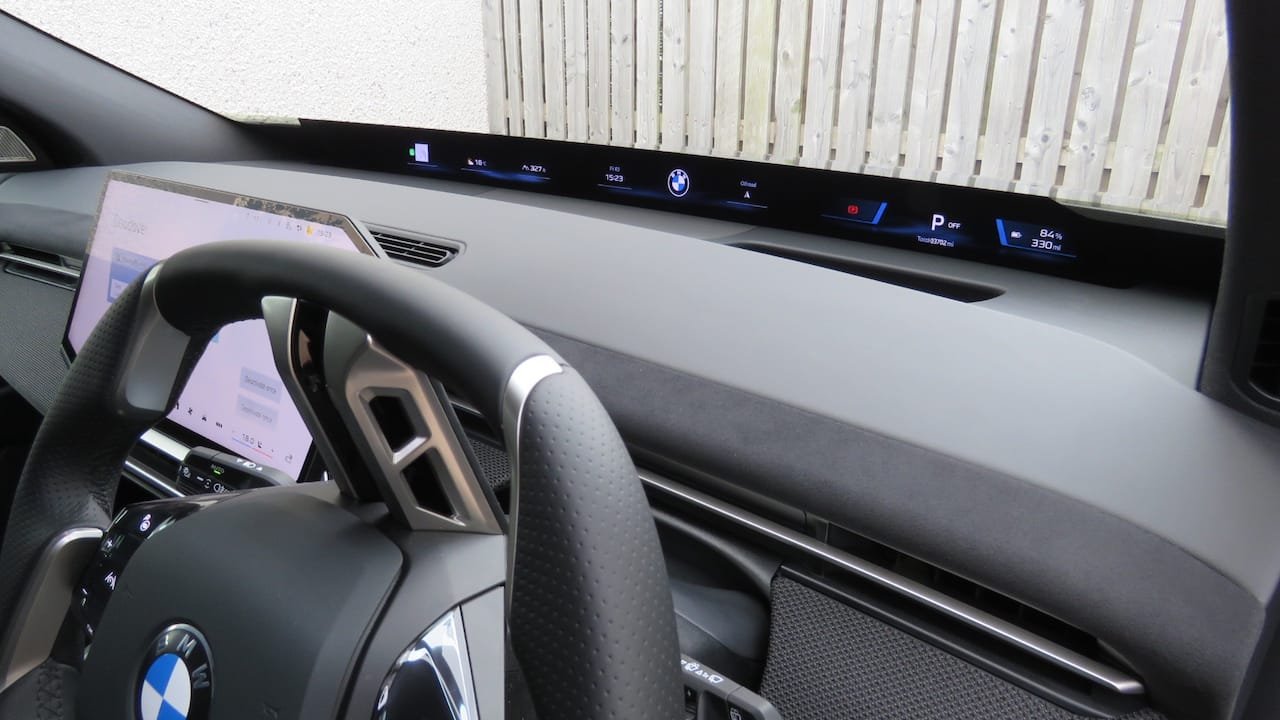
Combined with the optional BMW 3D Head-Up Display included within the Technology Plus Pack, it creates an environment that feels genuinely next generation without becoming overwhelming.
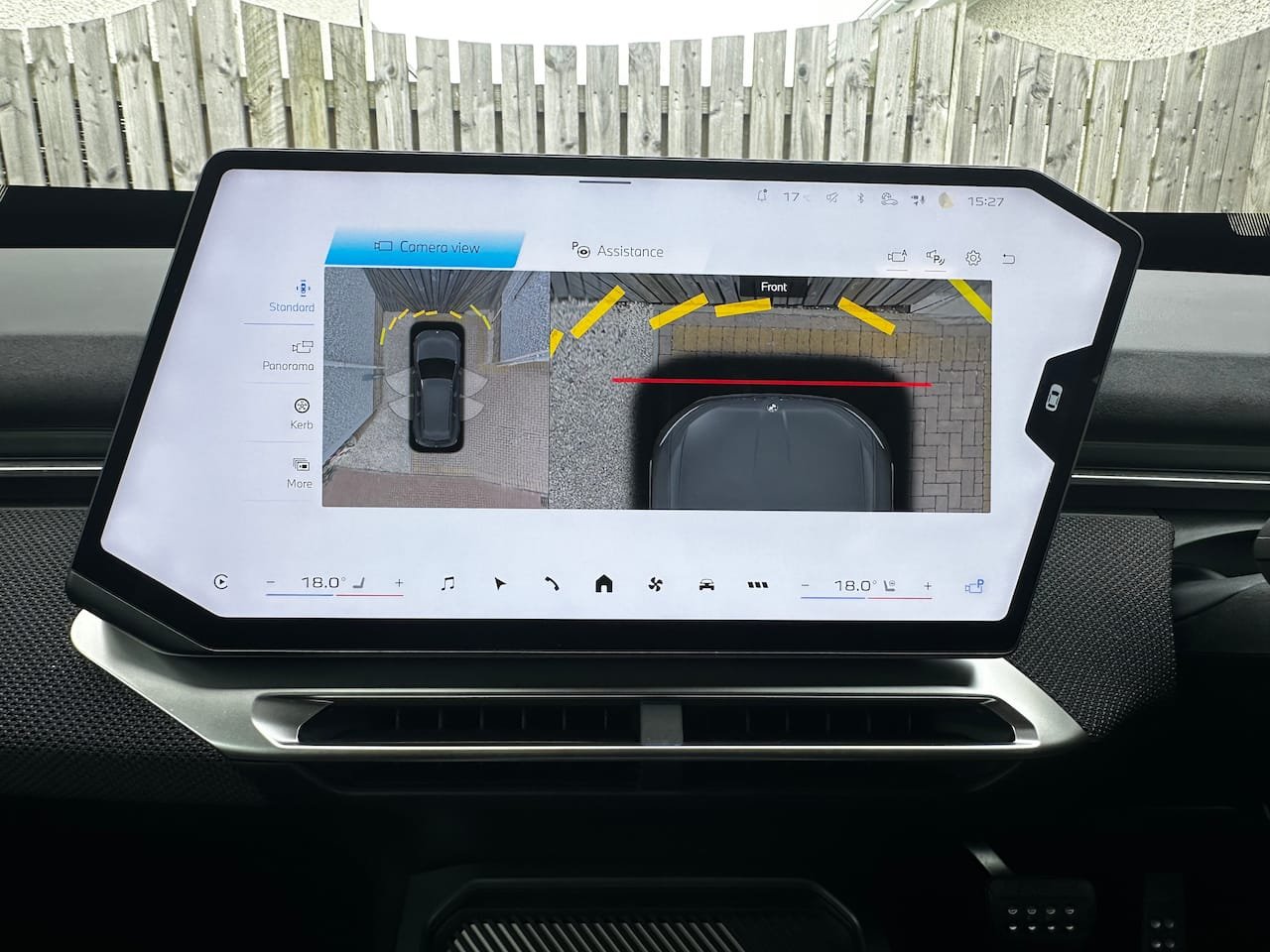
Every iX3 also comes generously equipped. Driving Assistant Plus and Active Guard form part of the standard specification, providing the latest suite of driver assistance systems designed to make longer journeys less demanding.
BMW TeleServices, DAB radio and wireless smartphone charging are also fitted as standard, meaning buyers aren’t forced into expensive option packs simply to obtain the essentials.
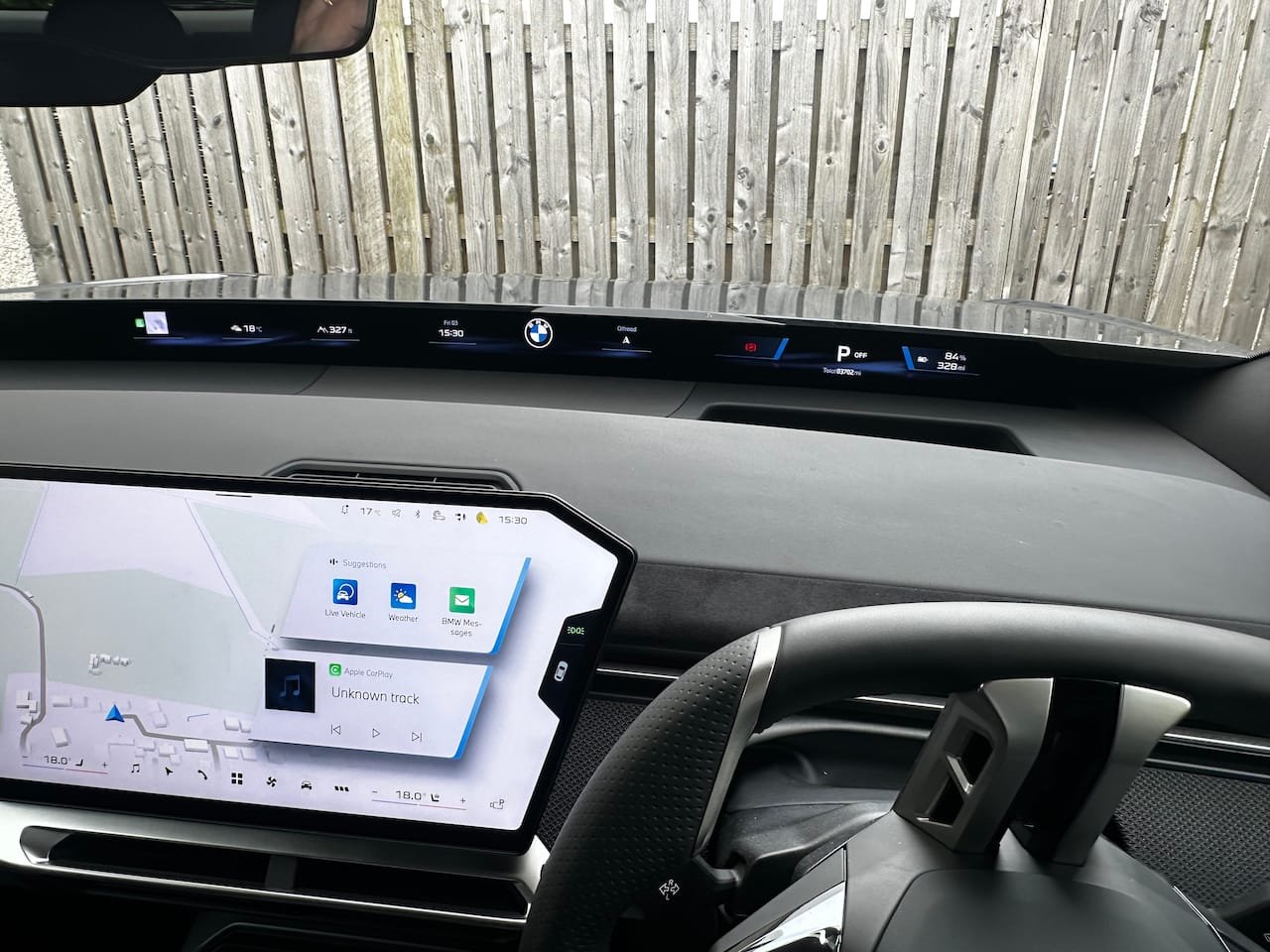
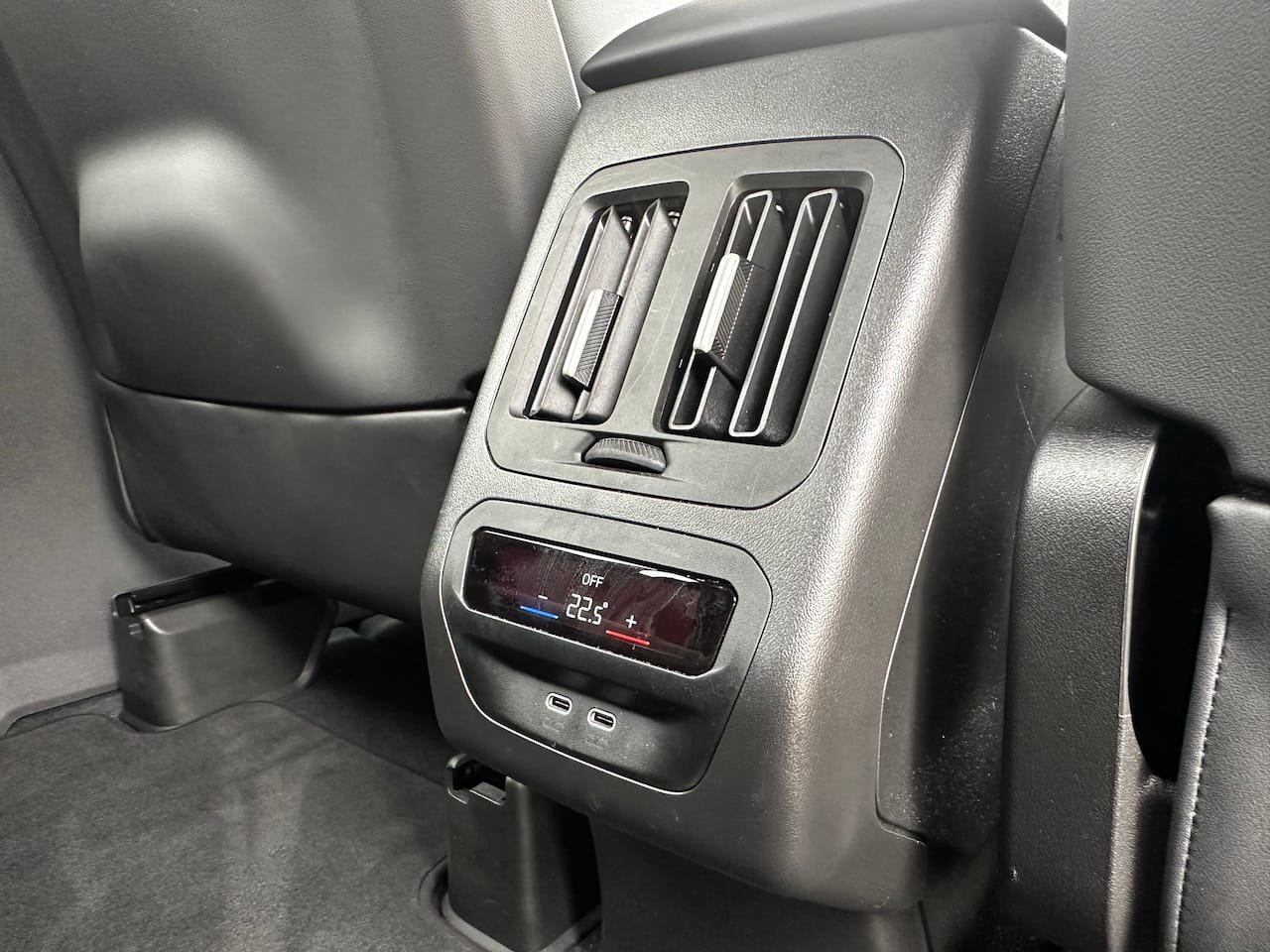
The optional Technology Plus Pack elevates things further – Alongside the Head-Up Display, buyers receive a Harman Kardon surround sound system and three-zone automatic climate control.
Driving impressions
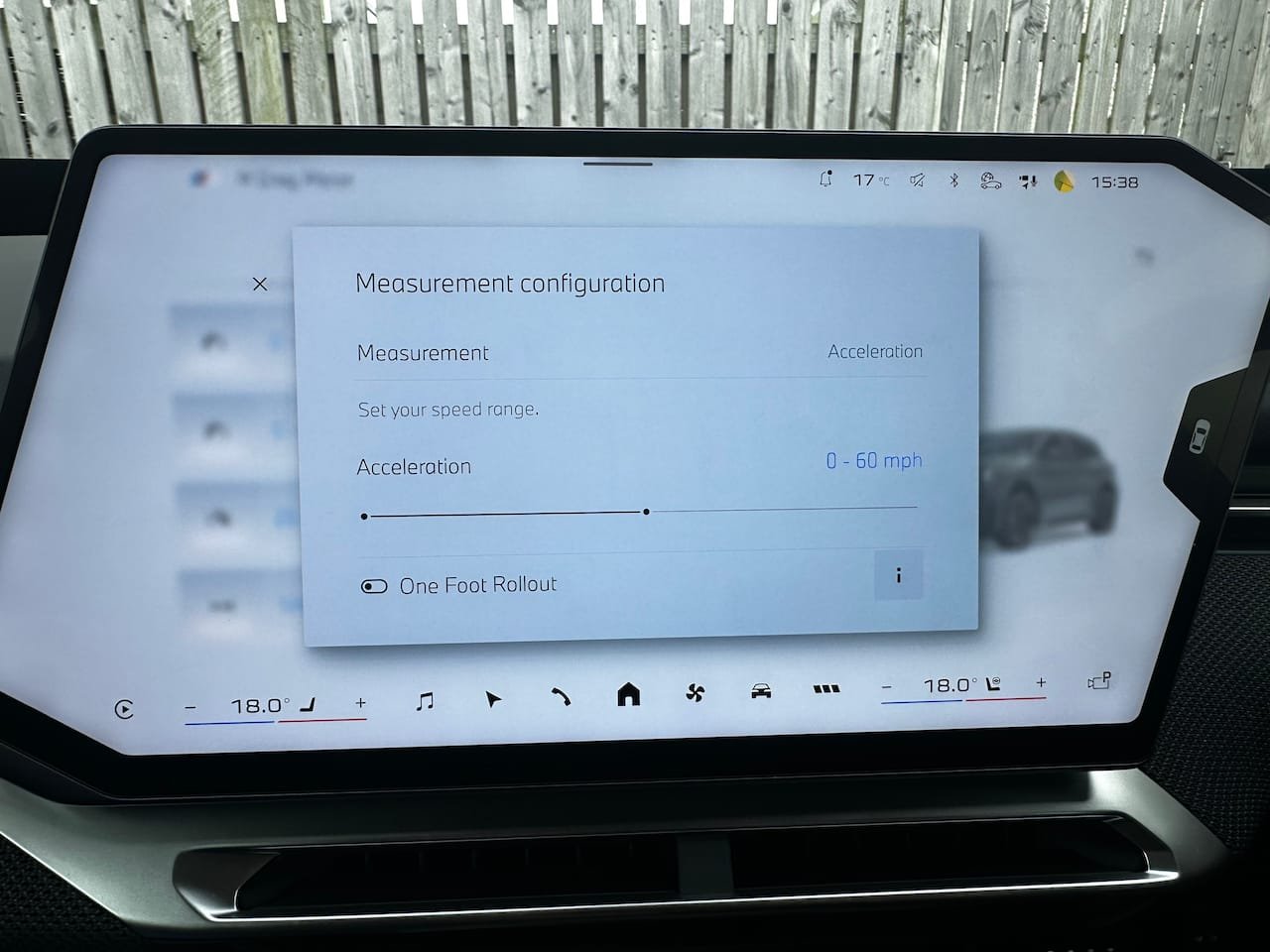
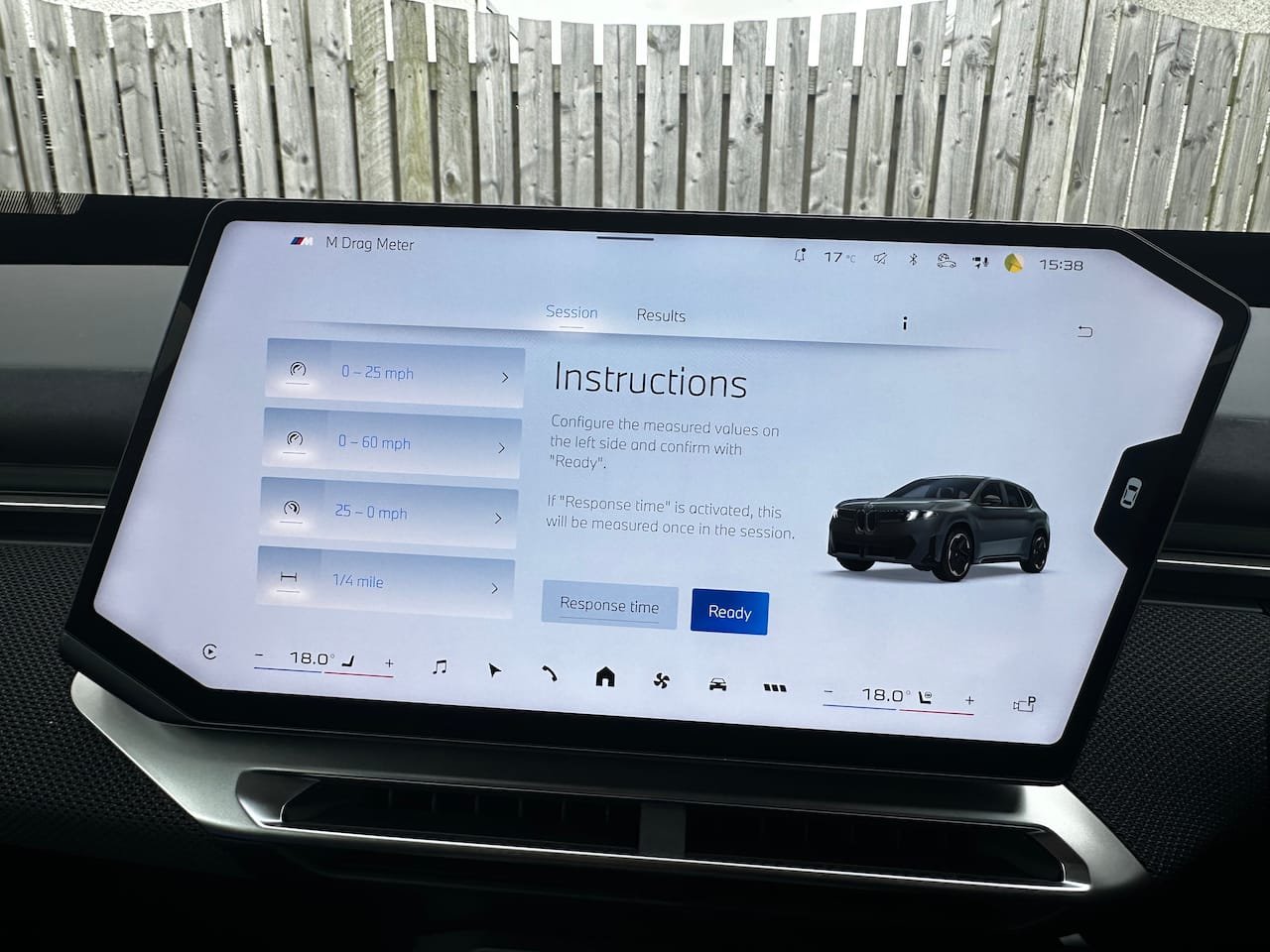
The iX3 certainly has the figures to impress. With 463 horsepower, 645Nm of torque and a 0-62mph time of just 4.9 seconds, it’s comfortably quicker than most drivers will ever realistically need.
Yet reducing the iX3 to its acceleration figures somehow misses the point. Electric vehicles have reached a stage where rapid acceleration is almost expected. The real differentiator now is how a car behaves during the other ninety-nine per cent of your journey.
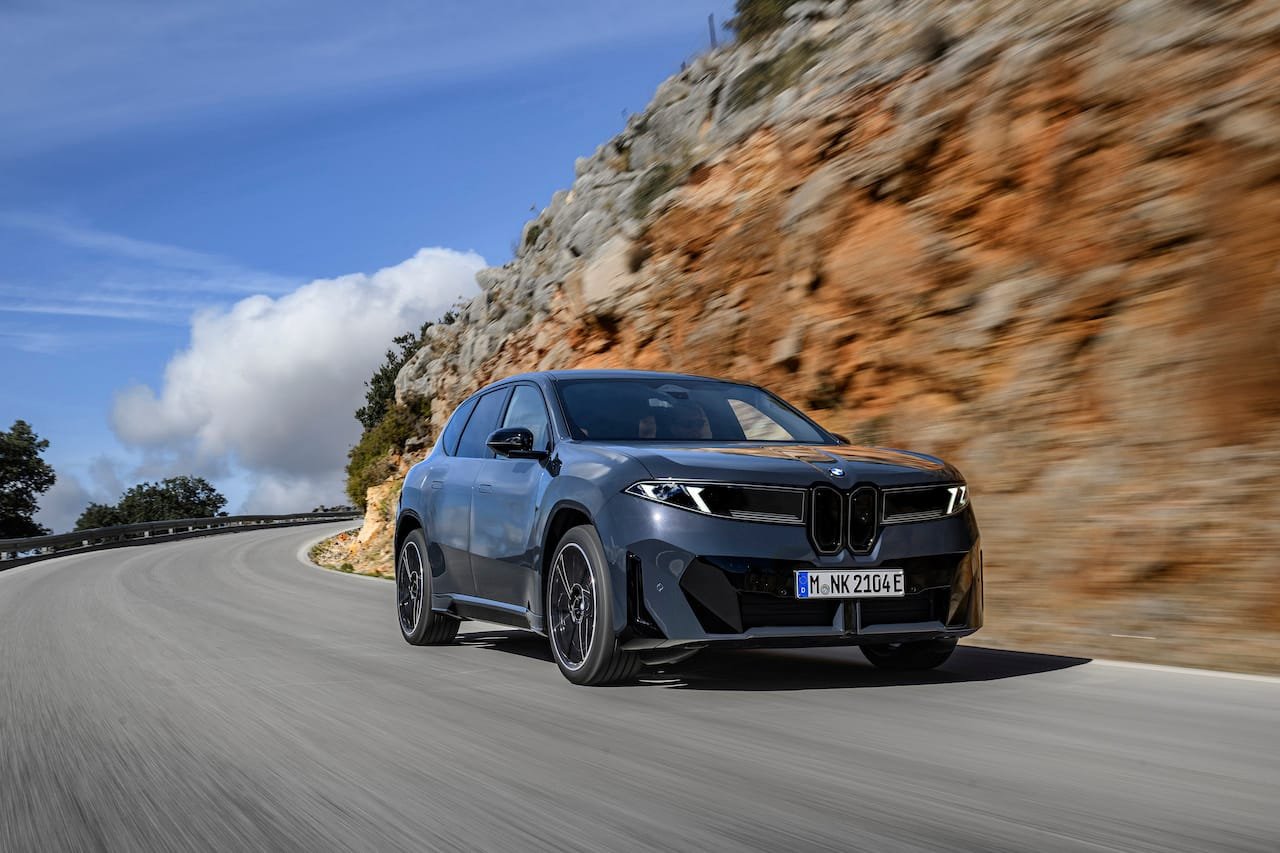
This is where BMW has traditionally excelled. Rather than chasing outright drama, the iX3 appears engineered to make every mile feel effortless. The dual-motor xDrive system promises secure traction in all weather conditions, while the substantial torque delivery makes overtaking almost instantaneous without ever feeling abrupt.
More importantly, nothing in the specification suggests BMW has lost sight of refinement.
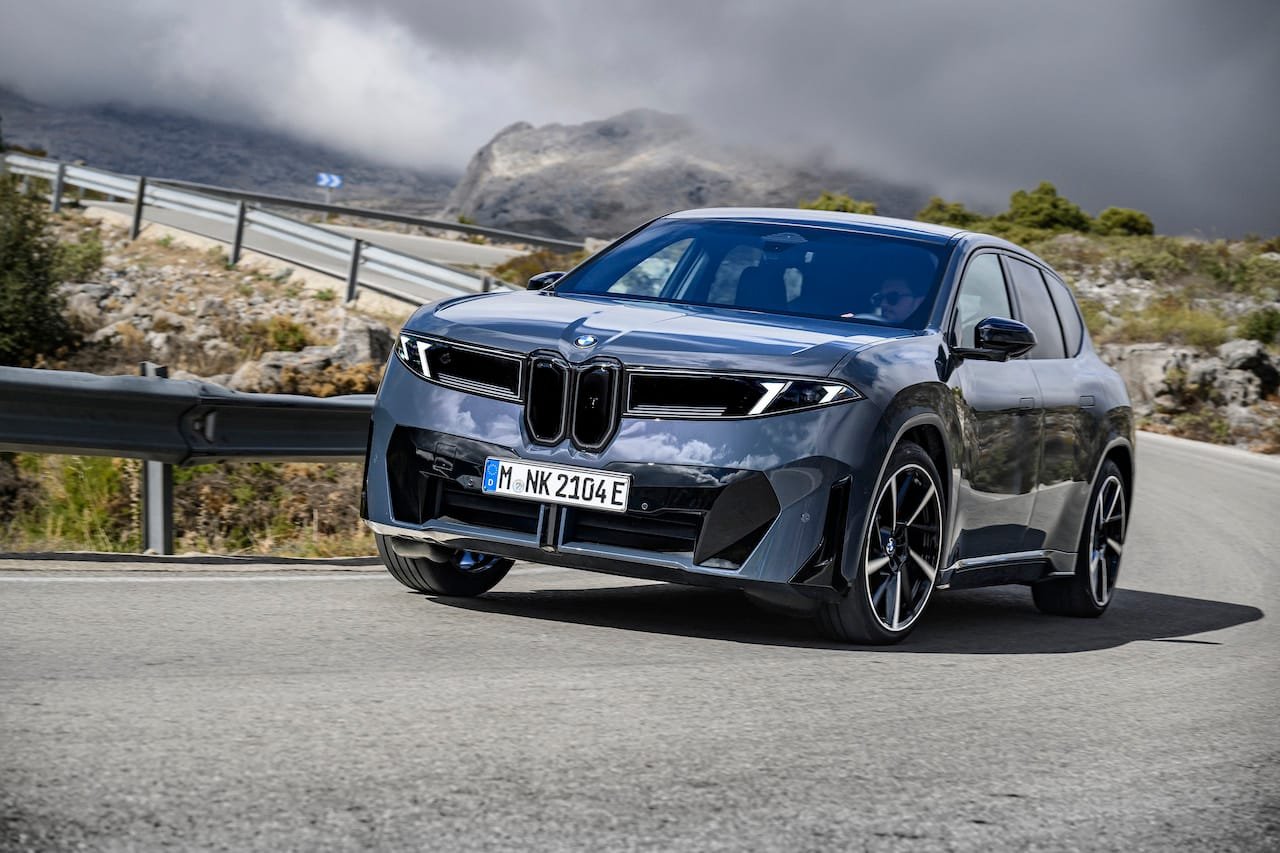
Over the past few years I’ve driven a growing number of premium electric SUVs, many of which arrive with extraordinary performance figures and interiors dominated by ever larger displays. Some are genuinely excellent. Others feel as though they’ve been designed around the showroom experience rather than the ownership experience.
The iX3 appears to take a different approach. Its emphasis isn’t on startling you during the first five minutes. Instead, it’s on ensuring the car still feels satisfying after five years.
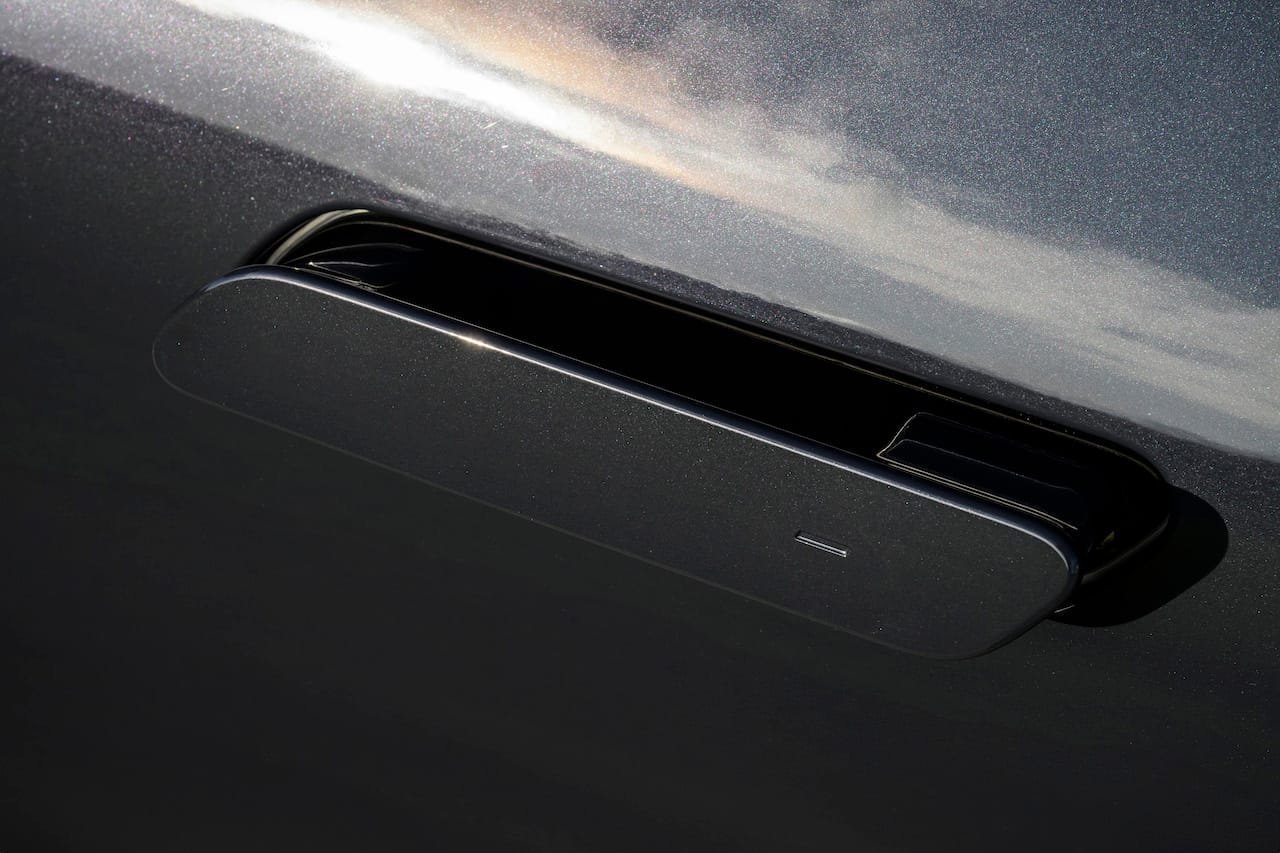
I couldn’t fault the ride quality on any kind of road – the chassis and damping soaked up everything that was thrown at it – and all in a quiet, confident way that made me think “Yea, I could live with one of these”.
The roads out of the village I live in are typically rural – a patchwork of repairs with dips, lumps and undulations around most of them. The roads themselves are twisting and somewhat unsighted approaching tight bends meaning you are constantly on and off the power.
This always highlights a vehicles dynamic capability – or lack thereof. Recent Chinese offerings, such as Chery, Jaecoo and Omoda can leave you feeling a little shaken and stirred with excessive ‘bounce’ before settling down. Not so in the BMW which was tight without being stiff; flexbile without being harsh. A real display of how to sort the ride characteristics for a UK market.
Afterall, BMW has spent decades developing a reputation for producing cars that feel cohesive from behind the wheel. Steering, throttle response, ride quality and body control have traditionally worked together as one complete package rather than existing as individual strengths.
Everything about the iX3 suggests that philosophy continues into the electric era.
Range
Range anxiety has become an increasingly outdated phrase.
Cars like the iX3 are a significant reason why. BMW quotes an official WLTP range of up to 497 miles, supported by an impressively low energy consumption figure of just 15.3kWh per 100 kilometres.
Even allowing for the inevitable differences between laboratory testing and real-world conditions, those are remarkably strong figures for a dual-motor premium SUV producing over 460 horsepower.
For many owners, it moves the conversation away from planning charging stops and back towards simply enjoying the journey.
Naturally, real-world range will vary according to weather, driving style and motorway speeds, but if BMW’s quoted efficiency proves representative, the iX3 should rank among the most capable electric SUVs currently available for covering serious distances between charges.
Rivals
Established names such as the Audi Q6 e-tron, Porsche Macan Electric, Mercedes-Benz’s forthcoming electric GLC and the Polestar 4 all compete for buyers seeking a balance between performance, technology and practicality. Tesla’s updated Model Y also continues to dominate many sales charts thanks to its efficiency and charging infrastructure.
It’s an exceptionally competitive field. Which makes BMW’s approach all the more interesting. Some rivals prioritise outright performance, others focus on dramatic styling or minimalist interiors.
The iX3 appears more interested in balance and quietly promises to do almost everything exceptionally well.
And for many buyers spending well over £60,000 on a family SUV, that’s likely to prove a far more persuasive argument.
Verdict
BMW doesn’t need the iX3 to be revolutionary – it needs it to feel convincing; and on the evidence available, that’s exactly what it has achieved.
The styling is mature, the cabin feels thoughtfully designed, the technology appears genuinely useful and the performance is comfortably more than most drivers will ever require.
Add an officially quoted range of up to 497 miles, and the result is an electric SUV that looks capable of covering enormous distances with very few compromises.
Perhaps more importantly, the iX3 doesn’t feel like a car trying to persuade sceptics that electric vehicles are the future. It simply feels like BMW has built another excellent SUV that just happens to be electric.

At a glance
Model: BMW iX3 50 xDrive M Sport
Price: £65,562 (as specified)
Power: 463hp (345kW)
Torque: 645Nm
Drive: Dual-motor all-wheel drive (xDrive)
0-62mph: 4.9 seconds
Top Speed: 130mph
WLTP Range: Up to 497 miles
Energy Consumption: 15.3kWh/100km
Charging: 11kW AC (0-100% in 11 hours) / Up to 400kW DC (10-80% in 21 minutes)